Juli Chenault on Recognizing the Early Signs of Dementia
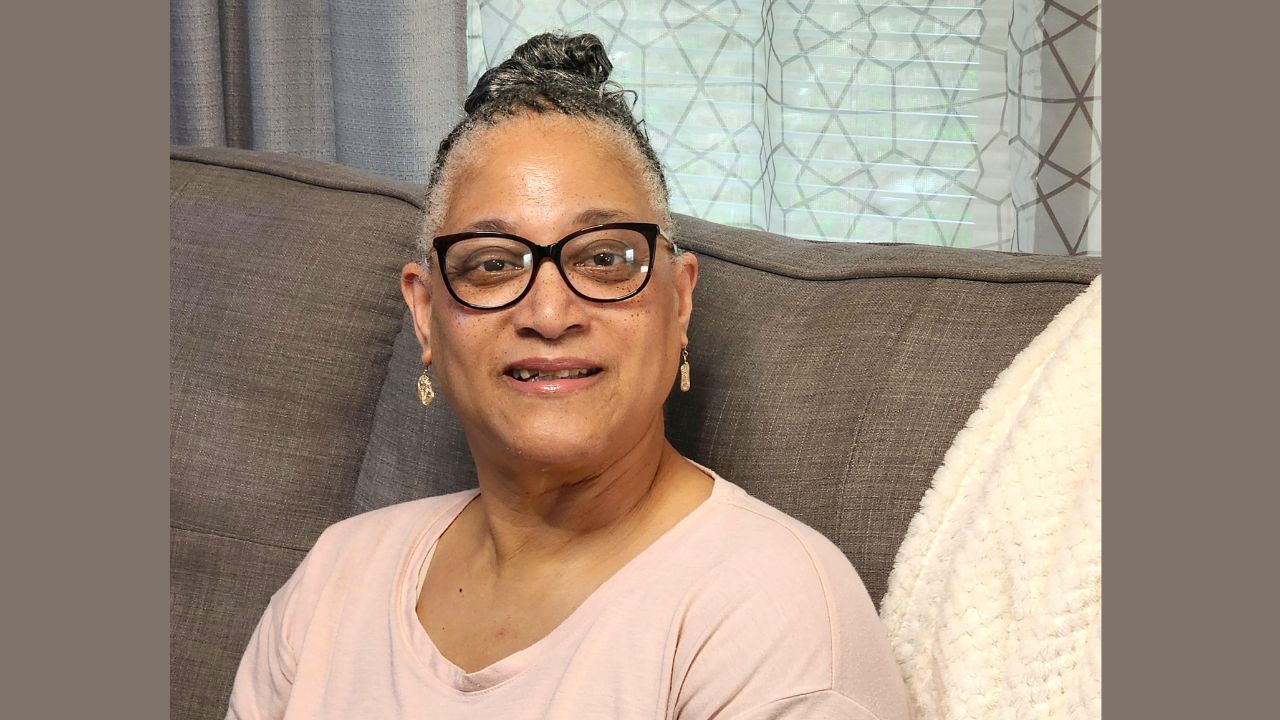
Juli Chenault reflects on the memory changes that led to her early-stage dementia diagnosis and how family and daily routines have helped her continue moving forward.
Journey to Diagnosis is a Being Patient series sponsored by Eisai. As with all of our reporting, the sponsor has no role in choosing guests, shaping questions, or reviewing content before publication.
Juli Chenault first began noticing memory lapses in 2008 while working as a business representative and traveling regularly across Kentucky. One of the first warning signs came when she could not remember how to get to an apartment she had visited many times and had to call her supervisor for help. After raising concerns about her memory with her primary care doctor and undergoing further evaluation, Chenault was diagnosed with early-stage dementia in her early 50s. Her mother had also lived with Alzheimer’s disease.
Since her diagnosis, she has remained committed to managing her health, staying on medication, and keeping her mind active. The support of her family has played a central role, both in recognizing the early changes and in helping her move forward.
In the conversation with Being Patient’s Mark Niu, Chenault discusses the relief of finally having answers, the importance of staying mentally and socially active, and the role her family has played in supporting her day to day. She also speaks about the need for more awareness in Black communities, where stigma, denial, and lack of information may keep people from seeking help. Chenault encourages others to take memory changes seriously, see a doctor, follow treatment recommendations, and stay connected to the people and activities that help keep the brain active.
Being Patient: When did you first begin noticing changes in your memory, and what made you realize something more serious might be going on?
Juli Chenault: Well, it was really actually before 2008. You know how you just have forgetfulness. And I’ll be doing this or doing that and I say, “where did that go? Or what was I supposed to say?” And then it just progressed.
I was a business rep, and I was on my way to an appointment, trying to get there. I had been there many times. For some reason, my mind just blanked out. I kind of panicked. I called my manager, and I said, “How do I get to such and such? I’ve been there, but I forgot how to get there.” She said, “Are you okay?” I said, “Well, yes.” I pulled over into a parking lot, and he pulled up where I was going and she asked me where I was. She said, “Well, you’re about five minutes away.” And so she told me to go out of the parking lot and turn left, which I did. And I went on up, and she said, “Now turn in that parking lot.” When I turned in the parking lot, it’s funny, my memory came back. That’s how fast it left. And then it came back. As soon as I saw the building, my memory came back. And then I was okay. So I was able to go in there and do my appointment.
So those were kind of the symptoms that I was having. My memory would just fade out for no reason. And I just couldn’t remember things like words, simple spelling words and places. And thank goodness we have GPS because, as a business rep, that was my support system to get me from A to B. It made me comfortable on the road. And not only in Kentucky, I was traveling a whole lot of other areas out of Kentucky.
Being Patient: When that happened for the first time, did you brush it off as something normal, or did it immediately raise concerns for you?
Chenault: No, it raised a concern because that had never happened. I mean, I would forget stuff, where I put my keys and simple things like that. But I had never blacked out like that where my memory just totally lost me. I kind of got wary.
When I went home, I called my doctor and made an appointment. I was telling him what happened and my concerns, and he did a few tests in the office. He said, “Well, you know what we need to do? We need to send you to a neurologist and let them run some tests and find out what’s going on.” And so that’s what he did.
He sent me to a neurologist there in Lexington. And he ran some tests. He [thought I might have] early dementia because it’s generic in my family. My mother had it. So he said, “We’re going to send you for further testing.”
I had to do math, I had to do the clock, they asked me how many words can you say out of Lor how many words can you say out of T. And then they would give me three words. I couldn’t remember. My mind was just gone. I would get so frustrated and upset. I was embarrassed. And then it made me scared. They did tests for probably almost two hours. He said, “We’re going to go through the results, and we’ll send them to your doctor,” to my neurologist.
I made an appointment to go back in to see him. And he said, “It’s showing that you have early dementia. And, so we’re going to put you on a low dose of medication.” He said it won’t stop it, but it’ll slow it up so that I can function.
I see my neurologist once a year. And he checks me and everything. And he said, “Well, you’re doing good. There’s been no change. It’s not moved forward. It has not moved backwards. You’re pretty much at a standstill right now. We’re going to keep you on the medicine. We’re not going to take you off of it.” So I’m on that medicine for life.
Being Patient: And when you received that diagnosis, was it just you by yourself, or did you have some support from family?
Chenault: When I went to Louisville, my husband was with me. But when I went to the doctor, I was by myself. I went home and told him what they said.
It was kind of a relief because then I had an answer to what was going on with me and things that I could work on to try to help myself through life as I got older.
Being Patient: After your diagnosis, what helped you begin to move forward and adjust to your life with early stage dementia?
Chenault: Well, you have to do a lot of things and it takes a village. It took my family being around me. They stay around me 24/7. My granddaughter, she’s here four times out of the week. I’m helping her with her homework. And you have to really use your brain. You can’t go home and sit. You have to stay focused on things, things you like to do. My mind fades away.
I’m not a big book reader anymore because my mind just doesn’t stay there. I go to Bible study and work in my church. And so it keeps me busy. And I do diamond arts. I do crocheting and word search, things that will exercise my brain and keep me functioning. Exercising, eating right, those sorts of things.
You have to have a village, a family. And once they acknowledge that they have a family member that has it, they have to support them. They can’t just put them in a corner and leave them there because then all they’re going to do is wither away.
“It was kind of a relief because then I had an answer to what was going on with me and things that I could work on to try to help myself through life as I got older.”
Being Patient: According to the Alzheimer’s Association survey of U.S. adults, Black Americans are more likely to experience a mixed diagnosis or remain undiagnosed than older white Americans, with 36 percent seeing discrimination as a barrier to receiving proper care, and more than half of people living with a form of dementia, such as MCI, have never been formally diagnosed. What are your thoughts about that in the Black community?
Chenault: Well, I think it’s because they’re in denial. A lot of them don’t go to the doctor like they should. You have to go to the doctor’s when you feel like something isn’t right — if you’re forgetful, or things are going on in your head that you don’t understand. A lot of us Black folks, we don’t do that because a lot of them are embarrassed. They don’t want people to know that they have this disease, but they have to realize it’s to help them. Go get to a good doctor. Go to that doctor and express what your symptoms are and tell them, I want to get better. I want to get to the bottom of this. I want to know what’s going on. And a lot of times doctors will do that. I think in our Black communities, we just don’t have a lot of that. And I think they don’t have an understanding of what Alzheimer’s and dementia really is.
Being Patient: Is that something that you’ve talked about within your community?
Chenault: No, I have not. It’s something that I would like to do. I would like to talk to my community church because we have a lot of senior citizens and we have a lot of ladies that have parents that are senior citizens that might be going through something like what I’m going through and just not familiar with or recognizing the signs. That’s something that I would like to talk to my church community about.
Being Patient: How has your family supported you, both in recognizing the early signs and also helping in managing day-to-day?
Chenault: My family is very supportive. I have a loving family. They check on me. I have a daughter in Louisville. I have a daughter in Crinton. I have my husband and I have my sister and my sister-in-law. I’ve got family all over and they don’t hesitate to check on me on a daily basis, and that’s something that a lot of people don’t get, and I appreciate it. I love it. And my granddaughter, she is my sidekick. She’s right to my hip bone every day. And she even watches me like a hawk to make sure that I’m not doing something wrong or whatever. But as I’m getting older, I’m finding that my memory still is slipping, but I still have to practice to keep my mind active so I can function on a daily basis.
“You can’t go home and sit. You have to stay focused on things, things you like to do.”
Being Patient: What are some of those things that you are practicing? Any particular things that you do?
Chenault: Well, I read a verse out of the Bible. Or I do my word search, things that will exercise my brain. I read stuff on Facebook. And sometimes if I’m out walking, I’ll talk to people. My kids keep me in everything. My daughter, she’s in Avon. She keeps me in Avon. And I’m a good talker. So I talk to anybody. It don’t matter who they are. I’ll sit and talk to you for hours if I can.
But it’s just keeping your mind busy on things. Just anything you can do to keep your brain functioning.
And you have to have a healthy heart, too. Your heart has to be healthy because that plays on your brain. And fortunately, I don’t have a problem with my heart. My heart’s fine. My mother had heart problems, so that played a lot on her problems. But other than that, I listen to music, I sing in the choir. And a lot of times I sing solos, but sometimes my brain will go left instead of right, so I have to keep something where I can look at so that the words pop back in my brain.
Being Patient: You bring up talking a lot and lots of activities, but social interaction is quite important instead of isolating yourself cognitively and also emotionally too, right?
Chenault: Exactly. Yeah, I go to bingo and to the gym, just where you can get out in the environment and just move about and see what’s going on.
Being Patient: Now, what type of treatments are you taking? And are you looking at the possibility of clinical trials?
Chenault: I’m just on medication right now. A low dose. And I’m just following what the neurologist is telling me right now. They’re saying I’m doing good. I hadn’t driven for eight years because of my dementia. And just here in the last few months when I saw my neurologist, he says, “Hey, I think you’re able to drive.” And that’s been there for eight years. So my memory is better, I feel, because of continuing to do things. Continuing to eat right and exercise. And exercise my brain.
Being Patient: What do you think is the best piece of advice that you’d like to give to those who have had an early diagnosis?
Chenault: Keep doing what you’re doing, going to your doctors, have your family around you for support. And if you’re on medicine, take your medicine. Don’t get off of it because you feel good. Continue to take it because it’s helping you. It’s the reason why you’re on it. If you’re having a problem, have it looked at.