Diagnosed at 47: Ben Draper’s Early-Onset Alzheimer’s Journey
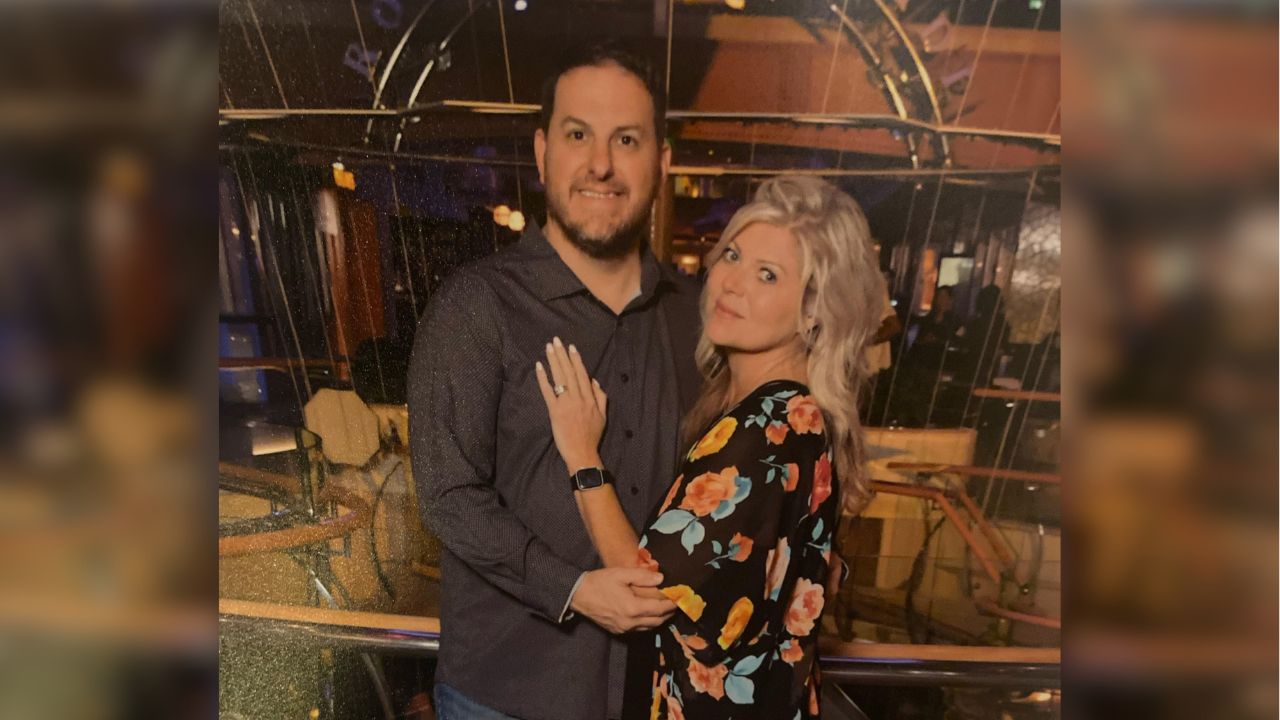
Ben Draper and his wife, Robin, share how subtle changes in daily life led to his early-onset Alzheimer’s diagnosis at age 47 — and how they’re choosing to live with intention in the face of it.
Journey to Diagnosis is a Being Patient series sponsored by Eisai. As with all of our reporting, the sponsor has no role in choosing guests, shaping questions, or reviewing content before publication.
Ben Draper was just 47 when he was diagnosed with early-onset Alzheimer’s. In the years leading up to that diagnosis, he and his wife, Robin, began noticing changes. Ben struggled with everyday tasks that used to come easily, such as sending text messages, using a phone or computer, managing time, and doing simple math. While running his construction business, he realized he could no longer read a tape measure. Even following GPS while driving became difficult.
Early testing revealed significant cognitive impairment, followed by an extensive medical workup that included an MRI and a spinal tap. The results showed amyloid plaque, and, with a strong family history of Alzheimer’s, Ben later learned he also carries a genetic link to the disease.
Today, Ben and Robin are focused on living each day to the fullest. They document their experiences on TikTok (@draperfamilylife) to help others feel less alone and to raise awareness about early-onset Alzheimer’s.
In this conversation with Being Patient’s founder Deborah Kan, Ben and Robin describe the emotional whiplash of fearing a diagnosis of rapidly fatal Creutzfeldt-Jakob disease before receiving clarity, and the unexpected relief of an early-onset Alzheimer’s diagnosis. They talk about Ben’s symptoms and how financial and care gaps can leave younger families scrambling. Above all, they focus on what Ben can still do, lean on community, and try to make each day count.
Being Patient: Can either one of you share that first moment when you knew something could be wrong?
Robin Draper: Well, we have two different moments. He has his first moment to describe.
Ben Draper: Yeah. So I was deer hunting in the panhandle, and I’ve been hunting all my life — and I couldn’t skin a deer to save my life. I didn’t even know what to do with it.
Robin Draper: He knew at that moment that something was wrong because he had been doing this forever and then he realized all of a sudden he couldn’t do it. I had noticed some things prior to that. His personality has changed. He was becoming a little more distant. He was a little compulsive with things — odd things — very compulsive, actually. He was struggling finding words, just everyday simple tasks: texting, using his phone, using the computer, things that he did with his job. Being his wife and being with him every day, I really noticed some things.
Being Patient: And in your work, were you noticing that there were things that were becoming more difficult for you?
Robin Draper: So he left his job, corporate job, to pursue a business in construction, which now that I look back, it makes me wonder: Was he struggling at work? So he started a construction company and he really started struggling there in about year one or two of that construction company with measurements, time managing. All sorts of job tasks and things like that, he was unable to stay on top of.
Being Patient: Robin, when you were saying, “It was becoming more obvious at home,” how long was it before you really decided, OK, now it’s time to go to the doctors? A lot of people attribute it to maybe normal aging, stress. What was that like?
Robin Draper: So we had so many excuses. He had a lot of excuses: “I can’t see. I can’t hear.” So we had his hearing checked, we had his vision checked. And I thought, well, maybe it’s something simple like that. But then some serious things started happening, like just even with personality being withdrawn and things.
But what triggered us was I had an uncle recently diagnosed with CJD (Creutzfeldt-Jakob disease). He was diagnosed with that and passed within three months. And every symptom that he had is what Ben was having. So it really scared me. That was the turning point where I said, something’s wrong. We’ve got to go to the doctor.
Being Patient: Tell me a little bit about that process. Oftentimes it takes people a long time to get a diagnosis. Can you tell me what that was like, and how long did it take to get a diagnosis?
Robin Draper: Sure. We started with our primary doctor. I had no clue on the process of this, on what to do. And I do believe it takes a long time to get diagnosed, the older the patient is, maybe, because it could be other things. But he got his diagnosis pretty quick. We started with our primary, and the primary saw some significant cognitive delays in his MoCA test. He was having trouble answering some of the simplest questions. A lot of that was stress.
He referred us to a neurologist, and then she initially wanted to diagnose him with CJD. During that first visit, I just knew that’s what it was. And I was already prepared for that. She sent us home, basically saying, “Let’s give it time. If he declines severely in this next month, it’s for sure CJD.” And then they started getting the ball rolling with some other testing: MRI. He had two spinal taps to rule out the CJD and also to diagnose Alzheimer’s. Tons of blood work — we did so much blood work.
Ben Draper: 17 vials. I’ll never forget it.
Being Patient: Was that because they were worried it was CJD?
Ben Draper: Yes. They had a protein of some sort that was not right.
Robin Draper: Yeah, they were worried it was that, and also we wanted to look for the simple obvious things — maybe vitamin deficiency. A lot of diseases can mimic Alzheimer’s, or cause the same symptoms. And so I think with it being such a rare case for someone his age to have this disease, they obviously wanted to rule out the most simple things. So we went that route first.
Ben Draper: Yeah. And all my family pretty much has had Alzheimer’s.
Being Patient: Have you had any genetic testing?
Robin Draper: He has a copy of the APOE4 gene.
Being Patient: Ben, did you live in fear of Alzheimer’s because so many people in your family have it? Or did you think about it much prior to your diagnosis?
Ben Draper: No, I never thought about it. I knew that my grandma was one of the ones that had it first. And my dad had it. It’s in the whole family.
Robin Draper: But you never feared that you would get it?
Ben Draper: No.
Being Patient: When did you find out it wasn’t Creutzfeldt-Jakob disease and it was actually Alzheimer’s?
Robin Draper: So the second time we went back, they ruled it out because it had been about a month and they said there was no decline. They were checking his walking and things like that. They were gonna completely rule it out with the spinal tap. So we started doing that.
We never formally got a diagnosis from our first neurologist. So I read between the lines. I don’t know why she didn’t diagnose him with that yet. Maybe in another appointment she was going to. So we went ahead and got a second opinion. And when I was in his office he said, “Definitely have early-onset Alzheimer’s.”
Being Patient: Tell me a little bit about what that was like. Forty-seven is young to have a diagnosis like that. What was going through both of your minds at that time?
Robin Draper: You know, one of the things with Ben being sick, I noticed that he doesn’t — I can’t say he’s apathetic — but he doesn’t feel as deeply as he used to. So all the burden of the emotion was on me. That was the worst day of my life, sitting in his office.
I just looked at him and I was crying, you know, and he just said, “It’s going to be OK. We’re going to be fine.” And so we just sat in the car and cried together for about 30 minutes. And then we moved on. We moved on.
But I will say one thing that’s most important is there was a time where I thought maybe he would survive for three months because the doctor said if he has CJD, he’s got about three months to live. So that changed everything. So when I found out he had Alzheimer’s, I thought, you know what, my husband’s here for a while. So every day is so important.
We don’t think about what’s happening tomorrow or the next day. I’m not going to make myself sick worrying about things. We live in the day. We live in the moment. And we’re excited about the things he can do. And our number one saying is we don’t focus on what you can’t do anymore. We focus on what you still can do.
There was a little relief also, because you have all those months of not knowing what’s going on. And so you’re just living in this constant state of stress and things like that. So when you do finally get the diagnosis, you can finally move on from that.
“We live in the day. We live in the moment. And we’re excited about the things he can do. And our number one saying is we don’t focus on what you can’t do anymore. We focus on what you still can do.”
Being Patient: Tell me a little bit about your day-to-day life today. What is it like and what does that mean to live life fully?
Robin Draper: There are some hard things for sure. We’re not going to deny that, but we have a really good life. We’ve been given the gift to know to make time intentional. We often forget to make the most of our time, spend time with people that we love and things like that. I take so much for granted.
With Ben being sick, I get to be home with him a lot now. He’s 47 and he doesn’t work anymore. That’s a bad thing sometimes, but I love it. He’s home with me. I work part-time now. I’m self-employed, so I’m able to stay home with him more. We love to go and do things. We’re outside constantly. We spend a lot of time together. Everyday life wouldn’t allow us if this didn’t happen. We’re very happy. We really are. We have a lot of joy.
Being Patient: Ben, how do you recognize Alzheimer’s in your daily life? What is it that you feel that maybe you’re not doing as well, or what are the symptoms that you’re experiencing at this point?
Ben Draper: So one of the things is speech. I get going with it, and then sometimes it just kind of goes out. And I’m sitting there wondering why people look at me like I’m crazy. And it just happens that way sometimes.
Being Patient: What, what about your memory?
Ben Draper: My memory is good.
Robin Draper: Yeah, that’s what’s odd. He doesn’t have a lot of memory problems. He has a lot of super short-term [problems] — like today, he kept asking, “What are we doing today?” “What time?” — those kinds of things. But as far as memory goes now, it’s really pretty good. It’s a lot of processing things that take steps. He does forget how to maybe start the lawnmower, just things that take multiple steps, he has trouble doing.
Being Patient: Tell me a little bit about your kids. How did you tell your kids? Tell me about that interaction there. I imagine that’s a hard thing to tell your children.
Robin Draper: I do all the talking. I know this man better than anyone. But I did have him tell the boys. His children are my stepchildren, but I claim them as mine. I love them dearly. But I believe I called the daughter and told her. But, I think we were already suspecting it at that point.
And, you know, we all — our family — we trust the Lord, every one of us. And I think no one had this huge reaction because we know that we’re taken care of. We know we’re good. So I’m sure they were sad. And there’s maybe they’re even in denial. I don’t know. But we’re dealing with it.
Being Patient: Are you on any treatments? Are you in any clinical trials? How are you living with this diagnosis?
Ben Draper: It’s just like another time, you know?
Robin Draper: He’s not on any treatments. We talked about it for a couple of months. He did get approved for the new treatment Kisunla. We did a lot of research on that.
I was kind of pushing him in that direction, but we prayed a lot about it and he just did not want to do it. It was hard for me to accept that, because when you do find out something like this, you want to just tackle it — especially me being the personality I am.
Ben Draper: But I know that God is the one that’s taking care of us.
Robin Draper: We did change our diet. I took control of what I could. We changed our diet, our eating. We cut out sugars and things like that to try to get his body healthier. And that turned into something else. I was constantly watching what he ate. It was another job. I was almost like a parent telling him, “No, no, you can’t have that.” So it was destroying us in another way. So we released all that.
But as of late, next week he does start some chelation treatments and we are going the holistic route. So we’re excited about that.
“We’ve been given the gift to know to make time intentional.”
Being Patient: Tell me a little bit about that. Who is giving you guidance with your health care and where are you finding the road to a more personalized approach for treatment?
Robin Draper: Yeah, I’m glad you asked that because there is one thing that we want to bring awareness to. If you’re diagnosed early like this, there’s nothing set up for you. So here my husband can’t work anymore. We lose income for a whole — we don’t have good insurance. And, you know, we have all these medical bills coming in and things like that.
So we had to wait for him to get approved for disability, then wait to get approved for Medicare. So now that he’s finally got approved for Medicare, now we can go the route of treatments. And so I got a lot of referrals for a great holistic doctor close to where we live, and we’re gonna go that route. And Medicare covers some of that.
Being Patient: Ben and Robin, tell me what your outlook is in life at this point. How are you defining living with an Alzheimer’s diagnosis?
Robin Draper: Just being intentional, you know, making the most out of every day. Oh, yeah, absolutely. And just being a team. And that’s what marriage is about anyway. But it has definitely brought us closer. We love harder, deeper. We find joy in the simplest things. We don’t get caught up in the nonsense anymore.
And we’re grandparents. We take so much joy in that. We love it. I know he wants to enjoy his grandkids as much as possible. So I try to keep us all together as much as possible.
We’re very active in our church. We have a very big support system that just — it’s unbelievable. We are loved so much and they’re just there for us: our neighbors, our friends, our church. So we just want to live every day. We never know when our time is. None of us know. So we want to just make the best of every day.
Ben Draper: Well, I just want to live every day for Robin and myself and God being with us all the time. That’s what really is doing something. God always will do something for anybody.