‘Living With Alzheimer’s, Not Dying From It’: Luke Davis on Life After Diagnosis
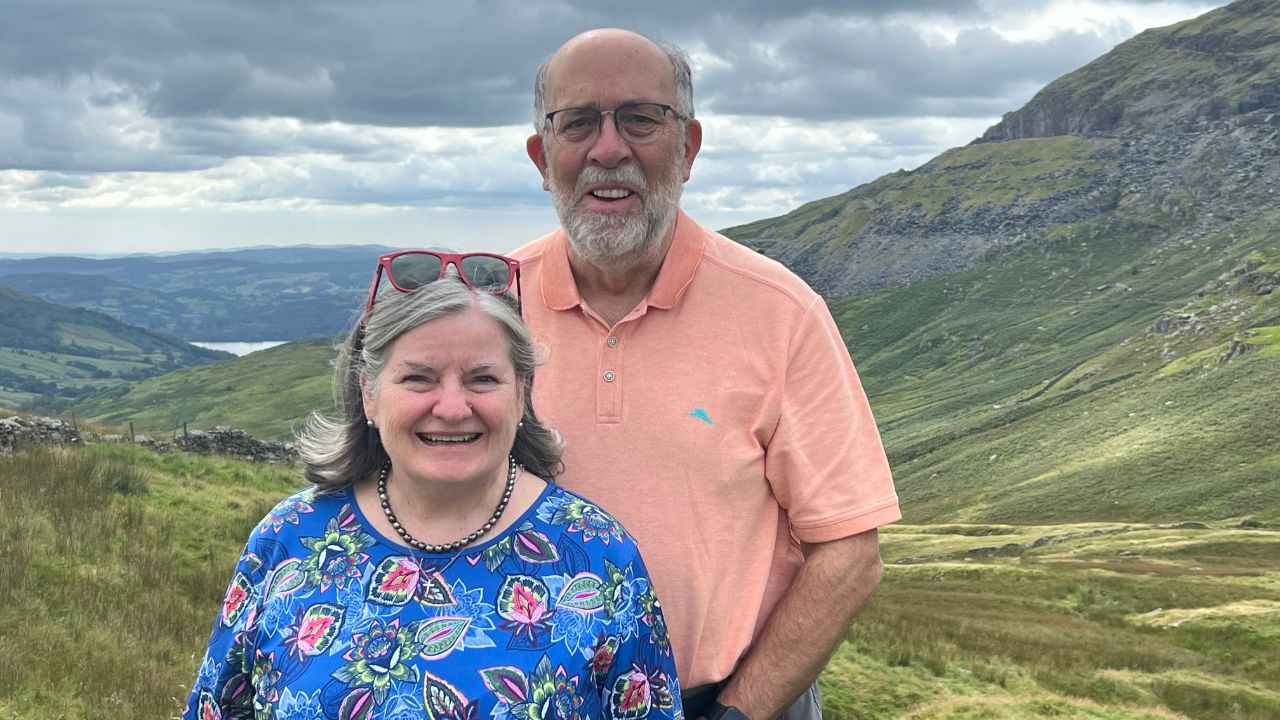
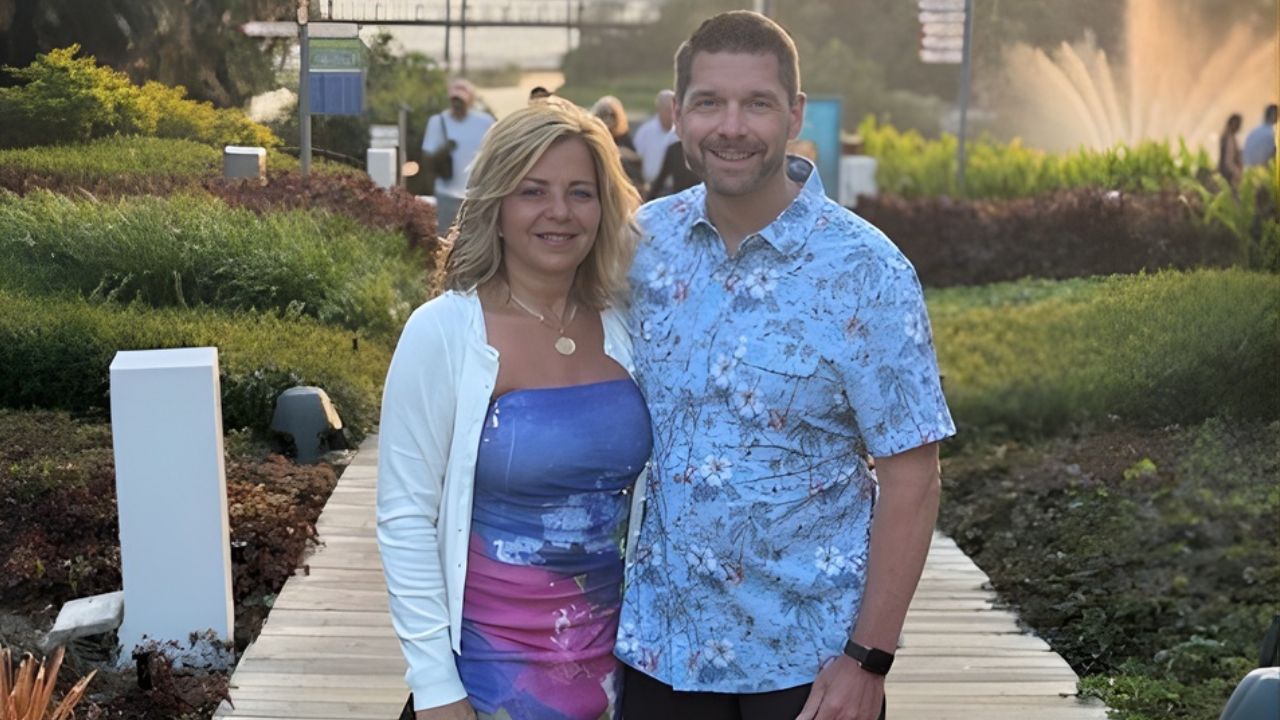
Luke and Paula Davis share how minor memory and spatial changes led to Luke’s early-stage Alzheimer’s diagnosis, and how early testing and treatment helped them keep moving forward.
Journey to Diagnosis is a Being Patient series sponsored by Eisai. As with all of our reporting, the sponsor has no role in choosing guests, shaping questions, or reviewing content before publication.
Before his Alzheimer’s diagnosis, Luke Davis spent four decades as an attorney in Dallas, balancing his career with an active life as a youth sports coach, school board member, and devoted husband and father. In the summer of 2022, he and his wife Paula began to notice subtle changes in his short-term memory — repeated questions and day-to-day details slipping away. A primary care visit led to months of evaluations, including cognitive testing, MRI and a PET scan that revealed amyloid plaque. In April 2023, just before his 69th birthday, Luke was diagnosed with early-stage Alzheimer’s disease.
Stepping away from law a few months later was a major transition, but it opened up space for Luke to focus on his health and his family. He began biweekly Leqembi infusions and sought education and support through the Alzheimer’s Association. Luke remains active in his community, continues to travel, and spends time with their four grandchildren.
In this conversation with Being Patient’s founder Deborah Kan, Luke and Paula Davis explain how early Alzheimer’s changes can be subtle and why partners often notice them first. They share Luke’s path to a diagnosis, including learning that he carries two copies of APOE4. They also offer advice to couples navigating a recent diagnosis and underscore the importance of leaning on community support. Their guiding message: Alzheimer’s is a detour, not a dead end. Luke described himself as “living with Alzheimer’s, not dying from it.”
Being Patient: Luke, tell me a little bit about these early signs. You obviously had a demanding career. Were you still working when you started to experience early signs?
Luke Davis: I was, and I don’t think there was any momentous issue that appeared. Paula and I just noticed, and Paula could probably respond or address this better as far as what she’s going to notice of what my short-term memory loss was. And it was, “I didn’t know that.” “You never told me that.” [And she would say] “Oh, yes, I did.” And so there were those kinds of things. It was more communications between us, than anything else. I didn’t miss deadlines. Never missed those kinds of things.
Being Patient: It’s really interesting because when you ask the person living with a diagnosis and their partner, it’s usually two different answers, right, Paula? Was that the case for you?
Paula Davis: It was mainly just short-term things. And then after he got the diagnosis, you could look back and go, “Oh.” When he was trying to put up, for example, the baby gates for our grandchildren, he had a real hard time with it. And I was like, “He’s just not reading the directions.” Well, it was that he was having trouble with spatial things. But we didn’t realize that.
With the family, and with me, a lot of it we just thought: He did have a demanding career, he’s busy in the community. We just thought he had so much on his plate. He either wasn’t listening or just wasn’t remembering things that we were telling him. And so that was the main thing that caused him to say, “Let’s go get this checked out.”
Being Patient: Was it first spatial, you mentioned the spatial issues, spatial perception, which in dementia is quite common. Luke, were you noticing anything was kind of off there?
Luke Davis: I don’t think so. I think we now look back and see those issues about spatial or just sequential things. But I think it was more, we just forgot some things. I had no family history of Alzheimer’s at all, or dementia that we know of. And fortunately, this was the summer, and I had my annual physical coming up. And I just said, “OK, we’re just going to ask. I’d like to get assessed.” And that was one of those — take out the pride. And it was maybe a divine intervention to say, “You just need to get this checked.”
Being Patient: So you didn’t have any Alzheimer’s in your family, right?
Paula Davis: No, both his parents lived to be 90 and 91. And his paternal grandparents lived into their late 80s and 90s with no sign. Now, his maternal grandparents died early. And one grandmother did have Parkinson’s. But that’s the only connection that he would have had from that.
Being Patient: And Luke, you were in your 60s when you were diagnosed?
Luke Davis: 69.
Paula Davis: It was 68 you went to get tested.
Being Patient: So you started to notice things prior when you were around 68 years. But before that, did everything feel normal before that?
Luke Davis: Yes. And I think, again, it would be Paula who would notice this even more than I did. I notice it now often. We’re fortunate that we live in Dallas, in a metropolitan area, where I was able to get the first testing done. It took four months, but I know that’s short to some people.
Paula Davis: He was able to get referred to a great neurologist, and then we went in November and she did talk to us about what we have been noticing, his physical history — things like that. And then he did that three-hour cognitive testing. And when he came out of it, he said, “There’s some things I know I struggled with.” And when we went back to report on it, it was spatial and it was the short-term memory. But everything else, he was at the top bar. So it was just those first two things out of however many things it was.
Being Patient: Were there any earlier signs, not when you noticed, “Oh, something’s wrong and I have to see the doctor,” but were there any changes in what you could do, maybe multitasking abilities, anything like that, that in hindsight may cause you to pause for thought?
Luke Davis: I’ve asked myself that question a lot. And I can’t think of anything that comes to mind. I was a civil — so I’m in depositions or I’m in court. And there was never a situation where I go, “Boy, I really missed — I didn’t have that question written down,” or “I should have made this objection to the judge,” or something like that. I didn’t miss birthdays or whatever.
Paula Davis: No, I think the only thing looking back, it’s just the little tiny things. It was more just like, “Oh,” probably when I told him that, he just couldn’t retain all of it. Or the spatial thing that we noticed that he had trouble with. But particularly at work, it never seemed to affect him there as much as it did just in personal things.
Being Patient: So aside from the baby gate, how else, Paula — what were you picking up at home?
Paula Davis: It was mainly just short-term things. Sort of like — one time, like at church, we were going to meet in the contemporary service and he was over in the sanctuary, the main service. And I was like, “No, I know we said contemporary.” But again, I thought he wasn’t listening or he just wasn’t paying attention.
And in fact, he was the main caregiver for his parents for the last six years of their life. So besides having a demanding job, he was looking after them, with my help, but he was always the one that was running over there to do things and stuff like that. So I think it was mainly just a short-term memory thing more than anything else.
Being Patient: Which a lot of people attribute — is it normal aging or is it something more serious? Right?
Luke Davis: Which a number of our friends now are asking us: Should we get tested, or is it just this?
Paula Davis: In fact, we just had a friend go get tested because his father did have Alzheimer’s, and he was starting to notice he was forgetting some things. And he went and did a baseline and he was fine. So it is important particularly if you have the history of it — to get a baseline so then you know when things are happening.
Luke Davis: I think part of it for us as well is we’re just such advocates for going to get tested and early detection. And we were one of the first on Leqembi. And we were able to get great access with the Alzheimer’s Association. And that’s why I’m doing advocacy work for them.
Being Patient: Can you tell me a little bit about how you got to each step of the diagnosis process? Because there’s a lot of people, frankly, out there who don’t get PET scans or who don’t have the blood tests, which are relatively new. So what was the process like for you?
Luke Davis: Paula can certainly add on this, from the referral from the GP, we had the cognitive assessment, all the memory questions, the spatial, the diagrams. Then we had the referral to MRI.
Paula Davis: Well, then we came back and met with the psychologist who’d done that, who had confirmed that he had two areas of mild cognitive impairment. Then we met with Dr. Padilla, and that’s when she again was like, “Any concussions? Strokes?” So he had an MRI first. Then we met with Dr. Padilla again, because the MRI didn’t show anything. And so then she ordered the PET scan, which didn’t happen until the end of March.
Within 10 days, she called us to say that it did confirm that the plaque was there and it was Alzheimer’s. So really it was Nov. 30 to April 8 from the first doctor visit to confirmation, which is, we’re learning, really fast.
Being Patient: I’m curious about the PET — was that because you were considering Leqembi or were you getting PET and having to pay out of pocket? What was the whole process with the PET scan?
Paula Davis: No, at that point, Leqembi hadn’t been approved yet.
Luke Davis: It was out of pocket. And then through that other kind of [testing] found — I had the double gene, the APOE4.
Paula Davis: I guess it was the middle of April when we got the confirmation, and we knew the approval from Leqembi was coming, and Dr. Padilla believed he was a candidate for it, but we had to then just wait for it to get approved.
Being Patient: So you got a genetic test after you got the PET scan, is that correct?
Paula Davis: After the diagnosis. Yes.
Being Patient: And I guess that was because your doctor may have been considering that a monoclonal antibody could be a possibility for you. Is that why they gave you the genetic test?
Paula Davis: Yes. And with it, he — was it a higher risk for brain swelling and brain bleeding? And at first I was like, “Why do we want to give him some medicine that would give him that?” And then of course she explains, because it would clear out a lot of this plaque. I was like, “OK, I think we can do that.” And she’s very conservative. So he’s had even more MRIs than what the protocol has been. And that has been very reassuring.
Right, right. And to go back, as we were going toward the diagnosis, we have two grown children. And at that point, one of them lives right here by us still. Our daughter lived in Chicago at that point. And in fact, we were at her home when Dr. Padilla called with the official diagnosis, which was good.
But as soon as Luke got tested, and got the results, we talked to the children and their spouses that dad was being tested, that it had come back that he had two areas of MCI. Of course, we were all praying that he wouldn’t have Alzheimer’s, but it ended up that he did. But we were all prepared because that was from December till April. We had time to get our minds like, “OK, it could be.” And so when the call came it was not a shock to them or to us.
Being Patient: Luke, do you have one copy or two copies of E4?
Luke Davis: Two.
Being Patient: So you’ve got one from each parent, yet you don’t have a known history of Alzheimer’s. Tell me a little bit about the genetic piece of this, because genetics involves your children too, right? And so what was their reaction to that? And how did you present it to them?
Luke Davis: We just talked to them about, “Hey, we do — there is this issue.” And it’s not up to us. It’s up to them to decide: Do we go forward? Do you run toward it? Do you just hide from it? Is it something you really need to know right away at their age? I think they’ve come to the point that it’s not an issue for them right now.
Paula Davis: But they know that it’s a possibility. And my parents didn’t have it. None of my grandparents did, that we know of. Of course, that was a hundred years ago.
Being Patient: Tell me a little bit about your experience on Leqembi, the infusions that you’re getting.
Luke Davis: We’re two miles to our infusion center. So we’re very fortunate. I went first just to see what it was like and the facility.
Paula Davis: Jump back and tell them just about where we were when we found out it had been approved.
Luke Davis: As soon as I had heard about Leqembi, and so I put it as a search on Twitter, Facebook, anywhere else where I might eventually hear about FDA approval or not. And we happened to be sitting in the airport to fly home, and I saw the tweet that it had been approved. And I think we made all sorts of ruckus and noise.
Paula Davis: We were so excited. We got home and called Dr. Padilla immediately, just to make sure he could get on it.
Luke Davis: Within two months, I had my first infusion.
So I did the whole 18 months of biweekly infusions, completed that, had another PET scan that showed that the plaque had been reduced by 66 percent.
Paula Davis: It was almost two years to the day from his first PET scan, and to have reduced it two-thirds. When Dr. Padilla called with that, I was like, “Am I hearing these numbers right?” Because it was just so exciting.
Being Patient: Paula, you obviously live with Luke. Have you noticed any changes?
Paula Davis: No. It has really kept him pretty much where he’s been. Now, there are a few things. I used to be able to send him to the store and give him a list verbally, and he’d just go off. Now, I write it down, and then I have found I need to be specific about some things. Because if I say “get black beans,” he might not remember what brand we buy. Sometimes I’ll put a brand, or sometimes I’ll put “buy the cheapest.”
Luke Davis: Much of it for me has been, OK, this is my new normal. OK, here’s where we are. It’s not defining who we are. It’s a detour, not a dead end. And so we’re going to live with this, not die from it.
“I did the whole 18 months of biweekly infusions, completed that, had another PET scan that showed that the plaque had been reduced by 66 percent.”
Being Patient: After you were on the medication for 18 months, what are you doing now?
Luke Davis: After the 18 months, I now have monthly infusions.
Paula Davis: When he first found out it was going to be every two weeks, we were like, “Wait, that’s going to hinder where we can go, what we can do.” That’s a first-world problem. That bothered Luke more than me. And then we just learned to adjust because it’s a schedule. And now that it’s a month, though — because now our daughter who lived in Chicago now lives in England — so we try to go over there at least twice a year. So now we can stay longer and not have to hurry back.And the other thing from the infusions, because I went with Luke the first time thinking I might need to go with him, well, he just goes by himself. He goes, he comes home. Occasionally he’ll have a headache that day or just kind of be tired. So he just goes to bed.
Luke Davis: I kind of just block out infusion day. Some there’s a little bit more impact, some there’s not. And so we just block that day out.
Paula Davis: He’s just learned to adjust with that. And he’s set out a second infusion center in both places, the staff there has been wonderful. We always know when he’s there because he’s sending the family all these emails and different things because he’s got an hour to sit there and focus on his iPad and send stuff.
Luke Davis: And I know what other people have to go through with various treatments of whatever disease they may have. And sitting in a comfortable chair and having a slow infusion is very fortunate.
Being Patient: Luke, have you noticed changes to your attention or your memory or spatial? Have you noticed anything?
Luke Davis: I think that in the short term, there’s clearly some disconnects. I think I’m also developing safeguards and other kinds of things. I want to get into the practice now before I need it further. I park at the mall. I take a picture of where I park — those kinds of things.
Paula Davis: We use the calendar. I still do a paper calendar and he does a computer calendar. And so we check with each other so he’ll know what we’ve got going on. So when I tell him something and if he’s not remembering, he can go look at the calendar, and that makes him feel better.
“Much of it for me has been, OK, this is my new normal. OK, here’s where we are. It’s not defining who we are. It’s a detour, not a dead end. And so we’re going to live with this, not die from it.”
Being Patient: So electronics haven’t become more difficult for you? Because that sometimes can be an early sign.
Luke Davis: In fact, I’m very active with emails. The things that have not changed: our family, community, our social outings, whether it be at church and volunteer work. And as you know better than I, how important those are. In fact, Paula will have friends go, “Are you sure he has it?”
Paula Davis: One of our best friends, Luke, plans a guys’ trip every year. And after the last one, he took me aside and he’s like, “Are you sure he has it?” He said, “On our last trip, the youngest guy on the trip got sick. Luke was just fine.” And so I’m like, “Yes, I’m sure.” And I think part of it, because we’ve been so open with people, it’s helped them know how to deal with us.
Luke Davis: It also takes it away from us walking on eggshells with people. And so we kind of eased into that. We worked with it as a family. We came to grips with it. And then Paula and I started going out to dinner with a couple, and not just a big announcement on Facebook or those kinds of things. And we’d talk and then say, “Oh, by the way, we want you to know this.” Because we’ve walking with other people, and we need people walking with us. And so it was kind of — I won’t say a slow rollout, if you will, but it was intentional, and we wanted people to hear it from us.
Paula Davis: By the time we put it on Facebook — when we did our first Alzheimer’s walk — our very best friends all knew and our church knew. And we have been so lifted up by all those groups, and by prayer, by so many people. That has just really made this journey so much easier for us.
Being Patient: I love how you talk about living with Alzheimer’s — changing our life to live with Alzheimer’s. So tell me a little bit about that reframing. What does that mean to live with Alzheimer’s?
Luke Davis: I think it’s almost a fresh start. It’s going, “Here’s my new normal, and what do I do with it?” It increases my intentionality with people, with Paula, with the rest of our family, and saying, we know that it’s a detour, and there’s going to be some things down the road that we’re not necessarily going to look forward to, but we’re going to make the most of life now. We’re going to live life to the fullest. Especially being with people, and travel, which we love so much, and just our connections.
I can understand someone just withdrawing. I think that’s a very natural inclination. Fortunately, because of the strong marriage we have, and Paula’s great support, that just makes it that much easier.
Paula Davis: Well, we’re so lucky, we’re going to celebrate our 50th anniversary this July, and so we’ve had several goals that we’ve been working on. One is going to all 50 states, and so we’re hoping to be in our 50th state together on our anniversary.
We’re so lucky we have two grandchildren very close. And another, even though they’re far away, we talk to them all. That’s a blessing of technology. Our oldest granddaughter’s going to be in a musical in March, and we’ll get to be there when she goes on stage.
“[W]e know that it’s a detour, and there’s going to be some things down the road that we’re not necessarily going to look forward to, but we’re going to make the most of life now. We’re going to live life to the fullest.”
Being Patient: What’s your best piece of advice for people who are just entering into this journey? Paula, let’s start with you. As a spouse of almost 50 years what would you say to other people who have a partner out there?
Paula Davis: Well, it is to just be by their side and to be with them, and to talk about, “Now what do we do?” We work with newlyweds at church and one of the things we always talk about is you can’t communicate too much. So communicate about what you’re feeling, what are our next steps, and remind each other when we need to do things.
I’ve never been a very patient person and so now I’m really having to work on my patience. But that’s not a bad thing. We all need to work on things. And give yourself grace. Sometimes he’s hard on himself. If he forgets something, he’s like, “Oh, dang.” And I’m like, “Don’t be so hard on yourself.”
We were blessed before this ever happened by a very large group of friends. And so be open to people wanting to help and be a part of it. Anytime anyone asks me about Luke, I’m always so pleased that they want to know how he’s doing and be able to share things. So don’t be afraid to talk to people.
Alzheimer’s is scary. And it was very scary when there was nothing we could do, but now it’s not as scary. I think this is probably how people felt about cancer 50 years ago, because they didn’t know anything about it. I think just to be supportive and know that we’re in this together through thick and thin.
Being Patient: And Luke, what would you say?
Luke Davis: I think just the word “diagnosis,” much less Alzheimer’s, it’s something. I’ve never had a diagnosis, I don’t think, before. And just realized you’re taking a gut punch. You have to address it. Can’t run from it. I also tell people it’s nothing you did. It’s not like you smoked four packs of cigarettes. This is just what happened. And seek good counsel.
The Alzheimer’s Association is great with us. So I took some classes with the association. I decided to be an advocate and went down to Austin for some legislative issues.
Receive what so many people can give you for support. It’s a team effort, and we’ve got a detour, not a dead end.
FAQs
People living with an early-onset diagnosis may be encouraged by their spouse and neurologist to retire in order to reduce stress and anxiety. Daily life requires practical adjustments — many people develop systems like writing detailed lists, photographing where they park, and using shared calendars with their spouse to stay on track. People may redirect their professional skills toward advocacy work, finding new purpose after stepping away from their careers.
Since Alzheimer’s is generally associated with older adults, it can be difficult for a younger person to get an accurate diagnosis. People who might be eligible for anti-amyloid medications may face barriers from their private insurers, which may not provide coverage for the drug. Financial concerns are also more acute, including navigating disability benefits, transitioning from dual to single income, and planning long-term care far earlier than expected.
Research suggests that healthy lifestyle changes like exercise, better sleep hygiene, and eating healthier may provide a boost for brain health, although they won’t reverse or halt the disease. Staying socially active, maintaining routines, continuing to travel when possible, and remaining engaged in community activities are all beneficial. Experts also stress the importance of early detection, since existing treatments and lifestyle interventions may be most effective in the earliest stages of the disease.