Ones to Watch: Emerging Tech From AAIC 2025

These startups are developing tools that could transform diagnostics and consumer brain health, from voice-biomarker software to next-gen sleep trackers.
At the Alzheimer’s Association International Conference in Toronto, companies operating in neurodegenerative disease and brain health industries gave us insights into their latest technologies on the conference floor at AAIC, from portable MRI machines to vocal biomarkers.
Read on to learn about four tech stand-outs and what the people behind them hope to bring to the field.
A no-specialist-required MRI machine you can take on the road
It can take years to receive an accurate dementia diagnosis, and while MRI scans have been a diagnostic tool relied upon by neurologists for years for their accuracy, a barrier for many patients is receiving an MRI at all.
For one, MRIs are expensive: Many people need to pay out of pocket to receive one, and geographic location and the travel distance can act as an additional barrier since not all medical facilities are equipped with a machine.
Hyperfine is working to change that with their Swoop portable MRI system.
“[The] team actually was visionary a few years back and thought that we needed to really bring MRI to the masses where the people are, rather than the bottleneck that exists with conventional MRI,” Maria Sanz, president and CEO of Hyperfine told Being Patient.
The Swoop system is a portable MRI that is AI-powered and runs on just a 15amp electrical plug, making it able to be used just about anywhere.
The ease of use of the machines makes it a convenient option for patients and does not require dedicated specialist. Any medical professional can operate the system.
The Hyperfine team also aims to keep costs to patients low.
“With a high-field MRI, the build out can be millions and millions of dollars. Here, it’s a 15 amp electrical plug. Unplug your microwave, plug this in, you’re good to go,” said Edmond Knopp, Chief Medical Officer at Hyperfine.
An at-home EEG for focus, stress, and sleep
Muse is focused on improving brain health through their wearable headband that uses advanced sensors to detect the brain’s electrical signals. Connected to an app, Muse is an at-home electroencephalogram (EEG) that gives you real-time insights into how you can improve your focused attention, mental strength and endurance, and sleep behaviors.
“Right now I’m doing a mental strength session. We’re using fNIRS to do that and so the task at hand is using the oxygen in my brain to make this owl fly,” Noah Gould of Muse said while demonstrating use of a Muse headband. “So you stare at the screen and depending how much oxygen is coming in and out of the blood in your brain the owl will actually take flight.”
Muse’s headband can help users who are looking to improve restoration as well, by providing you with real-time audio feedback while you meditate. A study found that 77 percent of participants who used Muse felt like they had a better handle on their stress, while 78 percent noted they felt more relaxed.
“What I like the most about it [the MUSE headband] [is that] you can just go to sleep with it. You wake up the next day and you get a full analysis of your sleep,” said Maurice Abou Jaude, a senior research scientist at Muse.
Newer, faster blood-based diagnostics
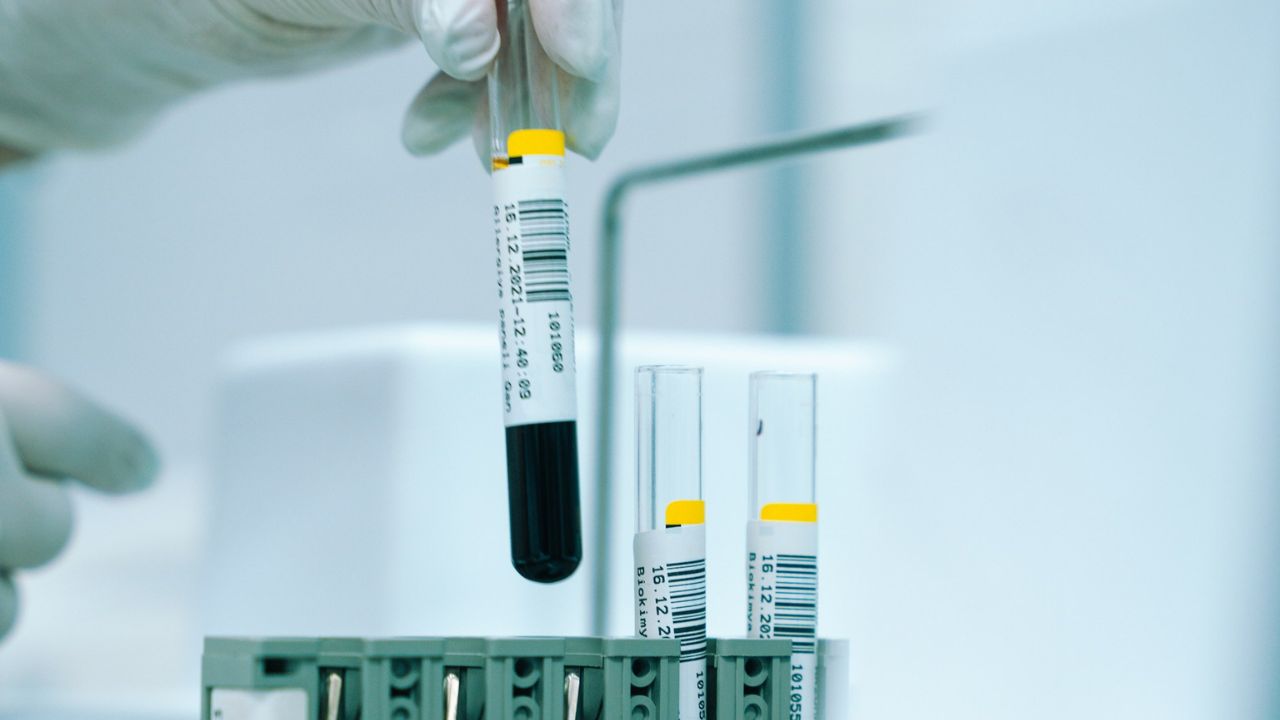
Taudia is a new diagnostics company that aims to transform Alzheimer’s disease diagnostics with a quicker and more cost-effective solution — delivering results in under four hours by using quantitative PCR machines, a technology used for measuring DNA.
“We have a new Splash technology to look at biomarker quantification. What we found still is that blood-based biomarkers are not the most accessible,” said Jason Wan, PhD, co-founder of Taudia. “We wanted to create the most accessible technology, which is using any qPCR instrument available. Our technology takes protein, turns it into DNA and then we quantify the DNA using qPCR.”
Blood tests for Alzheimer’s disease are an emerging technology and so far, Fujirebio’s Lumipulse G pTau217/β-Amyloid 1-42 Plasma Ratio test is the only one that is FDA-approved. Taudia’s technology could support clinicians and researchers as blood tests gain popularity.
“After the COVID pandemic almost every hospital, lab, or clinical setting has a qPCR instrument available so now you can already use the existing infrastructure to look at new biomarkers especially for Alzheimer’s disease and other types of dementia,” said Wan.
A way to analyze vocal biomarkers for cognitive decline
Voice biomarkers are being explored by researchers — and by tech companies — for their potential to aid in early detection of Alzheimer’s disease and even mental health conditions like depression.
AI company ki:elements, a spin-off of the German Research Center for Artificial Intelligence, is being used in global clinical trials as a vocal biomarker diagnostic tool.
“We look at 70 different speech features and determine whether or not you have cognitive impairment or cognitive decline,” said Sandya Iyer of ki:elements. “Our main product is in cognition, but we also have different products for motor [function] and respiratory as well.”
The company offers app- and phone-based tools that can be used remotely, potentially making screening far more accessible.
The company offers app- and phone-based tools that can be used remotely, potentially making screening far more accessible. “It’s a software, so it’s much cheaper, faster, and easier to do than a blood test or a PET scan or an MRI,” Iyer said.
___
From portable imaging to blood and voice biomarkers, these companies are betting that the future of brain health diagnostics will be faster, cheaper, and more widely accessible.