Living in the Now: How Anthony and Karen Sandone Navigate Young-Onset Alzheimer’s
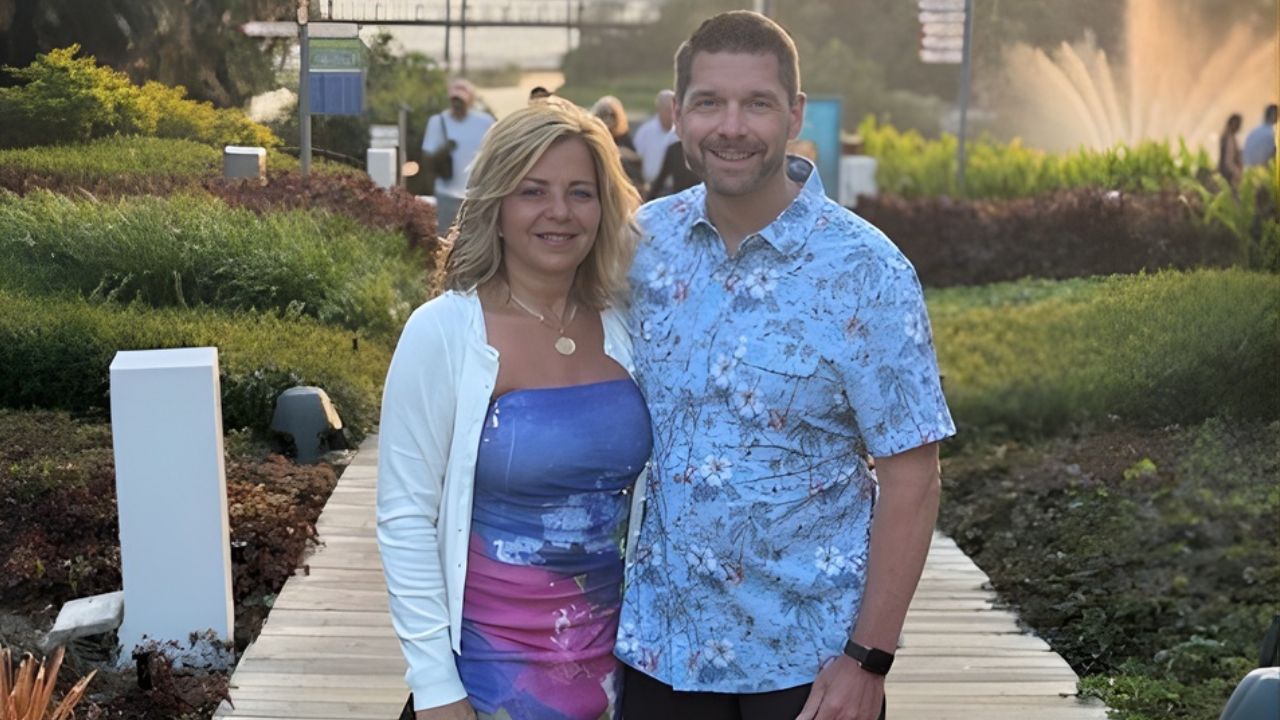
Anthony and Karen Sandone share their journey with younger-onset Alzheimer’s — from the first subtle changes during the COVID-19 pandemic to the realities of life after a diagnosis at 55.
Journey to Diagnosis is a Being Patient series sponsored by Eisai. As with all of our reporting, the sponsor has no role in choosing guests, shaping questions, or reviewing content before publication.
Before his symptoms began, Anthony and Karen Sandone were always on the move, traveling, working and staying active. A former college athlete who played football and baseball, Anthony spent more than 35 years as a chemical sales manager. Karen, a director of human resources at an education agency, now balances her professional role with caregiving. The couple documents their experiences on Anthony’s Instagram account, @anthony_vs_alzheimers, and through their younger-onset caregiver community, Surviving the Now.
In this conversation with Being Patient’s Mark Niu, Anthony and Karen talk about the early warning signs and the long, often confusing road to a younger-onset Alzheimer’s diagnosis. They discuss navigating work, pursuing treatment with Leqembi, managing seizures, and reshaping daily life around routines, travel strategies, and safety. Karen also shares candid advice on planning for the future, building a support system and finding ways to “live in the moment” and make meaningful memories, even as the disease progresses.
Being Patient: What are the first signs that something might be changing with Anthony’s memory?
Karen Sandone: The first real sign was when we were all inside for COVID in March of 2020. I was exposed to Anthony working from home. I was working from home as well as his daughter and my son. And we just noticed some concerns with technology. He was really having trouble learning some new software. And then I noticed very oddly, he would talk to clients and could not remember his sentences. He couldn’t finish his sentences. That was alarming because Anthony is a real talkative, friendly guy and always had a lot of time for conversation.
The biggest area of concern was the GPS. We were driving to the Jersey Shore and he could no longer interpret the GPS. Even though we knew where we were going, if we would take an alternate route, he couldn’t figure it out. And so that was really concerning to me. By August of 2022, I really started getting concerned and wanted to consult with the doctor.
Being Patient: Are there things you look back on now and think were earlier signs, even prior to that?
Karen Sandone: Not prior to that, but I do recall, we love traveling and we travel a lot by ourselves. We travel a lot with friends. But back in 2019, we went away with our children and my family. Anthony’s an incredible driver. I always trusted him on the road. All of a sudden, he lost control of a small boat, which was not like him. Everyone was kind of shocked by that. And we were like, what’s wrong? If I look back now, I saw some signs like that. He would forget our anniversary, and we would joke about it. I would say, ‘Oh, selective hearing, or maybe you just don’t want to remember our anniversary.’ Yes, but the true concern started in 2020.
Being Patient: When did you decide to see a doctor?
Karen Sandone: In April of 2022, Anthony went to see a general neurologist here in the area and they did an MRI, which is very standard. The MRI came back normal. And so we were like, great. We didn’t know anything about Alzheimer’s. So we just didn’t make anything of it.
Then by September of 2022, I started seeing other signs. He couldn’t remember words. He could not actually use pronouns. He started saying things and stuff and was very forgetful, which he never had that issue. So, losing keys, losing phones, opening doors and leaving them open.
In October of 2022, we went back to that doctor together. That’s when she referred us to a specialist. At that time, it took us eight months to get in to see both specialists, which is a long time. So it wasn’t until around May of 2023 that we went and then a series of tests began. MRI, EEG, PET scan, sleep apnea test, vitamin deficiency tests. All of that took about five months.
Being Patient: And that’s through a neurologist?
Karen Sandone: That was through two neurologists, yes. We wanted to get a second opinion, so I had scheduled it with two. Between the time that I’d scheduled it in October of ‘22 and the time of Anthony’s appointment, it had progressively gotten so much worse that Anthony was having performance issues at work.
In May of 2023, we realized that this had impacted Anthony’s work. And so he went out on short-term disability. I’m in HR, so I kind of knew what we needed to do. And while he was on short-term disability, we spent that time trying to get all of the tests completed so that we could get an evaluation, which we did over the summer of 2023. And the official diagnosis, which, by the way, we learned on the patient portal, not through a phone call, was on September 7 of 2023.
Being Patient: And then tell us about the diagnosis. What is the diagnosis?
Karen Sandone: Diagnosis is a younger-onset Alzheimer’s. Anthony also has a variant — it’s aphasia. It impacts his ability for speech and language and word recall. And so we noticed that was actually one of the first things that we noticed back in 2020. But of course, by that time, it was definitely a lot worse.
Being Patient: Anthony, can you describe getting that diagnosis at age 55 and your thoughts then?
Anthony Sandone: Yeah, I was devastated. I couldn’t do anything.
Karen Sandone: But we were hopeful because in July of 2023, Leqembi was approved by Medicare. That drug was supposed to slow down the progression of this disease. So we were hopeful, okay, he’s 55, let’s slow this down and then they’re gonna find a cure. Not realizing at a younger age sometimes this does go a little faster. So we got him on Leqembi right away.
Anthony Sandone: That helped.
Being Patient: Tell us about taking it in your experience. Is it difficult for you, the process?
Karen Sandone: We didn’t have any side effects. Every other week, he had to go to the neurology infusion center. It was about an hour long. We have a great support system. I work full time. So the family helped out and everyone took turns taking him.
Since then, I believe there is a new injectable medication. Anthony, I’m hoping he’s going back on Leqembi. Anthony had seizures in August of this year that has kind of stalled that process a little bit. But he had over 40 Leqembi infusions and no side effects. Maybe a headache here and there, but it was a good experience for him.
There’s so many unknowns. And so, yes, we’re hopeful. We believe that it helped. We don’t know where we would be without it. It’s hard to quantify that or evaluate it. But we were grateful that it was something Anthony was eligible for. Not everybody is eligible for these medications. And I was extremely grateful that we had that opportunity because when you get this diagnosis, you want to do everything you can to try and keep him comfortable, but also slow down the progression of the disease.
“There’s so many unknowns. And so, yes, we’re hopeful. We believe that it helped. We don’t know where we would be without it.”
Being Patient: So, taking to social media, was that a hard decision? Tell me about that.
Karen Sandone: Interestingly enough, Anthony’s children started putting it out on social media and sharing our story. And he and I were concerned. I wanted it to be private. I was still in shock. You know, you go through a series of emotions, you grieve and then we’re angry and then sadness, and then hopeful. You know, we’re going to change the world and we’re going to find a cure. And so you go through a series of those emotions.
When we started posting, the amount of people we started helping was incredible. [People] reaching out to us, asking me questions [like] “My husband just got diagnosed, what do I do?” And it just started escalating from there. We traveled to Florida in July, went on a cruise, I brought people with us because it’s really difficult, on the outside you can’t see this disability. It was really difficult for people to understand traveling now versus traveling five years ago. That video went viral, and people wanted to understand what I did so that hopefully they could consider it. That was really the start of us saying, “How can we help people?”
We also started a support group called Surviving the Now. I have three other incredible women. And all four of us have started a support group. We’ve had over 400 participants over the last two months. All of that is from social media. I met them through social media. I [was introduced to] Being Patient through social media. So it has been an incredibly rewarding honor to be in people’s lives through social media.
Being Patient: And tell us about Surviving the Now, what do you guys do exactly?
Karen Sandone: What we found when Anthony was diagnosed is that there weren’t a ton of resources out there for younger onset. The Alzheimer’s Association is great, they have resources, but we wanted a platform where we could just talk and really speak freely and openly about what we were feeling. And so these three other women and I have created Surviving the Now. We are on social media. It’s really just a platform for loved ones or caregivers who are caring for somebody with younger-onset, who need to understand and have questions.
Once a month, we have a podcast where we answer their questions. They register and we answer their questions. And then we talk to them through social media. And it has really taken off, which is another rewarding part of this. Some of these areas have helped me with my grieving and my sadness because it provides support for others.
Being Patient: And you still travel quite a bit, right? Like how often are you guys going on a trip?
Karen Sandone: Well, we just went on a trip for Thanksgiving, and luckily we went on the trip with Anthony’s children and some extended family. And it was quite difficult. It was a little bit challenging to be very honest, but I wouldn’t miss it for the world.
We just put strategies in place. Anthony wore a dementia lanyard, and although it’s out there and very noticeable, we received a lot of love. I mean, even from TSA, if you can believe it. We had a woman stop us who said, “My mother had Alzheimer’s. I can’t believe what you’re doing. This is great. Great strategy.” When we hear those things, we realize that we’re giving people options to not just stay in the house, try to figure it out. For now, live in the moment. And that’s what we’re trying to do.
“When we started posting, the amount of people we started helping was incredible.”
Being Patient: And Anthony, now you’ve experienced some important weddings with your children. Tell me about the importance of being there for those moments. And, you know, keeping your mind as sharp as possible. And those sort of memories stick in your mind, right?
Karen Sandone: Well, he did a speech for your daughter’s wedding. And that was November 22. And we wrote, we wrote it down for him. Again, it was kind of at the beginning stages. But that was helpful.
Anthony Sandone: I talked at Britney’s wedding.
Karen Sandone: And [he] did a toast when we were in Puerto Vallarta last week for Thanksgiving for the engagement. Toasted the kids. So that was really wonderful. We realized he might not need full sentences and paragraphs, but the meaning behind Anthony’s words are so incredibly powerful. And so even if it was a short and sweet toast, it came from you. And it meant a lot to his daughter.
Being Patient: We’ve got a question from a viewer, who says, does Anthony get antsy and want to go home? And how do you deal with that if so? They’re saying traveling is becoming harder for us due to that?
Karen Sandone: You know what? It’s actually the opposite. Anthony loves to travel. We’ve always traveled. And I find that he does better when we are on vacation. As a matter of fact, we used to call him Vacation Anthony because he would relax.
I will say, though, naps are important. We’re not making eight o’clock dinner reservations. We are making sure that the day is broken up and that I carry everything. I take a lot of the stress off of Anthony. When we travel, he gets antsy here at home. He’s antsy here. He wants to keep moving and doing things. So I would say it’s the opposite for us.
Being Patient: That’s interesting, because I know routine is typically something helpful for everybody, but you would think going on the road, you’re totally losing your routine. So are you finding routine in the chaos?
Karen Sandone: We definitely have routine. And yes, luckily, we have a full routine here during the week and it’s very consistent. If there’s something that comes up that’s not in the routine, like, for instance, Anthony went to get his beard done yesterday. If we do something like that, to be honest, we wait to tell him. And then about 15 minutes before we’re leaving, we’re like, “grab your coat. Let’s go. We’re going to go for a ride.” Because Anthony might think about it too much during the day. So that has worked, that strategy. We took him out to dinner last night.
Anthony Sandone: My birthday.
Karen Sandone: It was for your birthday. It was his birthday yesterday. He turned 58.
So I kind of waited to tell him, because again, you’re right about routine. There’s some obsessive compulsive concerns that go on if he knows the routine might be changed up a little bit. I never want to cause any confusion or stress for him.
Being Patient: For those couples who are just beginning this journey with early onset diagnosis, what conversations do you wish you had sooner about things like roles at home, planning for the future, or emotional support?
Karen Sandone: I will honestly say, there are many decisions that need to be made and need to be at least on the forefront of your mind as a caregiver. When will your loved one stop working? When will you apply for long-term disability? What’s going to happen if you become a single income family instead of a dual income family? Can you financially support the home that you’re in? Do you need an elder care attorney? Do you need to figure out Medicare? Because within 18 months, if you’re on long-term disability, then Medicare kicks in. What about care in the home? When will we need that? Some of those decisions cannot be made right away. But the ones that can be made, power of attorney, checking your will, making sure that you’ve taken care of a lot of the planning pieces are very important to do in the beginning.
I did a lot of research. I spoke to a ton of people. And then I met with a couple elder care attorneys. We are now at a point where caregiving and care is our topic. How are we going to support that care? How are we going to pay for that care? And if Anthony cannot be left alone, what does that look like, and it’s for his safety. I would say that’s not something you have to think about when you first get the diagnosis, but it definitely is those top 10, 12 issues or concerns that are on the list. And there’s certainly many things that need to be addressed.
Being Patient: You previously mentioned that Anthony had a seizure. What happened? Tell me about it.
Karen Sandone: In August of this year, Anthony had a seizure at home. He happened to be with his mom. His mom was here that day and it was only a three minute seizure. But they called me on FaceTime and I noticed he was totally out of it. We called 9-1-1, went to the hospital and unfortunately about an hour later he had a 30 minute seizure, a grand mal seizure, at the hospital that was really serious.
They intubated him, kept him overnight several days, and it was really serious to the point where we were not sure. The doctor said, “Karen, we don’t know how he’s coming back from this.” I had definitely seen changes, but for the most part, his personality, his sweetness, his kindness, there’s no aggression, all those things that we had before the seizures are still there. And so it’s really more a matter of doing tasks, brushing teeth, getting showered, life skills that have changed.
Being Patient: Did they say that seizure was related to his diagnosis?
Karen Sandone: Yes, and I did not know this, but we were told that in an aggressive stage of younger-onset, seizures are definitely a risk. Now he is on medication and we have been very lucky.
He takes his meds faithfully, and there is a chance that he could have another seizure but it’s very low risk, and so we can’t live in fear. We just live every day and we have strategies in place if that were to occur.
Being Patient: If I could ask you to share a final message to people who may be newly diagnosed or supporting a loved one through dementia, what would that be?
Karen Sandone: Newly diagnosed, you’re probably in shock, you’re feeling grief, get as much information as you can. Be advocates for your loved ones. Do not wait for doctor’s appointments. Do whatever you can to advocate to get those appointments in. Get Leqembi approved by your health care if your loved one is eligible. Live in the moment. Do not waste time grieving when you can meet your loved one where they are.
We still try to do a lot of fun things, it’s just an adjustment. It’s an adjustment for me, definitely an adjustment for the two of us. We may not do all the things we used to, but we still go out to dinner. I would say make memories, live in the moment, travel if you can, and educate yourself, and build a support system. Tell people what you need. That was my biggest challenge. I was trying to be Superwoman.
FAQs
People with young-onset Alzheimer’s tend to have different first symptoms than late-onset — such as worse attention, less ability to mimic hand gestures, and brain fog rather than classic memory loss — and that the brain areas targeted by chemical changes can be different, with greater damage to sensory and movement-related areas and less to the hippocampus.
Karen Sandone, whose husband was diagnosed with young-onset Alzheimer’s, had to think ahead and consider multiple decisions about when to stop working, how to manage financially with a single income, and whether to hire an elder care attorney. For daily life, the couple relies on a consistent weekly routine, and Karen waits to tell Anthony about schedule changes until 15 minutes beforehand to avoid confusion or stress.