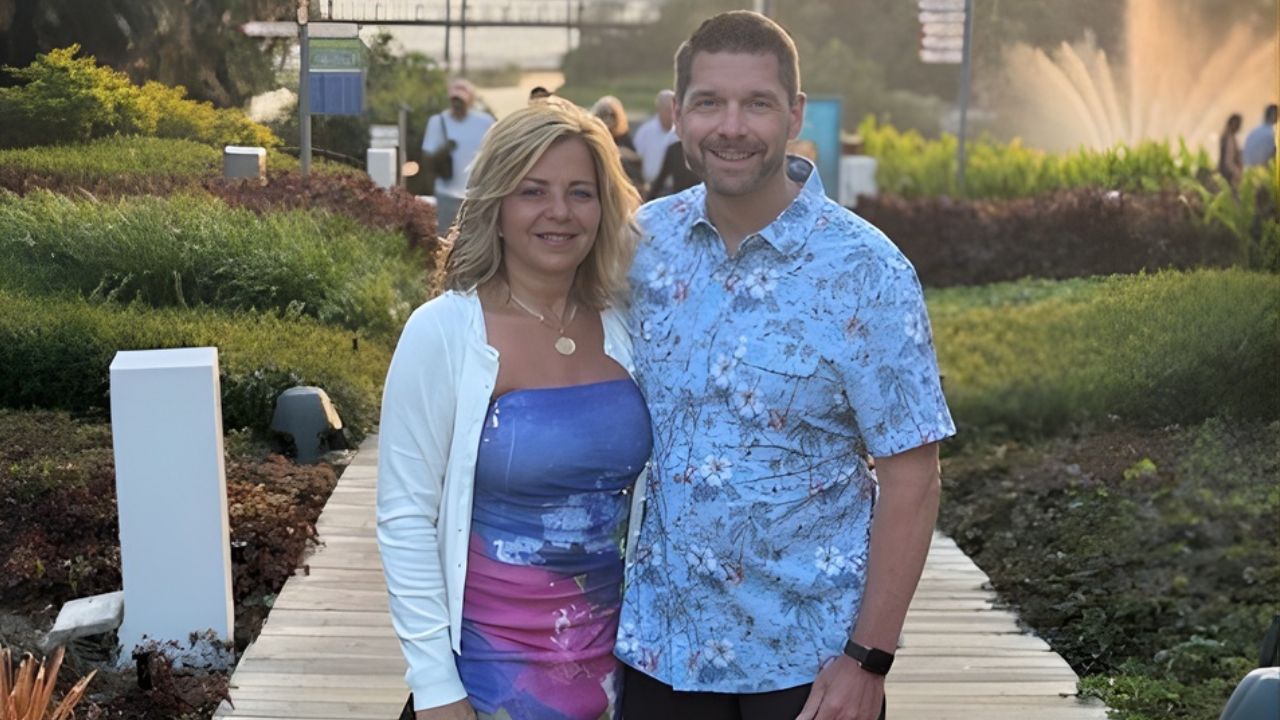
From Diagnosis to Dialogue: How Greg Nelson Found Purpose by Blogging Through Alzheimer’s

Greg and Shasta Nelson share how subtle memory changes led to an Alzheimer’s diagnosis — and how Greg has found renewed purpose by writing openly about life with the disease.
Journey to Diagnosis is a Being Patient series sponsored by Eisai. As with all of our reporting, the sponsor has no role in choosing guests, shaping questions, or reviewing content before publication.
Before his Alzheimer’s diagnosis, Greg Nelson spent his career as a leadership developer helping others grow. About a year and a half ago, his wife Shasta began to notice changes in his memory and urged him to get evaluated. They went to UC Davis’s Healthy Aging Clinic, where cognitive testing suggested mild cognitive impairment (MCI). A neurologist later ordered a PET scan and by mid-February, Greg had an official Alzheimer’s diagnosis.
For Greg, who didn’t want to retire and loved his work, this set off a shift in identity. Part of adjusting has meant finding a new voice. He now writes candidly about his experience living with Alzheimer’s — keeping a blog and sharing posts for his kids, his community, and for others going through similar challenges. Greg says that writing about his experience and connecting with others online has been a game changer, helping him find community and purpose after his diagnosis.
In this conversation with Being Patient’s Mark Niu, the couple breaks down early signs, from trouble with tracking TV plots to feeling overwhelmed by multi-step instructions. They also share what the diagnostic process can really look like: months-long waits, hours of neuropsychological testing and the importance of establishing a clear baseline. They explain why they chose to be public about Greg’s diagnosis — writing blog posts and having candid public conversations to reduce shame, invite support, and help others feel less alone as they navigate Alzheimer’s in real time.
Being Patient: Give us a brief look into your lives prior to Greg’s diagnosis.
Greg Nelson: I was a leadership development person, coach. The one thing I didn’t want to hear ever was my diagnosis, Alzheimer’s. So that shifted a whole lot. But up until then, I loved doing what I was doing. I would work with leaders and their teams. And it was wonderful.
Shasta Nelson: I travel a lot and speak and write books and work on friendship and what bonds us and the science of connection.
Greg was actually speaking full time and traveling a lot when I first talked to him and first started saying, “I think I’m noticing things,” and it was a super hard conversation to have because you just don’t want it to be true. And you don’t know what somebody is going to do. You can know somebody so well. We’ve been married over 20 years, and yet you can be like, is this going to depress him? He’s still working. Part of your brain is able to be like, “He must be okay. He’s still doing good stuff out in the world,” but I was noticing things and sat him down.
To his credit, he obviously was pained at first and asked some questions and had a little bit of defensiveness, and then to his credit, he just said, “I trust you, and if you’re noticing things, I’m going to trust that, and like, let’s go get tested.” He very willingly went, but the process is long, as many of you know, so it was unknown for a little while.
Being Patient: And how old was he at that time?
Greg Nelson: My 70th birthday was last January. That was before the diagnosis from my neurologist. So in February, he got the diagnosis, and he called me and he said, “Greg, I have this thing to tell you.” The last thing I wanted to hear, obviously.
Shasta Nelson: His dad died of dementia and his grandmothers had it. So it’s one of those things we’ve been following over the years. And one of those things that we’ve been doing everything we could preventatively.
It’s discouraging when you’re actually feeling like we’re doing the social stuff, we’re doing all the diets, we’re doing the exercise, we’re doing the walking, the good sleep, and the supplements. And you still get the diagnosis. [It was] heartbreaking.
Being Patient: What were the signs that you noticed? Did you have any blood tests beforehand to test for the genes?
Greg Nelson: Yeah, I had the blood tests.
Shasta Nelson: You didn’t have the blood tests that diagnosed. That one wasn’t offered.
Greg Nelson: I have APOE4. So that came from my dad.
It was really interesting to know that my dad died when he was 75. So I’m thinking, “Oh, man, if I could just go past that, that would sure be nice.” But who knows? But when I got that diagnosis, wow, that was a heartache.
“It’s discouraging when you’re actually feeling like we’re doing the social stuff, we’re doing all the diets, we’re doing the exercise, we’re doing the walking, the good sleep, and the supplements. And you still get the diagnosis. [It was] heartbreaking.”
Being Patient: Shasta, what signs were you noticing?
Shasta Nelson: I was noticing that he was having a hard time following the plots of television shows. I noticed that instructions felt a little bit more overwhelming to him when we were building something. Or if I was giving him too many steps to go do something, I could tell from his eyes that he got kind of lost and glazed over a tiny bit.
It’s easy to justify as the person who loves somebody to be like, “Well, I mean, TV shows are confusing these days. And he’s just tired.” And it’s so easy to kind of make explanations for so many things. There was nothing so blatant that you’re just like, “Wow, he’s got dementia.” But it was just these little things. And, you know, he has a hard time finding words. But again, that can be common with a lot of people.
I just had to kind of go with my intuition and be like, I actually don’t know if he has this, but I do sense that something has shifted. I do sense that, like, who I know him to be and his how he works is something is shifting.
For us, it was much more of like, let’s go, let’s go get help. Let’s go get a diagnosis. Let’s bring an expert in. Let’s at least start kind of getting your baseline and establish that relationship. And maybe it’s nothing, but maybe it is something. And let’s go figure that out together.
Being Patient: Greg, tell me about the process. Was it difficult to go through testing? Did it take long?
Greg Nelson: Oh, man. Yeah. UC Davis Medical has a department for aging. They had two neuropsychologists that would give me the exam. So three hours of this exam. And that was brutal. But at the end, they said, “You know what? A lot of people are feeling that way. But what we are seeing is you are starting here at MCI, mild cognitive impairment.” They don’t go farther than that. They referred me to the neurologist. And that took us five months to get to. And in January, we had the PET scan, and then they got the results in February.
Shasta Nelson: From when I talked to him in May to when we got the diagnosis, February 14, a lot of that was just getting doctor’s appointments and waiting for those appointments and getting all the different test results in.
I would say we did a lot of our anticipatory grieving along that way. It’s really hard not to go down all the roads of possibilities. We were doing a lot of grieving, a lot of processing, a lot of researching. You look back and the process felt long, but it was also very supportive and helped us do a lot of other things that prepared us for that diagnosis.
Being Patient: And your official diagnosis is?
Greg Nelson: Alzheimer’s.
Being Patient: Greg, tell me about writing about it and sharing it with others. Tell me about the first time when you decided you wanted to do it. Was there a hesitation? Tell me your thoughts when you decided to write that first post and get it out to the world?
Greg Nelson: I was so sad to stop my leadership development process. I thought, “You know what, there’s got to be something that I can do that would still give me a sense of purpose for myself.”
We got to talking, and long story, we decided that we would together do social media posts about my journey. And we’re not saying everyone else has to do what we are, because everyone has a different journey with Alzheimer’s especially.
It has been an amazing experience for people. Hundreds of people have commented. It’s been the right thing to do. And as I go along, it gets a little bit harder for me, but it takes more time for me, which is okay with me because I have that time. So that’s the idea of it.
My dad died from dementia. And I recall that he never said anything about it. He never once talked about dementia; we could see that it happened. So when I got my diagnosis and then decided to do this purpose, I said, “I’m not going to be like my dad. I want people to know. I want my family to know. I want all of that.” And so little by little, we did all of that. And it’s been really such a great reward for me.
Shasta Nelson: I remember the day when he was getting ready to go public and we were terrified in the house. There was a lot of fear, like you can’t come back from it. And, you know, just kind of being like, “Do we want this to be our whole life? Do we want everyone to know?”
But it’s been amazing to watch what has given him a sense of purpose, a sense of community, a sense of not having to hide it, not having to manage the symptoms when he’s out. He would rather talk about it with people than have it be an avoided subject. So it creates safety. People aren’t scared to talk to him about it. It’s had people reach out to him who want to express their appreciation to him. That’s been such a good gift for him.
Being Patient: There are some amazing moments that I watched on your site. One that stands out to me is you are a very good musician, which is very obvious in the video. And you started playing the piano for a group of your friends. And you had trouble finishing it. Tell me about that.
Greg Nelson: That was one of my fears playing in that concert. Will I be able to go all the way through the song? I had some music in front of me. But halfway through, my brain went flat. And so I sat there just for a moment with my hands at the piano. And then I remember saying something like, “Hey, you know what? When you have Alzheimer’s, man, you can do anything you want. So I’m going to just make this thing happen again.”
At that point, people started singing in the audience. And as soon as they started singing, everything came back to my brain again, and I got the tune and we finished this whole thing and everyone was just in tears. It was so meaningful. So in that sense, it was really useful for me.
I don’t have fear. I don’t have shame. That was a great opportunity for me to experience that. It’s like I became a child again and just lost it. But then other people helped me. Yeah, it’s beautiful. And that’s the power of being open about it, because people give you support. They see this. They see it. A part of it. And there has been so much that I’ve done with people since my Alzheimer’s, they want to be in on it.
Being Patient: And with your memory, I read that your memory is actually within the average range, but the issue is what you can retain. Shasta, you might shed some on that and how his mind is being affected.
Shasta Nelson: The neuropsychology testing was super helpful. And we’re actually going to go back in another month or two and get another one.
There’s six different main functions in the brain that they can test and to be able to say, once information gets in, if we repeat it enough, he retains it on average. What’s interesting is that the information coming in, it’s too many words and it’s so much that he hears bits and pieces but he doesn’t hear everything. So it’s hard to remember what you actually weren’t able to take in. So his ability to take in information is low and he has more challenges with expressing himself sometimes.
He’s always more nervous before interviews now than he ever used to because he used to be so good on the spot, and he still is. I think adrenaline kicks in and he still does super well, but he’s used to being a master communicator. So to not know that if you can rely on your words or to rely on finishing a thought is obviously a very intimidating experience for him to go into. His language is probably more affected than some of the other neuro functions.
I think that’s [why it’s important] to go get tested. I know a lot of people are scared to go do it and they go, “What difference will it make?” It gives us shared language. It helps us come up with management tools. It helps us realize, “Do I need to repeat myself? Do I need to talk slower?” It just helps us have conversations about recognizing exactly where he’s struggling and where he’s still absolutely ok.
“I think that’s [why it’s important] to go get tested. I know a lot of people are scared to go do it and they go, “What difference will it make?” It gives us shared language. It helps us come up with management tools.”
Being Patient: What are some pointers you can give on things you have to do differently or adjust to help him understand things or retain things?
Shasta Nelson: A lot of it is having more honest conversations about what tasks he can do and what tasks are more challenging. So we’re trying. We’re having a lot of conversations as spouses like, “I still need you to show up and call the cable company and call the phone thing if you’re capable of doing it.”
He had an experience a few weeks ago where he was halfway through a conversation with an insurance agent and he was leaving a message for them. His brain just went blank and he could not remember what he was trying to say. He was struggling and he just hung up on her. He looked at me and he was like, “Oh my goodness, I feel so dumb.” And to his credit, he picked the phone back up, dialed again, left another message and said, “I’m so sorry. I was doing too many things at once. And here’s my phone number. And here’s what I was trying to say.” And he did it again.
As a spouse, you’re walking that tightrope of when to jump in and do all the things and when to say, “I still have a very busy career, a very busy life. I need you to do as much as you can do.” But having better clarity around which of those things he can do and where I need to step in and help. But I help edit some of his posts. I help show up on things like this. I’m helping manage doctor’s appointments. So definitely a lot more compassion and a willingness to show up and be of service, knowing how much energy it takes him to do some of those things.
Being Patient: Tell us about sharing your content on social media, any stories of people you’ve connected with that have also inspired you or you’ve learned from?
Greg Nelson: Yes, that’s one thing I’ve really appreciated, all the comments that come in and a lot of people are saying, “Oh, we are thinking of you and thank you for this. And we can maybe do this with our lives, too, even though we don’t have Alzheimer’s.”
One that just has really hit me is this daughter taking care of her mother who has Alzheimer’s, and the mother said to her, “I don’t want you to tell anybody that I have Alzheimer’s.” Well, that’s a common thing that I’ve discovered. A lot of people don’t want to be heard. And what I’ve learned is the thing that people are falling to is fear, shame, and the inability to have vulnerability and honesty with others. And what happens in that kind of place is that, that person will not have the support that they could have with their friends, with other family members. If that woman doesn’t want to tell anybody anything, well, no one’s going to ask, “Can we help?”
The first thing I did when I got my diagnosis, I immediately called my adult kids. And I said, “I want to talk about what I just got from my neurologist.” So I told them I have Alzheimer’s. And you know, there [were] a lot of tears flowing down. And then they asked me the questions. And it’s been just amazing with my kids. They have shown their love for me in ways that I’d never got before. So it pays for us to at least be open enough with the people around us where they can support us and what we need.
Shasta Nelson: He loves the stories that come in from his posts where people had a conversation because of something he said, or they reached out to somebody in their life or are going to try it a little bit differently.
To be somebody who’s out in the world, having impact his whole life and speaking and coaching and training. He thought that was over. He did retire with this diagnosis. But, when he’s getting those kinds of comments, it pays for itself and what the time it takes for him to write those posts.
What a beautiful experience that a lot of people miss out on if we hide everything and pull away and withdraw and isolate. There’s a lot of love that might be missed out on that he’s gotten a lot of.
Greg Nelson: And I just say again, this is my journey. We’re not saying everyone needs to do that. But I tell you what, it sure does help.
Being Patient: If you have any advice, anything that stands out the most that might be helpful for people in a similar situation like yourself.
Greg Nelson: Yeah. It is a part of the support thing, so I just mentioned about my kids and the conversations that we’ve had. My daughter calls me once a week from her work [when she’s] going home. So we get to talk. My oldest son also does that. And my youngest son also does that. And then I have two best friends. And those guys, every week we talk together on the phone. So it’s that kind of thing that I really think sort of holds me up and gives me more confidence.
Shasta Nelson: I feel like one of the unexpected beauties of this journey has been … I would say this is one of our most intimate years. We’ve always had a very vulnerable, transparent, loving marriage and our marriage is built on communication, which just makes it feel so tragic to think about losing that piece of that in the way that we’ve known it. But we’re taking advantage of it [as much as] we can.
I’m so grateful to him for just being willing to be an open book and willing to process it and to say all the ugly thoughts and the fears and also to find how he can stay hopeful. To have those conversations about how hard it is to come to acceptance. We’ve done the journey. And in many ways, my respect for him has only gone up this year. My love for him has only gone deeper. And that’s because he’s let me in. And that’s because I feel like it’s us doing this together.
What he’s doing publicly is a glimpse of what he’s doing privately, which is, for me, the more meaningful part of it. But we are going to lose each other. And everybody is at some point, so to savor it and get as much as we can right now and to communicate. One of the things he’s doing is reading through a book about caregiving with me right now and it’s hard.
It’s hard for him to think about what I’m gonna be going through and the people he loves, and yet he has said, “You know what, when that time comes I won’t be able to thank you. I won’t know what it is you’re doing for me. It’s really important to me that right now I’m with you and on the journey with you.” As a spouse, I just have to say, what a beautiful, beautiful gift that down the road, I will never wonder what he was thinking or feeling, he’s giving me that gift now. The transparency that’s available through something like this is really beautiful.