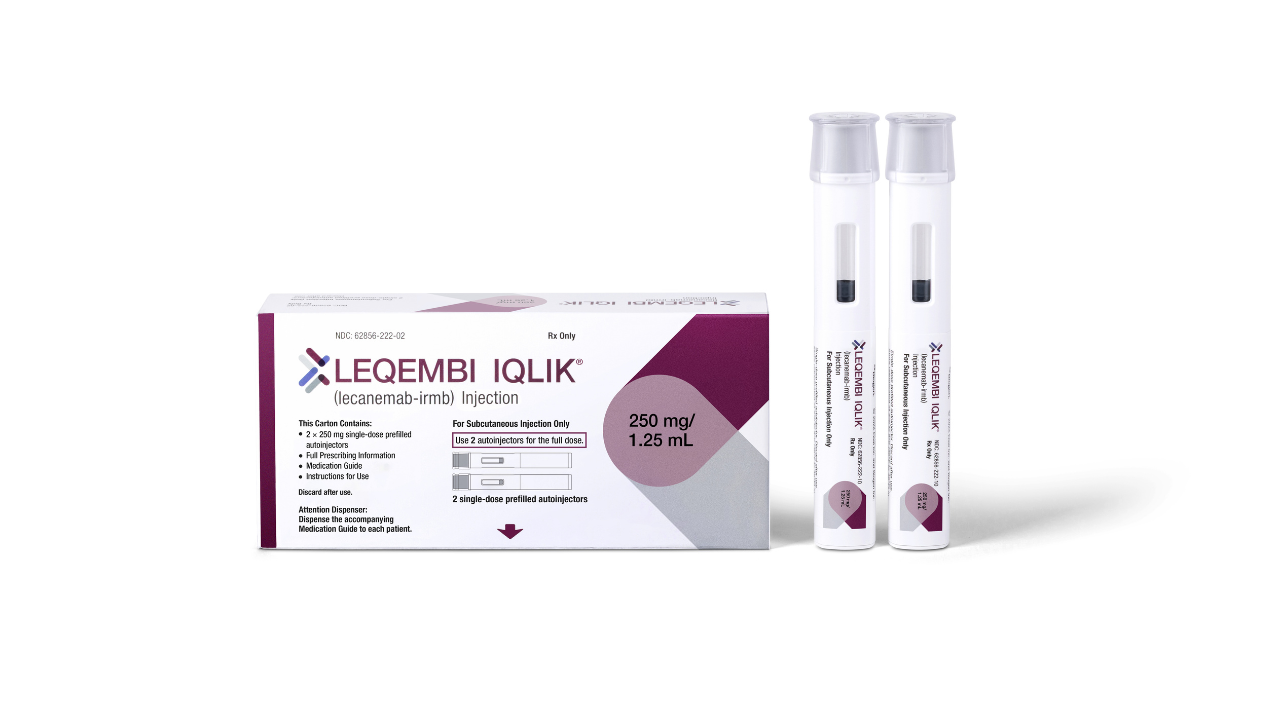
Alzheimer’s Drug Leqembi Approved in Canada

Alzheimer’s anti-amyloid drug Leqembi will soon be available in Canada, but it isn’t clear whether it will be covered by public health insurance.
On October 25th, more than two years after filing their application, Biogen and Eisai’s anti-amyloid drug Leqembi received conditional approval in Canada for treating early-stage Alzheimer’s.
As in the EU, UK, and Australia, only patients who do not carry two copies of the Alzheimer’s risk gene ApoE4 will be eligible for drug. Those with two copies have an increased risk of amyloid-related imaging abnormalities (ARIA), side effects that include brain swelling and bleeding. Regulators in other countries raised concerns that the risks of the drug might outweigh its small-to-modest benefit in slowing cognitive decline.
The conditions of Leqembi’s approval requires drugmakers to collect more data to confirm its benefits. Canada’s drug regulatory body, Health Canada, did not respond to a request for comment, and the phone number provided to inquire about drug approvals was not in service.
“This goes along with Health Canada being fairly risk-averse,” Dr. Sharon Cohen, the medical director of the Toronto Memory Program, who was involved in Eisai’s trials, told Being Patient. “Hopefully, we’ll be able to expand the indication with more real-world data.”
With the addition of approval inn Canada, Leqembi is now greenlit for use in 51 countries and regions. Cohen estimates that more than 35,000 patients are taking Leqembi around the world.
When will Leqembi be available in Canada?
Although the drug is now approved in Canada, it isn’t yet available. “The drug will be shipped and available for use within a few weeks,” said Cohen. However, it is unclear whether private insurers will cover the cost — approximately $26,500 per year.
Patients relying on public insurance will be waiting longer. Canada’s Drug Agency will recommend whether to cover the drug early next year, according to Cohen. Then, it’s up to individual provinces and territories to decide whether to cover the drug.
According to the Alzheimer’s Society of Canada, this process could take more than two years.
Patients could also face steep costs for confirming an Alzheimer’s diagnosis through biomarker testing, which is required to take the drug. Tests that detect beta-amyloid plaques in the brain — amyloid PET scans, cerebrospinal fluid tests, and blood tests — aren’t covered across the country. Cohen said that blood tests could speed up the process and cut costs.
Dr. Howard Chertkow, a neurologist and senior scientist at Baycrest and scientific director of the Canadian Consortium on Neurodegeneration in Aging told Being Patient that the delay to get care will be significant, with year-long wait times in his memory clinic.
Accessing MRI scans to monitor patients for side effects like ARIA, poses additional problems for patients. A study by the Canadian Association of Radiologists found rising MRI wait times and shortages of the machines and staff across the country. Chertkow said it could take up to nine months to receive an MRI
When will regulators decide on Kisunla?
Canadian regulators are still evaluating Eli Lilly’s anti-amyloid drug Kisunla. It is unclear when they will make their decision, especially given Leqembi’s review took more than twice as long as the agency’s target timeline.
“It speaks to Health Canada having insufficient resources and not enough expertise in this therapeutic area,” said Cohen. “Two years is very long, and they acknowledge that this is an area of serious unmet need, so you would think that would light a fire under them.”
Now that Leqembi, a first-of-its-class drug, is approved, Cohen said she is hopeful that regulators can make their decision on Kisunla sooner.
UPDATE NOV 5 12:55 ET: Added comments on approval from Dr. Howard Chertkow.