New Once-Daily Parkinson’s Drug Tavapadon Nears FDA Decision
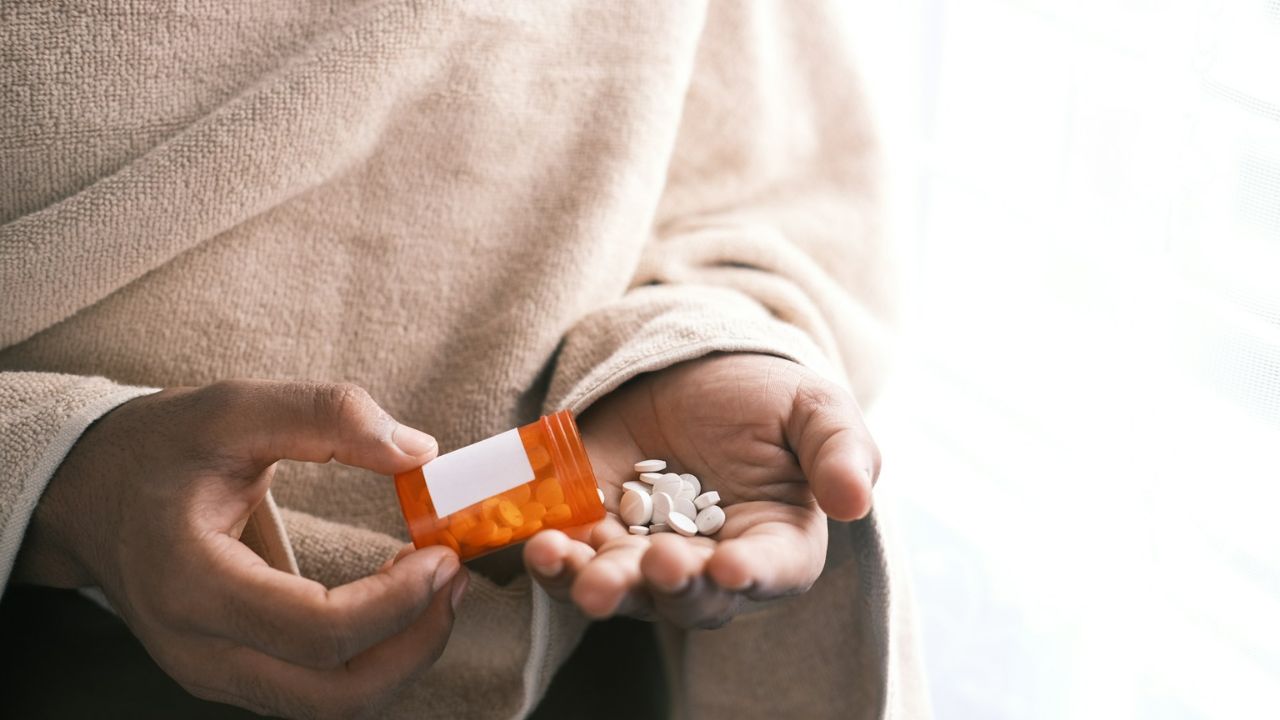
AbbVie’s experimental dopamine agonist may ease symptoms with fewer side effects, offering a potential alternative to existing treatments.
More than one million people in the U.S. are living with Parkinson’s, the second most common neurodegenerative disease after Alzheimer’s. The disease progressively kills off brain cells that release the neurotransmitter dopamine, causing symptoms like tremors, rigidity, slow movements, and posture problems that may progress to dementia.
There are several medications for Parkinson’s called dopamine agonists that help early on in the disease or as an add-on with other treatments. But they come with severe side effects like impulse control disorder, which leads to gambling and other disruptive behaviors.
AbbVie’s new experimental dopamine agonist tavapadon, which is up for FDA approval in the coming months, may offer the same symptomatic benefits as its predecessors with fewer unwanted side effects.
“Our hope that there would be less side effects from tavapadon seems to be validated,” Cleveland Clinic neurologist Dr. Hubert Fernandez, who served as a global principal investigator on two of tavapadon’s trials, told Being Patient.
What makes tavapadon different from other Parkinson’s drugs?
In healthy brains, dopamine is an important regulator of movement, thinking, and other processes. Dopamine agonists — like Mirapex, Apokyn, and Neuropro — mimic the effects of dopamine by activating D2 and D3 receptor proteins to help with motor symptoms.
In the early stages of Parkinson’s, they’re prescribed as a stand-alone treatment, and in later stages as an add-on for another medication called levodopa. Once it reaches the brain, it’s converted to dopamine. For many people, the effects wear off between doses, leading to symptom fluctuations called “on/off periods.” Dopamine agonists can prolong the effects of the medication.
“Twenty-five years ago, dopamine agonists were thought to revolutionize the treatment of Parkinson’s disease,” Dr. Michele Tagliati, a neurologist and director of the Movement Disorders Program at Cedars-Sinai Medical Center, told Being Patient. The center is one of the study sites for tavapadon.
Activating D2 and D3 receptors compensates for dopamine loss in the brain but leads to broad, unwanted side effects, including visual hallucinations, low blood pressure, and involuntary erratic movements called dyskinesia.
But the most substantial side effect was impulse control disorder, which affected up to one in six patients, leading to problematic behaviors like gambling. These side effects, said Tagliati, lead to a reduction in dopamine agonist use.
AbbVie developed tavapadon to provide the same benefits with fewer side effects. It does that by targeting different proteins called D1 and D5 receptors. Unlike most other dopamine agonists, which need to be taken three times daily, tavapadon is a once-a-day medication.
“Tavapadon’s main advantage will be much better tolerability,” Dr. Bryan Ho, neurologist and director of the Movement Disorders Program at Tufts Medical Center, told Being Patient.
How well does tavapadon work?
AbbVie conducted three Phase 3 placebo-controlled randomized trials of more than 500 participants each with mild to moderate Parkinson’s symptoms, each lasting 26 weeks.
The first and second trials focused on people newly diagnosed with early Parkinson’s. Researchers used a scale called the Movement Disorder Society-Unified Parkinson’s Disease Rating Scale Part 2 and Part 3, a 184-point measure where higher scores mean more motor symptoms and difficulty with daily activities.
In the first trial, participants taking the placebo increased by 1.8 points on the scale, while the drug led to a 9.7 point decrease at low doses and a 10.2-point decrease at high doses. In the second trial, the placebo group declined by 1.2 points, while the treatment group declined by 10.3 points. These changes, said Fernandez, are noticeable and meaningful for patients.
In both studies, most of the side effects were mild, including nausea, headaches, and dizziness with lower rates of psychiatric side effects. Tagliati cautioned that more long-term data is needed to confirm the side effect profile since impulse control disorder appeared as people used previous dopamine agonists for longer. An open-label trial following people taking the drug for over a year is being conducted by AbbVie.
The third trial tested tavapadon as an add-on treatment to levodopa in people with late-stage Parkinson’s. Compared to those receiving a placebo as an add-on, the tavapadon group led to an increase of 1.1 hours of “on time” where the drug worked with minimal side effects, and a decrease in “off time” by 0.94 hours.
As an add-on, “the results were good,” said Tagliati, “but they were not amazing.” Since people often take levodopa four times a day, that amounts to an extra 15 minutes per dose.
“Tavapodon in the early Parkinson patient was substantially more impressive than its effect on the later stages as an add-on therapy to levodopa,” said Fernandez.
Who might tavapadon work best for?
Tavapadon may help manage the symptoms of Parkinson’s and won’t stop the disease process. Since it has not been directly tested against other dopamine agonists, it’s hard to say whether the effects are better, but Ho said they seem comparable.
Because of the favorable side effect profile and the convenience of only needing to take it once per day, “it would be very difficult for us to justify the use of older generation dopamine agonists,” said Fernandes. The only potential barrier he foresees is price and Medicare coverage.
Ho thinks it may be advantageous in older patients who may be more vulnerable to the side effects of other dopamine agonists. “It’s not a huge game-changer, but definitely a nice additional tool to have,” said Ho.
AbbVie filed for FDA approval in 2025, and the agency will decide on the drug within the first half of 2026.