VOICES: My Son Knew Before I Did: Learning Self-Compassion After My Husband’s Alzheimer’s Diagnosis
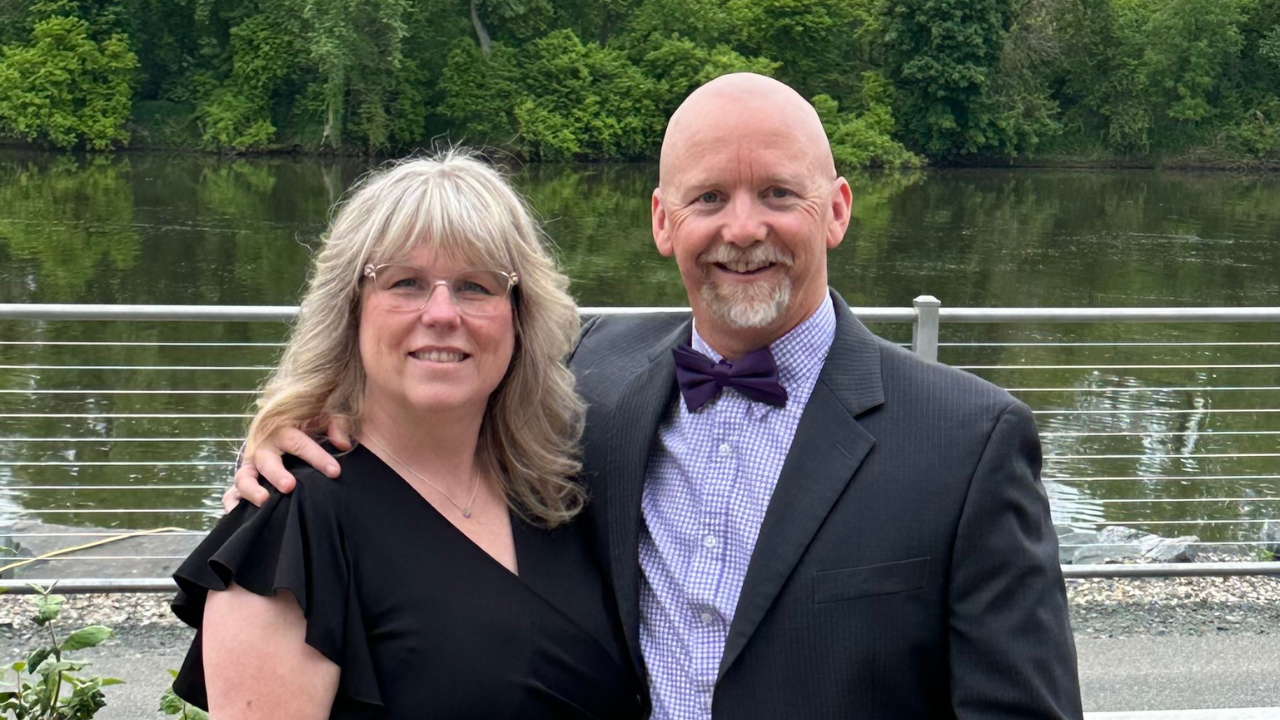
Cheri Davies writes about how her son opened her eyes to what younger-onset Alzheimer's is and how it has shaped her caregiving journey.
Cheri Davies is a contributing author of The Grief Experience: Tools for Acceptance, Resilience and Connection and the cofounder of Surviving the Now, a multimedia platform for spouses dealing with younger-onset Alzheimer’s.
“Mom, I learned about Alzheimer’s at school today. Here’s a pamphlet, I think Dad has Alzheimer’s.”
This is what my son Aidan, a junior in high school in 2017, said to me on a sunny spring afternoon. I wish I could tell you that I immediately believed him and we set the wheels in motion to getting my husband Chris diagnosed. But that’s not what happened. I dismissed his concern and moved on with my day.
As I look back now, I couldn’t fathom that my very outgoing, smart and capable husband, who was 49, had younger-onset Alzheimer’s. I didn’t even know that younger-onset Alzheimer’s was something that could happen.
My grandmother had Alzheimer’s 20 years earlier and that was all I knew about the disease. It was something people got in their 70s and 80s, not their 40s. So, I assumed he was having a mid-life crisis, or was stressed out at his job, but never once did I think Aidan was right and Chris was struggling with the early signs of Alzheimer’s.
Fast forward a year and a half later, our very good friend Gene pulled me aside at camp and said, “I think there is something wrong with Chris. He keeps telling me the same thing over and over again. It’s not like him.”
Quiet voices started to fill my head that I needed to pay attention. This was now another sign that something was wrong. By the end of the summer of 2018, I was able to see those signs too and went with him to see his primary doctor for his yearly physical.
On Oct. 12, 2018, I sat in on Chris’ physical and discovered that even he thought something was wrong. He had been having conversations with his doctor over the last year about having some memory issues. He noticed small things like losing his keys, not remembering he put cream in his coffee, and not knowing where I was going after I told him the information.
I actually thought maybe he had suffered a stroke or had a brain tumor. I was in denial of what I think I already knew. But 10 minutes later the world collapsed around me when he had to draw a clock with the time of 10 after 11. I saw him struggle to draw what wasn’t a circle but an egg shape, with numbers so crunched together inside the center that you couldn’t read them, and no ability to figure out where the hands should be drawn. I felt the panic rise inside my body, and I had to consciously adjust my breathing because that clock confirmed all our worst fears.
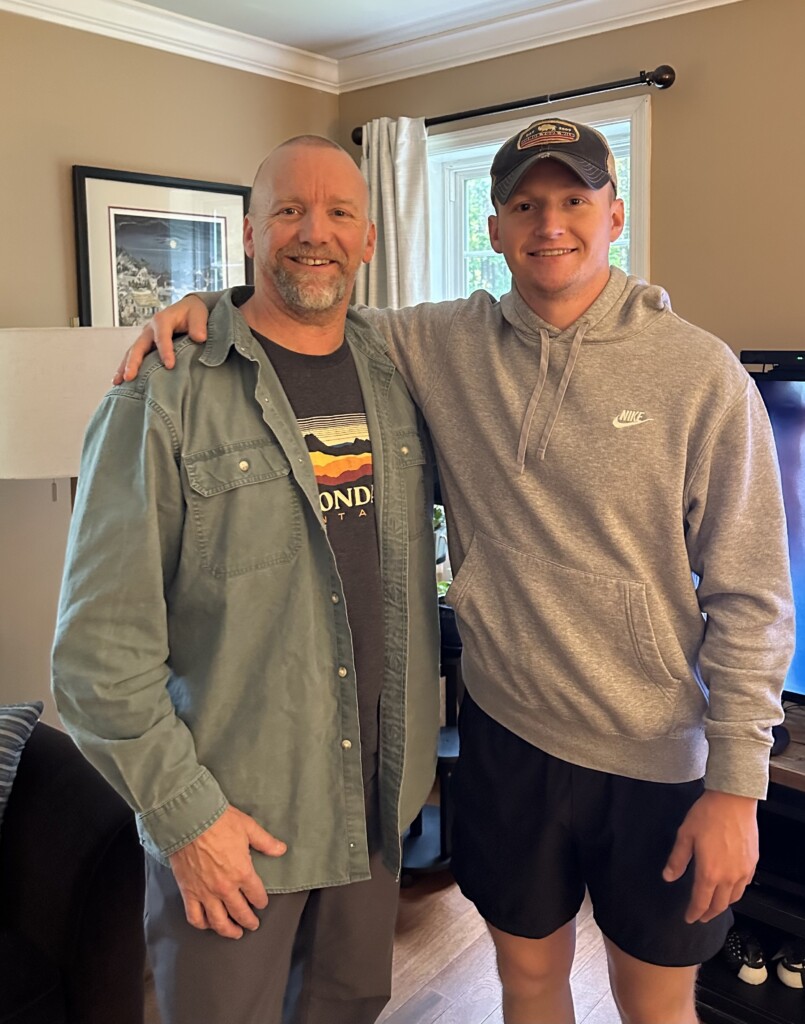
It would be another eight months and multiple tests to determine that Chris had the early stages of younger-onset Alzheimer’s. By the time our new neurologist said the words out loud, I had already known that’s what we were facing. Aidan told us back in 2017.
I recently asked Aidan why he thought his dad had Alzheimer’s after that presentation. He said simply, “I knew Dad would never be a bad parent.” My heart broke into a thousand pieces that I hadn’t asked that one simple question the day he said something. It wouldn’t have changed the diagnosis, but it would have changed how soon he could start medication. I could have been more patient knowing he was sick, and it may have helped Chris to feel less frustrated because he would have known what was happening to him. He wouldn’t have had to feel like he had to hide what was happening because it was all so confusing at age 49.
As I recount our story, I know now that the way this happened is fairly typical for people dealing with younger-onset. It looks like marital or family problems. It looks like disinterest in your partner or your children. It looks like the person with the disease is making choices that are damaging relationships. None of that is true. But at 49, I was unable to see that.
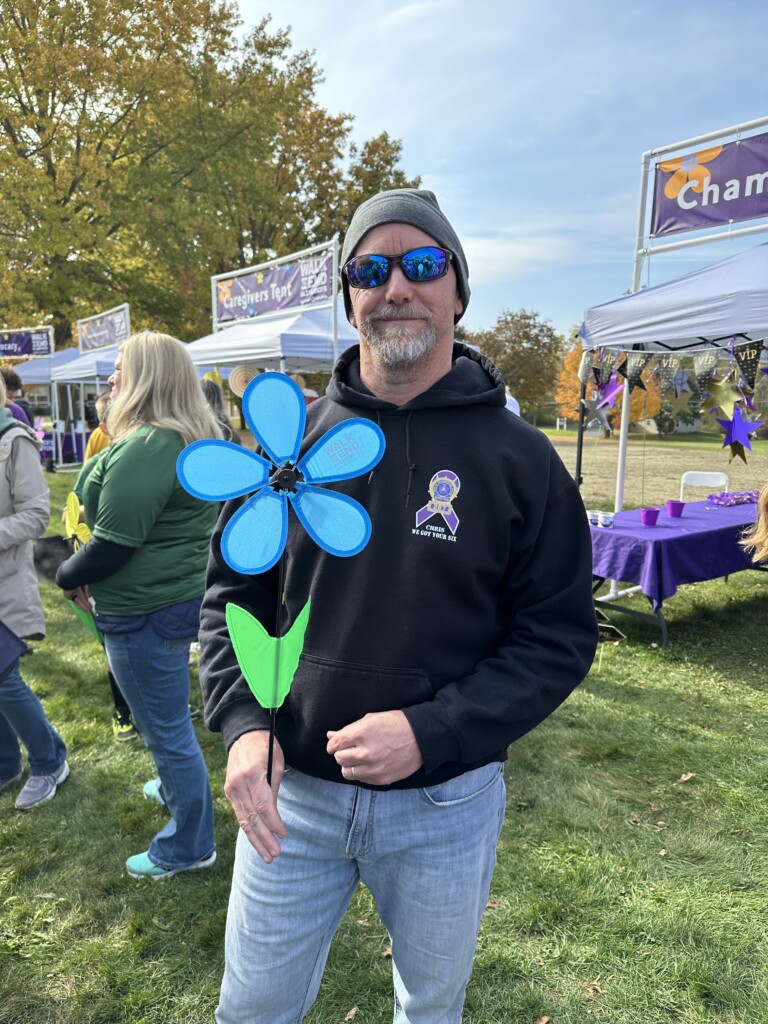
That’s where self-compassion has replaced the internal monologue that tells me I should have listened more or paid more attention. It was not an easy lesson. I spent the early years of my husband’s diagnosis trying to make up for not listening to Aidan and feeling like I had been insensitive to my family. It was a time of self-criticism that served no one.
After finding a group of women who were going through younger-onset Alzheimer’s with their husbands, I recognized that the imperfect way I am moving through this journey isn’t unusual. I have worked hard to practice mindfulness, self-kindness and vulnerability. As a caregiver, self-compassion is practice.
There are days that I can acknowledge things that I have done well or managed successfully. When mistakes are made, however, I find it more difficult to be kind to myself. This is why it’s an ongoing practice. To help move myself into a more positive mindset I ask myself, “Would I ever speak this way to my friends?” and if the answer is no, I tell myself what I would tell a friend.
This simple shift in the internal monologue, along with other small self-care practices, has helped me to move through my daily life a little easier. In a time when grief is all encompassing, I find that adjusting how I talk to myself changes how I can get through the days that become increasingly harder as time goes on.