VOICES: Dementia Didn’t End My Life — It Changed It
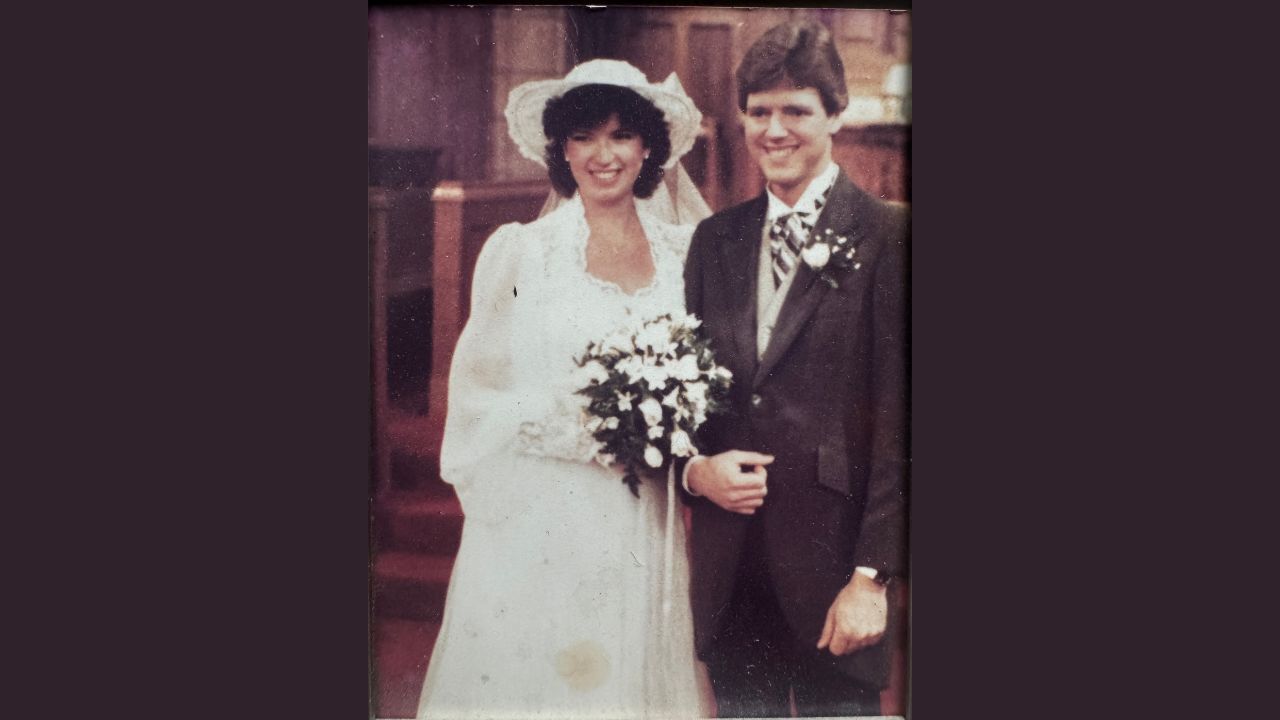
Diane Chew writes about her husband's Lewy Body dementia diagnosis and the strategies she uses to cope with their changing relationship.
Diane Chew is a certified life coach, writer, and community builder who cares for her husband Ben at home, following his diagnosis of Lewy Body dementia. She is the creator of the JoyQuest Support Circle, designed to help caregivers move from survival to stability to peace, and even moments of joy. She can be found at www.dementiacoachdiane.com and on social media as Dementia Coach Diane.
The first time my husband Ben looked at me and said, “You can leave and go home now,” my heart dropped into my shoes.
We were standing in our own home. He was calm, certain — and completely convinced I did not belong there. I didn’t yet understand what was happening, but I could feel the ground beneath my life begin to shift. There was no reasoning with him, no explaining, no reassuring. The more frightened he became, the more insistent he was that I was an imposter.
At the time, I had no language for what I was witnessing. I would later learn that this kind of misidentification—sometimes referred to as “imposter syndrome”—can occur in Lewy body dementia. But in those early days, all I knew was that the man I had known since I was 18 no longer recognized me as his wife, and that something fundamental had changed.
As these episodes escalated, Ben became increasingly aggressive. Eventually, the only way to keep both of us safe was for me to leave. I began staying in hotels whenever he became triggered, not knowing when — or if — this would end. I was terrified, disoriented, and utterly alone.
By the time Ben received an official diagnosis nearly a year later, I already knew that life as I understood it was over. I could not keep living the way I was living, being forced out of my own home in the name of safety. Eventually, I had to call the police. We ended up in the hospital, where his condition was finally named. But the diagnosis brought no relief; it only confirmed what I already knew.
What followed felt even more destabilizing. His symptoms progressed rapidly, and the man who had been my partner, my decision-maker, and my steady presence was disappearing. I was grieving the retirement I thought we would share and terrified of a future that felt unsafe and unrecognizable. I didn’t yet have language for trauma, but I was living inside it.
What made that period especially difficult was something I didn’t fully understand at the time: I had spent most of my life avoiding big emotions.
Like many people of my generation, I was conditioned early on to suppress feelings that were uncomfortable or inconvenient — fear, grief, anger, anxiety. As the family breadwinner in a demanding corporate career, I coped by staying busy and seeking relief through activity, achievement, and intensity. Some of those outlets were healthy; others were less so. But the pattern was the same: I escaped discomfort by staying in motion.

Caregiving took that option away.
There was no longer anywhere to run. No amount of busyness could distract me from what was happening in front of me or what was rising inside my own body. For nearly two years, I had lived in survival mode. But fear, grief, anger, and despair were no longer emotions I could manage or avoid. I had to feel them — all of them.
And that, unexpectedly, began to change everything.
In the midst of that darkness, I began to sense a quiet nudge from God — not to fix the situation, but to share it. The idea felt absurd. I knew nothing about social media and, if I’m honest, I carried some judgment about it. I didn’t feel qualified to offer anything when I could barely hold myself together.
But eventually, I did it anyway.
I muddled my way through my first post with no plan, no strategy, and no idea what I was doing — either as a caregiver or online. I shared from where I actually was: confused, grieving, frightened, and searching for meaning.
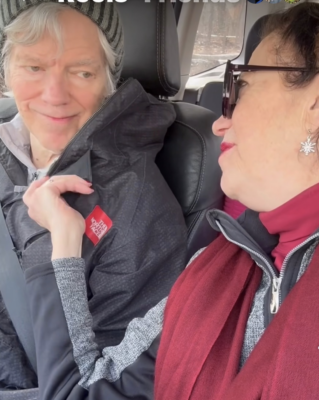
And within three months, something remarkable happened. A community formed around that honesty. Other caregivers began sharing their stories. We exchanged practical wisdom, encouragement, grief, faith, humor, and hard-earned insight. In a season when I had felt profoundly alone, connection emerged organically.
That was the moment I realized something essential: even when caregiving circumstances don’t change, our relationship to them can.
Caregiving did not become easier. Dementia did not slow down. Loss continued to unfold. But my inner experience shifted. I began to understand that much of my suffering came not just from what was happening, but from the tension created by resisting what I felt. Holding back emotion kept my body locked in stress.
As I allowed myself to feel fully, something softened. Fear did not destroy me. Grief did not break me open beyond repair. Anger, acknowledged and released, did not define me. Over time, I stopped hiding my emotions and began letting them move through my body in real, physical ways. Now, when grief or sadness rises, I allow myself to cry — and I no longer hide it from Ben. It has deepened our connection; he will often pat my back or pull me into a hug.
When anger shows up, I don’t direct it at anyone, I let it out somatically — smashing ice cubes on the driveway or screaming into a pillow. When anxiety or fear takes hold, I use grounding practices like tapping and deep breathing to bring myself back to the present moment, instead of letting my thoughts spiral into a future that hasn’t happened and may never happen. Allowing emotions to move rather than be suppressed has created space for clarity, steadiness, and peace.
What I wish I had known earlier is that trying to manage or suppress big emotions only intensified my stress. Resisting fear, grief, or anger kept my body locked in survival mode. Allowing myself to feel fully — without fixing, judging, or escaping — became the doorway from survival to stability, and eventually to peace.
At some point, caregiving also forced me to release every expectation I had of Ben — not just as a partner or spouse, but as a man, and eventually even as an adult. I didn’t let go willingly; the disease demanded it. But in the absence of expectations, something unexpected appeared. Because I was no longer spending so much energy resisting painful emotions, there was room for other feelings to surface as well.
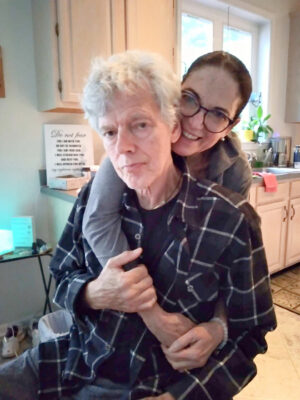
I still didn’t like the uncomfortable emotions, but when I allowed them to move through me instead of pushing them away, they made space for small sparks of joy in ordinary moments — and for something much larger. One day, as I watched Ben sleep, I felt a powerful surge move through my body. At first, I didn’t recognize it. Then I realized it was unconditional love — unattached to roles, reciprocity, or outcome. Love without demand. That experience felt like a gift from Ben, and from God, beyond anything I could measure or explain.
This willingness to feel everything — both the painful and the beautiful — and to allow life to be as it is, became the foundation of what I now call the JoyQuest Journey.
The JoyQuest is not about pretending caregiving is joyful or bypassing pain. It’s about learning how to be present with life exactly as it is and trusting that there is something larger than our thoughts and feelings holding us through it. I call that something God. Instead of praying for circumstances to change, I now pray for “the highest and best for all concerned,” trusting that even outcomes I wouldn’t choose might still carry growth, meaning, or grace.
Through that trust, I learned to move from survival to stability, from stability to peace, and to touch joy again — not as a permanent state, but as something I could return to, even in the midst of the most challenging experience of my life.
Caregiving, unexpectedly, became expansive. It expanded my emotional range, my faith, and my capacity for compassion — for Ben, for others, and for myself. It invited me into a life I never would have chosen, but one that has deepened my understanding of presence, surrender, and love.
Most days, I still don’t feel like I know what I’m doing. Dementia remains unpredictable. Caregiving remains demanding. But I no longer see uncertainty as failure. I see it as an invitation to trust more deeply and allow life to unfold without constant resistance.
Caregiving did not take my life away. It gave me a new one — one I never would have imagined, but one that has expanded my heart, my faith, and my capacity to live fully.
And for that, I am profoundly grateful.