
Alzheimer’s Clinical Trials: A 2026 Guide to the Drugs, Devices, and Studies in Development
January – May 2026
2026 Alzheimer’s Trials Update: What’s New Right Now
The quarter delivered three trials worth watching — Roche’s trontinemab cleared beta-amyloid plaques, a key early hallmark of Alzheimer’s disease; in 92 percent of high-dose participants in a Phase 1/2 trial, Lexeo Therapeutics reported that gene therapy LX1001 appeared to stabilize cognitive decline over three years in a small group of APOE4 carriers, the strongest known genetic risk factor for late-onset Alzheimer’s; and Leqembi was approved in Canada.
This quarter also saw a failure when Novo Nordisk’s semaglutide, the GLP-1 better known as Wegovy and Ozempic, did not slow cognitive decline in two Phase 3 trials of more than 3,000 people with early Alzheimer’s.
As of May 2026, 83 late-stage Alzheimer’s trials are actively recruiting participants. Below is what changed this quarter, plus what to watch for throughout the rest of the year.
83
Late-stage trials recruiting
2
Anti-amyloid antibodies FDA-approved (Leqembi, Kisunla)
0
New FDA Approvals
What changed this quarter
What changed in Alzheimer’s trials, January–April 2026
2026 trials to watch
These trials are set to report data from Phase 3 trials later this year.
AriBio’s AR1001 pill for early- to moderate-stage Alzheimer’s
Bristol Myers Squibb’s KarXT for agitation and psychosis

Cognito Therapeutics’ Spectris headset to slow cognitive decline



Being Patient’s Trials Tracker
Being Patient maintains an independent, regularly updated tracker of every late-stage Alzheimer’s clinical trial currently recruiting in the United States and worldwide. As of May 2026, 83 late-stage trials are actively enrolling participants across anti-amyloid, anti-tau, gene therapy, small molecule, GLP-1, and device categories.
The Tracker is built and maintained by Being Patient’s editorial team and is updated each quarter. It is editorially independent and not sponsored by any pharmaceutical company.
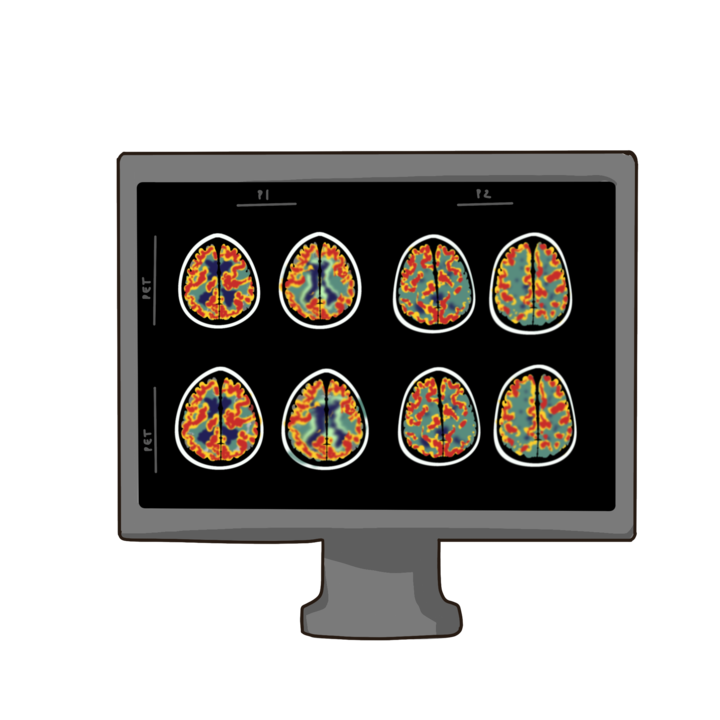


What symptoms are drugs targeting?
Treatments
Small-Molecule Drugs in Late-Stage Alzheimer’s Trials
Drug maker: AriBio
Latest trial phase: Ongoing Phase 3 trial
Next steps: Finish trial in 2026
New updates: Yes
Originally developed to address erectile dysfunction, AR1001 is now being tested to treat early Alzheimer’s in a 1,535-person Phase 3 trial. At the AD/PD 2026 conference, the company announced that about one-third of participants had completed the trial so far. Final results are expected this year.
Drug maker: Anavex Life Sciences
Latest trial phase: Completed Phase 2/3 trial
Next steps: Committee voted against recommending approval in Europe
New updates: Yes
Blarcamesine is a small molecule drug that turns on a protein called the sigma-1 receptor in brain cells, which triggers a process called autophagy. Autophagy helps brain cells clear out brain build-ups of amyloid, tau, and other junk. Late last year, European regulators voted against approving the drug in Europe and Anavex has since withdrawn its application for approval. It has not filed for approval with the FDA. READ MORE.
Next steps: More studies
New updates: Yes
A clinical trial testing low-dose lithium for mild cognitive impairment failed to slow or treat cognitive symptoms. The research comes months after a Harvard researcher provided evidence that lithium deficiency may be a driver of Alzheimer’s.
More studies of lithium at different doses and formulations, in a population of those with mild cognitive impairment caused by Alzheimer’s, are underway.
Latest trial phase: Shown safe and well-tolerated in Phase 2
Next steps: Unclear
New updates: No
LM11A-31 stimulates nerve growth and activates processes that prevent cell death. In an early Phase 2 trial in people with mild-to-moderate Alzheimer’s published last year, the drug appeared to reduce tau biomarkers but did not improve cognitive symptoms.
New data presented at the AD/PD conference showed that the drug shifted the protein profile in the cerebrospinal fluid, reflective of a neuroprotective effect. Larger confirmatory trials are being planned for this drug.
Drug maker: Priavoid
Latest trial phase: Phase 2
Next steps: Completing Phase 2 trial this year
New updates: Yes
PRI-002 is a pill that chops up plaques into smaller pieces of beta-amyloid. At AD/PD, researchers presented preliminary results from an ongoing Phase 2 trial of 304 people with early Alzheimer’s, finding no risk of ARIA, brain swelling and microhemorrhages that are a common side effect of other anti-amyloid antibodies.
Drug maker: Novo Nordisk
Latest trial phase: Failed Phase 3 trial
Next steps: Analyzing data
New updates: Yes
Across electronic health records, people taking GLP-1 agonists, a class of diabetes and weight loss drugs, had a lower risk of Parkinson’s, Alzheimer’s and other forms of dementia. These findings convinced Novo Nordisk to test their GLP-1 drug, semaglutide, for early Alzheimer’s.
Across two Phase 3 trials of more than 3,000 participants, semaglutide failed to slow cognitive decline. At AD/PD 2026, the company presented an analysis of participants’ subgroups showing there was no benefit of the treatment regardless of sex, age, race, body mass index, and type 2 diabetes status.
Latest trial phase: Phase 3
Next steps: Initiating two Phase 3 trials
New updates: No
Zervimesine is a small molecule drug that helps clear toxic beta-amyloid proteins from the brain. At CTAD, its drugmaker Cognition Therapeutics announced plans to launch two six-month Phase 3 trials in mild-to-moderate Alzheimer’s. The company hasn’t finalized the design of the trials or started recruiting yet.
Anti-Amyloid, Anti-Tau, and Other Antibody Drugs in Trials
Drug maker: AbbVie and Alector
Latest trial phase: Completed Phase 2
Next steps: Discontinued
New updates: Yes
AL002 is an antibody that binds and activates a protein called TREM2 on the brain’s immune cells, the microglia. The company published the results of its Phase 2 trial which showed that the drug did not slow cognitive decline and increased the frequency of amyloid-related imaging abnormalities (ARIA), side effects including swelling and micro-hemorrhages. Due to the results, drugmakers stopped a long-term extension, which would have tracked how people fared on the drug for a longer period of time.
Latest trial phase: Phase 2 and 3
Next steps: Completion of trials in late 2026/2027
New updates: No
Etalanetug is an anti-tau antibody. In a small early-stage trial of seven people with a genetic form of Alzheimer’s disease, the drug stopped more tau from forming and lowered the levels of tau biomarkers in the cerebrospinal fluid and blood. The drug is also being tested alongside anti-amyloid drug Leqembi across two different trials. READ MORE.
Drug maker: Eisai and Biogen
Latest trial phase: Approved by the FDA
Next steps: Ongoing studies to assess long-term impact
New updates: Yes
The drug was also approved in Canada though it might not be covered by public health insurance. Eisai also filed an application with the FDA for an under-the-skin or subcutaneous version of the drug as an alternative to an intravenous infusion. The company is currently awaiting a decision, which will likely come in the next few months.
Latest trial phase: Completed Phase 1/2 trial
Next steps: The company is planning a Phase 3 trial
New updates: No
Roche’s anti-amyloid drug trontinemab “tricks” the blood-brain barrier to get into the brain more easily. As a result, it is administered at lower doses and clears beta-amyloid plaques faster.
At CTAD, the company presented promising data from its 149-person phase 1/2 trial. The high dose of the drug cleared out most beta-amyloid plaques in 92 percent of the participants. The overall rates of ARIA are substantially lower than with Leqembi and Kisunla. Roche has started recruiting for two large Phase 3 trials across 18 countries, testing trontinemab in MCI and early Alzheimer’s, later this year.
Roche is also planning a future trial of trontinemab to see if it could prevent Alzheimer’s in people without symptoms. READ MORE.
Latest trial phase: Phase 2 trial
Next steps: Trial completing in 2028
New updates: No
VHB937 is an antibody drug that targets the brain’s immune cells, the microglia. It binds to a protein on the surface of these cells called TREM2, priming the microglia to protect against inflammation and clear out beta-amyloid plaques. Results for the 760-person trial are expected in 2028.
Drug maker: INmune Bio
Latest trial phase: Completed Phase 2 trial
Next steps: Designing a Phase 2b/3 trial
New updates: Yes
INmune Bio’s drug XPro1595 works differently from other biologics developed for Alzheimer’s. Rather than targeting beta-amyloid or tau directly, it neutralizes a pro-inflammatory protein called TNF. In a 200-person Phase 2 trial of Alzheimer’s, the drug failed to slow cognitive decline in early Alzheimer’s. However, a subgroup of participants who had beta-amyloid plaques as well as high levels of inflammation may benefit. After speaking with the FDA, the company is planning its Phase 2b/3 trial.
Gene Therapy for Alzheimer’s
Drug maker: Lexeo Therapeutics
Latest trial phase: Completed Phase 1/2 trial
Next steps: Phase 2 and 3 Trials
New updates: Yes
LX1001 is a gene therapy that involves inserting a protective gene, ApoE2, into the brain cells of people who carry two copies of the Alzheimer’s risk gene ApoE4.
At the AD/PD 2026 conference, researchers showed that the treatment was safe in 15 participants and that it raised the levels of ApoE2. Preliminary data from some of the participants that were followed for three years showed that their cognitive decline had stabilized.
Drugs Being Tested for Alzheimer’s Cognitive Symptoms
Latest trial phase: Four Phase 3 trials
Next steps: Completion of the first Phase 3 trial next year
New updates: No
Last year, KarXT, became the first new drug approved for treating schizophrenia in the US since the 1950s. The drug activates the same pathways in the brain as the neurochemical acetylcholine, which is crucial for memory and cognition. Since the brain isn’t producing enough acetylcholine in Alzheimer’s, drugmakers speculate that KarXT could help it compensate. Drugmakers are testing it across four phase 3 trials to assess its effects on agitation, psychosis and cognitive symptoms. Trials will finish between 2026 to 2028.
Drug maker: NSC-Therapeutics
Latest trial phase: Phase 1/2 trial
Next steps: Completing trial
New updates: Yes
NSC001 is an oral pill designed to activate the same pathways in the brain as the neurochemical acetylcholine, which is crucial for memory and cognition. At AD/PD, researchers shared details about the Phase 2 part of its trial in mild to moderate Alzheimer’s, which looks to find the ideal dose for the drug.
Drug maker: Neurim Pharmaceuticals Ltd
Latest trial phase: Completed Phase 2/3 trial
Next steps: Presenting data
New updates: No
Originally developed for sleep disorders, piromelatine may offer cognitive benefits to certain people with mild Alzheimer’s. Results from Neurim Pharmaceuticals’ Phase 2/3 trial which was completed earlier this year have not been presented by the company.
Latest trial phase: Phase 3 trial ongoing
Next steps: Results expected in 2026
New updates: No
An ongoing 348-person trial in Italy is exploring whether combining rotigotine (a Parkinson’s drug that affects the levels of a brain signaling molecule called dopamine) with an already-approved cholinesterase drug can improve cognition in people with mild to moderate Alzheimer’s. The trial is expected to finish next year.
Drugs Being Tested for Alzheimer’s Agitation and Psychosis
Drug maker: IGC Pharma
Latest trial phase: Ongoing Phase 2 trial
Next steps: Completion of Phase 2 trial
New updates: No
In a 164-person Phase 2 trial, this oral, cannabinoid-based agitation drug showed slight improvements at six weeks, but more research is needed to determine efficacy. The company has recruited 70 percent of participants for the trial. It is set to conclude in 2026.
Medical Devices in Alzheimer’s Trials
Device maker: Cognito Therapeutics
Latest trial phase: Ongoing Phase 3 trial
Next steps: Completion of Phase 3 trial in 2026
New updates: Yes
Last year, Cognito announced that its brain-stimulating light-and-sound headset, Spectris, showed lasting effects on brain volume and daily functioning in a preliminary study.
At AD/PD, the company presented data from the Phase 2 trial showing that the device led to a shift in brain wave activity, as measured by EEG, and that this shift in brain waves was correlated with reduced functional decline and brain atrophy.
Safety and efficacy results from its 670-person Phase 3 trial are expected by mid-2026. The company raised another $105 million to help support its submission to regulators and commercialization.
Interactive learning guide: Is an Alzheimer’s Clinical Trial Right for You?
Clinical trials are vital for testing the safety and effectiveness of dementia treatments. Too often, trial participant populations don’t reflect the communities most impacted by dementia. This guide explains the basics of enrolling in clinical trials.
Click on our interactive guide below to learn more about clinical trials
FAQs about Alzheimer’s clinical trials
No. In 2026, Novo Nordisk reported that two Phase 3 trials of semaglutide, the GLP-1 drug behind Ozempic and Wegovy, failed to slow cognitive decline in early Alzheimer’s across more than 3,0000 participants. At the ADPD 2026 conference, data presented showed no benefit to clinical trial participants.
ARIA stands for amyloid-related imaging abnormalities. ARIA-E refers to brain swelling and ARIA-H refers to small bleeds or microhemorages visible on MRI. ARIA is a potential side effect of monoclonal antibody drugs, like Leqembi and Kisunla. Most cases of ARIA are mild, but in rare cases ARIA can be life-threatening. People who carry two copies of the genetic variant ApoE4 are at greater risk of developing ARIA while receiving monoclonal antibody drugs.
The length of a trial typically depends on the phase. Phase 1 trials can last for a few months. Phase 2 trials typically run SIX to 18 months. Phase 3 trials usually run for 18 months to FOUR years. Some prevention trials, which enroll people without symptoms, run FOUR years or longer.
Three major late-stage readouts are expected in 2026: AriBio’s AR1001 (a small-molecule drug originally developed for erectile dysfunction, now in a 1,535-person Phase 3 trial), Bristol Myers Squibb’s KarXT (a schizophrenia drug being tested for agitation, psychosis, and cognitive symptoms in Alzheimer’s), and Cognito Therapeutics’ Spectris headset (a 670-person Phase 3 trial of a brain-stimulating light-and-sound device).
As of May 2026, 83 late-stage Alzheimer’s clinical trials are actively recruiting participants. They span anti-amyloid antibodies, anti-tau antibodies, gene therapies, small molecule drugs, GLP-1s, and brain-stimulation devices.
Not in the most recent trial. A clinical trial testing low-dose lithium in mild cognitive impairment did not slow or treat cognitive symptoms. The result followed Harvard research suggesting lithium deficiency may be a driver of Alzheimer’s disease. More trials, using different doses and formulations and focused on people with MCI specifically caused by Alzheimer’s, are underway.
