Could Alzheimer’s Drugs Work Better in Pairs? A New Approach for ‘Mabs’

Researchers are borrowing from cancer and HIV treatment strategies to see if pairing drugs could make Alzheimer’s monoclonal antibodies more effective.
For diseases like HIV, tuberculosis, and cancer, doctors often use a multi-drug approach. A mix of medications that attack the disease in different ways can be more effective than a single therapy. Alzheimer’s researchers are beginning to explore whether the same strategy could work for brain health.
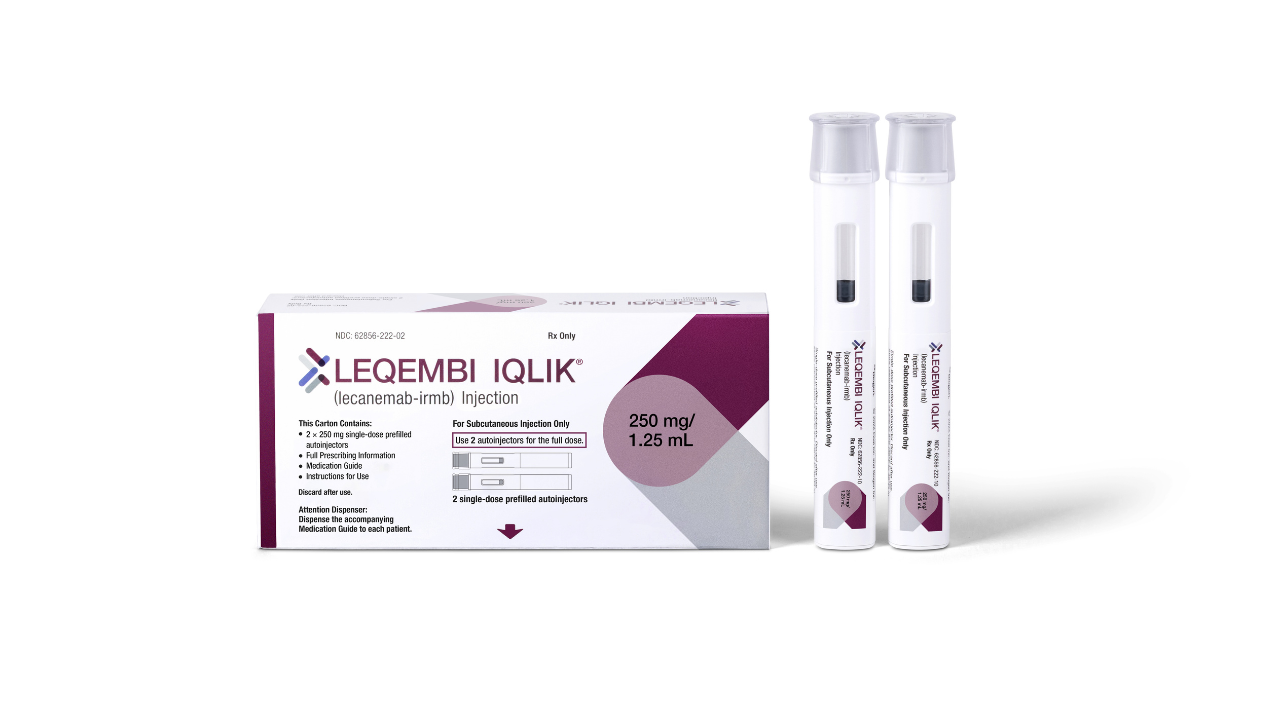
Today, two monoclonal antibody drugs for Alzheimer’s disease — Eisai’s Leqembi and Eli Lilly’s Kisunla — are FDA-approved to modestly slow cognitive decline in early Alzheimer’s by clearing away toxic beta-amyloid plaques. But beta-amyloid is only part of the story. Its buildup sparks tau tangles inside neurons, which are closely tied to memory loss and thinking problems.
So far, experimental drugs targeting tau haven’t succeeded on their own. Now, scientists are asking: What happens if you pair these drugs with other treatments that target different aspects of the disease? Could the benefits be stronger?
Are two Alzheimer’s drugs better than one?
Beta-amyloid isn’t the only protein that breaks bad in Alzheimer’s. Its buildup sets off a chain reaction that leads to tau tangles forming inside neurons — tangles that are closely linked to memory loss and thinking problems. So far, experimental tau antibodies haven’t succeeded in clinical trials.
But if beta-amyloid is the fuel for the tau fire, then you might need to get rid of the fuel before putting out the flames.
“If you take away the amyloid, maybe that will allow the tau drug to work better,” Dr. Robert Alexander, chief scientific officer at the Banner Alzheimer’s Institute, told Being Patient.
That’s the rationale behind two clinical trials now underway, which combine Leqembi with Eisai’s experimental anti-tau drug etalanetug. (Alexander is not involved in either study.)
The first, a phase 2 trial, includes 105 people in the early stages of Alzheimer’s. Everyone receives weekly under-the-skin injections of Leqembi, and participants are randomly assigned to one of five groups receiving different monthly doses of etalanetug or a placebo. Over 18 months, researchers will measure whether the combination lowers tau levels in cerebrospinal fluid. They’ll also collect early data on cognition, though a larger phase 3 trial would be needed to know for sure whether the treatment slows symptoms. Results from this phase 2 trial are expected by the end of the year.
A second trial is testing whether the combination approach can prevent or delay Alzheimer’s in people with rare genetic mutations that almost always cause the disease. This study, run by the Dominantly Inherited Alzheimer Network at Washington University School of Medicine, has enrolled 197 participants.
For people who already show symptoms, the DIAN trial starts with six months of biweekly Leqembi infusions, followed by four years of etalanetug or placebo. For those who are not yet symptomatic, the order is reversed: They start with a year of etalanetug or placebo, then add Leqembi for the next four years. Researchers will measure whether the dual-drug approach reduces tau biomarkers more effectively than either treatment alone, and whether this translates to cognitive benefits. Results aren’t expected until 2028.
A dual-drug approach for reducing amyloid
Alexander is part of a research team testing another kind of combination therapy: combining anti-amyloid mabs with drugs that affect how beta-amyloid is made.
The drug they’re testing is Roche’s experimental pill RG6289, a type of drug called a gamma secretase modulator. It latches onto gamma secretase, the protein that makes beta-amyloid, and helps it work more efficiently. The idea isn’t to stop beta-amyloid production wholesale but reduce the chances that the proteins will stick to each other.
“That’s thought to be very helpful in preventing plaque formation,” said Alexander.
Their upcoming trial will test a combination of Kisunla and RG6289 people with a rare genetic mutation that almost always causes early-onset Alzheimer’s. The study will recruit 240 people, including some who are still healthy and others in the early stages of the disease. All participants will receive Kisunla, but the timing of RG6289 will vary.
Some will take Kisunla first, for up to 18 months to clear out plaques, before being randomized to placebo or RG6289. If beta-amyloid is cleared out faster, then participants will advance to the next stage of the trial sooner. Others will receive the placebo or RG6289 before getting Kisunla. Altogether, participants will stay on the drugs for 27 months. The study is set to start next year, and results won’t be available until 2030.
The road ahead
Combination approaches in Alzheimer’s draw on lessons from other diseases, but because Alzheimer’s develops slowly, it takes years to see whether they work.
“The problem is, Alzheimer’s is a very slow, evolving illness,” Alexander said. “It takes a really long time to observe whether your drug is working when you treat very early.”
Still, scientists see combination therapies as the next step in making today’s Alzheimer’s drugs more effective. If they succeed, these strategies could extend benefits to more patients and reshape the way the disease is treated.
Combination trials pairing Leqembi with an anti-tau drug
E2814 + Leqembi trial (Eisai)
- Trial phase: Phase 2
- Number of participants: 105 people with early Alzheimer’s
- Treatment: Weekly Leqembi injections + monthly etalanetug or placebo
- Duration: 18 months
- Main outcomes being measured: Tau levels in spinal fluid, early cognitive measures
- Results expected: End of 2025
DIAN trial (Washington University)
- Trial phase: Phase 2/3
- Number of participants: 197 carriers of rare Alzheimer’s-causing mutations
- Treatment: Sequence of Leqembi and etalanetug varies depending on symptoms
- Duration: Up to 4 years
- Main outcomes being measured: Tau biomarkers, cognition
- Results expected: 2028
Combination trials pairing Kisunla with a drug that slows amyloid production
Kisunla + RG6289 trial (Roche/Eli Lilly)
- Trial phase: Phase 2
- Number of participants: 240 carriers of rare early-onset Alzheimer’s mutations
- Treatment: Everyone receives Kisunla; RG6289 or placebo given at different stages
- Duration: 27 months
- Main outcomes being measured: Plaque reduction, cognition
- Results expected: ~2030