A Case for Learning Your Alzheimer’s Risk While Still Healthy

As many as half of cognitively healthy people want to know their risk of Alzheimer’s. But today, even the most accurate blood test can’t foretell your future risk.
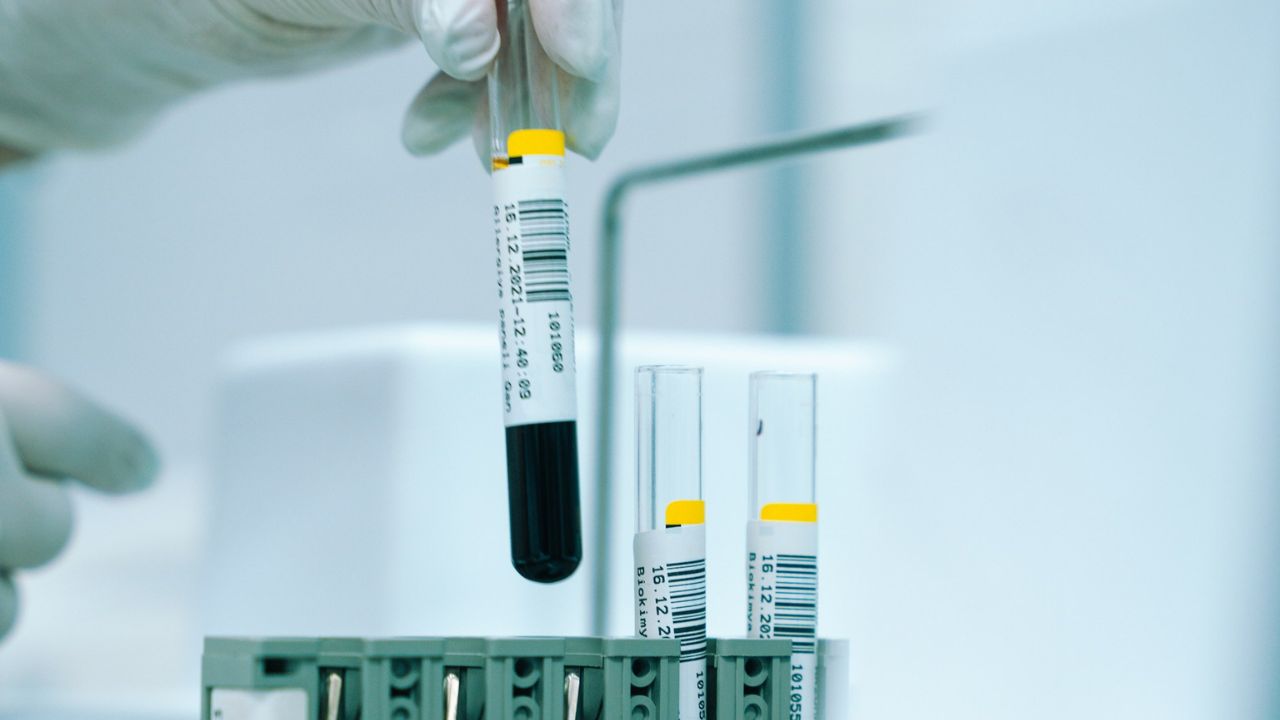
Multiple blood tests that detect biomarkers of Alzheimer’s, including one that’s cleared by the FDA, are on the market. Even though the tests aren’t designed to predict which healthy people will develop Alzheimer’s, people are curious about their risk.
In the Alzheimer’s Association’s recent survey of a diverse sample of 1,702 Americans, half would want to take a test that measured Alzheimer’s biomarkers while they were still healthy. But this is a hypothetical situation — if a doctor gave them a chance to see their results, would they take it?
Washington University, St. Louis researchers put people’s desire to know their Alzheimer’s risk to the test, publishing their results in JAMA Network Open. They asked 274 cognitively healthy people who signed on to a brain aging study, at the start, if they’d like to know whether they had Alzheimer’s biomarkers. A significant majority — 81 percent — said yes.
At the end of the study, which was funded by multiple grants from the National Institutes of Health, researchers offered to show them the results of their blood test and amyloid PET scan. And by this point, a quarter of those people had changed their minds: With the information now readily available, only 60 percent said yes.
“What our study shows is a kind of psychological phenomenon,” said Jessica Mozersky, an assistant professor at the Washington University School of Medicine, St. Louis, who led the study. “It’s very hard for us to predict what we would really want until we’re in that situation.”
Though the numbers roughly match the Alzheimer’s Association survey, Mozersky cautioned that her study’s results may not reflect most Americans’ attitudes.
“They’re a little different than the general population,” she said. “They’re already enrolled in research, they already have a strong interest in Alzheimer’s disease, and they’ve undergone a lot of tests and never historically learned those results.”
The researchers also counselled the participants about the pros and cons of receiving their test results to make sure they could make an informed decision.
Some of the reasons participants declined to know included:
- worrying that they would become a burden to their family
- negative experiences or perceptions of Alzheimer’s disease
- they feel they don’t have any memory problems right now
- they’re already prepared for the disease
- uncertainty over risk predictions
- lack of preventative treatments for people who are at risk.
To learn or not to learn (Alzheimer’s risk), that is the question
Sterling Johnson, a professor at the University of Wisconsin-Madison, commented on Alzforum that some people may change their minds about knowing whether they’re at risk of the disease, because they’ve seen family members progress and decline.
“If any of the ongoing prevention trials with amyloid removal therapy are successful, then I suspect we will see a rather large uptick in willingness to know one’s amyloid status,” he wrote.
Being Patient also conducted a survey in 2024 to understand attitudes behind genetic testing and risk factors for Alzheimer’s disease. Many people choose to test whether or not they carry the ApoE4 gene which puts them at an increased lifetime risk of developing the disease.
Of 419 survey respondents to the question on the importance of genetic testing, 59 percent thought genetic testing was very important, and 27 percent felt it was somewhat important in primary care for assessing a person’s Alzheimer’s risk. We also asked how respondents felt about the information they’ve received about genetic testing specifically. Over 80 percent of respondents did not feel there was enough education publicly available about these tests, and 80 percent felt their primary care doctor didn’t have enough knowledge to explain it to them.
The message is clear: Most people want to know more about their Alzheimer’s risk. But how meaningful are the results?
Is asymptomatic testing useful?
Right now, experts generally tend to agree that testing for Alzheimer’s biomarkers is not recommended for people who have no symptoms. Even though some of the Alzheimer’s biomarker blood tests are highly accurate, studies show that using them to test large populations of healthy people will lead to many false positives.
A study published in March tested how well six different blood biomarkers predicted Alzheimer’s disease in a population of 2,148 healthy old adults in Sweden. Over the course of 10 years, over 90 percent of the people who tested negative never developed Alzheimer’s or dementia. But only 43 percent of people who received a positive test result developed Alzheimer’s.
Nicholas Villain, associate professor at Sorbonne University, told Being Patient that “most asymptomatic individuals with positive biomarkers will never develop symptoms in their lifetime.”
Mozersky and Villain both said there might be a disconnect: People think these tests tell whether they’ll get Alzheimer’s disease when, in actuality, they’re measuring the levels of biomarkers, and scientists still aren’t sure what these biomarkers mean for healthy people. This misperception that these blood tests provide some certainty may be driving some of the desire to know one’s risk.
While experts agree asymptomatic testing isn’t needed at the moment — and could lead to undue stress and unnecessary treatment for people who receive false positives — experts say there are other predictors of Alzheimer’s that are more actionable and that do work to reduce a person’s risk, regardless of their genetics. These science-backed modifiable risk factors include:
- physically inactive lifestyle
- smoking
- drinking excessive amounts of alcohol
- loneliness and social isolation
- obesity
- high blood pressure
- diabetes
- high cholesterol
- untreated vision loss
- hearing impairment.
“This should be part of general risk screening,” said Villain of this list of factors. He is one researcher who has made the case that assessing these factors regularly in cognitively healthy people at risk of the disease can help with prevention.