When Insurance Refused to Cover His Alzheimer’s Treatment, He Found Another Way

Like many people with early-onset Alzheimer’s, IRONMAN athlete Dan Jaworski struggled to get insurance coverage for Kisunla. Then he joined a clinical trial.
When Dan Jaworski was being diagnosed with early-onset Alzheimer’s disease in 2019 at age 54, his doctor advised him to get started on his bucket list. Since then, he’s competed in IRONMAN events, including at Kona, and intends to continue competing as long as he is able.
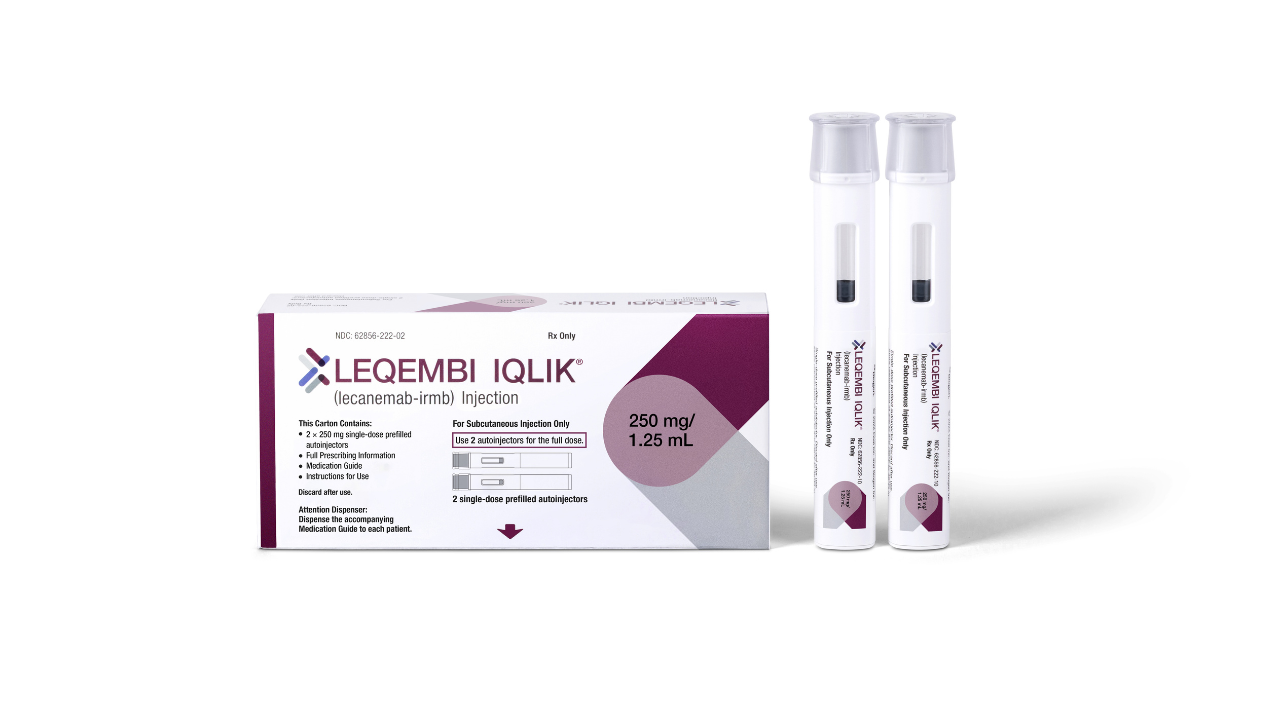
To give himself more time, he decided to take one of the two FDA-approved anti-amyloid drugs, Kisunla. He chose Kisunla over the other drug, Leqembi, because of the dosing frequency. (Kisunla is administered via infusion every four weeks, whereas, for the first year and a half, Leqembi requires more frequent dosing — every two weeks.) This offers more flexibility for Jaworski, who wants to travel to spend time with his family and compete in IRONMAN competitions. However, since Jaworski is under 65, he doesn’t qualify for Medicare, which covers the drug as well as the associated amyloid PET brain scans.
Like many others with early-onset Alzheimer’s, Jaworski had to rely on private insurers. His insurer, Florida Blue, denied him coverage of Kisunla. His healthcare team was going back and forth with the insurer for almost a year to try and change their decision.
“It was very disappointing,” Jaworski told Being Patient. He ultimately gained access to the drug through a clinical trial. “I got lucky that I found the trial.”
Insurance barriers to treatment
The anti-amyloid drugs Leqembi and Kisunla are FDA-approved, but they can cost more than $25,000 per year and their benefits are modest. They also carry a small risk of serious side effects called amyloid-imaging related abnormalities (ARIA) — brain swelling and bleeding. Real-world data have shown that the drug is well managed with the help of neurologists and other specialists.
Still, these shortcomings are used as justification by some private insurers to refuse coverage. Others might deny initial claims but may reconsider upon appeal.
“The irony here is that they want to save money,” Dr. Tara Carlisle, neurologist and assistant professor at the University of Colorado School of Medicine, told Being Patient. “By denying it to a lot of people and asking you to do extra assessments that are unneeded or unnecessary, it takes up more time and money.”
Many insurers also deny coverage for amyloid PET scans, which are used to make the Alzheimer’s diagnosis and track treatment progress. Carlisle explained that some insurers have a policy to only pay for these scans to distinguish Alzheimer’s from other dementias — something the scans don’t actually do. For Kisunla, these scans are also necessary to know when plaques are cleared enough for patients to stop therapy. Even though all the plaques are cleared, it doesn’t cure the disease altogether; it just slows progression.
The other problem: Private insurers might only approve treatment for six months or a year. Kisunla is prescribed for a maximum of 1.5 years, and people taking Leqembi will need to use it indefinitely.
“I’ve had cases where someone’s been on an anti-amyloid therapy for an entire year,” said Carlisle. “When I tried to resubmit for [insurance] authorization, the company claimed that I didn’t document that the patient was stabilized or improving.” Anti-amyloid drugs don’t stabilize or improve cognition. They slow cognitive decline.
How Jaworski navigated insurance barriers
It took weeks for Jaworski’s insurer, Florida Blue, to respond to his doctors. The insurer denied the claim, writing that the drug was not “medically necessary.”
Insurance denials are exceedingly common. With early-onset Alzheimer’s patients, these delays may make it harder for people to receive the drug while they’re still able to. Across Eli Lilly’s studies, patients who started the drug earlier in the course of their disease benefited the most. But if Alzheimer’s advances too far, patients miss out on the window to potentially benefit from the drug.
“The problem is you have a time frame where you’re able to take the drug, and then you’ll age out,” said Jaworski. “If the insurance company keeps [delaying and denying], they can wait you out.”
He said that he had noticed some changes in the time that had elapsed since he first started trying to access Kisunla.
“If you give me multiple dates, it’s really hard to keep them in my head so I need to have it written down,” he said. Despite trying to keep Alzheimer’s at bay with exercise and a Mediterranean diet, Jaworski explained that finally getting on the drug was “critical.”
After months of appeals, Jaworski was able to find a trial that offered him the drug for free.
Access through clinical trials
Kisunla’s drugmaker, Eli Lilly, is running additional studies to learn more about the drug’s safety and optimal dosing. Jaworski qualified for a Kisunla trial at the K2 Research Center in Florida, where all participants receive the drug as part of the study.
Jaworski had his first infusion in September 2025. He plans to continue competing in IRONMAN events. He also hopes the drug could give him more time to spend with his three grandkids and his parents, who are both living in different stages of Alzheimer’s.
For people struggling to gain access, Jaworski said that “you’ve got to be your own advocate” and refuse to “take no for an answer.”
UPDATE NOV 6 6:50 ET: Added clarification that Leqembi is dosed more frequently than Kisunla for the first year and a half.