4 Big Questions About New Alzheimer’s Anti-Amyloid Drugs, Answered

At AAIC 2025, 32 research groups from around the globe shared lessons from real-world data on anti-amyloid drugs for Alzheimer's.
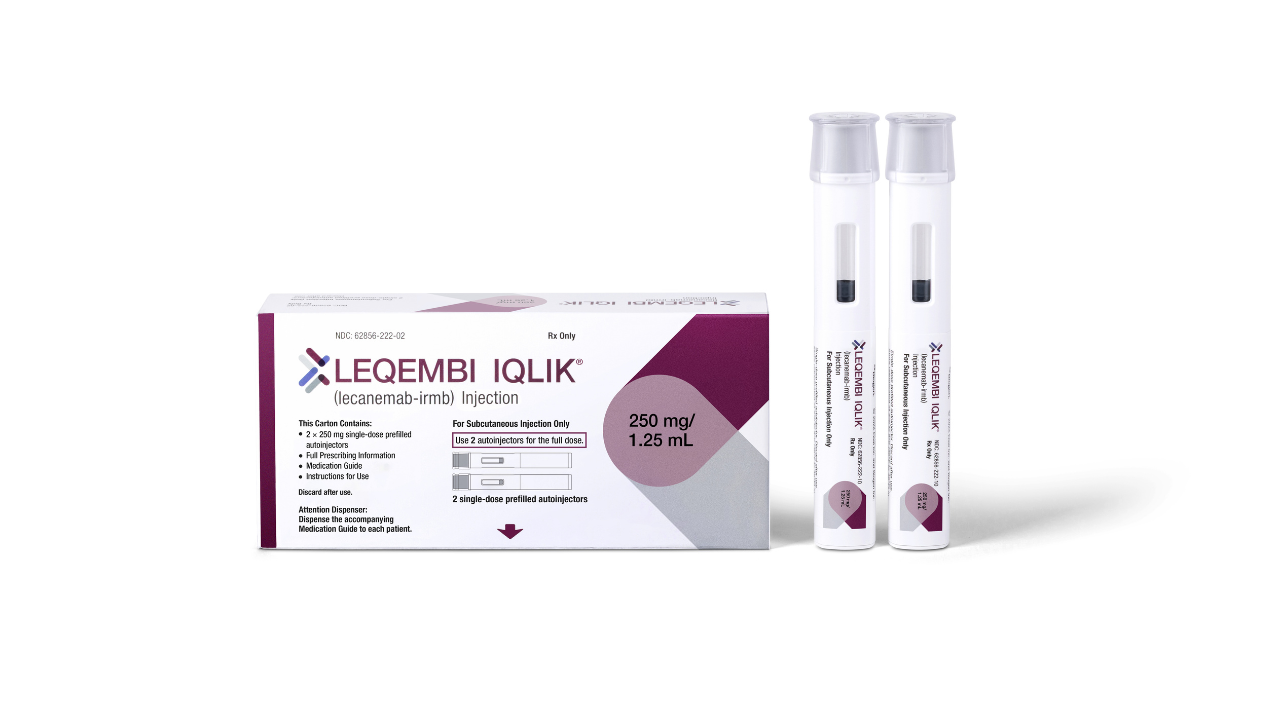
In 2023, Eisai’s monoclonal antibody drug Leqembi was approved for treating early-stage Alzheimer’s disease, followed by Eli Lilly’s Kisunla in 2024. Now, more than two years since this class of anti-amyloid drugs came onto the market, researchers are in the best position yet to assess how well they’re working and figure out who is facing barriers to accessing the treatment.
At the 2025 Alzheimer’s Association International Conference in Toronto, 32 groups of researchers across different health systems in the United States, Japan, China, and the United Kingdom shared insights on the real-world use of these drugs. The vast majority of the research focused on Leqembi, which has more data than its newer counterpart. Here are four big questions the data is helping researchers answer:
1. How safe is Leqembi?
One of the worrying side effects of anti-amyloid drugs is brain swelling and brain bleeding known as ARIA. While ARIA is often so mild that it is asymptomatic, in rare cases, it can cause serious complications, and even death.
Typically, when drugs move into the real world, doctors expect to see more side effects, since a broader swathe of the population — often on more medications and with more medical co-morbidities than those selected for clinical trials — will now receive the treatment.
Oddly, this isn’t the case for Leqembi. Earlier this year, dementia specialists followed more than 230 patients and found that the rates of ARIA were no higher in the Alzheimer’s clinic than in trials.
Now, multiple researchers from around the world shared similar data at AAIC. Chinese researchers reported even fewer cases of ARIA than in trials in their patients, consistent with data showing that rates are lower in Asian populations.
When they came onto the market, some critics of anti-amyloid drugs feared that “doctors are going to be reckless and use them inappropriately,” Dr. David Weisman, a neurologist at Abington Neurology Associates, who presented real-world data at the conference, told Being Patient. “We’re seeing the exact reverse; if anything, people were initially very, very cautious.”
Dr. Nicolas Villain, a neurologist and associate professor of Neurology at Sorbonne University in France, who was not involved in the research, agreed. He told Being Patient that the real-world safety data could be attributed to two factors: Neurologists are carefully selecting patients who have the least risk of developing ARIA, and radiologists may have trouble detecting mild cases on MRI brain scans.
2. Who is taking Leqembi and Kisunla?
In line with other research published earlier this year, two different studies found that patients taking anti-amyoid drugs were younger, white, had high rates of cardiovascular disease, and were more likely to live in socioeconomically advantaged neighbourhoods. People who are at a higher risk of developing Alzheimer’s — women, Black and Hispanic Americans — were less likely to receive the drug.
Multiple studies — including one by Dr. Jay B. Lusk, a preventive medicine doctor and researcher at the University of North Carolina, Chapel Hill, and colleagues — showed that the average patient receiving Leqembi was younger, white, and more likely to live in a socioeconomically advantaged neighbourhood. This average patient profile also included higher levels of cardiovascular disease risk factors.
“The U.S. healthcare system is structurally unequal, and egalitarian access to Leqembi or Kisunla is not the norm,” said Villain. “Prescription is mostly concentrated in tertiary centers and specialist memory clinics, which typically serve more privileged populations — not only due to income but also through social capital and healthcare navigation skills.”
3. Does it matter where you get Leqembi?
Neurology clinics affiliated with universities and Alzheimer’s Disease Research Centers have more infrastructure, such as access to amyloid PET scans for diagnosis and MRI machines for monitoring side effects. In contrast, there are many more private neurology clinics, albeit with fewer resources at their disposal.
So, where is it better to get diagnosed and treated? Dr. Michael Rosenbloom, a neurologist at the University of Washington, a large academic-affiliated clinic, conducted a study in collaboration with Weisman, who is part of a private neurology clinic, to compare. The study, published earlier this year, assessed the treatment of 165 patients with Leqembi across two different clinics.
Patients seen at the academic clinic were more likely to have mild cognitive impairment (MCI), while those seen in private practice were at a later stage of the disease. Despite diagnosing people with Alzheimer’s earlier in the academic clinic, it took on average 50 days longer than the private clinic to start treatment after the diagnosis.
“We have seven million people with this diagnosis in the country, and even more patients with MCI who will benefit from this treatment,” said Rosenbloom. “The academic institutions can’t treat all the patients.”
Despite being scrappy underdogs when it comes to infrastructure and resources, private clinics prove their mettle, showing that Leqembi treatment is just as safe at a community clinic as it would be in an academic setting.
The key message, Rosenbloom said, is not to wait — the sooner someone gets diagnosed and starts treatment, the better.
4. Does Leqembi work?
Since its approval, Leqembi has been controversial. Some dementia specialists and regulators, like in Australia, aren’t convinced that the drug’s benefits outweigh the risks. While the drugs lead to a slowing of cognitive decline, some argue these changes would be noticeable or meaningful for patients and their families.
Now, there is some more preliminary evidence that Leqembi’s effects are meaningful. Researchers presented preliminary data from a real-world study funded by drugmaker Eisai that will follow patients from 15 different American neurology clinics. Researchers presented data from 177 patients taking the drug for a year. Of the 177, 77 percent had not progressed to the next disease state, and seven percent improved from early Alzheimer’s to mild cognitive impairment.
“Patients in general are tolerating it well, ARIA remains low, and some people are actually improving,” Wiesman, who presented the data, told Being Patient. He cautioned that the study has confounding factors, as it lacks a comparison or placebo group. The patients taking Leqembi are also being treated for neuropsychiatric conditions, and in some cases, receiving cholinesterase inhibitors like Aricep to treat memory symptoms alongside the mAB.
Although the data is positive so far, it is still too early to determine exactly how much these drugs can slow Alzheimer’s progression in the long run.
“Alzheimer’s progresses slowly, especially in the early symptomatic or pre-dementia stages,” said Villain. Even without Leqembi, people with MCI or early Alzheimer’s disease will progress slowly. Since the drug’s effects are “modest”, it is difficult to tease out whether the drug is having a positive effect after six months or even a year of treatment.
As researchers around the world continue to monitor people taking this new class of Alzheimer’s drugs long-term, we will have more insight into their effectiveness.
UPDATED: 29 July 2025, 7:33 P.M. ET. Corrected the number of people involved in Eisai’s real-world study and the proportion that remained stable or improved with treatment.
Related Articles
No Related Post Found