Heidi Hall Is Defying the GRN Gene That Caused Dementia in Her Family
After testing positive, Hall navigated family tensions while turning to ultramarathons, therapy, and clinical trials to stay hopeful about frontotemporal dementia.
Despite her best efforts growing up, Heidi Hall, the youngest of five siblings, could never seem to outsmart her mother, Mary Margaret. The day after secretly hosting a house party, she remembers her mother slyly asking: “What did you do with all the beer cans?”
Mary Margaret was the “glue” for her family and community, Hall said. A school nurse with a signature 1980s perm, she was the president of the Parent Teacher Advisory Committee , helped with her husband’s business, and managed wedding dress shopping, cross-country moves, and all appointments for her kids.
But when she was about 21, Hall noticed the glue dissolving. Her mother, 56, had trouble spelling her last name, recalling words in conversation, and couldn’t remember how long she’d been married during her anniversary. “One time I asked her to schedule a doctor’s appointment for me,” Hall told Being Patient. “She called me up crying that she couldn’t.”
Unbeknownst to Hall, her 79-year-old grandmother, Margaret Mary (the inverse name of her mom) was experiencing similar symptoms at the same time.
Dementia runs in the Hall family
Tracing the line back to her great-great grandmother in Slovakia, dementia has always run through Hall’s family, though no one was sure what caused it. After hearing about the Hall family’s history and the language difficulties during a medical appointment, University of Pennsylvania neurologist Dr. Murray Grossman recommended genetic testing.
“When she was trying to make dinner reservations, she was having problems finding the right words,” Hall recalled about her mother. “She was quickly losing the ability to speak the words she wanted to say.”
By the summer of 2008, the testing showed that both Hall’s mother and grandmother carried the GRN mutation, which slashed the levels of the protein progranulin. Without it, waste clearance in the brain is impaired, leading to a build up of TDP-43 proteins, damaging brain cells and ultimately causing frontotemporal dementia (FTD). Their form, primary progressive aphasia, is the same type that actor Bruce Willis has.
Hall described the disease as locking them inside a “prison in their own bodies,” where her mother and grandmother could see and hear the world but couldn’t express their thoughts.
Graduating from college, Hall had to grow up fast. “My dad was so focused on my mom that it left me very much on my own,” she said. “It changed me, having to learn how to be very independent.”
Her thoughts about her early 20s are filled with regrets. “I wanted to forget that my mom had dementia,” said Hall. “I would just get frustrated because she was declining so quickly.”
In 2013, Hall’s mother and grandmother both passed away, donating their brains to research. This left Hall and her four older siblings, who all had a 50/50 chance of inheriting the gene, with a daunting question: Did they want to know if they carried it?
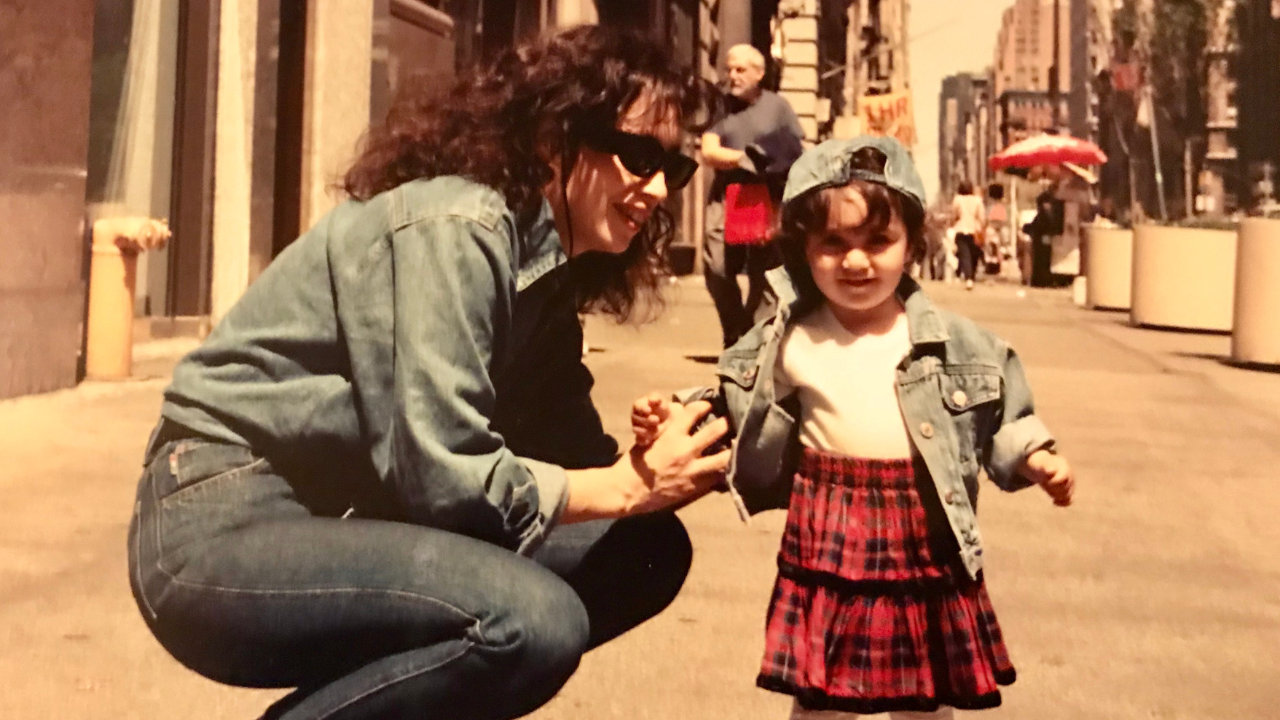
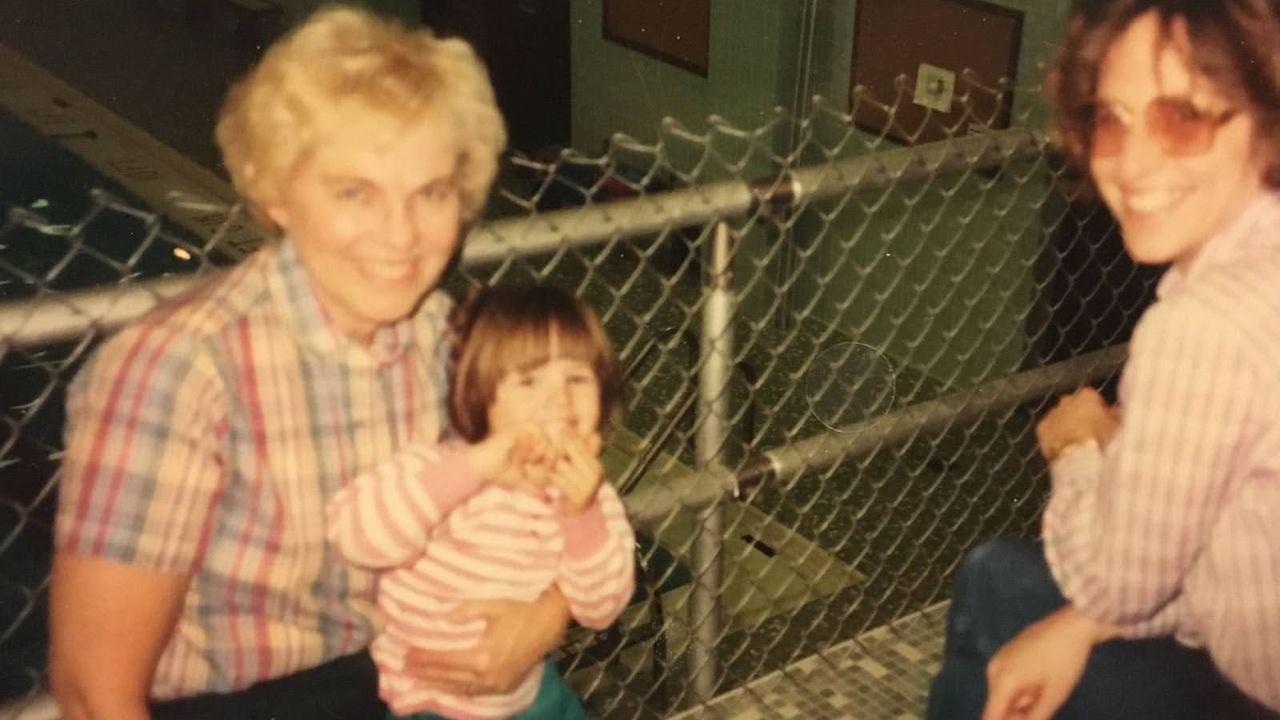
Heidi Hall as a child with her mother and grandmother.
Learning her genetic status
In 2010, the Hall siblings took part in an observational study for people at risk of FTD, but none of them chose to learn whether they carried the gene. The study ended due to a lack of funding.
“I don’t want to know the results for something that can’t be prevented or there’s no clinical trials and nothing in the pipeline,” said Hall.
Hall’s winding career path eventually brought her to a contractor role within the National Institutes of Health (NIH) working with clinical research. “I always feel like I was brought to NIH to redirect me into getting genetically tested,” she said.
Scrolling through a trials database one day, she discovered new studies at the University of Pennsylvania. In 2018, at age 31, she joined ALLFTD, a longitudinal study that tracked people at risk of FTD over their lifetime.
This time, she chose to learn her genetic status and found out she carried the GRN gene.
Hope in the Aftermath
After testing, Hall started making changes. She adopted a puppy, cut toxic relationships from her life, got a therapist, and started training to get back into ultramarathon running.
“I had to deal with my anxiety and my anger,” she said, “and focus on being even more healthy.” Her siblings, who opted not to join trials or learn their genetic status, distanced themselves at first. “The sister who had told me she would be there for me, ended up not being able to fully be there,” said Hall. Another sibling who heard she got tested cut off contact for eight months.
“You can’t be angry at those family members,” she said. With time, her siblings reconciled.
Hall urges anyone considering genetic testing for FTD to prepare for the emotional and practical aftermath by securing life insurance, finding a therapist, and connecting with a support group.

Heidi Hall running in a marathon.
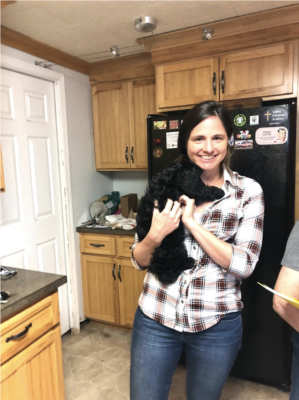
Heidi Hall and her dog Sky. She adopted the dog after finding out she had the GRN gene.
The drug that could prevent her disease
In 2019, the University of Pennsylvania got in touch with Hall to tell her about a new Phase 3 clinical trial. Alector was testing a drug called latozinemab in people with the GRN gene, who either had FTD or were still asymptomatic.
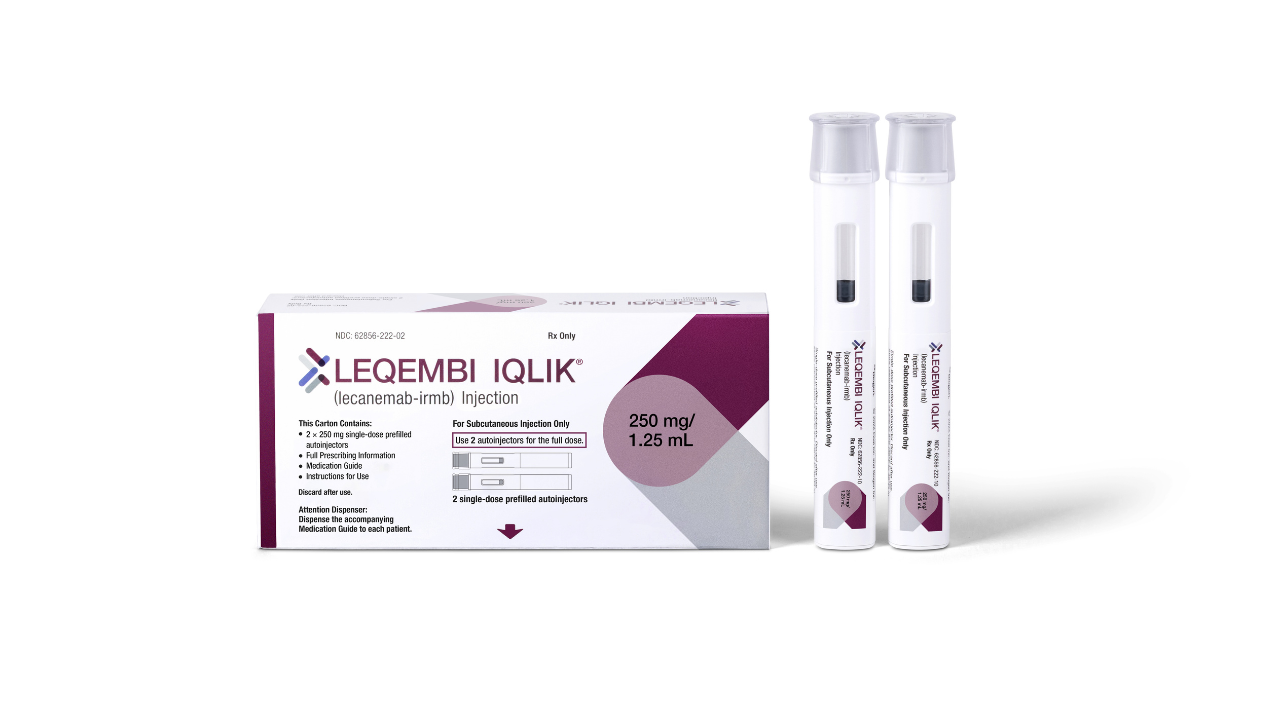
Latozinemab is a monoclonal antibody like Leqembi or Kisunla. But instead of sticking to beta-amyloid, latozinemab binds the sortilin receptor, preventing the destruction of progranulin.
She joined the trial, saying, “I couldn’t save my mom, but I can possibly save other family members.”
Unfortunately, latozinemab failed to slow the disease in Phase 3 trials and was discontinued in 2025. It’s now being tested as a potential treatment for Alzheimer’s instead.
When the study began, Hall said she felt the lack of support from her siblings, but when it stopped, “they all called me that day to check up on me, because they knew they had to be there for me.”
Despite setbacks, Hall remains hopeful. Several new therapies targeting GRN — including gene therapies — are now in Phase 2 trials and could prevent or delay FTD in her lifetime.