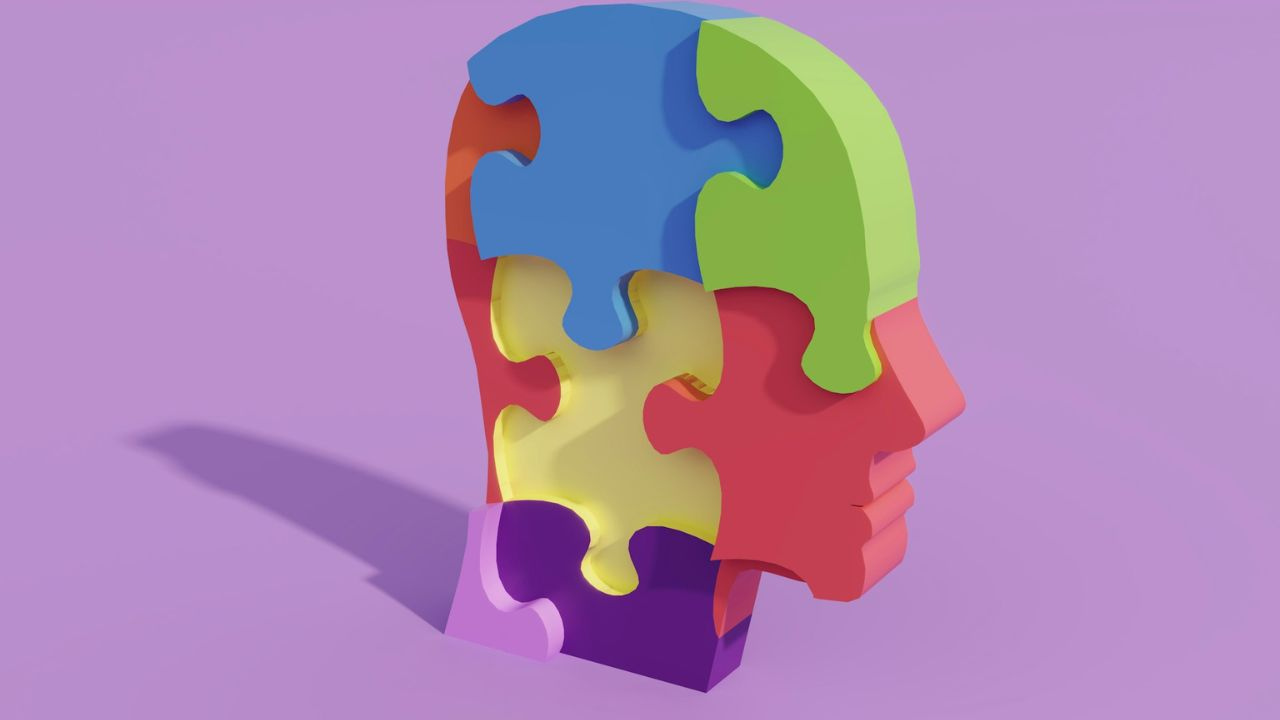
VOICES: Learning To Be Present With Dad 2.0
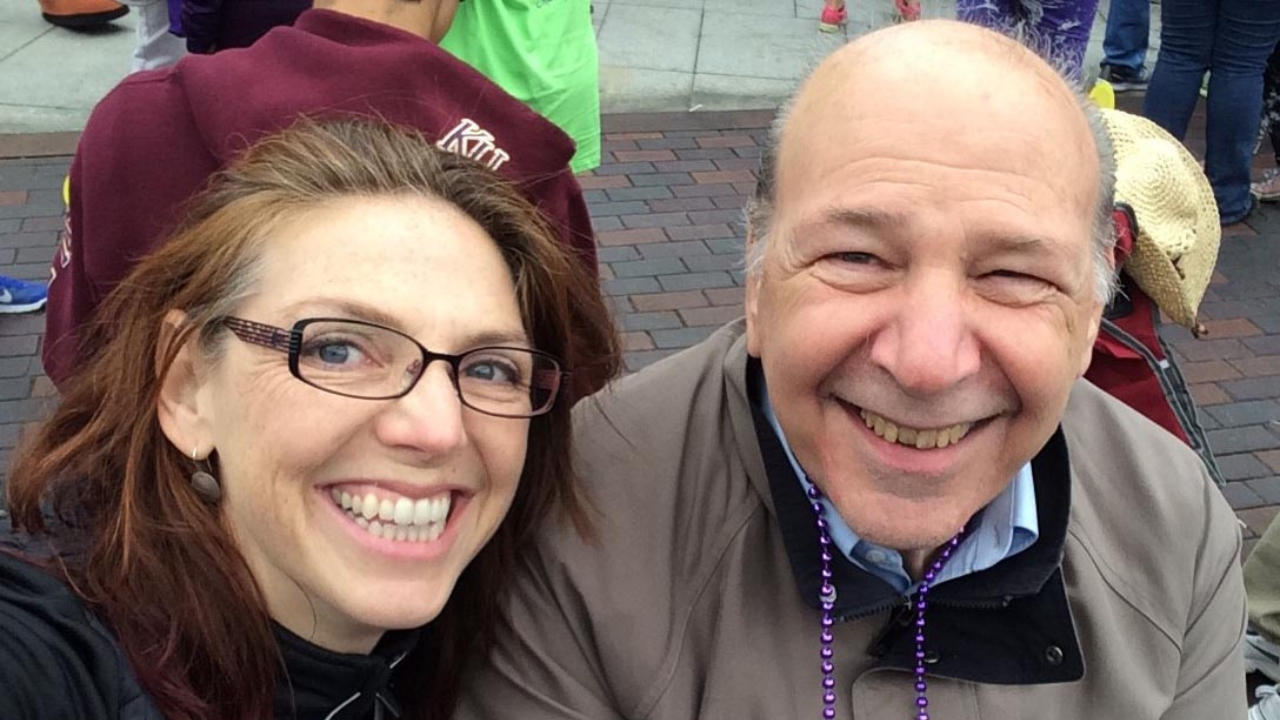
Rebecca Friedman Lockhart writes about adjusting to a new normal as a caregiver and learning to reframe her relationship with her dad.
Rebecca Friedman Lockhart, author, disability advocate and marketing professional, moved in with her parents to help care for her father alongside her mother. Her blog about her experiences as a caregiver were transformed into a memoir, “Walking with Dad, Our Journey Through Alzheimer’s, One Step at a Time,” currently in development. Connect with Rebecca @walkingwithdadbook on Facebook, Instagram and TikTok, @rfriedmanlockhart on LinkedIn, or contact her directly at rebecca@walkingwithdad.net
“Your dad stopped tutoring physics.”
“Your dad took a step back from his Rotary club.”
“Your dad got lost while he was delivering food for Meals on Wheels”
The weekly phone conversations with my mom were becoming more and more distressing. Yes, Dad had been diagnosed with mild cognitive impairment but without daily contact, I struggled to see the impact it was having on his life.
Dad had decided to go back to college when he was 68 years old to study his long-held passion for astrophysics. Surrounded by 18-year-olds, with their nimble brains and recently acquired knowledge of calculus, Dad was vigilant in his studies.
When Dad asked to borrow my college calculus book that had been long abandoned to layers of dust on my shelf, I couldn’t help but feel a small flicker of delight. I thought back to the innumerable evenings spent side by side on the living couch as he patiently helped me with my high school algebra homework. Finally, I felt like I was able to help him in-kind, even if it was indirectly.
Dad also had a passion for helping people and the Rotary Club, a global service organization, was a natural outlet to support this deep desire. People were drawn to his dedicated commitment to problem solving and to fix what needed repair. He was buoyed by others’ that had similar values and wanted to help, too. His orbit of influence grew, and with it, his ability to help more people.
After graduating with his second bachelor’s degree in astrophysics (which he said was not the point of his attending college, just the whipped cream on a delicious bowl of strawberry Jello), he reached out to a local high school to see how he might help students who were struggling to understand the intricacies of physics.
With all the extra time on his hands, no longer absorbed with formulas to determine the Doppler shift or Schwarzschild radius, he shifted his focus outward. Where else could he help? He searched and found a local need for drivers to deliver meals to home-bound individuals. His motivation and drive to help were ceaseless.
When my mom would drip fragments about dad’s shrinking, about his no longer feeling like he could be helpful, there was something obviously wrong. I took it as a sign for me to come home, and follow my dad’s example, to fix what needed repair. As an only child, it was up to me to take care of it.
I had already started researching everything I could about Alzheimer’s and caregiving; I am my father’s daughter. I became more vigilant in my own studies and made special note of research where individuals had recovered from Alzheimer’s. I was ready to go to battle, to make an assault on Alzheimer’s. I was going to fix my dad and cure his Alzheimer’s.
I utilized my background in marketing to strategize and plan. What strengths, weaknesses, opportunities and threats needed to be considered? I came up with a three-pronged approach to focus on nutrition, physical activity, and mental exercises. In addition to these practical approaches, I had to let go of expectations and the labels we had both developed on over the years.
Dad: introspective problem solver, excellent listener, stubbornly obtuse on occasion, wickedly smart, heart-led concern for others, the ballast of our family.
Daughter: the one who needs to be taken care of, the one who relies on Dad for validation of self, the one who can match Dad toe-to-toe in a battle of wits.
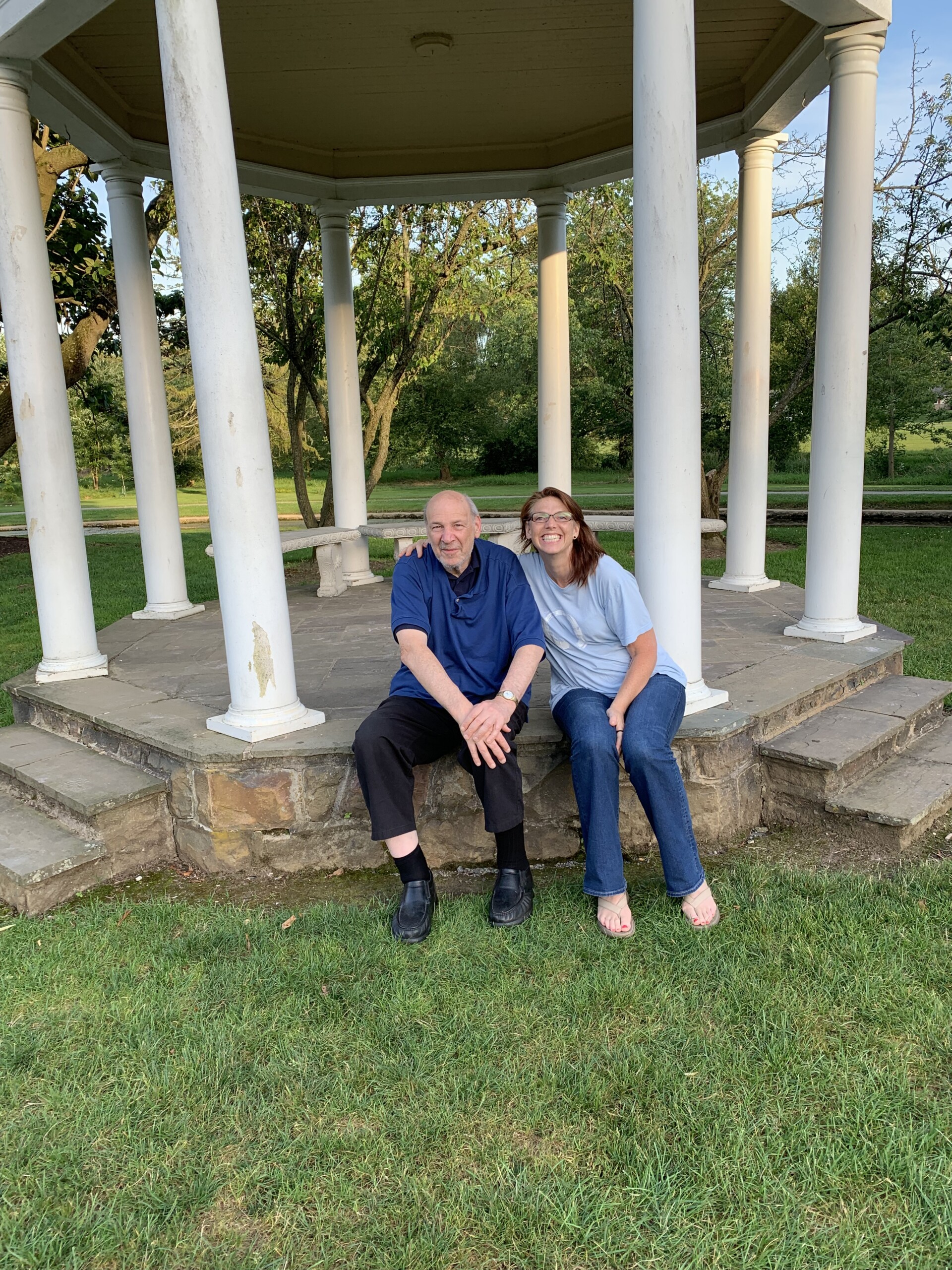
Right now, there had to be a rebranding; Dad 2.0. Dad 2.0 looked like my dad; he had a lot of similar qualities to my dad, but he was not the dad of my childhood.
I spent hours pouring over books, listening to podcasts, talking to specialists, and taking over the new label of healer. I did all of the things that were within my power and attempted to control things that were not. While I was doing all of this fixing, Dad and I spent time together walking, talking and just being with each other. I was on a 24/7 spin cycle of manically trying to patch the incessant cracks that kept forming, while Dad was experiencing his life, his new reality.
His reality was one that I could not truly know, but one I could walk alongside. It was the reframing of our relationship that allowed me to step in as I did. The fixing I thought I was doing led me to real healing. That happened during the literal and figurative walking alongside, in the moments that I stopped trying so hard and simply put one foot in front of the other, allowing myself to be present with Dad 2.0.
At the time, I had no clue how emotionally fortifying our walks were for me, too. While taking care of him, I was unaware of my own grief, sadness, and loss. Walking was when I got to spend time with him, being ok with just being. Walking allowed for an easy flow of communication, spoken and unspoken.
Each step was silent reinforcement from him, “You got this,” “You’re doing great,” and “I love you.”