She Lived With an Alzheimer’s Diagnosis Until Biomarker Testing Proved Otherwise

Until recently, doctors rarely used biomarker tests to confirm an Alzheimer’s diagnosis. As a result, as many as one in five with the disease may be misdiagnosed.
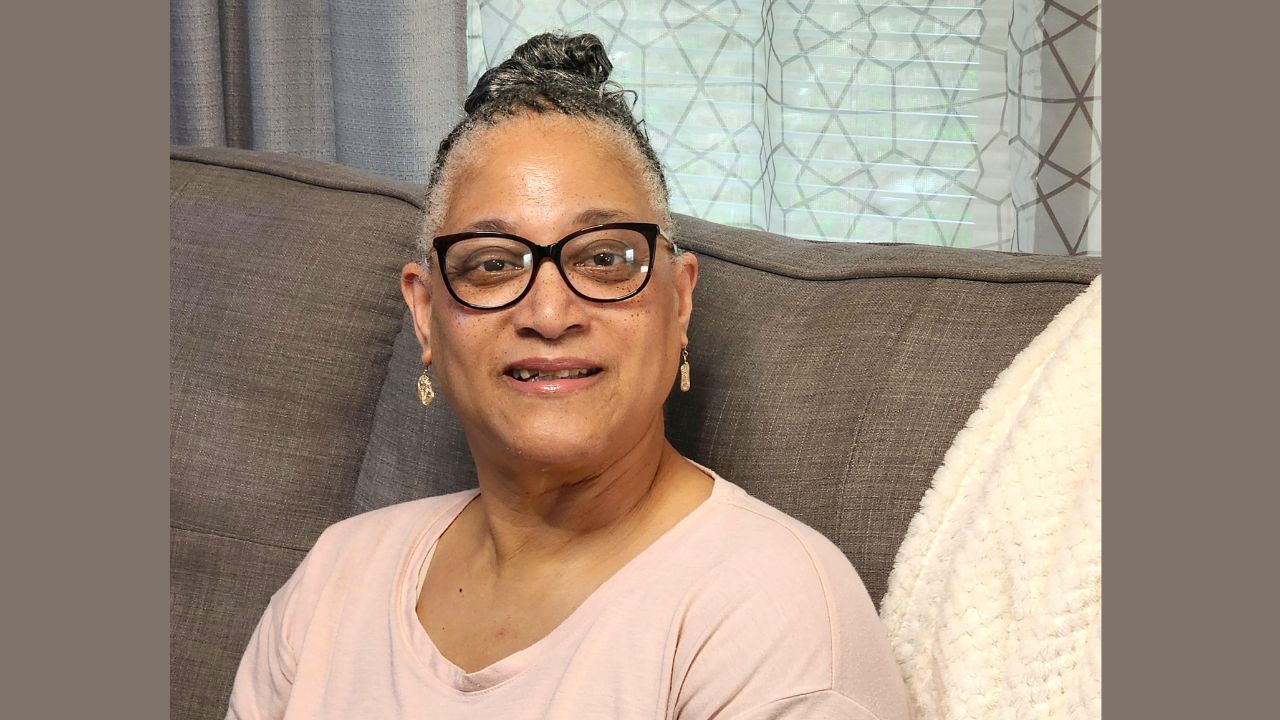
When doctors told Doreen Monks, 63, a neuroscience nurse, that her memory and cognitive problems were caused by early-onset Alzheimer’s, she reorganized her life. She quit her job, sold her home, and gave up her dog in order to devote the time she had left to advocacy. She began working with groups like Voices of Alzheimer’s, US Against Alzheimer’s, and the Alzheimer’s Association to raise awareness about the disease.
Eight years later, when she tried to enroll in a clinical trial testing a drug that cleared out beta-amyloid plaques — the hallmark brain biomarker of Alzheimer’s — researchers informed her that she didn’t have high levels of plaques in her brain, meaning she didn’t have Alzheimer’s.
“Nothing would come out of my mouth,” Monks said, remembering that moment. “It was like my brain was overwhelmed, and it couldn’t do anything else but listen. It’s almost like my life was a mistake or a lie, because it was based on this false assumption that I had this disease.”
For a while, she was angry about the years and part of her life she felt she’d lost. “I think of that house — that’s where I should be,” Monks said. “But I had to sell it because I couldn’t afford to handle the mortgage when I wasn’t working.”
Before the diagnosis, she had planned to pursue a PhD and start teaching. Monks realized that it wasn’t the doctor’s fault, and that she can’t recover the time she lost. Instead, she’s looking toward the future.
Monks is not alone, as more Americans are receiving biomarker testing to qualify for trials and treatment, as many as 20 percent may learn they don’t have the disease.
How common is an incorrect diagnosis?
According to brain autopsy studies, around one in five people who received an Alzheimer’s diagnosis without biomarker confirmation — a blood test, cerebrospinal fluid test, or amyloid PET scan to confirm they had beta-amyloid plaques in their brain — might not have the disease.
Dr. Gregory Jicha, University of Kentucky neurologist, told Being Patient that the American Academy of Neurology sets out guidelines with ways to spot other potential causes of cognitive impairment like deficiencies, tumors, hormone dysfunction, and depression. However, in his experience, many people coming to the memory clinic haven’t had these conditions ruled out.
“They show up with memory problems,” he said of their prior diagnosis, “and are dismissed as having Alzheimer’s disease.”
Although biomarker testing in the form of cerebrospinal fluid tests and amyloid PET scans have been around for more than a decade, many Americans have avoided them, either because they have been hesitant to get a spinal tap, or because until recently PET scans weren’t covered by insurance.
Dr. Gregory Day, a Mayo Clinic Neurologist told Being Patient that before biomarkers were widely used, an Alzheimer’s diagnosis, even if incorrect, was often the “best logical guess.”
Jim Taylor, president and CEO of the patient advocacy group Voices of Alzheimer’s, points the blame on Medicare’s refusal to cover amyloid PET scans for 15 years, preventing many from getting an accurate diagnosis. “I think they discriminated against people with dementia,” Taylor said. “Anybody with cancer can immediately have a PET scan that’s covered by Medicare or their commercial insurance.”
The tide has shifted as testing has become more accessible. The Centers for Medicare & Medicaid agreed to cover amyloid PET scans in 2023 as disease-modifying treatments like Leqembi and Kisunla were garnering FDA approval. Now blood tests are also available, meaning more people are receiving biomarker confirmation of their diagnosis.
Getting the Alzheimer’s diagnosis right
One of the complications is that many other diseases and dementias mimic Alzheimer’s symptoms. “The difficulty is Alzheimer’s disease affects brain regions that other types of diseases affect,” Melissa Murray, a neuropathologist at Mayo Clinic told Being Patient.
When people like Monks visit their doctor with memory and thinking problems, doctors and neurologists start with a detailed patient history and then eliminate other causes of the symptoms through bloodwork and routine laboratory tests. Several conditions cause reversible forms of mild cognitive impairment — like vitamin B12 deficiency, thyroid hormone problems, depression, and sleep apnea — that can look like Alzheimer’s or other dementia. The recently FDA-cleared Roche pTau-181 blood test could also rule out the possibility of Alzheimer’s with a high likelihood.
“They should screen you for depression, and they should perform at least a bedside examination of you,” Jicha said. “And if you haven’t had those things done, you cannot say that you have Alzheimer’s.”
Some patients will then receive a referral to a specialty clinic to assess memory and cognitive symptoms.
“It can look like a memory problem in our day-to-day life, and the patient might feel like it’s a memory problem, but it could be something else,” Tara Carlisle, neurologist at UCHealth and assistant professor at the University of Colorado School of Medicine, told Being Patient.
In other words, a person might not be forgetting their appointments. They may have a problem with attention or executive function, where the brain isn’t encoding the information about an appointment in the first place.
Psychological testing could also help narrow the diagnosis to Alzheimer’s or point to other conditions like Lewy body dementia, frontotemporal dementia, or limbic-predominant age-related TDP-43 encephalopathy (LATE).
Other patients might have problems retrieving information from their memory. For example, they might not remember a piece of information the neurologist showed them a minute ago, but if they’re given a chance to choose via multiple choice, they can remember.
“That can be more of a vascular problem,” Dr. Andrew Ho, a cognitive neurologist at Banner Sun Health Research Institute, told Being Patient. “That’s very common for people with diabetes, hypertension, or high cholesterol.”
Despite the challenges, specialists still diagnose Alzheimer’s correctly 80% of the time without any biomarkers. “I’m just always very cautious on the term misdiagnosis,” Murray said, “because I think our clinicians are really doing a good job to try to predict based on their observations through time.”
Sometimes there can be miscommunications between doctors and their patients, especially when they’re short on time. Doctors might say they suspect Alzheimer’s is the most likely cause of their cognitive impairment, Ho said, which patients may interpret as a certain diagnosis. “I think there is a confusion of diagnosis that is given without education,” he said.
But now, with greater access to biomarker testing, doctors can be more confident about an Alzheimer’s diagnosis.
When it turns out it isn’t Alzheimer’s
With two approved anti-amyloid medications now on the market and next-generation anti-amyloid in clinical trials, more people who were diagnosed without biomarker testing are seeking that extra confirmation.
That’s what happened to LuPita Gutierrez-Parker, who was diagnosed with Alzheimer’s in 2019, when she was 62. She finally got an amyloid PET scan in May 2025, and the results showed she didn’t have beta-amyloid plaques in her brain; her symptoms weren’t caused by Alzheimer’s after all. Her current neurologist thinks she might have mild cognitive impairment but isn’t sure what’s causing it. She’s currently waiting on the results of a sleep study.
“Now we have a whole bunch of people that learn ‘I have dementia,’ but it’s not due to Alzheimer disease,” Day, of the Mayo Clinic, said.
Taylor believes that scientists need to develop better tools to diagnose other forms of dementia. For those who find out they don’t have Alzheimer’s but likely another form of dementia, he said, there’s a “need to find funding and continue to research the biomarkers.”
Nowadays, Monks doesn’t feel like she’s experiencing cognitive impairment. She’s currently residing in an apartment complex with other seniors but due to financial problems, she said she may need to move into subsidized Section 8 housing.
Despite the ordeal, Monks urged anyone noticing new problems with memory or thinking to see a doctor.
“If there’s an issue and it’s really affecting your life, if you chase it head on, you’ll have a much better outcome,” she said. Even if it turns out to be Alzheimer’s, “there is a life after diagnosis.”
UPDATE 22 January 2026, 6:50 P.M.: This article was updated to correct Dr. Tara Carlisle’s affiliations.