The Future of Alzheimer’s Detection May Already Be on Your Wrist

From sleep and speech patterns to gait changes, wearable technology is giving researchers new ways to track subtle signs of cognitive decline long before diagnosis.
Deborah Kan is an award-winning journalist and founder of Being Patient. In this “Thought of the Week” column each Friday, she highlights one of the key stories shaping the future of brain science.
Dear readers,
I remember when my mom was first diagnosed with Alzheimer’s in 2013, I gave her the MoCA test almost every day for two weeks. Maybe it was because I was in denial that she actually had the disease. In the back of my mind, I wondered how reliable early cognitive assessments really were.
Today, I can’t help thinking if she were diagnosed now, how much more would we know? How much more accurate could her diagnosis be? We’ll never have that data.
Aside from new diagnostic technology such as blood tests, researchers are getting closer to gathering more data from people while they are still healthy, thanks to the widespread use of wearables and the advancement of technology.
There are multiple examples out there, but wearables are shifting the way we think about early detection.
For decades, an Alzheimer’s diagnosis has rested on a memory test in a clinic, along with a few questions — but the entire picture is much more complicated. I often wondered how a bad night’s sleep might impact the results. Devices like the Apple Watch, Fitbit, and Oura ring are beginning to offer something different. They capture a continuous, ambient view of how a person moves, sleeps, and communicates over months and years.
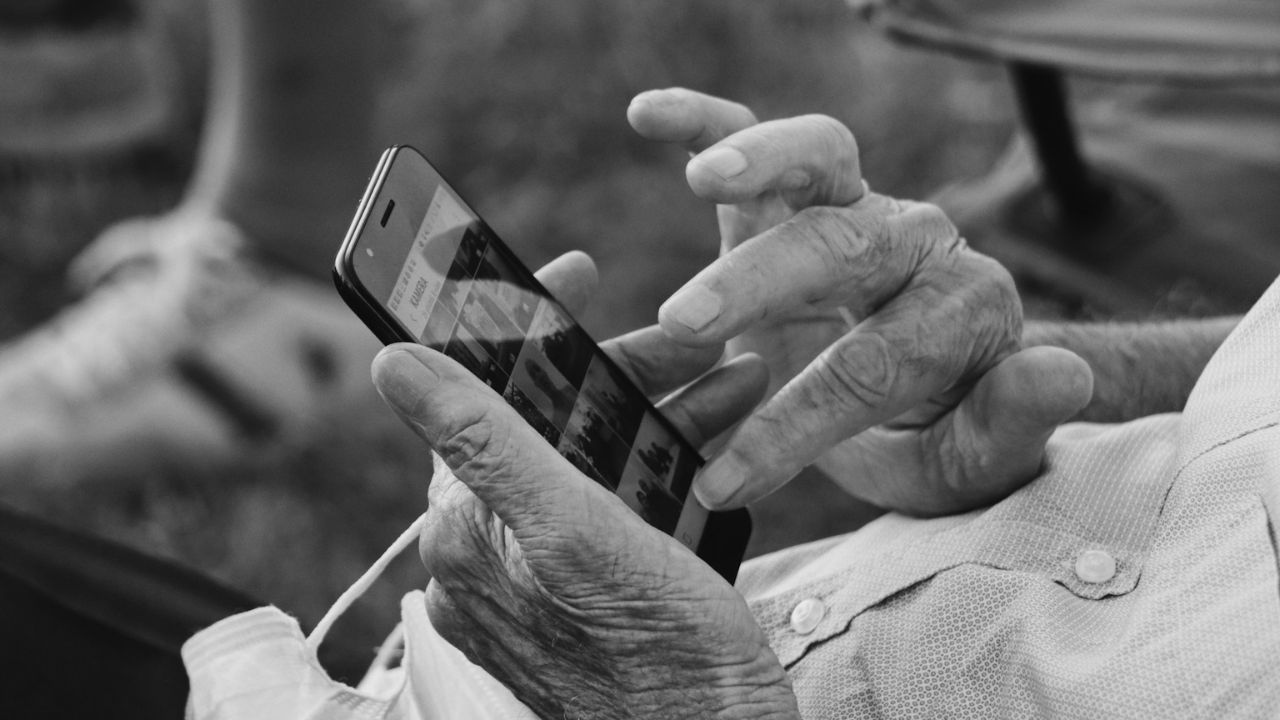
In our piece Could Your Smartphone Tell You’re Developing Cognitive Impairment?, we explored research suggesting that subtle changes in speech and language, including word choice, grammar, and the structure of how we speak, may reflect early changes associated with Alzheimer’s. None of this is diagnostic yet. But the idea that a device most of us already carry might one day flag changes years before symptoms surface is a meaningful shift.
Then there’s the way we walk. A study of more than 4,000 adults from the English Longitudinal Study on Aging, found that gait speed alone could help predict dementia risk. The research used a simple timed walking test, but the implications for wearables are significant. The same data points that researchers gathered manually can now be captured passively, every day, by the device on your wrist. Walking pace, stride length, and variability are no longer something you need to come into a clinic to measure.
The most familiar use of wearables is also the simplest, and one many caregivers already know: keeping a person with dementia safe. In From Medical Alert Bracelets to Smart Watches: Wearable Tech for Alzheimer’s, we looked at what’s available today, from GPS-enabled bracelets to fall detection on the Apple Watch. These tools don’t change what the disease is, but they change what living with it can look like. In Japan, for instance, the government distributes free wearable QR codes to help locate people with dementia who wander, a kind of community-level safety net that doesn’t yet exist in the U.S.
The promise of wearables isn’t that they will replace doctors, brain scans, or blood biomarkers. It’s that they may give us a longer runway, more years where we know enough to do something, instead of fewer years where we don’t.
As for my mom’s MoCA results, the inconsistency told its own story. Some days she passed with flying colors. Other days her scores validated her cognitive decline. The one thing she could never do, regardless of the day, was the clock. Asked to draw a clock face and set the hands to a specific time, she would get it wrong every time.
The irony is that maybe today a watch could have provided some clues, long before the one she could no longer draw.
With hope,
Deborah