Planning Thanksgiving After My Mom’s Alzheimer’s Diagnosis
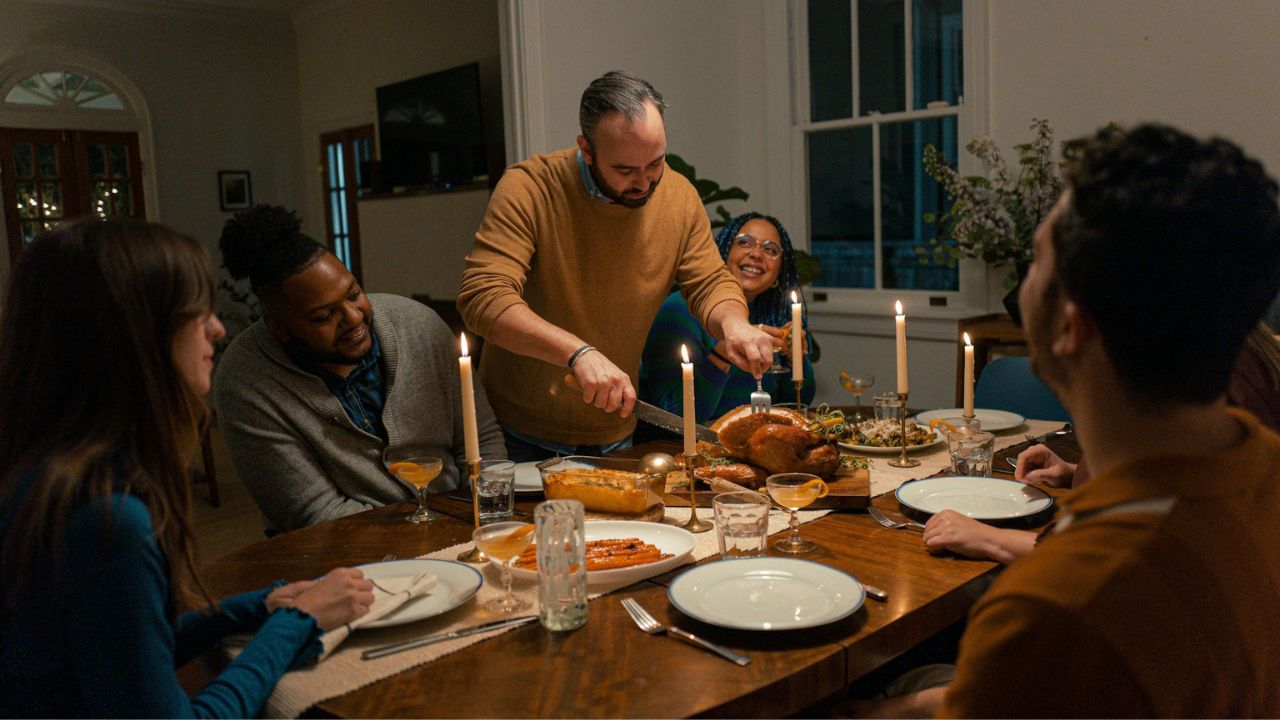
Holiday meals when a loved one has dementia can be stressful, giving rise to moments of heightened confusion. Notifying all guests about what to expect can help ensure an enjoyable occasion for all.
Dr. Catherine Madison, is a neurologist with Seniors At Home, a division of Jewish Family and Children’s Services, and was founding director of the CPMC Ray Dolby Brain Health Center in San Francisco. After serving eight years in the Air Force, she returned to California to care for her mother with Alzheimer’s disease. She is the author of “Navigating Memory Loss: Essential Questions and Answers on Alzheimer’s and Dementia.”
Thanksgiving gatherings are times to look forward to, but having a family member with dementia can also temper that excitement with fears of real mishaps. I won’t ever forget the Thanksgiving we found out my mom, who had been diagnosed with Alzheimer’s Disease, was unable to control her eating.
The holiday started off well, as we were able to let her “assist” with some simple tasks in the kitchen, which felt good for me and my sister. I was careful in arranging the table, placing her next to my husband and seating my dad at the other end to give him a much needed respite. My husband’s hospitable nature, however, became problematic as my mom continued to accept offers for more food. Unfortunately, my poor mother ended the meal vomiting much of her food onto the table. She was embarrassed and confused, but the rest of us were able to clean-up quickly and offer support.
Even though her diagnosis was Alzheimer’s Disease, the overeating was suggestive of some fronto-temporal dementia in the mix of pathologies. Needless to say, it was quite a lesson for all of us. At future gatherings we were more careful to monitor her portions, and this episode was never repeated. We also began to focus on the emotional connections we could make with our mom as they became more sparse. When she couldn’t remember my name, she still knew I was someone special. And that connection remained until close to the end.
Holiday meals are times when building in more preparation is important to help a loved one with dementia as well as other family members all enjoy the experience. Such occasions can give rise to moments of heightened confusion, when someone can no longer navigate changes yet manages to keep up a facade of “normal” on their own turf.
This is quite common in most types of dementia, yet it still can take the rest of us by surprise. Setting expectations for everyone is a good grounding strategy. One way to do this is by sending an email to extended family before the event. Here’s a suggested email along these lines:
Looking forward to seeing everyone on Thanksgiving. I just want to share that mom was recently diagnosed with mild dementia. She has not really noticed any changes, but you likely will. I am sending some suggestions on how to handle this. Thanks for your cooperation and see you soon.
- Adjust expectations and be receptive to new approaches. With dementia, mom is no longer anchored in our shared memories. She also doesn’t see that she has changed and tends to get upset when this is suggested to her. So please don’t point out the changes to her.
- Going with the flow is a useful strategy. If she loses track of where she is in your conversation, veer into a similar direction and just keep going. Try to guide the conversation from her cues as much as you can and let that conversation together be more important than the content shared.
- Mom can’t follow well in a group; with damage in her brain she can no longer process information from multiple sources. Try speaking with her one-on-one.
- She may need to take a break from the commotion. It is a lot more effort for her to participate and she becomes tired more easily. Please follow my lead on this.
We are not generally comfortable talking about dementia, but adding this topic to our conversations around holiday prep is essential.
Even when everyone is prepared, the day can still go off the rails. But following a few basic strategies to help a loved one feel comfortable and supported in a new situation, such as Thanksgiving in your home, can make a difference.