VOICES: Navigating My Wilderness: How Alzheimer’s Has Been My Biggest Adventure
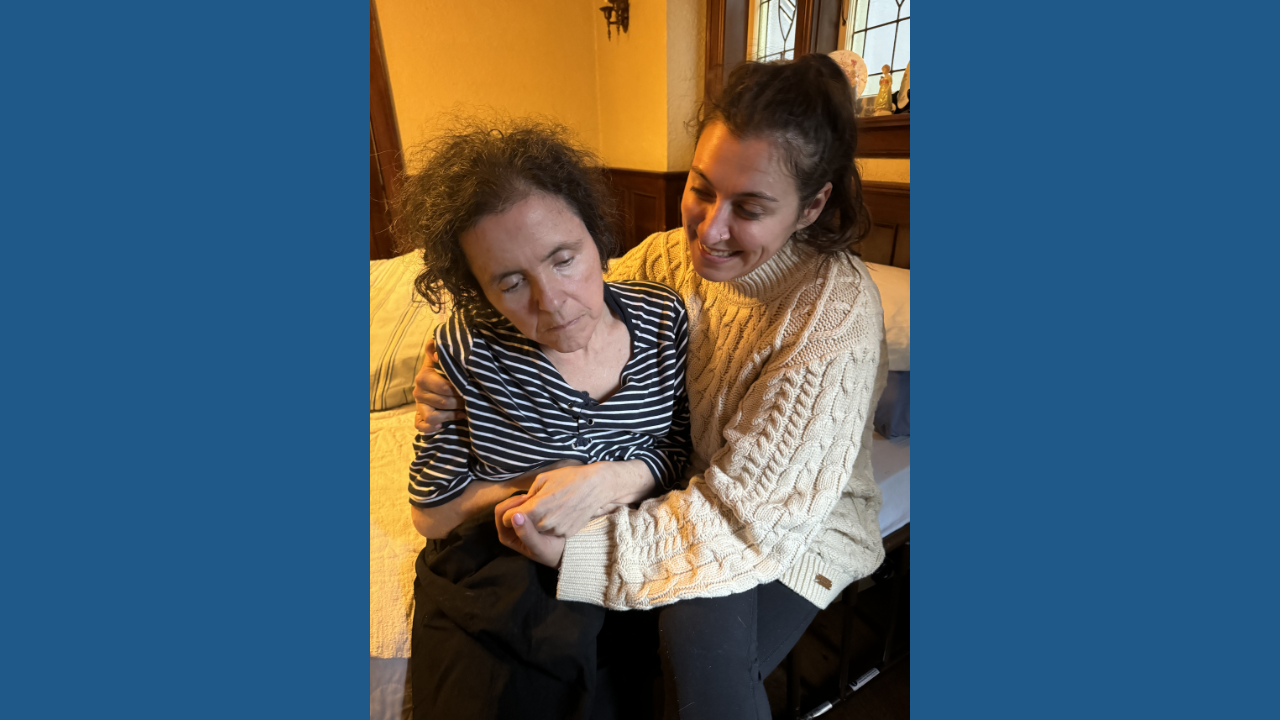
Kathryn Fudurich writes about how she has learned to approach Alzheimer's caregiving through her spirit of adventure.
Kathryn Fudurich is a Toronto-based filmmaker, writer, and Alzheimer’s advocate whose work is shaped by her long experience as a caregiver to her mother with early-onset Alzheimer’s disease.
As far back as I can remember, I was packed up and brought along on cottage trips and backcountry camping trips throughout all four of Ontario’s extreme seasons. Long days outside with unstructured supervision undeniably influenced who I was becoming.
On hot summer nights, I was kept awake with excited anticipation of another early morning spent in a row boat on the creek befriending all reptiles and amphibians. In winter time, my brothers and I broke the peaceful silence of winter on a frozen lake with screams of delight leaping off the roof into towering snow piles surrounding the cottage like a medieval fortress.
My childhood was only made sweeter by a healthy imagination, an imagination I’ve held close and kept active as an adult too. The Canadian wilderness felt endless but familiar. It was where I practiced becoming brave.
In my late teens, working at a summer camp refined my resourcefulness and confidence. I became a canoe tripper, leading out trips of up to sixteen days through the waterways of Ontario and Quebec, and later taking myself on many solo canoe trips. Long days paddling lakes and rivers, connected by portages of varying intensity, showed me how to notice shifts in the land, sky and wind and their impact on my plans.
I learned how to rely on both the map and my instincts, how to manage what I’d expected with recalculating goals based on the realities of the day. I enjoyed the simplicity of getting from one spot to the other, eating and sleeping. Life was good. With an idol like Steve Irwin (RIP) and a fascination with documentary filmmaking, I imagined a life spent exploring. I would finish my degree in TV and Film Production and then leave chasing stories far from home. My future felt full of possibility.
As I finished university, however, a landscape I had never dreamed of began to take shape around me. Years of small shifts in my mom’s behavior turned into many months of uncertainty as to what exactly was wrong, until finally we were hit with our new reality: my mother had Early Onset Alzheimer’s. Immediately, I was lost in this new and wild environment. This was not the adventure I had hoped for as I entered adulthood.
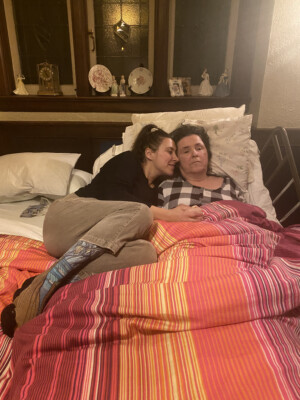
And yet, I began to recognize something familiar.
My mom and her experience with Alzheimer’s demanded many of the same skills the backcountry does: attentiveness, adaptability, presence. It has required attention to subtle changes inside our home the way I pay attention to the forest, water and wind when camping. It required reliance and trust in my own decision making and problem solving when there was no easy or straightforward next step. She and this disease taught me that progress is not always reaching the next destination, oftentimes it’s simply not panicking and capsizing when you’re caught in a raging storm.
I once defined adventure by geography and remoteness. My experience has shown me that the most demanding, transformative journey I may ever endure unfolded inside of me within the walls of my childhood home. Losing my mom this way was never the world I intended to explore. But as I’ve reflected on the last 17 years, I have realized much of what qualifies an adventure; resilience, curiosity, humility, parallels the characteristics of navigating something as wildly unpredictable as the journey of loving and losing someone to Alzheimer’s.
I wouldn’t ever call this fun or pleasant but I am grateful to my mom for continuing to teach me so much more about how to navigate life’s most horrific challenges through this heartbreaking phase of her own life.
Alzheimer’s is undeniably terrifying. It reshapes memory, identity, the present and future. It’s caused trauma and coping skills that I will always need to be mindful of. But it has also violently restructured my values and priorities at a very young age. It has forced me to face my deficits as a person and expanded my capacity for empathy and how to demonstrate love.
In the end, the dream was never only about travel. It’s about becoming someone capable of navigating the unknown. And in that way, I am.