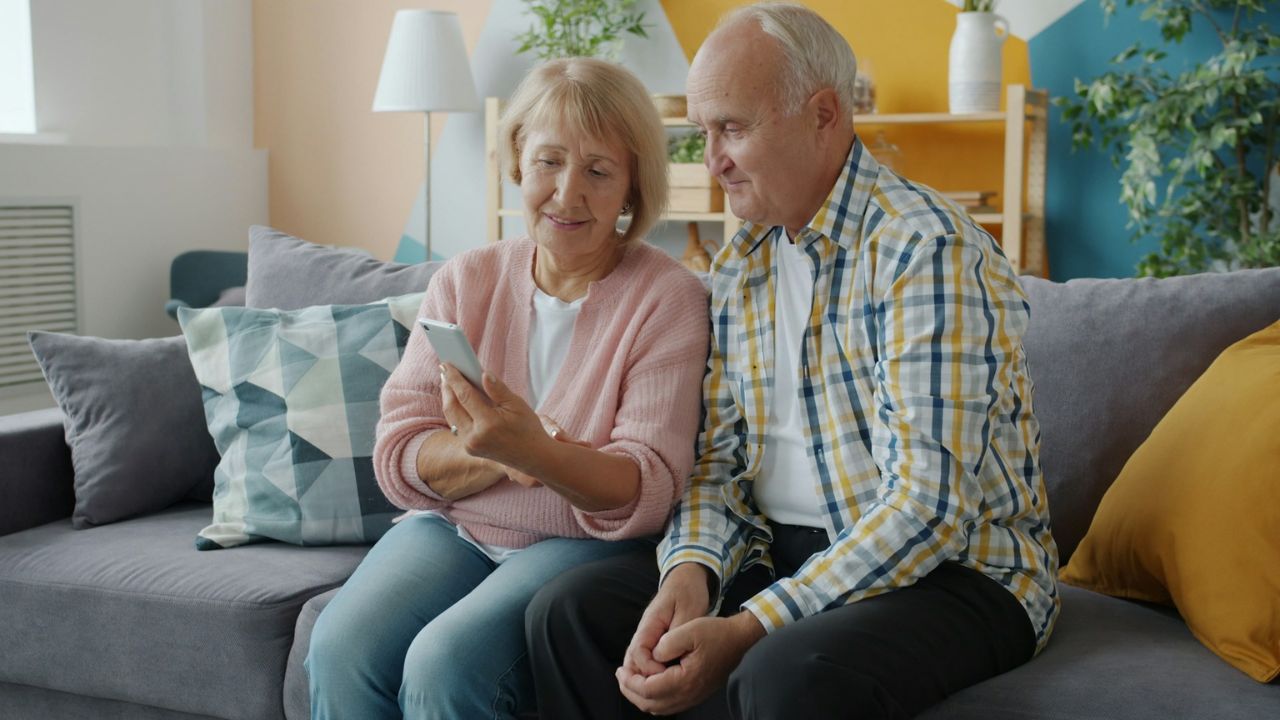
How to Talk to a Loved One About Cognitive Decline
Dr. Dani Cabral explains how families can approach concerns about cognitive impairment with honesty, empathy, and care. She offers practical guidance on when to speak up, how to lower defensiveness, and why early, open communication can make a meaningful difference.
Conversations about cognitive impairment can feel confusing and hard to navigate. You may notice small changes and not know whether or how to bring it up, or what the “right” approach might be without causing fear, defensiveness, or shame.
Dr. Dani Cabral is a neurologist and psychiatrist with more than 15 years of experience in Alzheimer’s care and clinical research. She founded BrainLove after seeing how the traditional health care system often fails to give patients and families the time, support, and individualized care they need. Through BrainLove, Cabral is working to transform the narrative on Alzheimer’s and related diseases by combining cutting-edge medical care, accessible education, and trusted resources to help families move forward with more clarity and a sense of possibility. Drawing on her background in both neurology and psychiatry, as well as early experience in hospice dementia care, Cabral brings a whole-person approach that addresses not only the biology of cognitive decline, but also the emotional, psychological, and practical realities families face.
In this interview with Being Patient’s Mark Niu, Cabral emphasizes that conversations about cognitive changes should begin gently and without assumptions, focusing on curiosity rather than confrontation. She highlights the importance of involving family members early, addressing safety concerns before they become crises, and recognizing that cognitive decline is not always straightforward or caused by one condition alone.
Being Patient: Tell me about BrainLove — what services are offered, and any areas you try to focus on, whether that be mental stimulation? Or does that even include diet and things like that, too?
Cabral: One of the first major focuses of Brain Love is this comprehensive medical practice that’s based in Phoenix. And so it’s a private-pay model, direct specialty care model at this point, because most of what we do isn’t covered by insurance. But core pieces of our philosophy are that we’re available quickly to see people. We include the care partner or family members immediately. And the first step we call the brain tune-up.
Anyone over 40 probably would agree they could use a brain tune-up. And we look at everything — not just, you know, is it Alzheimer’s or not — but we’re looking at sleep, we’re looking at lifestyle, we’re looking at cardiovascular health, alcohol use, metabolic issues, stress, depression, anxiety, all of these things. And we’re giving them the state-of-the-art diagnostics and then a really in-depth brain health report that’s individualized. And so the family member or members, we want them to be there from the get-go.
And so that report may include that they have a new diagnosis of Alzheimer’s disease or something else, but also all of these other things that, frankly, as we know, to take action on lifestyle factors will help people feel better immediately (and is going to help their heart health and everything else) — their sleep, their mood. We do a lot to figure out, like, how can we support the person to change their behavior for their brain health.
So that’s the first step in the Brain Love process. And then people can sign on for a year. And really what we want to do is get people the resources they need when they need them. Because as you know — and as family members know — you’re often given these long lists of, “Here’s all the agencies that do this,” or, “Here’s all the companies that do this.” And it’s overwhelming. And people don’t know who they can actually trust. So it’s really about the right timing and the right resource and feeling supported.
Being Patient: How do you start the conversation in a way that lowers defensiveness when somebody may be reluctant to accept their cognitive decline?
Cabral: I think about how often in families we make assumptions about what the other person is thinking and what is driving them to do what they’re doing, but actually we’re wrong. And if we were to just start to have those conversations in a gentle way — so if a spouse said, “I’ve noticed you used to do the taxes on time and perfectly, and then the past couple of years it’s been taking longer, and I’m just curious: What do you think might be reasons for that?” Just not a “why” question, but more like exploring what’s going on with that and see how they react. And they might get defensive, or they might get sad. But planting seeds is really important.
But, number one, to know that we don’t know what other people are thinking or driving them. And then when it comes to this concept of denial, there’s so many layers of denial or types of denial. And we know that with diseases like Alzheimer’s disease, that can actually cause you to lose awareness or not have awareness that you’re having trouble. So your person who’s making mistakes and things, they may not even realize it. They’re not doing it on purpose.
What I’ve seen is that people are trying to protect each other. So they’re not bringing it up. They don’t want to hurt each other’s feelings. But ultimately, know that the families that do the best have open, honest, transparent communication about their concerns, their fears, and they’re not trying to make decisions for each other without getting their input. So it’s about collaboration and autonomy. That’s how I approach it.
Being Patient: What would you say are some of the early signs that warrant an initial conversation if you believe your loved one is having a cognitive decline?
Cabral: Alzheimer’s changes start 25 years before any symptoms, with amyloid plaques building up and then tau tangles and many other things happening. And so it’s really hard to answer that these days as opposed to 20 years ago.
The subtle changes that happen when it’s just starting. It’s really impossible to know: Is it Alzheimer’s? Is it something else? Is it sleep? Is it alcohol? Is it menopause? When there’s signs that are so profound that, say, a person can’t find their way driving to a doctor’s appointment or a familiar place — like that is a red flag. Or something that they’ve been good at — like I mentioned the taxes for somebody — or someone’s been a good cook, they remember all these recipes and then they stop. They make mistakes and they never have. So it’s all about the individual person and something has changed. So I’d say that’s a time to step in and start asking questions gently.
But with that frame, I would say this is really important for families to try to not have a goal of what you’re trying to get from the person. It’s like you’re just exploring and you’re not in your mind being like, they must be evaluated. So my goal is to kind of talk them into getting evaluated because people that are experiencing this, what I found, tend to be actually almost in so much fear that they’re in terror inside. They’re so fearful about what it could be, that to push too hard could have a negative reaction. It is a gentle dance, but it can be successful.
“ But ultimately, know that the families that do the best have open, honest, transparent communication about their concerns, their fears, and they’re not trying to make decisions for each other without getting their input. So it’s about collaboration and autonomy.”
Being Patient: What are some other mistakes that you see families make in those early situations?
Cabral: I think knowing that something could be unsafe and not doing anything about it — like someone’s driving, and it just becomes acceptable and everyone’s just like, “Oh, grandpa’s driving.” But actually, that could lead to a crisis and people getting hurt. Feeling or knowing that you have this person’s best interests in mind, and if they were looking at themselves now, 20 years ago, they would say to you, “Please step in and help me.” And don’t feel like you’re going to disrespect them or overtake their autonomy. Because actually, the longer we wait to intervene, the more likely it is that there will be a crisis. And then when there’s a crisis, especially with, say, driving — that’s when we have to go and take the license away.
What I do in my practice is I talk about driving every single visit. And what I say is: We’re all going to have to retire from driving if we live long enough, or almost all of us. And so how do we maintain our independence in driving while being safe and knowing that there’s so many cognitive and motor functions that need to happen simultaneously in driving? So let’s see how you’re doing. And we adapt over time. So adaptation is the key, I would say, to resilience and living well, even with these challenges that people are facing.
Being Patient: And how do you answer the question: Is cognitive decline preventable or reversible?
Cabral: It’s about setting appropriate expectations. We’ve learned a lot in the past 15 years that most people have one or more neurodegenerative disease pathologies in their brain when they die, if they’re older. There’s even ones that lead to this more like normal-aging-looking cognitive change.
But yes, absolutely, cognitive decline can be slowed down 100 percent and prevented. At this point, we do not have a cure for Alzheimer’s. But we’re bending the curve of the progression for sure in Alzheimer’s, and we’re headed there with other diseases, too.
There’s clear, strong data about lifestyle factors. We hear about this all the time, but we actually have to do it in our real life. So physical activity, especially aerobic activity — more data for strength and resistance training now. And what I would say is it’s about consistency and getting started as early as possible. Definitely by midlife, we know that physical activity, cognitive activity, social activity — especially starting in midlife — is going to delay and slow the onset of cognitive changes as we age. So we should be having these kinds of things covered by our health insurance companies by the time we’re 50, if not younger. Because that also helps our heart health, our sleep, our mood, our relationships, our work productivity.
And then things like getting your hearing loss addressed, wearing your hearing aids, wearing your vision aids — your glasses, your contact lenses — is really important. Getting good sleep. Limiting alcohol use. We know alcohol is pretty much toxic to our bodies, right? But it’s about reevaluating where you’re at with that, depending on your stage of life.
“The longer we wait to intervene, the more likely it is that there will be a crisis.”
Being Patient: You mentioned physical exercise, social and cognitive exercise. I don’t want to say one is more important than the other, unless you believe so. But which do you think more people are missing out on?
Cabral: I actually just did a review of the literature. And what’s fascinating — and I guess not at all surprising — is that the biggest impact interventions were a combination of physical plus cognitive activity together in the same intervention.
The physical activity, it’s clear how to do that. But what’s the cognitive activity? And so there’s these things like brain games. And there’s some now that are actually looking promising — things that deal with improving processing speed. But doing things together is the most beneficial.
But if you’re forcing me to pick one, I would say the physical activity because you’re usually also in some way getting at the cognitive and social when doing the physical activity, and that’s going to help decrease inflammation in your body, improve metabolic factors — of course, like the endorphins and the mood elevation from exercising. But if you want the A-plus, you do that with a group in a community.
Being Patient: What are some of those cognitive activities or games or stimulation that you’re finding very useful?
Cabral: I go a little more broad and I say it’s a natural inclination for most of us as we age to do less, make our world smaller. We say, “Well, I’m pretty content. I prefer just to stay home now,” or not do this and that. But really what we need to do is push ourselves to get out of that comfort zone because the comfort zone is really — the brain is going to be shrinking, is atrophying. You’re not working your brain.
And so a lot of getting older is about imposing structure on our lives, imposing activities on our life, and just saying, “OK, I want to just sit on my recliner, but I know that once I do these things — once I go to this activity, I go to the gym, go play pickleball — I know it’s going to help me. I’m going to feel better,” and so on and so forth. So that’s usually how I encourage people.
Being Patient: I’m thinking of myself too and my mother — she will be in her surroundings and know where to go. So if I bring her to another state visiting a relative, people say, “Oh, she looks so lost going there.” But that’s not necessarily bad, though, the fact — as long as she’s being watched over carefully — that she’s experiencing a new environment. At least under guidance in a new environment that is actually helping her brain process new things, even though she may look quite confused.
Cabral: Yeah, the answer varies case by case. When you have someone with advancing, say, moderate to severe cognitive and functional changes from Alzheimer’s disease, just walking out the door of the house could be new and novel because they don’t remember where they are. That’s pushing them. That’s already working their brain. It’s taking effort to orient themselves. Because especially if it’s not their childhood home that they lived in forever. So I would say in that case, whether it’s a matter of monitoring — is she in distress because of the disorientation, or can she flow with it? And everyone is so different. And some of that comes down to: Do they have people around them that they feel safe, that they can get where they need to go even if they’re not sure about where they are?
But if you’re someone who’s minimally or not cognitively impaired, I’d say any new activity — walking a different path than you usually walk, traveling, talking to new people, going to a different grocery store — these are all working your brain.
Being Patient: Living arrangements — whether somebody is going to stay in their place or whether they go to a facility — those are extremely tough conversations. How do you approach some of those thorny issues?
Cabral: We used to live in villages where everyone was taking care of everyone else, looking out for everyone else, but that’s less and less so. We’re isolated. We live on the other side of the country from our families. One person can’t typically take care of their loved one with progressive Alzheimer’s disease, because if that person has it, and especially when it’s the spouse and they’re also older, and they have maybe their own medical challenges and things like that.
I try to look at the specific situation and also talk about this right from the beginning. What are your goals? And given your situation financially, living home the whole time is out of reach for almost all of us. The cost to bring in home care 24/7 is astronomical.
It really varies case by case, but I would say to do it in a controlled way if you’re headed in that direction. If the care partner is getting burnt out, they don’t have the resources or support to find a good place — and that’s not just looking, is it a beautiful building? But it’s actually, are the staff trained to care for people who have cognitive change? Because if they’re not, it’s not going to go well.
For many people, it’s not a question of if, but when the person will have to go into a supervised memory setting. But that doesn’t mean their lives are over. Some people actually do really, really well when changing to that supervised environment.
Being Patient: How can someone living with that cognitive impairment advocate for themselves? Are there certain things they need to make sure they get from their doctor — questions that need to be answered?
Cabral: Our health care system doesn’t really support having another person come into all the visits. There’s not enough time in the 15-minute primary care appointment to talk to two separate people, basically. And so I think to help our health care professionals with their limited time and resources, to craft a short list of questions and provide those to your health care professional before the visit and say, “These are things that are really important to me.”
And, you know, if you have cognitive impairment, you may forget when you’re in the visit. So to have that. But also to have appropriate expectations — like they only have 15 minutes, right? And so getting additional connections to, say, the Alzheimer’s Association. There’s a caregiver coalition — that’s for caregivers — but we have the Area Agency on Aging, right? That’s all over the country. So basically building your team and keeping track of everything.
Being Patient: Finally, I just wanted to ask you: If you could leave families with one guiding principle to have these conversations, what would that be?
Cabral: Don’t wait to have the conversations. And you’ll be surprised with what comes out when everyone in the whole family shows up openly and honestly and shares their fears and their hopes together — and how much of a game changer that can be.