How Artificial Intelligence Could Accelerate Alzheimer’s Diagnosis and Discoveries
From scanning electronic health records, to optimizing brain scans, and helping scientists analyze data, researchers at the Alzheimer’s Association International Conference provided a glimpse of how AI is changing Alzheimer’s.
Advances in artificial intelligence (AI) are continuing to impact our understanding of Alzheimer’s. AI helps researchers make sense of vast reams of data and perform tasks that they wouldn’t otherwise couldn’t.
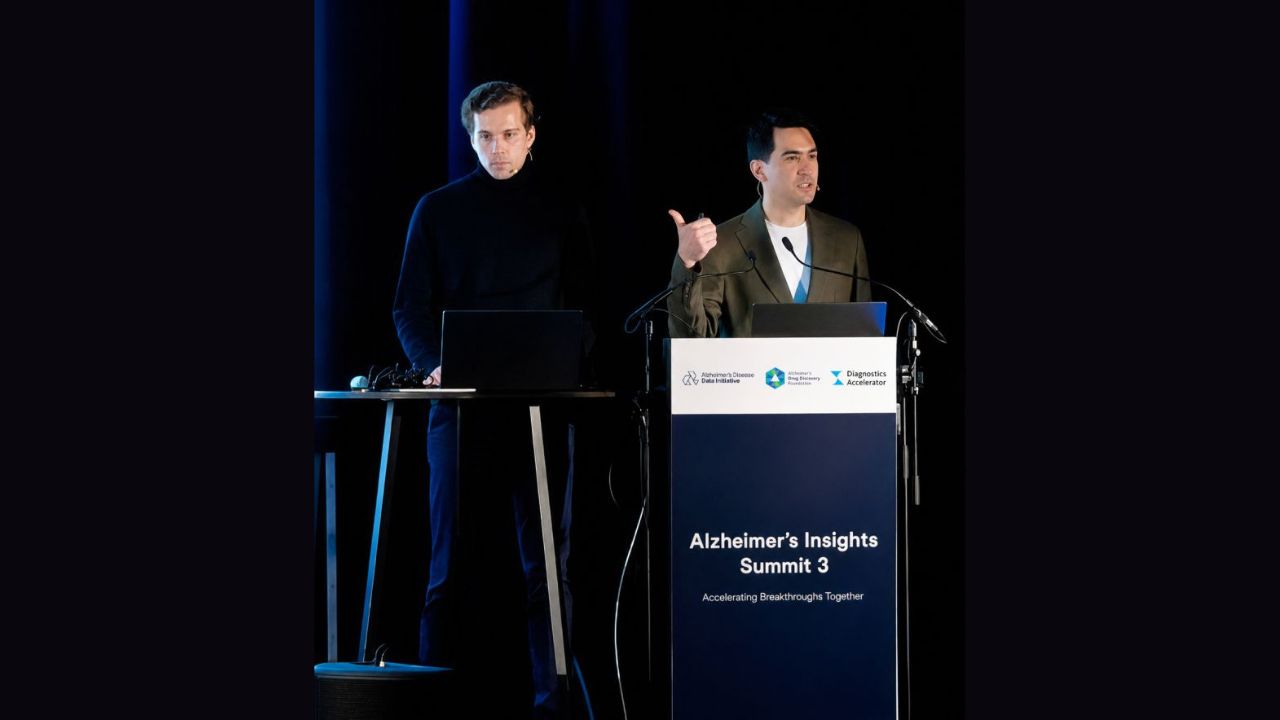
On Sunday, researchers at the Alzheimer’s Association International Conference (AAIC) in London presented new research and tools that could improve diagnosis, draw more information out of a simple brain scan and speed up new experiments that further our understanding of the disease.
“For twenty years we’ve asked Alzheimer’s patients to fit into boxes,” Physician and MIT researcher Adrián Noriega de la Colina told Being Patient. “This session was [showcasing] different attempts to break out of them.”
Improving detection and diagnosis of Alzheimer’s
The doctors’ notes in electronic health records years earlier might provide the early clues of Alzheimer’s. Hong Yu, a professor at UMass Lowell, trained an AI model to look for mentions and keywords in these files that relate to memory, executive function, and other biological changes that occur in Alzheimer’s. The research was published earlier this year in Communications Biology.
The model was tested on health records from over 60,000 veterans who developed Alzheimer’s and 230,000 matched controls. The AI helped detect an increase in the number of mentions of these keywords 15 years before diagnosis, suggesting it could be used to help spot the disease early. Importantly, the research findings need to be validated in a real-world study to see if it could detect people at risk.
Meanwhile other researchers focused on using AI to improve the tools used by doctors and memory clinics to make a diagnosis.
Vincent Dore, a researcher at CSIRO in Australia, used AI to “clean up” the noise in amyloid PET scans, which detect the hallmark beta-amyloid plaques that define the disease. Since blood tests detect proxy signatures of these plaques, they’re validated against these PET scans.
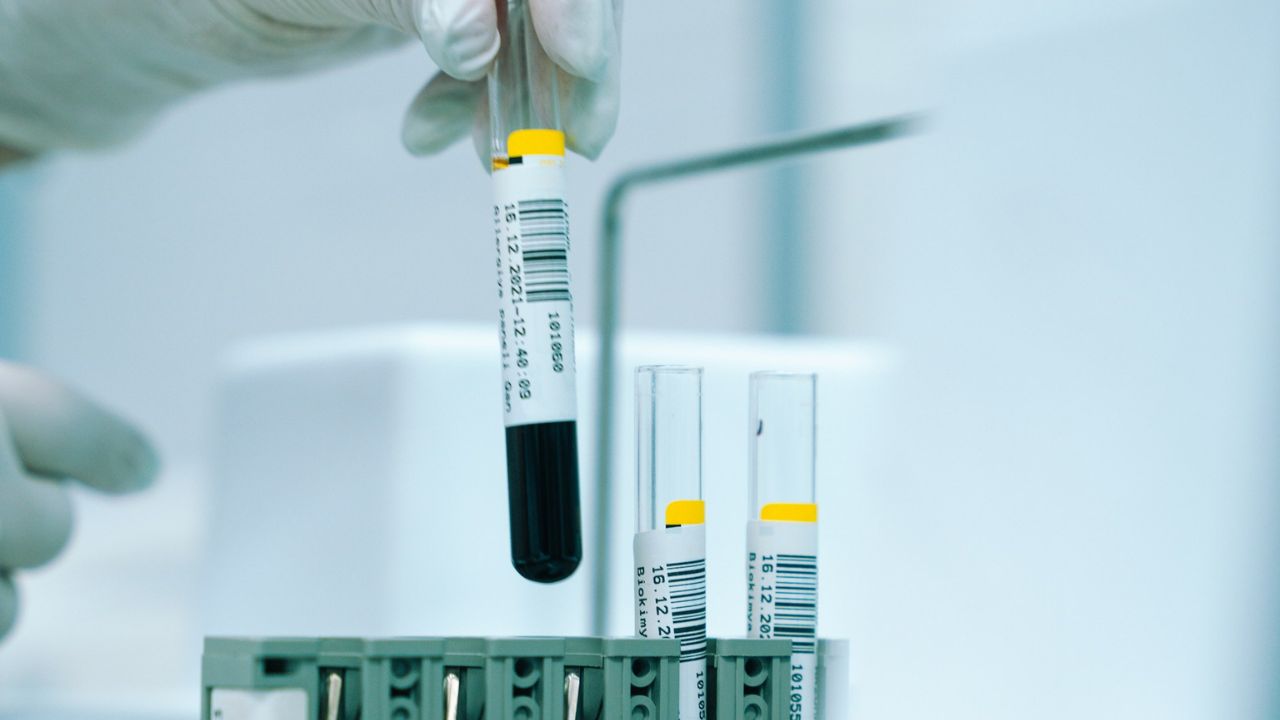
Cleaning up the scans with AI managed to make several prominent blood biomarkers, including pTau-217 and Aβ42/40 even better at ruling out Alzheimer’s. The algorithm also reduced the number of people who received an indeterminate test result — indicating the test can’t confidently rule in or rule out Alzheimer’s risk — which would give doctors a better answer sooner. The algorithm to improve these brain scans was made publicly available to other researchers.
Developing ways to increase the accuracy of blood tests by improving these scans, said Noriega de la Colina, “is the kind of unglamorous work that actually moves trials forward.”
Others set their sites on other types of brain imaging. Mohamad Habes, an associate professor at the University of Texas Health Science Center developed an algorithm called SPARE-tau that used data from tau PET scans, which measure tau tangles, to predict Alzheimer’s progression and stratify people by their disease stage.
His laboratory is also developing other AI tools that could use brain imaging to help detect multiple types of dementia at once from brain imaging. “The models, while they perform perfectly for whites, might underperform for minorities like African Americans and Hispanics,” said Habes. His lab is developing algorithms that could help eliminate the bias that makes these models less able to detect the disease in non-white individuals.
Gareth Harman, a senior data scientist at the University of Pennsylvania, also developed an AI model that looks at brain scans. His tool focuses on tracking brain shrinkage across five different regions, which he calls dimensions, to map out how they change over time and whether they deviate from the pattern seen in healthy aging.
On some of these dimensions, increased shrinkage was linked to the buildup of beta-amyloid proteins and tau tangles, as well as cognitive decline and worsening executive function. Using this data could help map out the individual trajectories of cognitive decline, which Harman said is “really foundational to understanding mechanisms, accurate and early diagnostics, as well as personalized and targeted treatments.”
Accelerating the pace of research
To make sense of vast amounts of biological data, researchers are developing AI tools that help with generating research ideas and code for analysis. These tools help them explore questions they wouldn’t otherwise have the time or technical expertise to pursue.
The Consortium for Biomedical Research and Artificial Intelligence in Neurodegeneration (C-BRAIN) announced the launch of several open-source AI tools that help researchers scour published and unpublished studies and provide peer-review and feedback on grant proposals, manuscripts, and experimental design.
At AAIC, researchers presented more tools that help researchers to analyze data.
Tyler Ard, an assistant professor at the University of Southern California, presented GINA, a research AI tool that could help them navigate aggregated dementia datasets involving more than 700,000 participants. GINA can help researchers find the right datasets to answer their research questions, develop code to analyze data, and search for other published information about a topic. Unlike other AIs, there is no blackbox. GINA shows every step of its work.
“This is not a replacement, this is a tool,” cautioned Ard. “You need to have an intelligent scientist driving this to get meaningful results.”
Duygu Tosun, a professor at the UCSF, developed another tool for interpreting massive databases of dementia data. Tosun and her team developed AlzNavigator to serve as a centralized hub for datasets containing more than 850,000 participants across various longitudinal studies.
“The goal is to democratize discovery of the datasets by removing technical barriers,” said Tosun.
FAQs
Researchers are using AI to test whether electronic health records might hold early clues about disease risk and also developing algorithms to get more information from brain imaging and more accurate blood tests.
No. The AI applications are still being validated. Blood tests aren’t replacing other diagnostics either and are currently used as a complement alongside neuropsychological testing, lumbar punctures, and regular brain scans.
GINA and AlzNaviatore are AI tools that help researchers analyze large datasets, generate new research questions, and speed up the research process.