An AI Model Could Change How We Prevent Alzheimer’s
AI is helping scientists integrate biological data to find new biomarkers that predict Alzheimer’s risk.
The sheer volume of biological data available, including genomic, protein, metabolic, and microbiome signatures, is impossible for researchers to make sense of on their own. Advances in AI technology, however, are allowing them to begin to interrogate this data for new clues about Alzheimer’s.
An MIT-based team developed an AI foundation model, an algorithm trained on vast datasets that can do many specialized tasks, called FINGERS-7B. The name references the FINGER dataset it was trained on — one of the largest lifestyle prevention trials that combines exercise, diet, and cognitive training — and the seven billion parameters, the number of internal dials and levers controlling the behavior of the model.
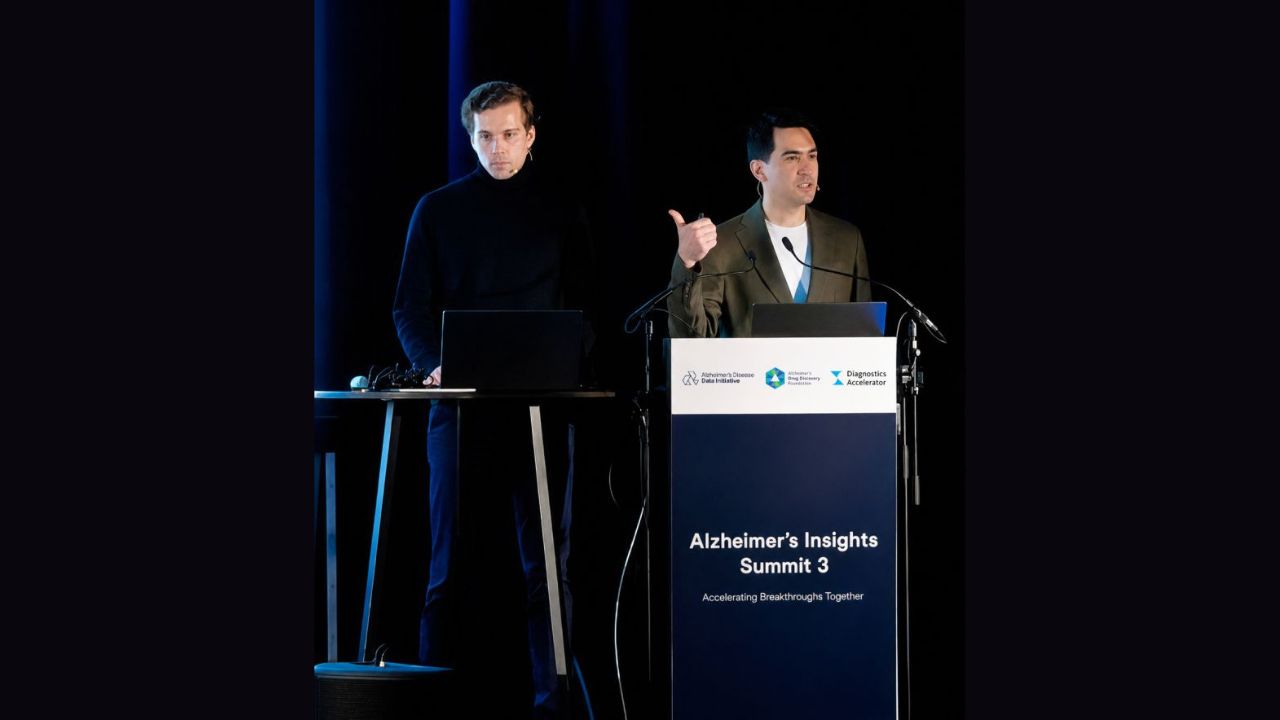
The AI model could accurately predict which healthy participants would develop Alzheimer’s biomarkers and even predict which participants would respond best to interventions. Researchers presented their data at the 14th International Conference on Learning Representations, one of the largest AI conferences, in Rio De Janeiro in April.
Adrián Noriega de la Colina, a researcher at MIT and co-lead developer of the AI model, likens the different types of data that scientists have collected over the years to messages written in different languages. The FINGERS-7B model, he told Being Patient, “allows us to read through all of those languages simultaneously and find patterns that are invisible to any of us individually.”
How FINGERS-7B works
Think of a chatbot, like ChatGPT, for which researchers have trained the algorithm to recognize patterns in vast amounts of text without understanding what each individual word means. For instance, it might identify that ambulances are related to hospitals and healthcare, since those words often appear together.
FINGERS-7B is like a chatbot for biological data that doesn’t need to understand what individual genes, proteins, or microbes do in the body. “They can figure out relationships and correlations,” Arvid Gollwitzer, scientist at Broad Institute and model co-developer, told Being Patient. “Without ever being taught translation directly.”
When researchers input information from the FINGERS prevention study into the model, it applied the biomarker patterns it had learned from previous research to the new data.
FINGERS-7B identified multi-omic biomarker signatures. Rather than relying on a signal from one protein, like pTau-217, or one microbe, a multi-omic signature uses multiple different biological information. For example, one group of people might have high levels of pTau-217, a specific genetic variant, and lower levels of a gut microbe. The study presented at the conference identified gut microbiome signatures, composed of multiple microbial features, that predicted cognitive decline within the next three years with 89 percent accuracy and predicted who would respond best to the FINGER lifestyle intervention. It also flagged four potential drug targets from the microbiome data.
Neurologist Timothy Chang, who serves as director of the UCLA California Alzheimer’s Disease Center, and isn’t involved in the study, told Being Patient the MIT team’s approach is “interesting” and transfers research from other domains, like the microbiome world, over to Alzheimer’s.
Since the AI model is open source, other scientists can use and iterate on the model, accelerating its progress.
“The FINGERS-7B model, he told Being Patient, ‘allows us to read through all of those languages simultaneously and find patterns that are invisible to any of us individually.'”
Can AI improve Alzheimer’s research and care?
Noriega de la Colina and Gollwitzer hope that FINGERS-7B could help identify risk factors on an individual level. Someone with a specific genetic variant, Noriega de la Colina said, might not respond to lifestyle changes meaning that they may need a different approach for Alzheimer’s prevention.
Other researchers are leveraging AI for Alzheimer’s as well. In his work, Chang used AI models to examine electronic health records and spot undiagnosed cases of Alzheimer’s.
Now his team is trying to predict how an individual’s cognitive scores will change as they age. Since people don’t come in to see their doctor at regular intervals, in the same way that study participants receive regular testing, it makes these models more challenging to develop. But since they’re based on representative real-world data, they might be more applicable.
These models aren’t ready for integration into clinical care just yet. Gollwitzer called FINGERS-7B a “hypothesis generating model.” It takes data and makes predictions about biomarkers and risks that scientists need to test and validate in further studies. He hopes it could lead to the development of new biomarkers or reveal new mechanisms underlying Alzheimer’s.
FAQs
FINGERS-7B is an AI foundation model developed by an MIT-based team. The model is trained on large biological datasets including genetic, protein, metabolic, and microbiome signatures to find new patterns in Alzheimer’s data to predict Alzheimer’s risk and who responds ebay to prevention strategies.
Much like a chatbot learns patterns in text, FINGERS-7B learns patterns in biological data without needing to understand what individual genes, proteins, or microbes do. It finds relationships across multiple data types simultaneously, the way a polyglot might read across several languages at once.
When fed data from the FINGERS lifestyle prevention trial, the model identified gut microbiome signatures that predicted cognitive decline within three years, and could predict which participants would respond best to lifestyle intervention that integrated exercise, diet, and cognitive training.
Not yet. Researchers describe it as a “hypothesis generating model” — its predictions still need to be tested and validated in further studies before it could be integrated into clinical care.
Yes. FINGERS-7B is open source, meaning researchers around the world can access, use, and build on it, which could help accelerate progress.
Yes. Separately, a team at UCLA is using AI to analyze electronic health records to spot undiagnosed cases of Alzheimer’s and predict how an individuals cognitive scores may change over time.