Not All Memory Loss Is Dementia: A Physician’s Perspective

From normal aging to mild cognitive impairment, understanding what’s typical—and what’s not—can help you respond with clarity, not fear.
Dr. Em Wong is a doctor of internal medicine and brain health coach with a background in women’s health and integrative medicine. An artist and author of iHeal Mag online, she is writing a book, “Vibrant to 100: Extend Your Brainspan and Shape How You Age.” Her goal is to be healthy of mind and body at her 100th birthday party — and she wants to invite you along on the journey.
People of all ages worry about brain function. What’s different in the older population when they talk with a doctor is the note of trepidation in their voice. Such confessions are usually accompanied by a tentative chuckle as they go on to minimize their concerns by saying things like, “It’s probably nothing . .” or “Sorry to bother you with this . . ”
Their ambivalence is understandable, because we aren’t sure what to expect in terms of memory as we get older. We know that forgetfulness is a natural part of aging, but how do we know what is and isn’t normal? We want to be reassured that nothing is wrong, but would mostly rather not know about anything more serious.
The thing is that it’s not binary — normal brain aging and early neurodegenerative disease are not the only two options. The reality is that forgetfulness is common and cognitive aging looks different for each of us. What we have in common is that changes are gradual in onset and subtle in nature, and they fluctuate from day to day, depending on what we have going on.
Dr Em graphic.
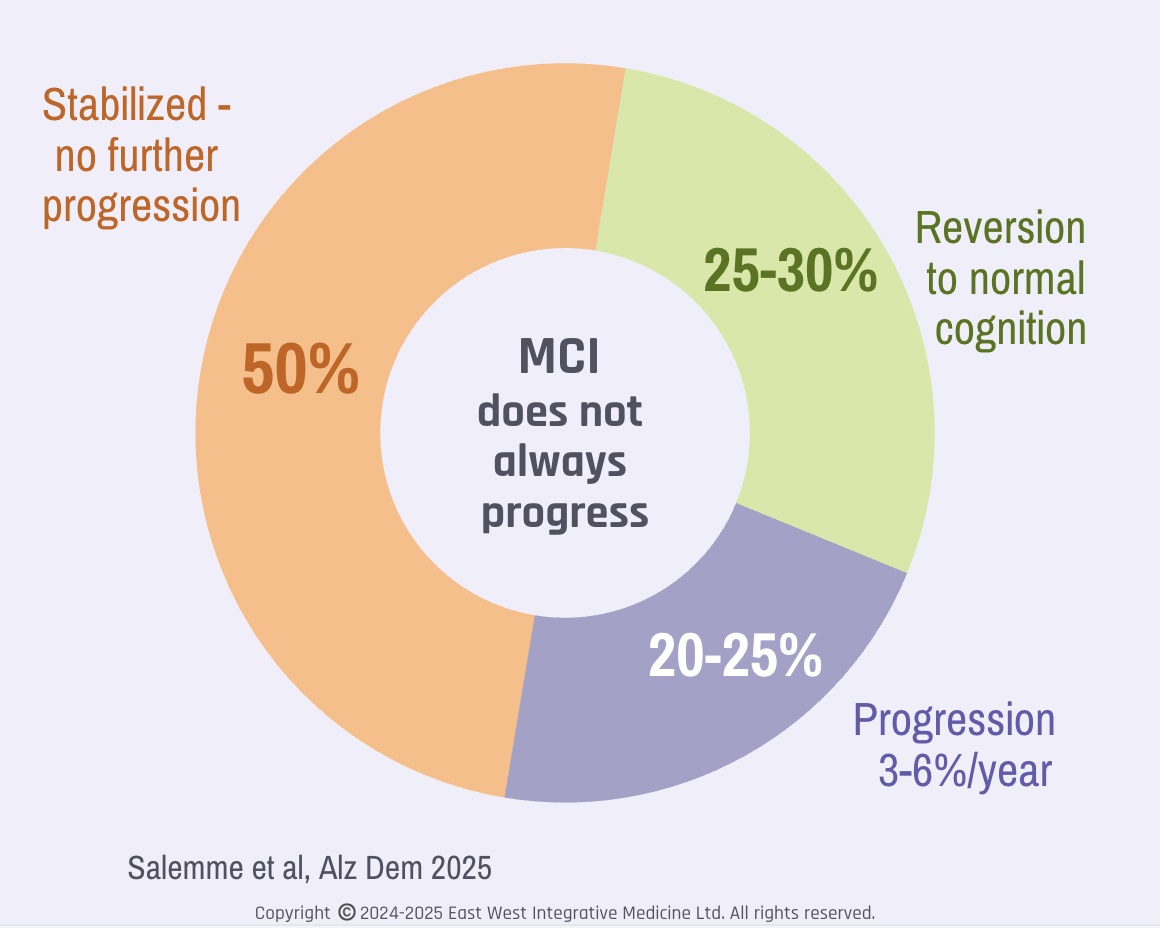
When memory loss and behaviors become concerning they fall into a gray area known as mild cognitive impairment or MCI. Doctors used to think that everyone with mild cognitive impairment (MCI) would inevitably develop dementia, progressing at a rate of 10% of cases per year. But that data turned out to be skewed by selection bias, meaning that outcomes looked worse because they were based on sicker study populations in clinics and hospitals.
When looking at broader community-based elders with MCI, researchers found that over half of cases actually had stable cognition with no further progression over time. In fact, 25-30% of MCI cases reverted back to normal cognition.
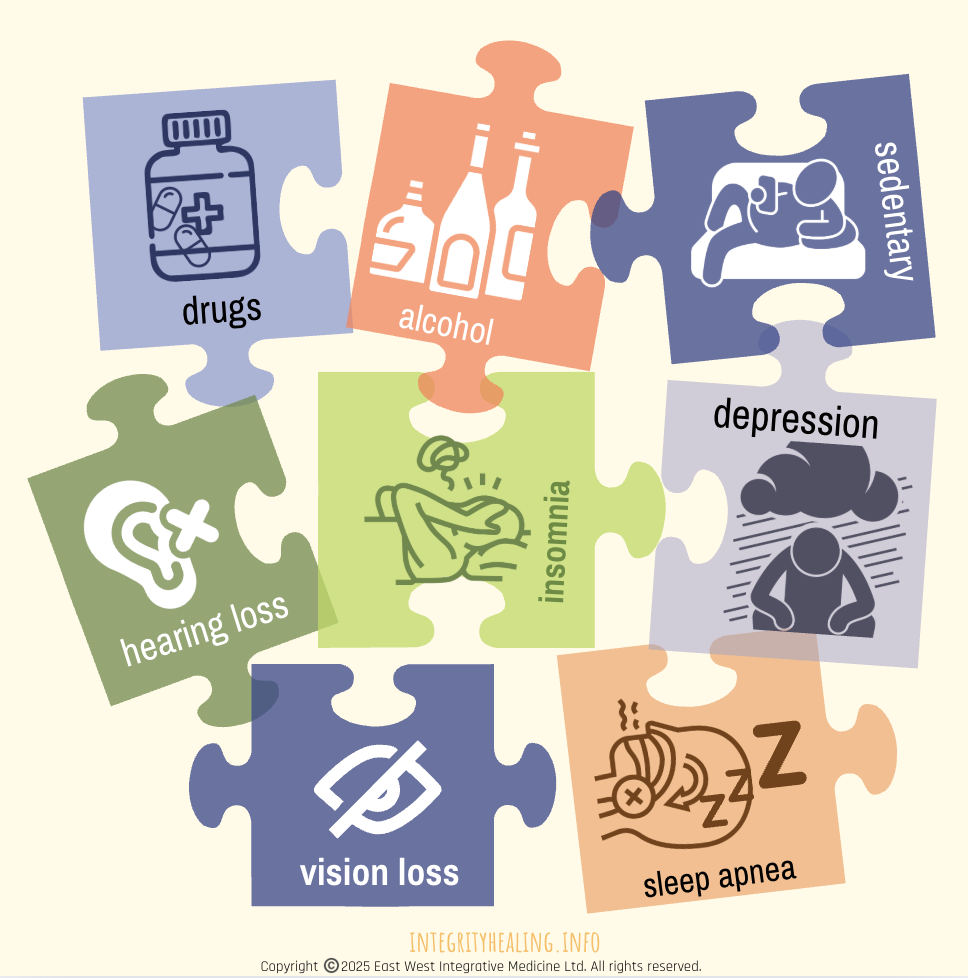
Such cases highlight the importance of identifying potentially reversible causes for memory loss, which include vitamin B12 deficiency, low thyroid, depression, medication effects, poor sleep quality and physical inactivity.
The reality is that our brains do slow down with age, just as our bodies do. Certain aspects of cognition known as crystallized intelligence have been shown to remain stable or may even improve with age. Examples of crystallized intelligence include: general knowledge, vocabulary and repeated practised skills like cooking a favorite dish.
By contrast, fluid intelligence tends to begin declining in our mid 30s. Whether or not you’ve noticed, it’s probably no longer so easy to multi-task and it may take more time for you to learn new information.

My inner librarian. Dr Em graphic.
Aging also typically impacts the speed at which information is retrieved. Of course it makes sense that we’ve accumulated more and more knowledge over the years, so it naturally takes longer to find what we want. When this happens to me, I try to envision my inner librarian who isn’t as spry as she used to be.
It takes her a moment to put on her glasses as she gets up to find the information I want. I find it helps to think of her with compassion and a touch of humor, rather than becoming disgusted or impatient. After all, she’s certainly still serving me well in sorting through those internal archives and I don’t want her to fall off the ladder just because I’m in a hurry.
Many memory issues are age-agnostic — you’ve probably had the experience of walking into a room and forgetting why you’re there, or losing track of your phone. These actually represent instances of distraction, in the sense that memory was never laid down in the first place because you weren’t paying attention.
No matter our age, phones and mental overload are huge contributors to forgetfulness. So we can do ourselves a favor by cutting down on distractions and slowing down to pay attention, rather than getting frustrated in such moments.
Stress can also play a huge role in cognitive function, regardless of age. Worry has the ability to distract the mind with anxiety, leaving fewer available resources for concentration and recall. Chronic stress also reduces motivation and processing speed, creating a kind of sluggishness or brain fog.
We can help ourselves by acknowledging stressful situations and by becoming more mindful of whether our coping strategies are helping or hurting. For example, staying up late to scroll on our phones or excessive drinking may further impair cognition, while walking with a friend may help.
It’s easy to let the mind jump straight to worst-case scenarios when we have a memory lapse. But it’s more helpful to stay grounded by gathering data. Keeping records and tracking patterns keeps us focused on what’s actually happening rather than what we might fear in the future. Were you overworked, stressed, exhausted? Or maybe getting sick, dealing with medication side effects, dehydrated or hungover?
If you’re feeling confused it helps to reorient yourself with basics, reminding yourself of where you are, who you’re with, and what day it is. These simple questions serve doctors the world over in screening for serious neurological problems.
Another reassuring clue to normal brain function is self-awareness. Noticing that we are able to think requires higher order complexity, like following conversations and managing daily tasks.
What interferes with brain function? Dr Em graphic.
Embracing the aging process isn’t about throwing in the towel — it’s about staying engaged. Sometimes that means accepting support for our aging brains and bodies — like addressing hearing loss with hearing aids, which have been shown to improve cognitive outcomes.
We can also build neuroplasticity by challenging ourselves to learn new technology. Picking up unfamiliar skills keeps the brain flexible — fueling motivation with novelty and a sense of progress.
Uncertainty seems inherent to dealing with memory issues and none of us can predict how our aging journey will unfold. But it’s clearly time to drop the “nothing can be done” narrative. We know that 45% of dementia cases may be preventable through brain-healthy lifestyle choices. So we are most likely to stay independent, strong and active by choosing to remain open to different strategies for aging.