
Having a Higher Purpose May Lower Dementia Risk
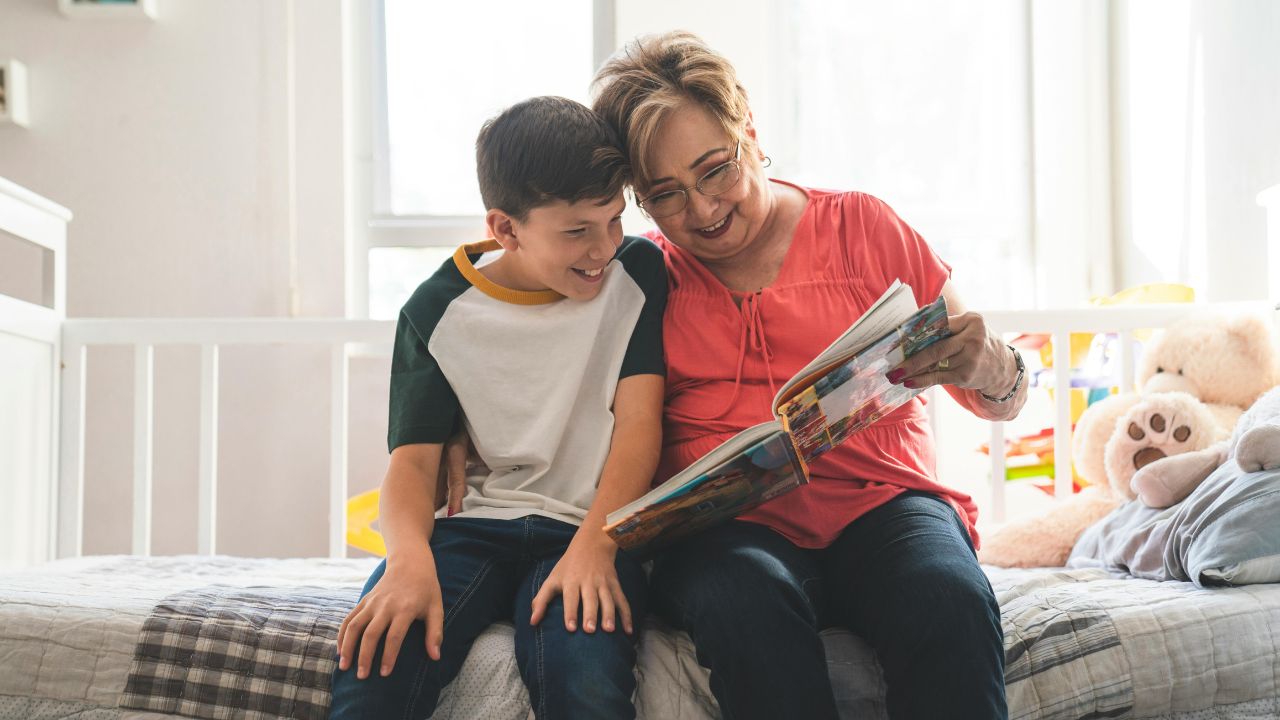
Caring for grandkids, volunteering, or engaging in a favorite hobby may help delay or reduce the risk, even for people who have the gene for Alzheimer’s, say researchers.
As a carrier of the APOE4 gene, Theresa Braymer, 66, is at high risk of developing Alzheimer’s disease. And though her two siblings have progressed dementia, Braymer does not, a fact she attributes partly to her being an active volunteer for APOe.info, an online community of people like herself who carry the gene.
She also credits her passion for bird-watching around her Denver home for keeping her cognitively healthy, a hobby she says has many health benefits.
“Bird watching gets me out there in the fresh air and sunshine, socializing with other people,” she said. “Your senses are heightened with bird watching, you’re hearing and seeing things. I think it contributes greatly to my health.”
Studies indicate that having a sense of a higher purpose — which could be focusing on a personal goal, or having a sense of direction in life, such as volunteering, pursuing a passion, or even caring for grandchildren — can reduce a person’s risk of developing cognitive impairment. Having a higher purpose is defined as a tendency to find meaning in life with a sense of intentionality and direction toward goals, according to Patricia A. Boyle, Ph.D., a professor of behavioral sciences and neuropsychologist with the Rush Alzheimer’s Disease Center in Chicago.
New findings show that the protective effect of having a higher purpose is found even in people like Theresa who are genetically at risk of dementia.
It also is true across all racial and ethnic groups and when age, sex, education level, and depression scores were considered, having a purpose or goal in life that provides meaning and value to a person, is still associated with having that same lower risk.
This lowered risk is not small. One recent 2025 study from the University of California, Davis, published in The American Journal of Geriatric Psychiatry, tracked more than 13,000 men and women aged 45 and older and found that those who had a higher purpose in life were 28% less likely to develop cognitive impairment over a 15-year period.
Another study, led by Boyle found that people who had a sense of a higher purpose in life were more than two times more likely to be free of Alzheimer’s disease compared to those who did not.
Boyle calls having a higher purpose a “resilience factor,” which can help people even in the face of disease.
Just how this protective effect works isn’t fully understood.
“When older adults have a higher sense of purpose, it can have cascading effects on different health behaviors — they might engage more socially with others, exercise, stay active, and avoid harmful levels of alcohol use,” said Ashwin Kotwal, MD, MS, associate professor in the division of geriatrics at University of California, San Francisco, and San Francisco VA Medical Center.
“They may experience less stress from sudden or chronic stressors, which leads to an overall lower burden of inflammation,” he said. “All of this can contribute to a lower risk of cognitive impairment over time.”
In contrast, lack of purpose can lead to isolation. “People may feel lonely or have existential distress, a feeling of losing their identity and place in the world,” Kotwal said. “It can affect their faith and relationships with others. Taken together, it is not surprising that it would have a strong relationship with cognitive decline.”
Engaging in meaningful activities, whatever they might be, fosters social connections, cognitive engagement, and positive emotions, “which together may delay dementia onset and lower risk,” explained psychiatrist Aliza P. Wingo, MD, MSc, one of the authors of the UC Davis study and a professor in the department of psychiatry and behavioral sciences.
What’s critical is that having a higher purpose in life is a potentially helpful, non-pharmaceutical therapy available to everyone. “Purpose in life is one of the strongest factors that tends to help people navigate the challenges of physical difficulties,” said Kotwal. “It tends to give people an ability to adapt to changing circumstances, stay positive, and remain engaged in meaningful activities.”
Theresa Braymer says her volunteer work is about interacting with others. Sometimes, she volunteers along with her husband, who also has the APOE4 gene. She said, “The motivation came not to save myself but to help others.”









Excellent advice, thanks
Hi Ed, thank you for being here. Here’s an article on Alzheimer’s and social interaction you might find useful: https://beingpatient.com/alzheimers-and-social-interaction-heres-what-you-need-to-know/?utm_source=organic&utm_medium=social – take care.