Frontotemporal Dementia Is Often Misdiagnosed — New Tests Could Help

Many with FTD receive a wrong initial diagnosis. Emerging biomarkers and genetic testing could help.
For generations, Wanda Smith’s family faced a range of neurological disease diagnoses — including senility with depression, Alzheimer’s, and Lewy body dementia. They were all wrong.
Doctors hadn’t realized the family members all had a genetic form of frontotemporal dementia (FTD), also called frontotemporal degeneration, caused by mutations in the GRN gene. She later founded CureGRN to connect families with researchers and trials. Smith’s family wasn’t alone in getting the wrong initial diagnosis. One in three people eventually diagnosed with FTD are first misdiagnosed with psychiatric conditions like depression, anxiety, or psychosis.
“We have a lot of people who are being told there’s nothing wrong with you, it must be a midlife crisis,” Penny Dacks, chief science officer of the Association for Frontotemporal Degeneration (AFTD), told Being Patient.
Affecting as many as 60,000 Americans, FTD is an umbrella term for several rare dementias that often strike people in their 50s or 60s.
Finding biomarkers for FTD
Since there aren’t any tests that confirm that FTD causes a person’s symptoms, many people don’t get diagnosed quickly. The variety of symptoms, too, makes it more challenging. Some people develop the behavioral variant (bvFTD) resulting in personality and behavior changes while others develop primary progressive aphasia, losing their language and speech abilities. Other forms affect movement abilities first.
Even among those with the GRN gene, there’s a range of symptom presentations. Most people with this gene develop either behavioural variant FTD or primary progressive aphasia, though some show other symptoms. Even with identical GRN mutations, the symptoms and age of onset can vary substantially.
Sandra Ahten, a semi-retired business owner living in Urbana, Illinois, cared for her mother, whose FTD progressed during the early years of the COVID-19 pandemic. When Ahten started having concerns about her mother’s symptoms, which resembled stroke more than dementia, some of the doctors they went early on didn’t make the right diagnosis, despite a family history of FTD.
As one of the doctors fumbled around on the computer, Ahten recalled her mother joking, “They might need to see a doctor more than I do.”
It took four years for her mother, initially told she had Alzheimer’s, to get the right diagnosis. A brain scan that showed the frontal and temporal lobes of her brain were shrinking finally helped doctors figure out it was FTD.
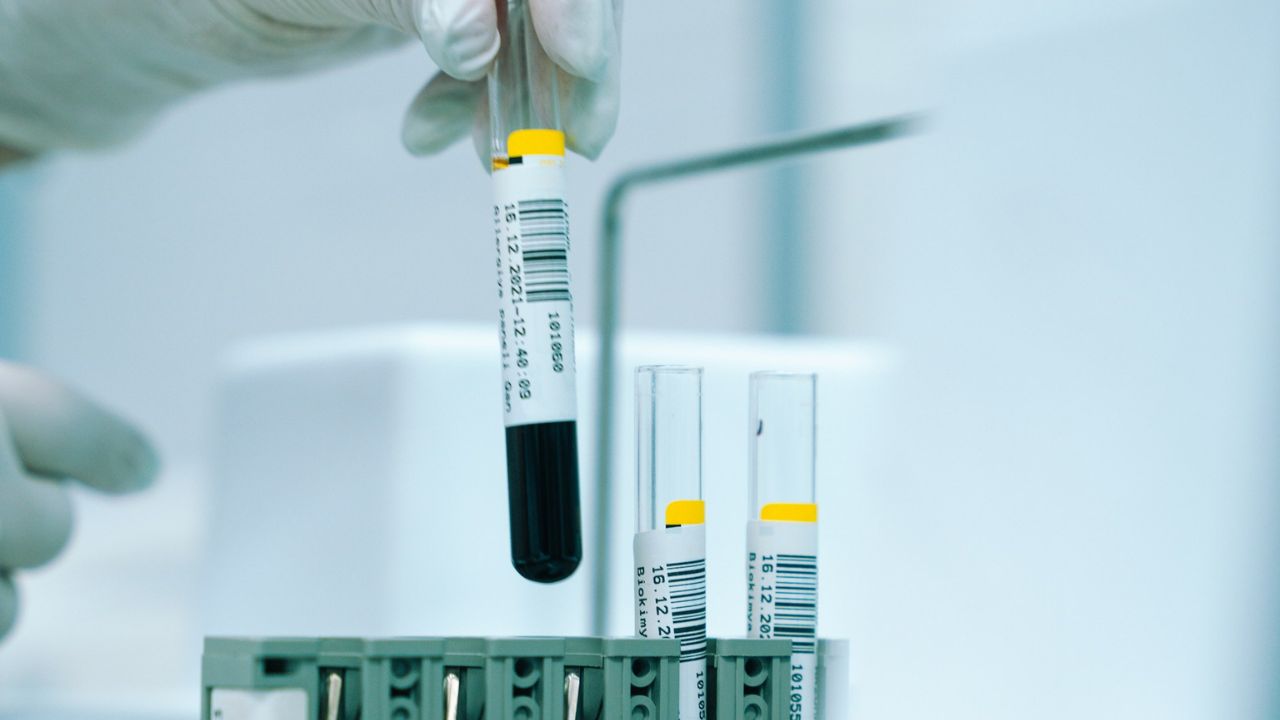
Researchers and companies are searching for a biomarker that could confirm a diagnosis through brain imaging, skin biopsies, saliva, blood, or cerebrospinal fluid. Dacks believes that when it’s developed, it could screen patients, helping doctors identify who needs to be referred out to the limited number of U.S. specialists who can make the final diagnosis.
Since 20 percent of cases are caused by mutations in a specific gene, major organizations like the AFTD recommend that people with a family history receive a genetic test.

Sandra Ahten in San Francisco
Preparing for genetic testing
A genetic test revealed that a mutation in the GRN gene caused Ahten’s mother to develop FTD. Ahten decided she wanted to know whether she carried the gene too. Before getting tested, Ahten purchased long-term care insurance, which she might not be able to get if she knew she had the gene. She tested positive and is currently asymptomatic.
Genetic counselling is recommended before and after testing. A counsellor helps people understand any drawbacks and risks and explains the results of the test. The Progranulin Information Navigator was created by the Bluefield Project, a non-profit helping accelerate new treatments for the genetic form of FTD caused by a GRN mutation, to help individuals and their families by providing free genetic counselling and testing.
Heidi Hall, another asymptomatic carrier of the GRN gene, told Being Patient that anyone considering genetic testing should prepare for the emotional and practical aftermath. She urges finding a therapist, connecting with a support group, and bracing for family tensions. Getting tested caused a temporary rift with her siblings, she said, who decided not to find out whether they carried the gene as well.
One man whose wife carries the GRN gene told Being Patient that one of their children got tested while family planning. With some forms of in-vitro fertilization, it may be possible to select for embryos that don’t carry the mutation.
The positives of an early diagnosis
Soon after Ahten’s mother received the correct diagnosis, her condition progressed. She passed away the following year during the early stages of the COVID-19 pandemic. As a caregiver for her mother, Ahten said she had a “long goodbye” and closure rather than a sudden loss.
But if the diagnosis had come sooner, “she could have gotten into a trial” that might slow the disease, Ahten told Being Patient. Ahten herself is taking part in the ALLFTD (Advancing Research and Treatment for Frontotemporal Lobar Degeneration), a longitudinal study following people at risk of developing FTD across their lifespan.
“I use that study to reduce stress,” said Ahten. Rather than ruminating over every minor lapse in memory, she gets extensive testing once a year in Philadelphia, monitoring her brain health as part of the study. “That’s not your job to have your brain monitor your own brain,” she said “That’s the doctor’s job.”
Knowing she carries the GRN gene was also a “wake-up call” for Ahten, and it’s not necessarily an entirely negative experience. She’s planning a large trip later this year, and took up biking and breathwork. “What do I have to do? Go to Morocco. Go to Philadelphia once a year,” she said. “You get a long goodbye, starting when I’m completely healthy.”