Ask Teepa Anything: Care Homes, Apathy, Sleep Changes, and Other Care Questions
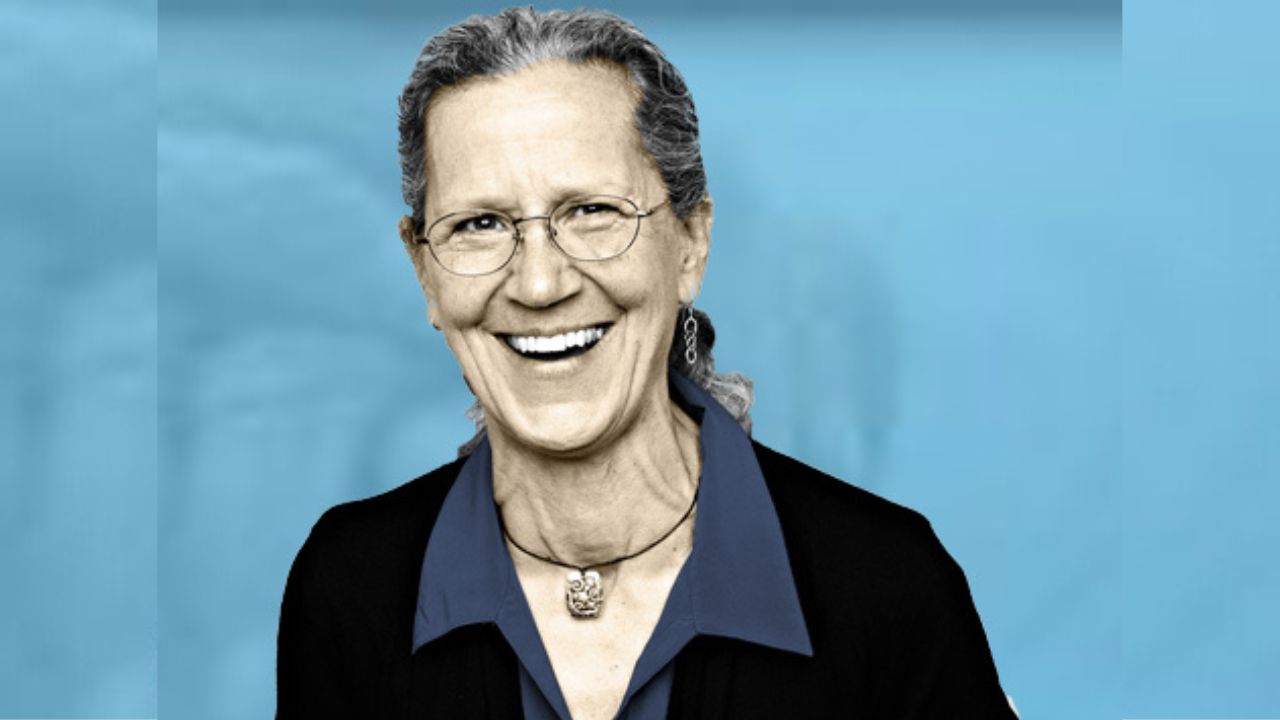
Dementia care expert Teepa Snow answers audience questions on some of caregiving’s hardest decisions, from when to consider memory care to how families can respond to behavior changes, apathy and shifting daily needs.
When a loved one is diagnosed with dementia, caregivers are often thrust into a world of difficult decisions — from whether it’s time to consider a care home to how to respond when a spouse becomes unrecognizable in temperament.
Dementia care expert Teepa Snow, an occupational therapist with more than 40 years of clinical and academic experience, emphasizes that successful caregiving often depends less on arguing facts than on adjusting the environment, preserving purpose and social connection where possible, and recognizing that clinical labels or test results do not always capture what daily life with dementia actually looks like.
Teepa developed the GEMS States of Brain Change and Positive Approach training strategies. Her company, Positive Approach to Care (PAC), provides online and in-person education and products to support those living with brain change. She also founded the Snow Approach Foundation, a nonprofit organization based in Hillsborough, North Carolina.
In this conversation with Being Patient’s founder, Deborah Kan, Snow discusses how dementia care rarely follows a straight line: families often must keep reevaluating what is working, balancing safety, dignity, routine, and quality of life. Snow urged caregivers not to wait too long before considering a care home, noting that adjusting to a new environment becomes harder as dementia progresses.
Deborah Kan: Just in the past week, three people have contacted me saying that they’re really struggling. Should they be considering a care home for their parents? Their parents are in earlier-stage dementia, but they’re starting to realize they can’t live alone anymore and they can’t move in with them for various reasons. So what’s next? What should people consider? It’s a really hard decision. You get to middle age, your kids are getting older, and you’re faced with, ‘What do we do about mom or dad?’ Teepa, from your perspective, what should people ask themselves to feel OK about a decision like that?
Teepa Snow: The first is, if you’re asking me the question, your brain is already feeling some pressure to do something out of where we are right now. Where we are right now has got to be a little uncomfortable, or this is not a question to be bringing up.
So you’re thinking about an environmental change. Well, you have two choices with an environment: bringing people into the environment and changing the environment that way, or taking the person to a new environment where they’ll have new people but it’ll also be a new place.
If you think about your person, do they like changing places? Are they pretty comfortable changing places, or would they rather sort of think about having people coming into their place, which is their private space? Which do you think would be the more problematic or the better supportive for them?
Kan: Well, I guess the first question, and this is what I always say, is do they thrive around people? But again, they have dementia. So I don’t know if that’s the same answer.
Snow: Well, see, that’s the really tricky part. I’ve had so many people that want to stay at home, and so the family says, OK, well, let’s bring some people in. And then you can stay at home. And they fire everybody.
They don’t want anybody in their home. And the problem is, they’re the boss of that space. And so you can’t get them not to be the boss of the space. So you create a space where they’re not the boss there. And they’re a person who stays there, but they’re not the boss of it. And that way it’s easier for them to accept other people are in that space.
But you might say she wants a private space. Well, then I might say, do you have the option to do a single room? Is that an option? Because if it’s not, OK, well, now we have to go to the next. How would she feel about a roommate that’s not her spouse?
We have to also get into the reality that these are super expensive to do and sometimes not super satisfying, in that how are you going to cope with when things aren’t going like people told you they would in the advertisements?
Kan: I guess the tricky part is I’ve heard both stories. Sometimes it’s like, oh, it was great. She’s so much better. And then other times, not. So it’s almost like a trial-and-error type of thing.
Snow: It is a little bit of a trial and error, because their brain is changing, their body is changing, their likes, their dislikes are changing, their capacity is changing.
The one thing, if it’s possible, I would not wait really late to do this, because adjusting to different really late is super hard. Unless you were able to keep them in one environment for a really long time, and then something bad happened, then you have to make a shift. But that’s called crisis management. That’s a little different. That’s management of a crisis. And people have to do that sometimes.
“It is a little bit of a trial and error, because their brain is changing, their body is changing, their likes, their dislikes are changing, their capacity is changing. “
Kan: For our family, there was a period of time where my dad broke his hip. And so we opted to put them in a care home because my mom could be well looked after in memory care and my dad could just heal. And so we did that for a few months. And what we realized is my mom was a lot better off there. She loved the people. She loved being busy. She was always a busybody, like she always had stuff going on. And so in a weird way my sister and I were like, does it seem like she’s getting better? But then it gets complicated. My dad wanted to go home. They’d been married for — there’s no way he’s going to be apart from his wife. And so you’re always dealing with these things.
Snow: Yeah, and I can’t think of a single situation that doesn’t get complicated one way or the other. Finances are complicated. Relationships are complicated. Housing is complicated. One partner versus the other partner, this dementia, that dementia. It gets really tricky. What people said was going to happen when you moved in isn’t what happened. They ended up in the hospital. And your whole thinking of safety and how this is going to play out, you’re reevaluating.
And I think if I can say anything for the work that you do, it’s the reevaluation. You have to look at it again and go, OK, so much for Plan A and B. Let’s see, where are we? OK, I guess we’re at C. Let’s look at what our options are now.
Kan: I’m going to go to the audience now. Denise is asking, “Why is my husband so demanding and mean to me, yet a real gentleman to anyone else?”
Snow: OK, who does he trust and love the most? You. So guess who he feels most comfortable bitching to? He’s really unhappy about a lot of things, but he’ll only do it with you in a private space initially. And then it moves into less private space. And then it becomes a habit. And it’s mostly because he trusts you, and you may not be shifting your role as quickly and effectively as you might want to maintain a better relationship.
So if he says, “I don’t understand why we can’t go down to dinner at 4:30,” the old you would say, “Well, because the doors don’t open till 5. There’s no point in going down.” And he says, “You always want to tell me what to do.” So instead, when he says, “I don’t understand why we can’t go down at 4:30,” you go, “You’re not sure about why they won’t let us eat at 4:30. You know what, why don’t we go down and ask the receptionist what the rules are?”
You’re not trying to explain the world to somebody who is going to view you as the bad guy. Because you’re safe. You’re super safe. “Why did you take my checkbook?” And without thinking out of your mouth you will say, “Well, we talked about this.” And you have to catch yourself and you have to go, “Ouch, dementia. OK, let me think about my answer before I do it.” Because if I just answer you like your wife — “We talked about this” — there’s really clear messaging there that there’s no memory of that previous conversation about taking the checkbook. So you can’t bring it up that way. If you bring it up like that, it’s seen as an argument versus a conversation. And it’s really risky.
Kan: And I don’t mean this to sound demeaning, but it is kind of the strategy we use with our kids, right?
Snow: It is the strategy used for somebody who doesn’t have a fully functional prefrontal cortex, which is what you’re acknowledging. The wiring into the prefrontal cortex no longer works. So I’ve got to quit trying to use what’s not there and acknowledge how I can use what they still have, which is they wanted to know something. They were being curious with you.
“Why are you doing the checkbook now?” They said it in a way that sounded mean because you surprised them by taking the checkbook, which gave you more data, which is they don’t remember the conversation you just had 15 minutes ago. And all this, you’re doing this in real time and you’re tired. And you just want to write the checks. “Tell you what, why don’t we do this together for right now? Let’s just get it done.” And I’ll say, “Tell you what, here’s the amount here, put that there. Great. Now let’s get this one in the envelope.” And just move into doing something with the checkbook rather than trying to explain why you’re taking it over. It’s a choice and it’s a hard one, but arguing is rarely going to result in something you want long term.
Kan: Mary is asking, “My husband, 78, is fit, still living with Alzheimer’s and vascular dementia, has practiced and taught tai chi as a martial art since 1981. He only has one class with senior-age students who range from 70 to 85-ish. They’ve been with him for decades and are more friends than students, and they have been supporting him to be able to continue the class, which obviously gives him purpose and meaning. The past week wasn’t good. He was trying to make corrections to what they were doing in the warmup exercises and it was too demanding. He got upset, they took breaks, then the next class he skipped the warmups.”
Her question is, does she tell him the class doesn’t exist anymore? She’s getting some home care starting next week. One of his students has offered to take it over when he can no longer lead it, but he still goes on the bus or might even bike there over the summer. So it’s a lot of logistics that she’s handling.
Snow: So I guess the question I have is, does he bring up teaching the class or does he get reminded about teaching the class? That’s a starting point. Is he still aware that he has a job to do and he wants to go do the job?
Are there selective students who would work with him, a smaller class? A lot of people couldn’t make this time, so it gets to be a much smaller class. There are three or four people who are super comfortable and are starting to develop some skills at saying, “So, teacher, shall we start with this warmup or do you think we should start with this warmup?” And so it becomes a supportive space where he can still perform with support, but there’s less risk involved and he’s not hurting himself or others. But it requires a lot more work. But it still might be super important for Mary, because she needs him out of the house for just a little bit.
You have to use what you had and you build it into something slightly new. And I think what’s happened is he’s been able to use what he had and just keep using what he had. And now we’re getting to a space where it has to be something somewhat different for him to sustain that sense of purpose. And it may be one-on-one classes, where there are a couple people who really would like some one-on-one support. And so that becomes what happens instead.
But he gets a lot out of leaving his home space and going somewhere. And I would hate to see that disappear. Because that periodic routine of leaving and going and doing and then coming back is incredibly important to a human brain that’s changing. Sustaining that, if you can, is super important.
Kan: I want to ask you something about what you’re seeing through caregiving. One of the things that we did after my mom passed away is we made her brain autopsy public so that other people could learn about what you get out of an autopsy. And one thing that really surprised my sister and I was that they found the presence of three different types of dementia in her brain.
And it shouldn’t surprise me because I’ve interviewed pathologists who say 75 percent of cases are mixed dementias. And they don’t know, just to be clear to our audience, we don’t know if they start as different dementias or if all roads converge and they end up merging into different dementias. But I think what surprised me was two things. One was, I always thought she had vascular dementia, and that’s based on a scan that she had where they found little —
Snow: Little white matter disease.
Kan: So I thought, OK, it’s vascular because you can’t really differentiate the symptoms between Alzheimer’s and vascular a lot of times, correct? Am I correct in saying that?
Snow: Vascular tends to have more episodes of like, wow, what just happened? And then a little bit of a recovery. And then, what’s wrong with her? Why is she acting like that? And then she comes back. But it can be a little tricky if there’s Lewy body involved, because Lewy body has episodes of weird and then comes back, too.
Kan: OK, so that’s interesting. And very much so in the beginning of this disease, we had that, like, oh, she’s doing great. She’s fine.
Snow: She doesn’t even have anything going on. Wow. She looks fantastic. Maybe it’s not dementia.
Kan: Yeah. And then the next day it would be like, oh, crap. What’s going on?
Snow: That’s classic for vascular or Lewy body. Less typical for Alzheimer’s.
Kan: Interesting. So maybe that was the vascular coming in. And then she had confirmed amyloid and tau in her brain, which is indicative of Alzheimer’s disease. But the third thing they found was TDP-43, which a lot of our audience won’t be familiar with.
Snow: How old was your mom when these all started?
Kan: Well, that’s another interesting question. The symptoms — are you asking? So she was diagnosed in 2013 but because my sister and I opened all her medical records, because we had authority over health. We saw, and we didn’t know this, she went to the doctors in 2008, worried about her memory. So five years prior to when we ever noticed anything, she was noticing things. She was asking herself, is it normal aging or something more serious, in 2008. So something must have triggered that for her to be scared enough to ask the doctor. But we didn’t know.
Snow: How old was she in 2013?
Kan: She was like 80, 83 or so.
Snow: Here’s the thing. I think your mom had some LATE.
Kan: She did. They found TDP-43, which is indicative of LATE dementia.
Snow: Yeah. And so it has some really interesting profile features.
In 2020 in England, they discovered — they re-looked at a bunch of very wonderfully donated autopsy brains that families donated and went, “Oh, look at this.” We thought they all had Alzheimer’s because they had some beta amyloid and tau. But when we investigate tau, it’s like, “Oh, this is TDP-43.” How old were they?
And what we know is the most common dementia after age 80 is not Alzheimer’s. It has a profile that approximates Alzheimer’s, but it’s based on this tau pathology that’s different, TDP-43, and it’s invasive. And so it gets really profound and it sort of attacks the prefrontal cortex in ways that are interesting. It attacks the limbic system in a way that’s super interesting. And so it mimics Lewy body, and vascular problems, and it mimics Alzheimer’s, but it’s actually this different phenomenon, and it’s really common among old people.
Kan: OK, so they don’t have a test yet for TDP-43 that’s not postmortem, right? It’s very hard to diagnose it. You could do elimination, and you could say, “Oh, this person doesn’t have amyloid, therefore maybe they have LATE,” correct?
Snow: And how they behave and how they interact.
Kan: What’s the difference between LATE and Alzheimer’s in terms of symptomatic presentation?
Snow: So if somebody didn’t have Alzheimer’s, like your mom started off with some vascular and Alzheimer’s a while back, but then she really got cooking, and it cooked fast and it revved up the engine for her symptoms. Her symptoms got really pronounced quickly. But those symptoms were different. She had problems sometimes seeing things visually that were accurate or inaccurate. She would have difficulty thinking things are happening that weren’t actually happening the way she thought they were happening. So her brain made up stuff.
And we would also have potential of being awake at night, not being able to settle down at night, being really concerned about break-ins, about bad things going on, hearing something and thinking it was about here and now. And it’s like, “Mom, that was the TV. They were talking about something going on in Europe.” “You don’t understand.” And then, episodically, losing language.
Kan: But isn’t that Alzheimer’s too? Losing language, or is that only LATE?
Snow: It’s not like, boom, what’s going on with her? Did she have a stroke or something? Because finding words gets really hard, and then it’s back. And it’s like, OK, yesterday I swear she couldn’t come up with words. I asked her what she wanted for lunch. And then two days later, she’s like, “Well, I’d like a ham sandwich. Or maybe I should have …” So it’s bizarre.
And if they chase it and try to treat it with meds, they can kill them. They can kill people. They can give them too much of a medication for hallucinations and delusions, and they end up falling and cracking their heads open. It gets really nasty when people don’t know about LATE, and too many providers know nothing. They don’t even know it exists. I’ll say the word LATE and they’ll go, “You mean like late in life?” And I’m like, no, it’s a condition.
Kan: I believe there’s more LATE cases because more people now are getting PET scans thinking to go on the monoclonal antibodies and finding, wait, I don’t have any plaque. So to me, that might be LATE, correct? But do you have to be older in age to get LATE?
Snow: So it’s limbic-predominant age-related TDP-43 encephalopathy. So what it means is in and of itself, it’s an age-related, they think, phenomenon, but they’re wrong. I don’t think it’s one of those things where we’ll find out, just like Lewy body’s very rare — it’s like, no, it isn’t. Thirty percent of everybody with dementia has some Lewy body, some alpha-synuclein protein stuff. It’s messy.
And the fact that your mom ended up with three different profiles, I think the blood-brain barrier is fragile. And I think once you get into a space where you have damaged it in some fashion, whether it’s due to viral load or whether it’s due to bacterial inflammation, whatever — there’s all kinds of possibilities. Once it gets damaged, it’s more amenable to more variables and more of these malformed proteins kicking off. I think our systems try to fight fire with fire.
And so I think what we’re finding out is, I believe it’s all going to come down to your brain trying to keep you whatever way it can. And so it activates these systems that are immune reactions, but they’re overdone — they’re done in malformed ways. And we end up causing more harm. Just like the idea that, “Oh, we should take an anti-inflammatory every time we feel a single ache,” instead of like, “Whoa, let’s investigate what’s going on.” Maybe we shouldn’t throw everything at this at once, because it might be masking what’s actually going on and making it worse over time. I think it’s complicated.
Kan: But towards the end, she did lose her ability — she was losing words. She did lose her ability to talk. She could say little words, but you could tell she was thinking something.
Snow: She was still thinking through, yeah. And that’s one of the phenomena I see a lot with LATE, which is what I would call locked in — having a communication you want to get out and not being able to do that. And some people get really sad. Some people get angry. And some say, “I’m so stupid, so stupid.” And they hurt themselves. They want it to be the end because they just don’t want to do this anymore. It’s a super hard place to be.
Kan: Miriam is asking, “Are there any volunteer opportunities you can think of that I could take a 61-year-old lady with early onset Alzheimer’s to? She’s lost interest in most activities, and just wants to watch TV. However, she’s super friendly and talkative. I’d like to get her out of the house more so that she and I could enjoy and sit with people.” That’s great too. So what do you do? Apathy is a huge part of dementia.
Snow: It’s a huge part of it. [Phrase it like this] “The Meals on Wheels group is really desperate for having people deliver meals. Would you help me do that? I don’t mind doing it, but I want somebody to go with me. I don’t feel comfortable navigating on my own. Would you help me? And deliver some meals for people.”
Kan: So you incorporate yourself into the volunteering and have the person along so they feel useful, that you’re doing it together.
Snow: Or I find somebody that I can either pay or pay back in some fashion and say, “Mary’s doing this thing and she would really like a partner. And she doesn’t feel comfortable going alone, but she’d really love it if you went.” And then sign up for a list that has a whole bunch of people that are all lonely. And when you deliver the meal, conversation.
Meals on Wheels is a great opportunity. I have found it works really well because it’s already expected, you can do it as a partner. A second is food banks, putting up vegetables, cans of vegetables into things, putting vegetables into bags. You meet people. They feel grateful. It’s so wonderful. You feel so valued. And all you do is put cans in places or move things from here to there. Those kinds of places tend to be very accepting.
Kan: That’s a great piece of advice, though, to just do something together and then the person feels very useful, like you’re doing it together.
Snow: Sometimes going to a park to pick up trash, and then watching kids and having conversations with people while you’re doing the trash pickup. Like, “I know, Mom, you just carry the bag, I’ll do the pickup.”
So almost all of these have to be partnered. But what I would say is something that’s repetitive, because it uses less skill, and it’s around people but doesn’t require a lot of back and forth that might overwhelm me. But it gives me a chance to see people, watch people. We could sit and watch the kids for a bit and I could say, “Hey, Mom, can you still swing? Oh, look, they have one that’s a chair. Oh, let’s try it.” And we get to play a little bit, which is also being outside.
Those opportunities — and my win is going to be like five minutes to start with. Maybe that’s all the person will do. Hey, I’ll take five minutes, one delivery. And then we build up because it’s like a muscle. We have to get the muscle back in order because it’s a weak muscle now.
Kan: Rebecca is asking, “A lot of people with Alzheimer’s and dementia sleep a lot. I just read that their circadian rhythm gets disrupted with the progression of the disease, and their body requires more energy. So is sleep disturbance and excessive napping normal with a lot of the elderly you’ve had experience with? How can we help best and communicate this to families?” So this is obviously a caregiver who’s asking. They want to sleep all the time. What should I do?
Snow: Well, there’s a couple of things. Yes, it is true that when you’re having to use more effort to do things that used to be a piece of cake, you’re burning more brain fuel. But if you’re just mostly sitting around and not doing a lot, you’re not burning fuel in your entire system. And so what your system does is get sluggish. You’re just hanging around all the time.
So one of the things to make sure is when the person is awake, that we have things that are happening. Not super high demand, but that does energize. So sitting all the time is not an energy thing. “I could use some help putting the dishes away. Here, could you help me? Could you get these dishes down? I’ve got to wipe that shelf.” “Oh, hey, listen, I need to clean the pantry. Come and hold the sugar for me. Here, put it over here. There you go. Put that over there. Great. Thank you.” “OK, now sit down for a second. Here, would you like some water? Yeah, here’s a glass. Go ahead to the sink. There you go. Good. Oh, I’ll take one too. Can you get the glass for me?”
So learning how to take a simple thing and give it a variety of activities in that window — small window — suddenly some people aren’t sleeping so much because they weren’t actually sleeping. They were bored. And they can’t initiate. That’s one of the tricky parts. Is it truly that they’re resting because they’re tired, or are they bored and not able to initiate or sustain without support?
So I look at what people previously did. What time of day was their best time of day? What was their worst time of day? Can I do some more things in the best time of day? Or has that changed dramatically? Because it can. But often night owls are still night owls. And what we’re not good at, if I’m not a night owl too, I don’t really want to be up at 4 in the morning. I want to be asleep. So maybe who I hire is somebody to come in and work at 4 in the morning so I can get sleep and my person can be active. And they take some pictures and videos, and I can be happy that they were doing wonderful things at night. But trying to make them sleep at night can actually give them a hangover in the day. So this gets tricky. It’s not a yes or a no. It depends.
“Is it truly that they’re resting because they’re tired, or are they bored and not able to initiate or sustain without support?”
Kan: Luke is asking, “Are there certain markers that will indicate or suggest that my wife will shift from a support partner to a care partner as the disease progresses? We are not there yet” but he wants to know, what are those signs?
Snow: Yeah. So often with couples, I’ll ask, in your relationships, how intimate have you been with things like mouth care previously, or in the bathroom? Has either one of you ever been in a situation where the other one was disabled due to something and you helped? How did that feel to you two? Is that a comfortable or uncomfortable thing, to feel the dynamic of care enter the relationship?
Because it’s one thing to support one another in, like, “Oh, we’re going out the door. You may want to stop by the bathroom. I need to go, I know, before I get in the car.” That’s a cue, and that’s partnering. When we’re in the bathroom and I have to say, “OK, now you’ll want to pull your — OK, here you go, undo your zipper” — that’s a very different level of intensity in a relationship. And for some human beings, “I would rather have somebody who has a degree or experience, not my spouse.” And other people, it’s like, “I absolutely want it to be my spouse. But I don’t want it to be my daughter.” And so each human has to sort of indicate to us who’s the best person to do this.
Some people flow smoothly into caring. And the person living with it smoothly flows, because it’s like, it’s just a body. It’s OK. Or it’s really uncomfortable, because I’ve always done it for myself and I’m having a hard time letting go of that.
Some of it will depend on how easy it is for you to let go of skills that are not like they used to be. So you’re trying to shave and you look at the razor and you’re trying to figure it out, like how do you use this? And how skilled is she at saying, “OK, let’s turn it on. And you’re going to try it right here. There you got it. That’s it. OK, now over here.” And how smooth and skilled she can be and how much she’s struggling with not having you be how you were. And she’s not necessarily a care person. She loves you. But she doesn’t do hands-on care.
My mom was super clear in her life, she would never be my grandfather’s care person. She couldn’t. They argued. They had argued pretty much their whole life. But I, on the other hand, could be his care person.
Kan: That’s a really valid point because there’s a difference between support and care. That’s a transition in the relationship that happens.
Snow: It is at some point going to happen, unless you get lucky and something else happens first and you never have to get to that place in your brain change.
But most of us, if we get brain change, we will go there, to where we aren’t capable of figuring out how to do things that we’ve always done. I can look right at this glass and not know how to pick it up and get it to my mouth. No matter how much I think I should be able to do that, I can’t figure it out. And to have somebody know how to support, but then how to know that I should be thirsty by now, and if I’m not doing it, we need to scope out what’s getting in the way. And that takes some detective work, too.
Kan: OK, Robin is asking, “My husband had a PET scan and it didn’t reveal plaque. I’m hoping to find a provider with more of a team. And if he has vascular only, which I suspect because past MRIs seem to support, what treatments are possible?” Or maybe you could talk about it in the care frame of mind.
Snow: Yeah, I’m a little curious if they looked for tau or if they just looked for beta amyloid, which classically, they’re just looking for beta amyloid on these infusion kinds of scans, because that’s what they need to find in order to get the coverage. But it turns out tau pathologies, when they show up, are more concerning in their presence.
Kan: I just had a talk with two neurologists and they were saying tau is more indicative of progression than amyloid.
Snow: Yeah, amyloid is tricky because building amyloid is something we do when we get an inflammation or an infection. It can hang out for a while. It’s sort of an overresponse. Or for some people, your immune system’s not great and you don’t get it. But it doesn’t mean you don’t have brain changes. It means you just don’t have much because your immune system isn’t great, because it’s part of an immune system response.
So I think what we’re looking at is, we want to look at what is the person doing that’s creating challenges in your world, their world, in your relationship, and what can we do with that? Because that’s what I can work with, because that shows me what they’re losing, what they’re keeping, what I have to work with, and so what I’m going to do differently to support. If they say, “I just took a shower,” and I know it’s been a week — “Wow, so you had a shower. I didn’t know that. I am so sorry. I thought I checked and it seemed like things were dry in the bathroom. I apologize because I truly thought you hadn’t washed up. Here’s what I’m going to ask you. Would you do me a huge favor and do the pits though? Because I am noticing …” But I’m not going to argue.
Kan: Nora is saying, “My husband was diagnosed with mild cognitive impairment years ago. He’s taken a neuropsych test the last two years, and things haven’t changed. What should we do next? Should we get a blood test, a PET scan? What would be your recommendation?”
Snow: Number 1, MCI is what happens when you go to the doctor’s office and people perform top-notch. And you’re like, you’ve got to be kidding me. How could this still be MCI? I’m just saying what a lot of the folks I work with say, “This can’t just be MCI. He can’t go to the post office and get stamps without me.”
And what many neurologists are using is an antiquated system that says unless you need assistance with six Activities of Daily Living (ADLs). But if you look at the definition of what a dementia is, it means you can’t live your life the way you’ve lived your life because of cognitive deficit. And it’s like, I used to be a university professor. I can’t be one. I’d say you have the brain changes that come with dementia. Let’s not call it mild. Let’s talk about how it destroyed your way of living your life every day.
I think one of the things that happens is we are in a place and space right now of miscommunication among professionals, family members, people living with it. I have plenty of people living with it who said, “If this is mild, I’m not doing moderate.” Because they’re still at MCI. The number of people I’ve had who say, “They say I have a different dementia than they thought. So now they just say they aren’t sure what I have. So now they’ve moved me back to MCI.” And it’s like, but you just told me you can’t use your tablet anymore. “Yeah, no, I can’t figure that out at all.” And you can’t use the calendar you had set up. “Yeah, I can’t do that either. I need somebody else to tell me what to do.”
Kan: So are you saying the neuropsych tests don’t translate into real-life living?
Snow: Absolutely. I am saying really smart people can still do really well on neuropsych tests, and I will also tell you after you’ve done them a few times, really smart people don’t lose that. Because it’s the difference between staying as I am and — your brain is going to work super, super hard, and you will crash. And you will crash hard after that day of taking those tests. You look like crap the next day. You may not even make sense. You may be sleeping for three days. How do I know that? I work with a lot of people who’ve gone through this experience. The brain is a remarkable thing that tries to keep us being us. The primitive brain really kicks it up.
Kan: I know neuropsych tests are much deeper and really involved, and they can take a day. Sometimes they take a few days.
Snow: Yep. And the other thing that almost always will show up is if you do animal fluency — how many animals can you name in a minute — you will notice shifting and changing. I use animal fluency. And then I use trail-making, which is your first time, you just go 1, 2, 3, 4 on a piece of paper. You’re tracing along a trail. Then you go 1-A, 2-B, 3-C, 4, which means your ability to divide your attention between two sets of data and track it visually while the lines are crossing one another. And it’s getting more complicated. And you’re supposed to be able to do it within two minutes.
I think our problem is we don’t screen ourselves. So we don’t know what people’s baseline is. And so these things with ceilings and floors, every screening device, every assessment tool has a baseline, a base measure and then a ceiling. It sounds like your husband might be a brilliant human being who probably could ace portions of that. And he was bad at other portions of it.
And that’s just stayed the same because he’s solid in those areas, but you’re living with him. Is something getting worse? How could he not be getting worse? And when you’re saying those words, or he’s saying, “This is worse, I hate this, I can’t figure out how to get places anymore. I used to be able to drive without even a map. And now, even with the instructions, I’m getting turned around.”
Self-assessment, or assessment by somebody who’s close to someone, I will always listen to that before I’ll use some arbitrary test that is given in a clinical setting, because human beings are interesting with test-taking. They either crash or they do really, really well.