Removing Amyloid Might Not Explain Why Anti-Amyloid Drugs Slow Decline

Two drugs approved for early Alzheimer's target beta-amyloid in the brain, but paradoxically their modest benefits aren’t linked to amyloid clearance.
More than a decade before the onset of Alzheimer’s symptoms, toxic forms of the beta-amyloid protein aggregate into toxic chains, called protofibrils, and plaques in the brain.
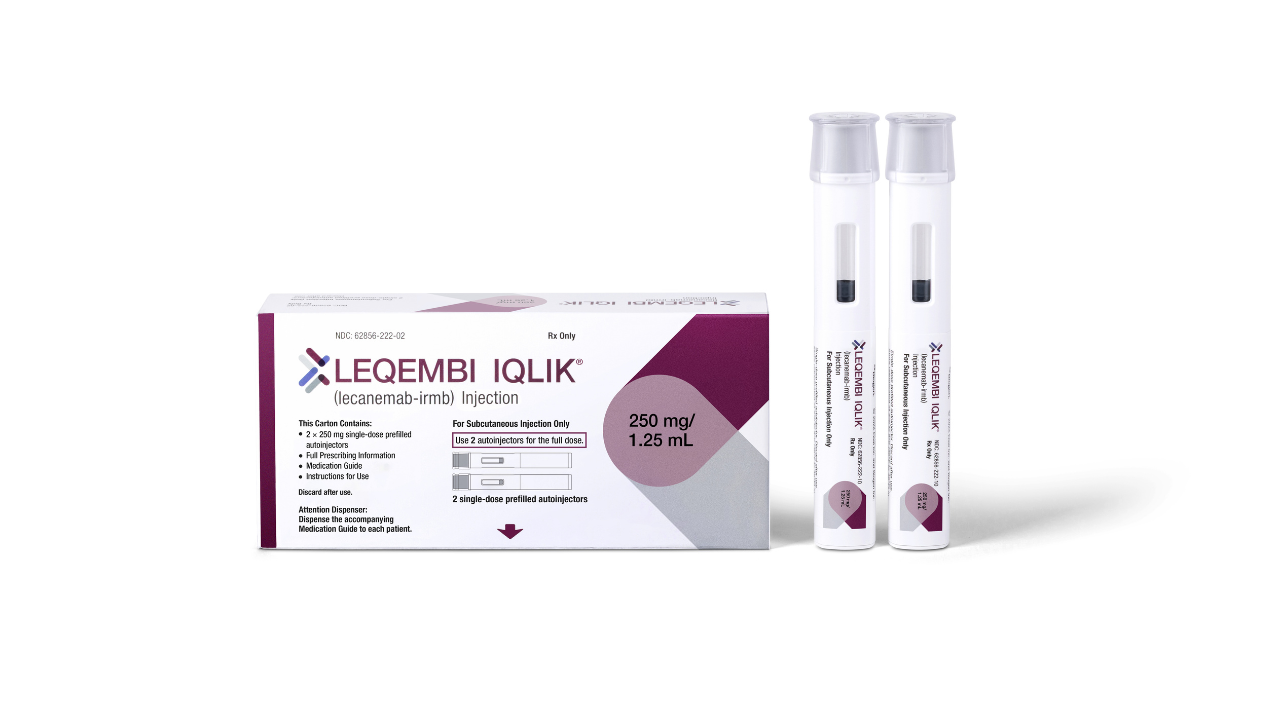
Since 2023, the Food and Drug Administration has approved two anti-amyloid drugs, Eisai’s Leqembi and Lilly’s Kisunla. These drugs are laboratory-designed antibodies that target toxic beta-amyloid to slow decline.
In trials, both drugs provided a small-to-modest slowing of disease progression in the earliest stages of Alzheimer’s. Though real-world evidence has shown they’re well-managed by most people, these medications can lead to common, and sometimes serious, side effects of brain swelling and microhemorrhages, called amyloid-related imaging abnormalities (ARIA).
But paradoxically, the amount of plaques cleared out by anti-amyloid medications, as measured by a specialized brain scan called an amyloid PET, doesn’t correlate with the cognitive benefits.
As some neurologists argue in editorials that new anti-amyloid drugs should receive approval based on amyloid clearance detected on a brain scan alone rather than waiting for data that shows it slows cognitive declines. But others including Dr. Nicholas Villain, a neurologist at Sorbonne University in France, explained that changes in these brain scans caused by taking the anti-amyloid medications don’t predict whether someone’s symptoms improve.
“The risk is that we start accepting drug efficacy based mainly on improvement in a brain scan, even if the same scan does not reliably predict the clinical benefit that individual patients can expect,” Dr. Nicholas Villain, a neurologist at Sorbonne University in France told Being Patient.
So, how do anti-amyloid drugs work?
Villain believes that the drugs “almost certainly work through anti-amyloid biology” but amyloid PET scans only measure one form of amyloid.
Clinical benefit may depend on other factors, he said, including other forms of amyloid, inflammation, and the levels of tau tangles — protein aggregates linked to cognitive decline in Alzheimer’s. Some effects might also occur from the noise inherent to cognitive testing, the variability in day-to-day performance on these tests that has a small impact on the scores.
Some researchers who are more skeptical of the effects believe the change may be driven in part by functional unblinding, where people figure out they’re receiving the drug because of the side effects, and experience small benefits due to the placebo effect.
Drugmakers have not published the data on amyloid clearance
Eisai and Lilly did not publish the data which shows how beta-amyloid levels change in each person across the study. Villain said this data is crucial. Even though the drugs show a modest benefit, the how is still important.
“The ultimate purpose of approving a treatment is to treat individual patients, so we need to know not only whether a group does better on average, but also how much patients vary in their chance of benefiting,” said Villain.
An analysis published by Lilly scientists late last year, which grouped participants together rather than using individual-level data, suggested there was a link between amyloid clearance and cognitive changes in the trial.
“When an analysis averages patients into large groups, it may produce a very elegant-looking relationship between amyloid PET and cognition,” said Villain. It also provides data for researchers to point to when they suggest drugs could be approved based on amyloid-clearance abilities alone.
A recent rebuttal led by Brown University epidemiologist Sarah Ackley challenged the idea that this is caused by amyloid clearance. The methods Lilly scientists used makes any association between amyloid clearance and cognitive slowing seem 29 times stronger.
“I think the individual level correlations are not compelling, and that’s why we’re seeing statistical gymnastics,” Ackley told Being Patient. Doing a proper analysis using individual-level data would be “straightforward and fast” for a drug company to do.
Eisai stated in the publication for its Phase 3 study that it would not share the results. In contrast, Lilly will provide access on a case-by-case basis to outside researchers via a platform called Vivli.
Unfortunately, not sharing data is the norm for pharmaceutical companies and most academics, explained Dr. Lon Schneider, a gerontological psychiatrist and researcher at the University of Southern California, and one of Ackley’s co-authors, told Being Patient, adding that the data in this case is proprietary. Schneider is also a paid advisory board member for Vivli and has received grants from anti-amyloid drugmakers Eli Lilly and Eisai.
Ackley said she’s applying for access, but it can take six months for the company to decide whether to approve the request.
“The companies approve what you do, and so the companies regularly disapprove most requests for data,” said Schneider. “If I were to ask them for individual patient data to carefully assess the evidence for disease modification, they would not give it to me because I could come up with an adverse finding.”
As companies continue to develop amyloid-targeting drugs, the individual-level data that might provide researchers and clinicians an idea of the effect of plaque clearance on cognition — and potentially improve trial design — remains unreleased.
FAQs
No, in clinical trials Leqembi and Kisunla were linked with a small-to-modest slowing of cognitive decline over 18 months. This suggests these treatments may slow, but not stop, the disease.
Leqembi and Kisunla may lead to an infusion-related reaction which includes fever, chills, and body aches. The treatments are also linked with the risk of brain swelling and microhemorrhages, called amyloid-related imaging abnormalities (ARIA). These side effects are usually asymptomatic but may present serious health risks in rare cases. As a result, anyone undergoing treatment with these medications receives careful monitoring via regular MRI scans to spot ARIA.
There is no robust evidence that amyloid plaque clearance is linked to improvements in memory. Clinical improvement may depend on other factors like inflammation, tau protein levels, or clearance of different forms of amyloid that aren’t captured by the amyloid PET scan.