Next-Generation Alzheimer’s Drugs Show Mixed Results at AAIC

Three experimental Alzheimer's therapies presented at AAIC missed their primary goals, but researchers say two still show enough promise to move into larger Phase 3 trials.
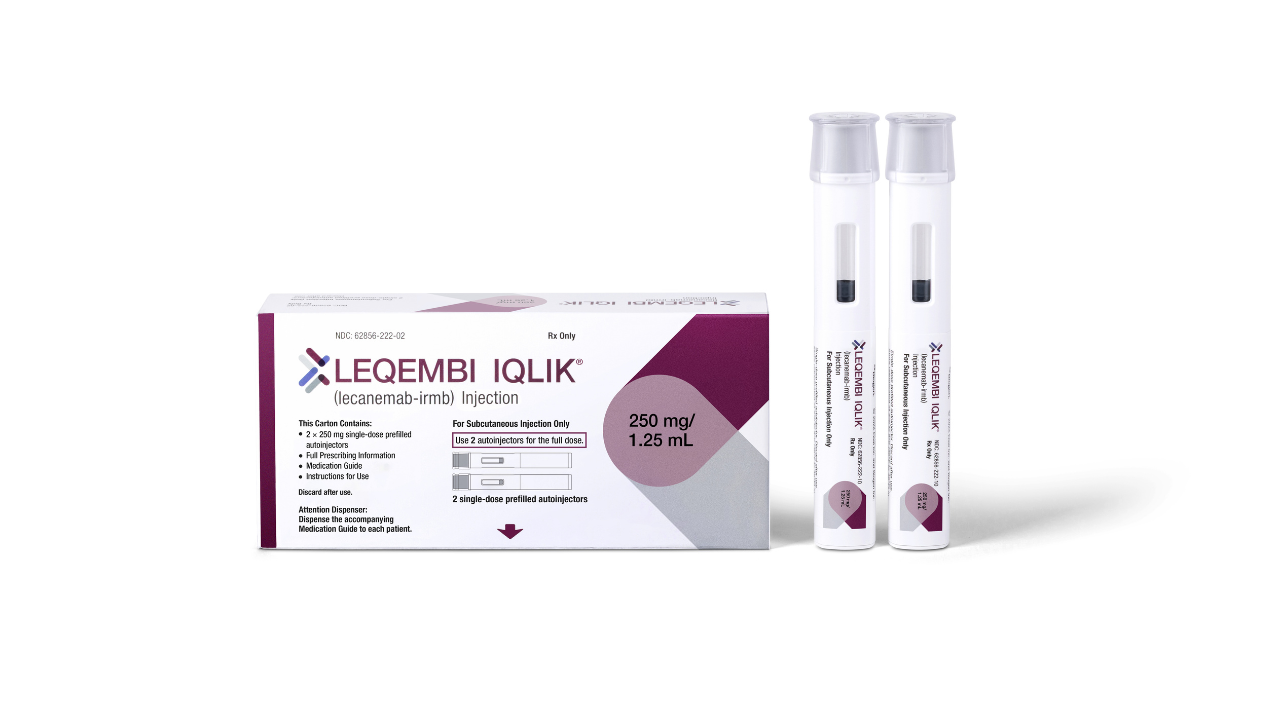
The first generation of disease-slowing drugs for Alzheimer’s, Leqembi and Kisunla, target misfolded proteins called beta-amyloid that form in the brain more than a decade before symptoms appear. Drug companies vying for the next approved drug are exploring other targets to treat the disease.
At the Alzheimer’s Association International Conference (AAIC) in London, researchers presented data from three Phase 2 studies: Two tau-targeting drugs and a repurposed erectile dysfunction pill. Though all three studies failed to succeed in their primary aim, drugmakers are hoping that two of them will pay dividends in Phase 3 trials.
Biogen’s tau-silencing therapy diranersen
Neurologist Catherine Mummery, a professor at University College London, presented the data from Biogen’s tau-silencing therapy diranersen, previously called BIIB080. The drug, administered via intraspinal injection, is a small string of genetic code that silences the signal that tells cells to build tau proteins.
The Phase 2 trial was designed to test whether higher doses of the drug would lead to more cognitive slowing than a lower dose. In most cases, a higher dose resulted in more of a therapeutic effect but also more side effects. The secondary goals included measuring whether the drug slowed cognitive and functional decline.
Biogen randomized 416 people with early Alzheimer’s to receive either a placebo or one of three doses of the drug. Participants who received the lowest dose experienced the biggest cognitive benefit, declining less quickly than those who received the placebo or higher doses of the drug.
“Typically, when a treatment is effective, both its benefits and its side effects tend to increase together with the dose,” said Brown University epidemiologist Sarah Ackley. “Seeing the largest apparent benefit in the lowest-dose group raises some concern that the finding could reflect cognitive placebo effects.”
When the researchers grouped all the participants who received the treatment together and compared it against the placebo, there was a slowing of decline across five of six measures. The drug also reduced biomarkers of tau measured through the cerebrospinal fluid and via a brain scan.
Most of the side effects were mild or moderate and linked to the spinal injection. Frequently, it led to pain at the injection site, other side effects related to the injection, or confusion.
Jessica Langbaum, senior director of Alzheimer’s prevention and research at Banner Health, told Being Patient that it’s rare for drugs that fail to show an effect on their main outcome in a Phase 2 to succeed in Phase 3. But Both Ackley and Langbaum believe that the data is promising enough for a larger trial.
Biogen is now working on designing a definitive Phase 3 trial.
Awaiting pivotal data from a repurposed erectile dysfunction drug
Niels Prins of the Brain Research Center Amsterdam presented data for AriBio’s experimental Alzheimer’s pill AR1001, also called mirodenafil. The drug is thought to have multiple neuroprotective effects and is already approved in South Korea for treating erectile dysfunction.
The Phase 2 trial of 210 people with mild or moderate Alzheimer’s was published last year and found that there was no statistically significant effect on cognitive function, meaning that participants who received the treatment did not do better than those who received placebo after half a year. But since the study was designed before Alzheimer’s blood biomarkers were readily available, it included many participants who did not have the disease. AriBio believed there might still be potential in those who tested positive for the biomarkers.
Ackley remains skeptical and believes that some of those findings might be due to change alone. “Overall, the evidence does not make AR1001 look promising,” she said.
For its Phase 3, AriBio recruited 1,535 participants with early Alzheimer’s, confirmed to have biomarkers, to test whether the drug slows cognitive decline over a year.
So far, the data shows it is safe and well-tolerated with 0.4 percent of participants developing severe side effects related to the medication. The Phase 3 results will be presented in November at the Clinical Trials in Alzheimer’s Disease (CTAD) conference in Boston.
An anti-tau antibody fails to slow cognitive decline, with an unexpected effect on tau
Ziad S. Saad, scientific director at Johnson & Johnson, shared additional analysis of posdinemab, an anti-tau antibody, from its 520-person Phase 2 trial last year, Posdinemab failed to slow cognitive decline or tau spread in early Alzheimer’s and was discontinued by the company.
At AAIC, Saad showed tau PET imaging revealing some reduction of tau tangle accumulation in the brain, especially in regions with high levels of tangles.
“This finding is contrary to our prior expectations,” said Saad, adding he thought it would halt the spread but not affect existing tau in dense tangles like it did.
New treatments on the way
For Langbaum, the diranersen trial shows that it’s possible to use gene-silencing therapies to target tau, findings that could be expanded to treat other forms of dementia as well. But the spinal injection “is not going to be sustainable for widespread usage,” she said.
Langbaum believes companies will develop molecular brain shuttles that help drugs get to the brain more easily. Already, one such brain shuttle drug was approved for treating Hunter syndrome, a rare childhood dementia, and Roche’s brain shuttle anti-amyloid trontinemab is currently in Phase 3 trials.
The emergence of these new technologies that move dementia treatment beyond antibodies that require an intravenous infusion, said Langbaum, “would be a real game changer for the field.”
FAQs
Diranersen is an experimental gene-silencing therapy that stops brain cells from making new tau proteins. It is delivered via intraspinal injection and in the Phase 2 trial, showed promising signs that it might slow cognitive decline and clear out toxic tau tangles in early Alzheimer’s. A Phase 3 trial is needed to confirm whether it is effective.
AR1001 (mirodenafil) is an erectile dysfunction drug being repurposed for Alzheimer’s because it shows potential neuroprotective effects. The drug failed to slow decline in its Phase 2 study. A larger Phase 3 trial, using the same approach is set to read out later this year to provide a more definitive answer.
Johnson & Johnson stopped development on posdinemab because the anti-tau antibody failed to slow down cognitive decline or halt the spread of tau proteins during its Phase 2 clinical trial.