George King on Alzheimer’s Early Signs, Treatment, and Choosing to Live Fully

George King discusses the early signs that led him to seek an Alzheimer’s diagnosis, his experience with treatment, and how he continues to live fully with the disease.
Journey to Diagnosis is a Being Patient series sponsored by Eisai. As with all of our reporting, the sponsor has no role in choosing guests, shaping questions, or reviewing content before publication.
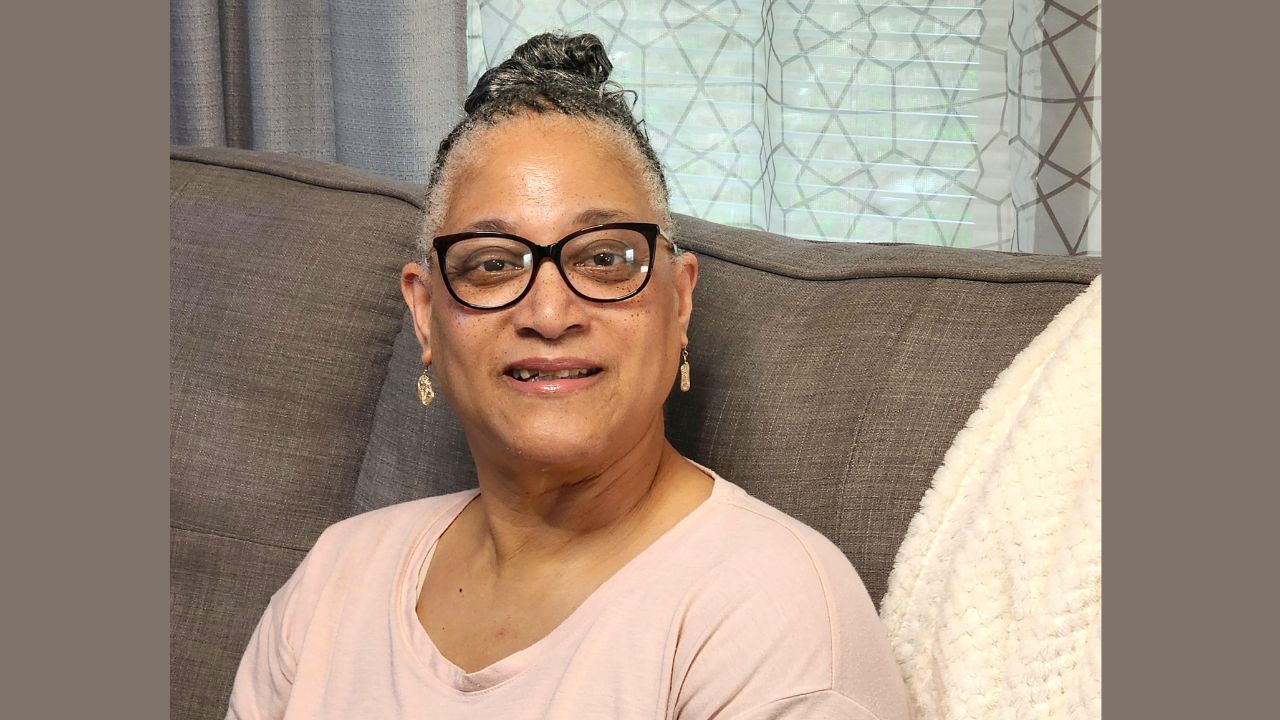
George King’s work spans film, theater, writing, and photography. With both parents having lived with dementia, King was already attuned to the possibility of cognitive change when he began noticing subtle shifts in his own memory. A word game on his phone eventually became an unexpected warning sign, prompting him to seek evaluation from a neurologist. Today, he documents his experience on Instagram at @dancing.with.delirium, using his platform to share what it is like to live with Alzheimer’s.
In this conversation with Being Patient founder, Deborah Kan, King reflects on the path to diagnosis, the role of Leqembi in his treatment and the importance of finding a neurologist who answers questions clearly. He also discusses the daily adaptations that help him manage frustration, stay independent and continue traveling, creating, and engaging with the world. For King, living with Alzheimer’s is not about fighting the disease, but learning how to negotiate with it while continuing to live as fully as possible.
Being Patient: Were there any signs, in hindsight, where you thought, “Oh, this could have been related to the Alzheimer’s”?
George King: Yeah, I think very much so. But to preempt that, both of my parents died with some form of dementia in the 1970s. And I was the person who was shepherding through that process, trying to sort out how they would live, where they would live, and all this stuff. It wasn’t diagnosed at the time — you had to have an autopsy at that time — but almost certainly it was Alzheimer’s. And so I was aware that this was in the mix, so to speak. I had this vague knowledge that there are genetic connections.
I noticed maybe 20 years ago, maybe more, I started having some of the same things that I experience as symptoms today. I honestly believe I started seeing or experiencing them. I would talk to my friends, as one does, and they would say, “Oh yeah, no, that happens to me too. Don’t worry about it. That’s just aging, that happens.”
At some point, I decided to create a kind of canary in the mine shaft, which was originally the New York Times crossword puzzle. And I decided the day I couldn’t complete the Sunday edition without references and stuff on my own was the day I should turn myself in. That transferred to a word game they have, the Hive, which is played online. You can play online on your phone. And the word I had just entered — it said, you already thought of that. And when that happened a few times, I thought, wow, okay.
And so I bypassed the normal process, which is what I counsel people: if you have concerns about your memory, go to see your general practitioner, go to see your primary care physician and talk to them and they will know what to do. I went straight to a neurologist. I picked the phone up, and there was a guy I’d seen five or six years before because I thought I might have Parkinson’s, because my father had Parkinson’s. And he said, no, you don’t have Parkinson’s, and go away. And I came back five years later, and he took me through these series of tests.
Being Patient: Your self-awareness must be off the charts. They say it’s usually the partner who realizes something might not be quite right, or a workmate. But you were actually very early on going, something’s not right.
King: But I wasn’t experiencing a lot of symptoms that impacted my life. For a start, I worked for myself; I’ve been a lifelong artist. So you learn skills about adaptation and such in those worlds. I didn’t have workmates. I do have a partner. But I was also tuned into this little word program that was very specific and gave me a very specific response. And I thought, hey, maybe it’s nothing, but I’m going to get myself checked out.
Being Patient: So there was five years between that early time where you’re like, something may not be quite right because of the games that you’re playing. And then they basically said, get out of here, you’re fine. How long did it take after that before you actually received a diagnosis?
King: I eventually went to a neurologist when I thought there was something going on. And the neurologist took me through a series of tests. Came back to see him maybe three or four times. And at one stage, I said to him, “I feel I’m being led down a path here. Where are we going?” And he said, “Well, you certainly have some cognitive issues. And if it was diagnosed, for example, as Alzheimer’s, there are treatments that may be of value to you.” And he was speaking specifically of Leqembi, which is the drug that I am now on, which is one of the two available in the United States that slow the impact of the disease in its early stages. So I said, “what do you need to test?” And he said, “a sample of your spinal fluid.”
It’s one of two methods that you can test for Alzheimer’s disease. The other is the PET scan, which is more accurate, but costs. I don’t think Medicare wanted to pay for that at that time.
Being Patient: Your diagnosis was relatively recent, if you’re on Leqembi, correct? When did you get diagnosed?
King: So the day I gave them a sample of my spinal fluid is the day the FDA ratified Leqembi for use in the United States. I was on it two months later. I think I was probably one of the first people on it under Medicare in this country.
Being Patient: There’s a lot of interest in these monoclonal antibodies. So tell me a little bit, George, about your personal experience. You said you had parents with dementia. We know that with these drugs, there’s a little bit higher risk for people who have a genetic link to Alzheimer’s — carriers of the APOE4 gene. That risk is managing side effects. But did you get a genetic test? Do you know what your genetic status is, given that you have two parents who had dementia?
King: I started receiving these infusions — once every two weeks, you get an infusion. Totally painless; I never had any reactions. You also have to go on a regimen of brain scans, because there are potentially serious side effects to these monoclonal drugs. We’re talking about 5 percent, maybe less, but they want to monitor these things.
I walked in one day for one of the infusions, and the nurse, who’d become a good friend by then, said to me, “I have to tell you, Dr. X told me he didn’t want to treat you anymore because of the blood thinners you’re taking.” And I thought, number one, why isn’t Dr. X telling me this? And number two, I was on blood thinners when he put me on this drug in the first place, et cetera, et cetera. So I wasn’t a happy camper. He didn’t answer any questions. He refused to answer questions.
So basically I went off this drug for maybe three or four months. And I immediately picked up the phone and sought another neurologist. And I went into a different program. They are excellent. This man is fantastic. He answers all my questions. And I feel very lucky to have landed there, so to speak. He said, “I don’t see any reason why we shouldn’t just put you straight back on it. I’ve looked at all the medical history. You didn’t have any side effects.” He said, “Oh, by the way, did you know that you have two pairs of the APOE4 gene?” I said, “No.” So the number one neurologist, amongst other things, did not tell me that.
Being Patient: Right. Can you tell me about what the infusions are like? Do you have to go in every couple of weeks? Are people scanning you? What’s the treatment protocol?
King: What happens with Leqembi is usually you go on it for 18 months. And during that time, there is a scheduled series of MRIs that you have to take. And based on those, if they see any problems: microhemorrhage and hemorrhage — I’ll learn to say that one day — and possible swelling of the brain. These are the issues. Nobody has died from this since testing, since we got out of the test stage. What they do is they just take you off the drug, and that seems to solve the problem. In my case, I’ve experienced that nothing has shown up on any of these scans. There have been no problems. So I’m now on the maintenance dose.
After the 18 months, they took a PET scan, and essentially they’re looking to see what’s happened to the amyloid. I still haven’t talked to my neurologist since then, personally, but what he wrote was: the amyloid is all gone. That’s not what’s supposed to happen. It’s usually a reduction — you have 70 percent and you get it down to 28 percent or something. Apparently I don’t have any amyloid anymore. And I’m on this maintenance dose, which I’m likely to be on for the rest of my life.
Two other things: this neurologist, who I have a great deal of respect for — he’s a researcher as well — he said, “Frankly, I think the maintenance dose is overkill.” I said, “So, you’ve been treating people who have been on Leqembi, for example, when it was in its trial stages. What are you noticing?” And he said, “I have no patients that are doing worse.” And because people ask me all the time, “So are you doing any better?” No, I never had any expectations to do better. I just have an expectation that it’s either going to be a much slower descent or change. But that’s been the reality, I’m hopping along now on the maintenance dose and doing just fine.
Being Patient: So you’ve now been living with these medications for a year and a half. We talked about maintenance versus getting better, but how do you feel? What’s your outlook now?
King: Well, my outlook is excellent. In the early stages of this, I found myself being very frustrated. I’m a self-starter. I can take care of myself. You could parachute me into the middle of nowhere tomorrow, and I would survive. I’d probably even have fun. But I have to say, there are things that have been very frustrating. Technology can be very frustrating. Literally very simple things, like, wait a minute, this iPad yesterday, when I swiped it, it did this, but now it’s not doing that. And the question is always: is it me or is it the technology? And of course, as we all know, sometimes it is the technology, which is doubly frustrating.
But I think I’ve learned two things. I’ve learned to adapt, and I’ve learned that planning is of great value. So having plans in place of what might happen, contingencies, and then basically being prepared to try to adapt to whatever comes your way, and to adapt to it with some sort of goodwill. I’m an optimist, so I don’t have to deal with some of the problems I know a lot of people have to deal with, but that’s how I’ve been facing the world, which is, as it comes at me, I’ll take it on.
I just had a rotator cuff surgery, and it’s been about three weeks now. And I had not anticipated this in a million years. I face things as they come, one at a time. So, gosh, I’ve got rotator cuff surgery tomorrow morning. Okay, I had it in this shoulder five years ago. It was fine. Everything was copacetic. I’ll deal with it, no problem. I wake up the next morning and I have this thing strapped to my chest, and over the next 24 hours, the realization dawns: I’m right-handed. This is my right hand. This is a useless flipper. And it’s unbelievable — trying to get into underwear, trying to do the simplest things, suddenly out the window. And I’ve noticed that my brain is literally dealing with these issues. It’s like saying, what do you mean you can’t do that?
“I’ve learned to adapt, and I’ve learned that planning is of great value.”
Being Patient: And you’re actually experiencing your brain trying to figure out what’s going on, and it’s probably making the dementia more difficult?
King: I’m absolutely fascinated by whatever is going on in there. And I love the fact that I can study myself. I’m the perfect patient. I know where I am. I’m not going anywhere. And it’s been very, very interesting.
I’ve learned an enormous amount just by thinking and trying to understand how this disease works, what it’s doing, how my brain is trying to respond to it, because my brain must be aware that this disease is in it. And I don’t imagine it’s just going, okay, well, that’s fine. So I find myself — I feel that I’m negotiating with this disease.
For a while, I thought fighting, but no, fighting is a very convenient male word, but I don’t think fighting is useful. Negotiating is where you understand you don’t have the power, really. You’re looking for things and you’re trying to share something. And I have found this process to be absolutely fascinating and very helpful. It’s kept me calm, collected. It’s fed my intellect. As you know, one of the things we need to do is keep our brains alert. And so it serves that function. Overall, it’s been a good ride.
“I feel that I’m negotiating with this disease. “
Being Patient: What I love is that you’ve made your story so public. George has social media accounts where he’s chronicling what’s going on. And you hear a lot about the Leqembi and all of that. But what’s especially noteworthy with your social media is you’re not letting this stop you. You’re traveling. So tell me a little bit about that, because that to me says, “I’m just going to live life.”
King: I think you just summed it up. My partner and I both love traveling. And she’s now retired. And so our time is much more elliptical. We just spent a month in New Orleans. We rented a house from a friend of a friend. And we just had a blast living in another city. It’s extraordinarily interesting, because it’s like, oh, great, I now have a coffee shop on the corner, and there’s a pub over there I can pop into, and wow, they have music on Monday nights here. And I just had the best time. So absolutely, I’m not about to slow down on any of that.
Being Patient: Overall, are you tracking the disease? Do you feel — I know you just finished your treatment, the Leqembi — do you feel progression at all? How does Alzheimer’s present itself in George’s life today?
King: Yeah. So specifically today, I feel a quart low, so to speak, because this whole episode with this arm and its unexpectedness, the unexpected impact on my life — which is absurd, because if I’d thought about it for five minutes, duh, it’s your right hand. But I didn’t. And so it’s difficult for me to measure things in the current circumstances. What I think is that I’m bouncing out of this. But right now, my thinking is definitely slowed. I am more ponderous and have to be more deliberate about things.
But in general — and I believe this will return — I do pretty well. A lot of my friends living with this disease say they have good days and bad days. I really don’t feel that I have bad days. There are some days when things aren’t going very well, like something just went wrong for the ninth time or something with my computer. But I don’t think that’s the disease.
People say, “Did you notice any improvement?” And I said, “Well, funnily enough, about six months into the treatment, I started taking Aricept.” And around that time, I noticed a kind of sharpening of my brain. And as I understand it, that’s what it’s doing. Aricept is not a drug that is going to cure or even delay Alzheimer’s, but it can potentially help you focus a little more. And I experienced that, and I thought, okay.
That’s pretty much continued on a plateau. And I haven’t really noticed any diminution in the capacity of my mind, my cognition, any of these other things. When I went in to see my neurologist last, he ran the usual annual test, and I said, “How did I do?” And he sort of looked at me like, oh, come on. And then he said, “Oh, well, you actually did better than last year.” And it’s like a point or something.
Being Patient: But that’s good. Better than five points less, right?
King: No, it is. It is. And I feel that I can handle traveling to Europe on my own, which I’m probably going to do. My partner will come for some of that, maybe. But I can fly to other cities. I handle the money for the house still. I’m running this blog and various other things. So I’m pretty functional. And I realize I need to take some more rests, partly because of my age. I realize that a nap in the afternoon can be enormously beneficial. And I have learned not to fight when I’m feeling tired.
In the old days, it’s like, it’s 4 o’clock, but you’ve got to get this work done. You’ve got to get this work done. A deadline. You’ve got to do this. Now it’s just like, no, I don’t think so. I’m out of here. And it’s a much, much more sensible way to respond. And so it’s been very successful, I find.
Being Patient: So, George, before we go, what is your advice for people who are coming in or just getting diagnosed, starting their journey?
King: Absolutely. Take time. Don’t rush into anything. Don’t make any hasty decisions. Realize that many, many people are living productive, creative lives with this disease. I know people who have been on this for five years or so and are still traveling around the planet, still doing this, that, and the other.
It’s not a sentence of some kind. It’s not. And I think the key, frankly, is not to think about what might happen, because you have no control over what might happen. And then you just work yourself into a tizzy. And so I say, recognize this is part of life. Life is a cycle. We are all going to die. This or something else like it will kill me eventually. But until something comes along, I plan to live the best life that I can. And I advise everybody else to try to do the same thing.