Next-Generation Alzheimer’s Drugs, Blood Tests and Prevention Research Take Center Stage at AAIC

Researchers will gather in London for the Alzheimer’s Association International Conference to showcase the latest findings in Alzheimer’s and dementia research.
More than 11,000 experts from around the world will gather in London next week for the Alzheimer’s Association International Conference (AAIC) — the largest gathering for Alzheimer’s and dementia researchers — to share the latest findings from research studies and drug trials.
“There’s really a palpable excitement that’s happening right now in our research and clinical field in Alzheimer’s disease and other dementias,” Rebecca Edelmayer, vice president of scientific engagement, told Being Patient, adding that the conference received a “record-breaking” amount of submissions, nearly 8,000, from researchers interested in showcasing their work.
Researchers will present new findings seeking to better understand disease risk, the disease continuum, and the development of new treatments and diagnostics that could improve real world care. Ahead of the conference, which runs July 12-15, we spoke with several researchers to find out what they’re most excited about seeing next week.
Being Patient’s conference coverage will break down the most important findings.
Drugs that researchers are closely following
“I’m excited about some of the clinical trial data that might be coming out,“ Rachel Buckley, an assistant professor at Massachusetts General Hospital who studies sex differences, risk, and resilience in Alzheimer’s, told Being Patient.
She’s one of many experts we spoke with who are looking forward to seeing the updates of Roche’s anti-amyloid brainshuttle trontinemab, which has entered Phase 3 trials. The drug is a monoclonal antibody drug, like Leqembi or Kisunla, but has a molecular “shuttle” stuck onto the drug that lets it get into the brain much more easily at lower doses. In early trials, the drug led to rapid beta-amyloid removal with far fewer side effects, brain swelling and brain bleeds called amyloid-related imaging abnormalities (ARIA), than approved medications
Buckley is also interested in updates about Novo Nordisk’s GLP-1 semaglutide. Although the popular drug failed to move the needle in two pivotal Alzheimer’s Phase 3 trials last year, she said closing the door on that treatment might be premature. The company will present more data from its trials at the conference.
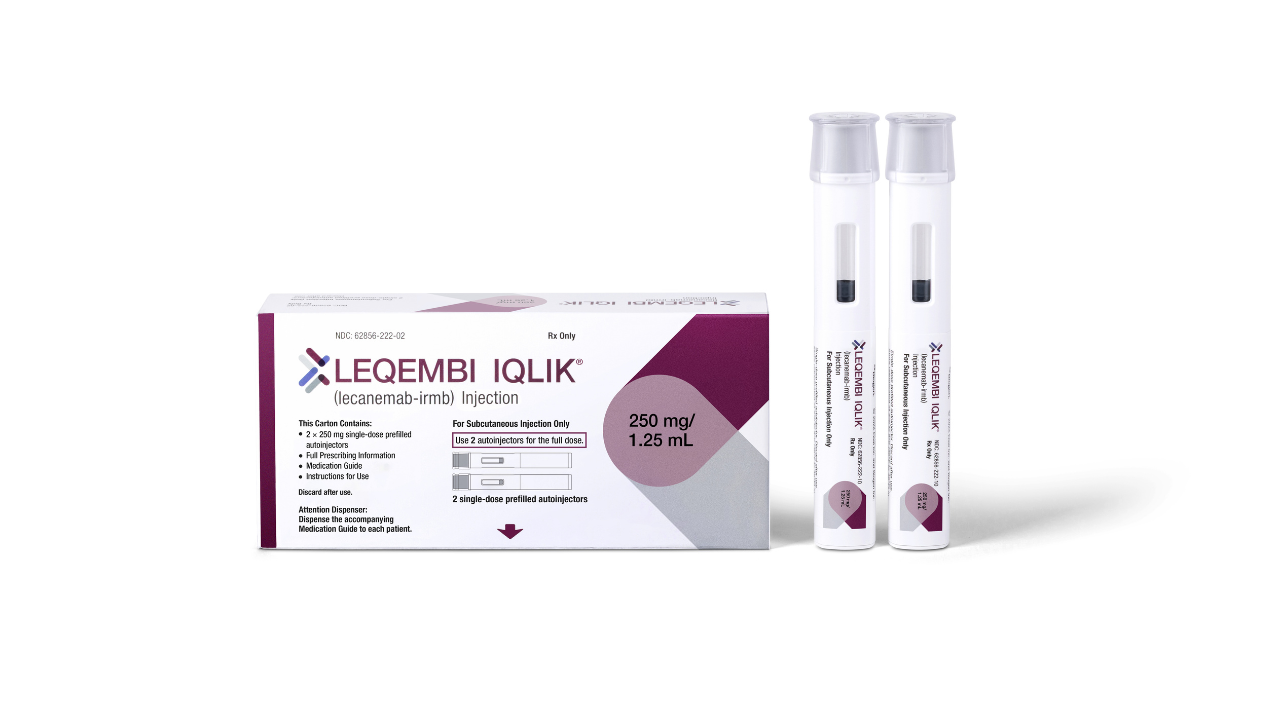
Physician and MIT researcher Adrián Noriega de la Colina told Being Patient that he’s excited about presentations on the real-world impacts of Leqembi and Kisunla, and the data supporting the use of injectable Leqembi as an alternative to intravenous infusions, which are the mode of drug delivery for the first 18 months of treatment. Injectable Leqembi may be approved by the Food and Drug Administration in August.
Both Noriega de la Colina and Dr. Henrik Zetterberg, a professor at the University of Gothenburg and a visiting professor at UW−Madison and at University College London, told Being Patient that they’re excited to see the latest data on tau-targeting therapies.
Biogen will present the much-anticipated data on its tau-silencing drug diranersen which prevents brain cells from reading the genetic instructions to make tau proteins.The drug failed on its primary goal, showing that a higher dose of the drug would lead to more benefits, the company said in a press release. Unexpectedly, participants receiving the lower dose of the drug showed more cognitive improvement. Still, since the drug did improve cognitive symptoms and lowered levels of tau protein, the company announced it will pursue a pivotal Phase 3 trial.
Dr. Brent Forester, chair of the Department of Psychiatry at Tufts Medical Center, told Being Patient he’s also looking forward to seeing the data from drug trials for other dementias. “The world needs more effective and safer therapeutics across the dementia spectrum,” he said.
Blood, Sex and More
Despite being increasingly available, blood tests still lack published real-world validation showing that they lead to better outcomes, like a more accurate diagnosis, in people who have the disease. Research presented at the conference will provide an early look at how they might impact diagnosis and care.
Researchers will also present data from lifestyle prevention trials across Latin American countries. “It demonstrates too that we can create these culturally adapted interventions that may be very impactful for individuals that are living across the world,” said Edelmayer.
True to her research interests in women’s brain health and sex differences, Buckley is also following the talks on sex differences. “I’m heavily biased,” she said. “We’ve got a few really incredible sessions coming up that will be focusing a lot on reproductive health, [the] X chromosome,” and how these factors shape Alzheimer’s risk.
“When you put the diagnostic tools together with the treatment trial data,” said Edelmayer. “You start moving towards a better understanding of how we prevent disease. That’s going to be a really amazing shift for the field.”
FAQs
At AAIC, researchers will present updates on Roche’s trontinemab, an anti-amyloid drug designed to enter the brain more efficiently with fewer side effects and Biogen’s diranersen, a tau-silencing drug that stops the spread of toxic tau tangles. More data is being presented about Novo Nordisk’s GLP-1 semaglutide, which failed to slow cognitive decline.
An injectable version of Leqembi is available for maintenance therapy after 18 months of treatment. In August, the Food and Drug Administration is set to decide on approving an injectable version as a starting dose for the medication.
There are many blood tests available to doctors with variable levels of accuracy. Some are used to rule out the diseases while others provide confirmation. At AAIC, researchers will present new data on the real-world use of these blood tests.