What Blood Tests Could Mean for Early Alzheimer’s Detection
New Alzheimer’s blood tests and biomarkers may help detect disease earlier, but experts say routine risk testing still raises major medical, ethical, and emotional questions.
Blood tests and other biomarkers are bringing researchers closer to detecting Alzheimer’s disease before memory loss begins — a shift that could reshape prevention, treatment, and the way families think about risk.
Dr. Joshua Grill, director of the UC Irvine Institute for Memory Impairments and Neurological Disorders (UCI MIND) and UCI’s NIA-funded Alzheimer’s Disease Research Center, explains how advances in amyloid PET scans, spinal fluid testing, and blood-based biomarkers are changing Alzheimer’s research and care. Grill has published more than 150 articles and is nationally recognized for his work on clinical trials, recruitment and retention, and biomarker disclosure.
In this conversation with Being Patient’s Mark Niu, Grill discussed why these tests are useful today for people already experiencing cognitive symptoms, why they are not yet recommended as a routine risk test for people without memory problems, and how biomarkers are helping researchers design prevention trials for people at higher biological risk. He also explained the emotional, ethical, and legal questions that come with assessing Alzheimer’s risk and what still needs to happen before early testing and treatment become part of routine care.
Being Patient: When we talk about detecting Alzheimer’s before memory loss begins, what exactly are researchers looking for in the brain or body?
Dr. Joshua Grill: Let me begin by saying it’s a really exciting time to be doing this research, and we really made incredible progress. But I think this element of the story goes back decades now. We’ve been following people in Alzheimer’s research centers for quite a long time, and that includes following them all the way to autopsy.
More than 20 years ago, we recognized that about a third of people who were cognitively normal when we examined their brain in autopsy had the pathological changes that we associate with Alzheimer’s disease. And then technology really answered the question of: is it that some people simply can live with these changes and not develop dementia? Or is it that those people were at higher risk, and if they had lived longer, they would have developed the problems in cognition and memory and fulfilled the criteria for dementia?
The technology changes that really enabled us to answer those questions was the development of markers of those things while a person was still alive. We call those biomarkers. They’re markers of the biology of disease that we can assess while a person is still alive and use that to make a more confident diagnosis that a person’s cognitive problems are indeed caused by Alzheimer’s disease. And we were able to do these longitudinal studies that let us identify people who had those biomarkers but didn’t have cognitive problems and see if they would develop those cognitive problems over time.
Now it’s pretty clear that if you have those biomarkers of Alzheimer’s disease but have normal memory, your risk of developing memory problems in the future is higher. And based on that, we’ve for the better part of 10 years now been using that information to enroll people in clinical trials to see if we can actually stave off those memory problems by treating people at the earliest possible stages.
Being Patient: So, tell us about the various tests that are available.
Grill: There are a variety of biomarkers that are now used clinically. Primarily and near exclusively, those biomarkers are used in people who have cognitive problems. And so people may have heard that we could only diagnose Alzheimer’s disease after a person passes away and we can examine the brain under the microscope. There’s still some truth to that, that the definitive diagnosis of Alzheimer’s disease is made by examining brain tissue. But again, the development of these tools to assess whether those biological changes are present while a person is still alive has really enabled clinicians to make highly confident diagnoses that, at the very least, Alzheimer’s disease is a contributor to a person’s memory and thinking problems.
The gold standard, if we have one, of biomarker tests is an amyloid PET scan. This is a brain scan, a picture of the brain that’s taken after injecting a dye or tracer into the blood. And what that dye or tracer does is it goes into the brain and grabs ahold of the amyloid plaques that are synonymous with Alzheimer’s disease. And the brain scan is taking a picture of whether those plaques are present, how much those plaques are present, where in the brain those plaques are present. That really enables the clinician to feel confident that Alzheimer’s disease is, at the very least, a contributor to a person’s cognitive problems.
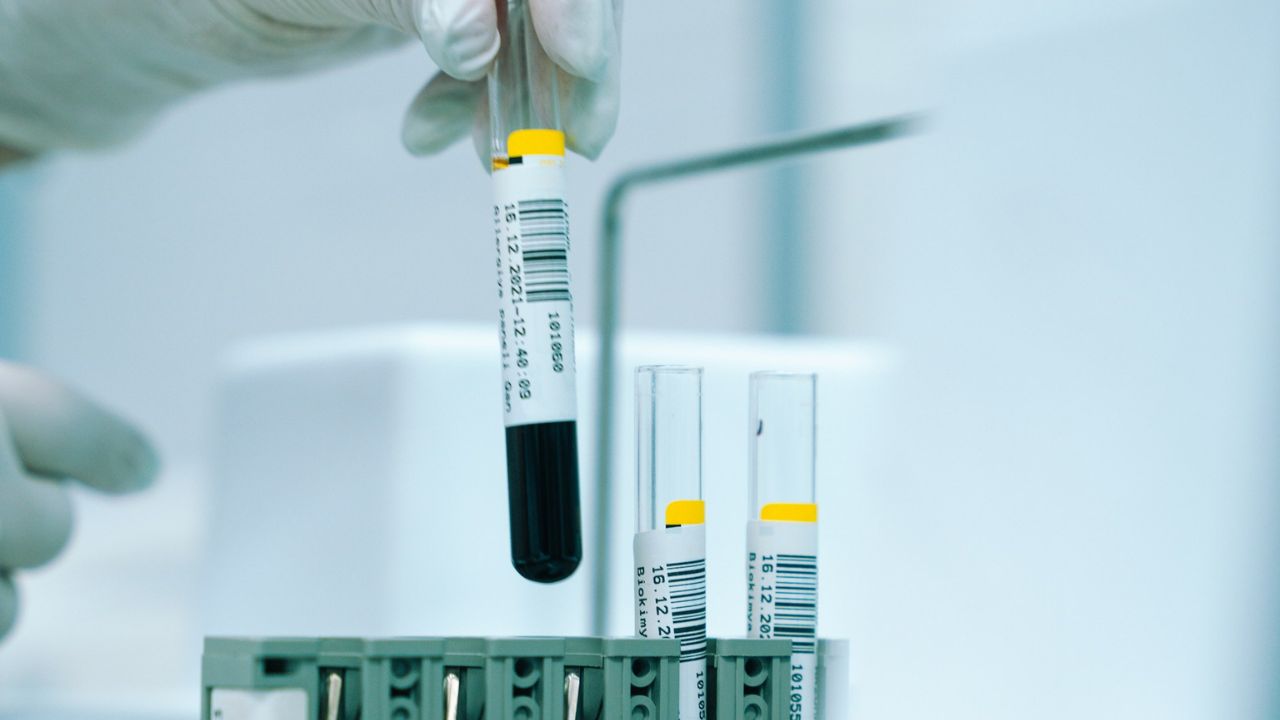
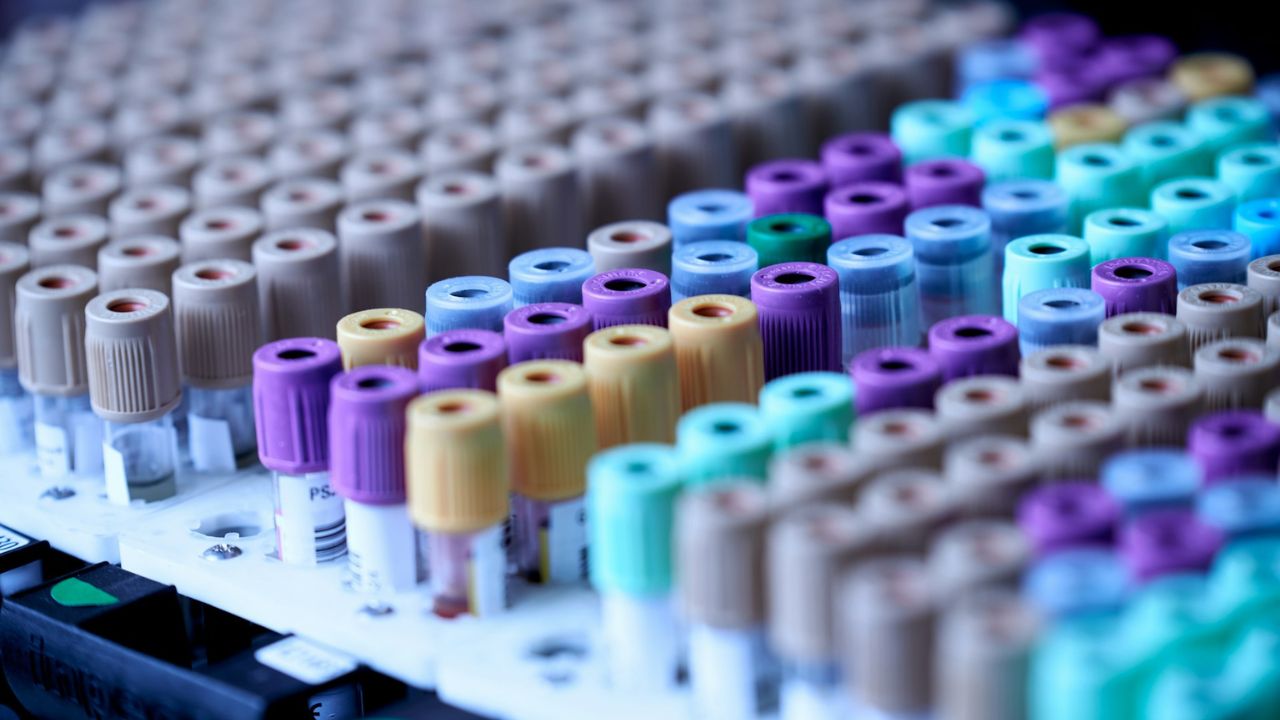
Amyloid PET scans came along first, but we do have other biomarkers now. We can measure the other hallmark pathology of Alzheimer’s disease, the neurofibrillary tangles, with a different PET scan. We’ve long been able to measure the proteins associated with plaques and tangles in the cerebrospinal fluid, but there’s a little bit more reluctance to having those tests. And most recently, we’ve seen really rapid progress in being able to measure proteins in the blood, again with the idea of giving us information about whether plaques and tangles are present in the brain.
Those blood biomarkers are really changing things rapidly. It’s really just over the last five years that these have been accelerated in discovery and even begun to enter clinical practice now. Mostly, what we think these blood biomarkers do right now is give us information about what the other more gold-standard biomarkers might tell us. I think this is going to continue to change.
Clinicians are using blood biomarkers in people who have memory problems, people who might meet criteria for mild cognitive impairment (MCI) or dementia. And they might be using them to say, “Boy, I think I really need to get a PET scan on this person.” Or in some cases, the blood biomarker might be sufficient to say, “I’m pretty confident that the person’s memory problems are due to Alzheimer’s disease.”
Being Patient: What is the general recommendation for someone as to whether they should take that blood test to estimate their Alzheimer’s risk.
Grill: These tests are very powerful for helping clinicians diagnose patients who have memory problems, who meet the criteria for dementia. They’re fantastic tools. They’re really going to increase the accessibility to this biological information. It’s going to make it easier for more clinicians to be able to provide these diagnoses. These tests are not recommended for people who don’t have memory problems in order to learn your risk. And especially for the blood-based biomarkers, there’s still a lot of work left to be done before they’re really ready for prime time in that way.
Now, I should back up and say, we don’t recommend PET scans, we don’t recommend CSF, we don’t recommend blood biomarkers as a way of understanding a person’s risk. The reason that we don’t make that recommendation is that though the data are pretty strong — that we can identify people who may be at more risk or less risk — the recommendations we make to those people do not change dependent on the outcome of the test.
There are many things that we can and will recommend for free that people do to lower their risk for developing memory problems or dementia. Everyone should be doing those things. And those tests should not be used to decide whether someone eats a healthy diet that has regular consumption of fish and dark green leafy vegetables, or whether someone gets their physical exercise on a regular basis.
No matter what those test results show, we would still recommend people work closely with their doctor to control their blood pressure, their cholesterol, their diabetes if they’re dealing with that or are pre-diabetic. All of those things are essential for every older adult to try to maintain their brain health, to avoid memory and thinking problems or dementia. And the results of those tests really wouldn’t affect the recommendations that we would make for an older adult who’s worried about those things.
“These tests are very powerful for helping clinicians diagnose patients who have memory problems, who meet the criteria for dementia… These tests are not recommended for people who don’t have memory problems in order to learn your risk.”
Being Patient: And how far in advance can some of these new generation of tests actually predict or potentially detect before Alzheimer’s-related changes potentially happen?
Grill: It’s clear that the changes can be detected quite early, 15 years, maybe even longer, before the onset of memory problems. And there’s a lot of really critical work that’s happening now to do things like create clocks so that we can understand where someone is on that trajectory, or calculators to know your risk of developing memory problems in the next five or 10 years. None of those things have entered into clinical practice.
All of those things have important limitations that should be noted. For one, the data that’s available is still pretty limited, and it comes from somewhat biased samples by and large. So most of the folks who’ve provided the data that helped instruct those understanding and the development of those tools have been well-educated, affluent, mostly non-Hispanic, white, older adults. And so we really need more information from more diverse samples to feel confident about those.
Even in those biased samples, there’s still important sources of variability that have come to our attention. The blood biomarkers can even change on a circadian pattern, meaning within a day we might get different readings from the same individual. We also know that a person’s health otherwise, whether they have liver problems or kidney problems, might affect the integrity of these tests. So there again, there’s really some work left to be done.
Now, the work is being done, and the tests are improving, and the capacity for these tests is increasing. And I do think that in the future, we will give blood tests to everyone at certain ages to figure out if they are at increased risk for developing memory problems, and how proximal that risk is for a given individual. And that’ll most importantly be used to decide whether to put a person on a treatment that actually delays or prevents them from developing those memory problems. And that’s where we’ve been really focused over the last 10-plus years is conducting clinical trials in people who are willing to be in a drug study, a drug versus placebo clinical trial, and willing to learn if they meet the criteria for being in that study based on these biomarker tests.
Being Patient: And how are all these early detection tools impacting the design of these prevention trials?
Grill: They’ve made the way we do these trials now possible. In the old days, we would try to do prevention trials where we would simply recruit a large number of older adults who didn’t have dementia. We’d randomize them to an intervention or control, and then we’d see how many people developed dementia over the next five-plus years. It was not a very sophisticated approach, but it was the only approach available to us. And it was used to answer important questions about some interventions.
With the advent of these biomarker tests, we then could restrict those populations to people we knew to be at increased biological risk for developing dementia due to Alzheimer’s disease. That let us answer questions about more aggressive treatments in smaller numbers of people over shorter periods of time. Now, it is still the case that these trials are large, they take a long time, they’re expensive and difficult to complete, but we are much more efficient now than we used to be.
The advent of the blood biomarkers actually increased our efficiency quite a bit, and we’ve just in the last year or two completed recruitment for a trial that I’m a part of where the blood biomarkers helped us find the people who were right for having a PET scan to see if they qualified for the trial and also let us know that certain people should not have that scan because the probability of being eligible for the trial was so very low for those people. So we’re using those tools in a variety of ways to get more efficient, and try to answer questions more quickly. And eventually, this is how we’re going to completely change clinical practice where we think we’ll be able to someday prevent people from developing dementia.
“It’s clear that the changes can be detected quite early, 15 years, maybe even longer, before the onset of memory problems.”
Being Patient: For people who have family members with Alzheimer’s, there can be a lot of anxiety around getting the test — and then, if they do, waiting for and receiving the results. How are researchers and clinicians thinking about that emotional side of testing? Is that something you’re studying as well?
Grill: That’s something we’re studying. And I have to give credit to other leaders in the field who had the foresight to think about this. As we began doing these clinical trials, it was clear that we were not only testing drugs to see if they could prevent people from getting dementia, testing an entirely new clinical practice where an older adult would undergo some of these biomarker tests to learn if they were at increased risk and make sure that we could do that in a safe way. It’s really an honor for me to be involved in several of these clinical trials led by people like Reisa Sperling, Paul Aisen and Jason Karlawish.
For several years now, we’ve been studying just the issue you raised. When we first began thinking about doing those trials, some people didn’t think they were a good idea. Some people thought, you really can’t give people this information because they’ll have catastrophic reactions. Over many years, we’ve now produced quite a bit of scientific knowledge about delivering these results to people as part of clinical trials and showing that indeed people are capable of getting this news.
Now, we took important precautions. We engaged in a thorough process of educating people, counseling them, helping them understand what this information meant and what it didn’t mean, and ensuring that they were psychologically prepared to receive this information before we delivered it to them.
But over the last 10-plus years, we’ve produced a variety of findings demonstrating, for example, that people don’t have catastrophic reactions to this information when that process is in place. They don’t get suicidal thoughts, they don’t get clinical depression, they don’t get clinical anxiety. And that seems to be the case immediately after getting the information and over the duration of the trial, for example, which many of our trials last more than seven years now.
I think that as we imagine that future clinical practice, we realize we’re going to have to be able to scale this approach. All those folks got to meet with a neurologist or a psychiatrist in an academic medical center. That person engaged in counseling and education and then delivered the result in person.
We know that we’re moving toward remote disclosure by necessity in clinical practice, and that’ll certainly be the case for when we start thinking about doing this more routinely in older adults who don’t have memory problems. There’s important work going on about how we scale this. Scalability could be as simple as delivering results by telephone compared to delivering them in person. Or you can imagine now with artificial intelligence and technology that you could do this by bot or by some artificial intelligence-derived avatar. That work needs to be done. We’re not doing that in the setting of these clinical trials. We’re still delivering results through an expert clinician in person or by phone, but some of that work has begun to try to take us where we think we’ll need to go.
It’s estimated that more than 45 million Americans may qualify for preclinical Alzheimer’s disease diagnoses based on these biomarker tests. That’s a lot of people, and that’s a lot more people than today’s available neurologists and psychiatrists could see on a one-on-one basis.
Being Patient: We have a question from our audience, “How does one become eligible for a trial?”
Grill: So it’s really important to say that we struggle to recruit for clinical trials, even exciting trials like preclinical Alzheimer’s disease. Now, that’s partly because, thankfully, most people don’t qualify. A lot of people get Alzheimer’s disease, but it’s not the case that most people get Alzheimer’s disease. So when we’re doing clinical trials, we’re working hard to find people who are willing to participate in these trials with the sometimes burdensome requirements that they include, but also to find people who are eligible for these trials. That’s where the blood tests have really been quite helpful to help us quickly identify people among those who are willing who might qualify for these studies.
You can sign up to be in a registry. Registries are opportunities for people to say they’re willing to consider participating in research and want to be first in line if a study comes along. There are national registries like the Alzheimer’s Prevention Registry and the Brain Health Registry, or there are local registries that may exist in your area, particularly if you’re near one of the NIA-funded Alzheimer’s disease research centers.
There are differences in some of these registries. The Alzheimer’s Prevention Registry has started what they call GeneMatch to try to do genetic testing to help match people to studies. The Brain Health Registry has long done online cognitive testing to try to identify people who may be experiencing changes in their cognition. And the Alzheimer’s Prevention Study is starting to refer people who are in a registry over to having some of those blood tests now. And so exploring the various registries that are available nationally or perhaps locally is probably the best thing someone can do if they want to be first in line to participate in a clinical trial.
Being Patient: Tell us about the thought process of participating in a clinical trial and what people have to weigh, the risk-benefit.
Grill: First, no one should ever pay to participate in a trial. We pay people to participate in trials because we understand the burden that they absorb when they agree to help us with this important research mission. So if someone says you need to pay to participate in a clinical trial, I would really think twice and I would reach out to an expert to try to better understand what they’re offering you.
There is absolutely a burden associated with being in a clinical trial. Because of that burden, and because of how passionate people are about wanting to help us find cures and move research forward, the people who participate in clinical trials are my absolute heroes, and I have many of them. These are the people who really give more of themselves with few, if any, expectations on their part. They are truly altruistic in wanting to help science progress.
When you do a clinical trial like a preclinical Alzheimer’s disease trial, you’re signing up to do a lot. Of course, you’re signing up to take frequently an investigational medication or be randomly assigned to a placebo. We are now doing preclinical Alzheimer’s disease trials of FDA-approved drugs that are not yet FDA-approved for the preclinical space. And we don’t yet know if these drugs are going to work to delay the onset of memory problems, but we’re excited about that possibility. And we don’t do trials unless we think there’s real promise associated with the therapy. But though some people participate in clinical trials in order to gain access to a drug before it’s widely available, and I understand that, we don’t generally know that the treatment is going to work. And so people are taking the risk that they might get a placebo, as well as the risks associated with that medication.
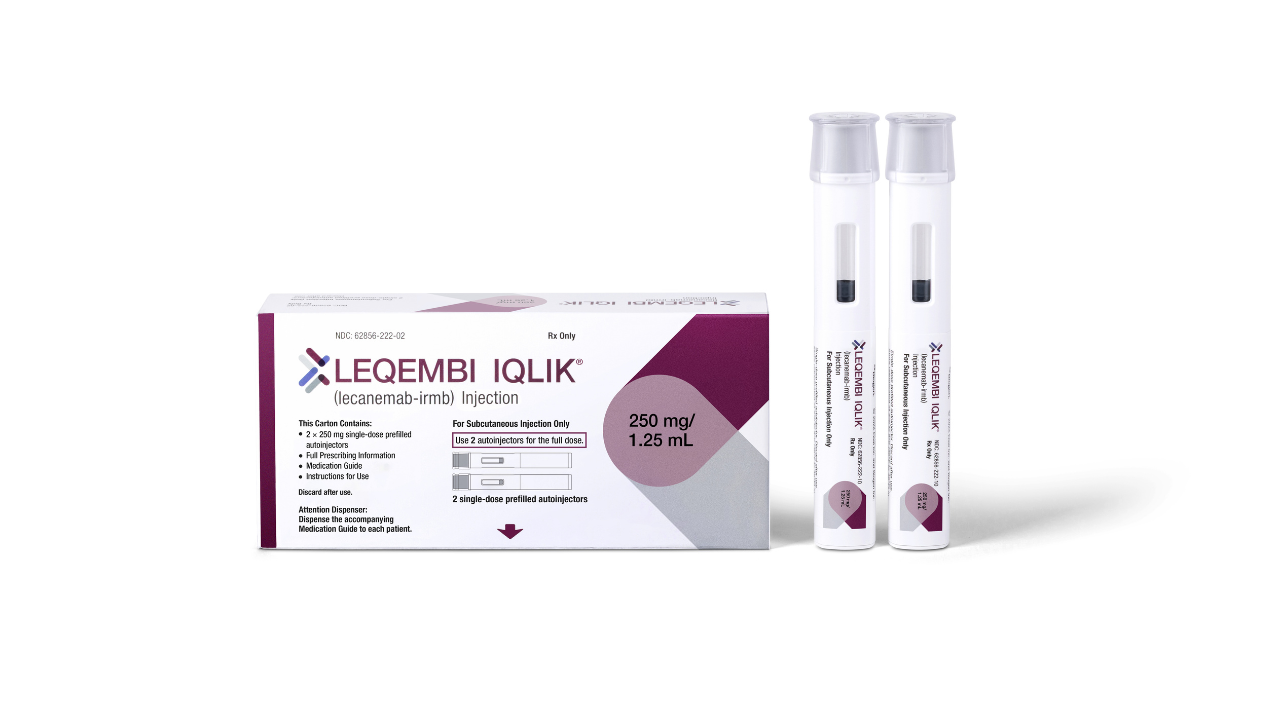
The drugs that we’re now testing in many preclinical AD trials as a field, and I’m involved in one of the FDA-approved treatments, is lecanemab. There’s another one that I’m not involved in of the FDA-approved treatment donanemab. Those drugs have important safety profiles, and they include things like the risk of swelling or bleeding in the brain. That’s a rare side effect for people taking these drugs, but it’s a real potential side effect.
I think the other thing I really need to say is that if you’re participating in a clinical trial, you should have the opportunity to get a variety of forms of paperwork about the study that describe what’s expected of people participating and the risks of the treatments that are being studied. And you don’t only get the paperwork, you get the opportunity to sit down with the investigator, go over everything involved in the clinical trial, and have all of your questions answered before you sign on the line and say you want to participate. And if you do sign on the line, it’s not a contract. Research is always voluntary. You’re demonstrating that you engaged in this process with the investigator, that you had all your questions answered. And the investigator can show that to their IRB or other agencies to demonstrate that they engaged in this process. You’re always free to drop out from the clinical trial because research is voluntary.
When I do that process, when I sit and talk about a trial and go through the documents, I say, when you sign, you’re not signing a contract, you’re not obligated to do everything. But I also educate people about the dangers of too many people signing up for a trial and then changing their mind. When people enroll in the trial, we’re really hoping that they’ll see it through all the way to completion. Now, if someone has a side effect, the team is going to work closely with them to manage those side effects and decide if they should stay on the treatment and/or stay in the trial. And again, thankfully, that doesn’t happen a lot. But if people just change their mind, decide this is more than I really thought it was, and I don’t want to do it, then the trial becomes at risk. And that’s the one thing we really can’t have happen.
If too many people enroll in a trial and then drop out, that trial may not answer its question, and that’s just unacceptable. We have to make sure that each new study is answering a question. Because even if the question answer is this drug is not the right one, that’s an important answer that helps move the field forward. And so research is always voluntary. We take that voluntary nature very seriously, and people are free to withdraw from a study. But I always like to educate people about the importance of seeing a study through, even if it means going off the treatment but staying in the trial. I hope that’s the case in every trial that people might consider. It’s certainly the case in the trials that we do here at UC Irvine.
Being Patient: An interesting question from Laura, who says, “What percentage of false positives does the blood test yield?”
Grill: So this is one of my concerns, we don’t have great numbers for some of these blood tests, especially as we move into more diverse communities and real-world applications. And I’ve been fairly public about voicing some of those concerns. In particular, some of these tests are available online now rather than through a clinician. I really don’t recommend them that way.
What I recommend is that if you’re worried about your memory or thinking problems, see a clinician. If you’re worried about your risk for someday getting dementia, stay tuned. Do all these things. Maybe consider participating in a natural history study or try to sign up for a clinical trial if that’s something that you might be up for. But don’t pursue these other tests. They are not quite ready for prime time. There’s variability from provider to provider in their sensitivity and specificity. While in the best hands, they do seem to be quite promising, I really worry about the integrity of some of the things that are out there and available to folks. If you are thinking about this, I would seek out expert care and guidance before you sign up for any of these tests.
Some people, when undergoing education and counseling, really change their mind about whether they want to have these tests. And once you’ve had the test, if we assume you’ve had a high-integrity test, it’s information that will be with you for the rest of your life. And you can’t put the toothpaste back in the tube. Again, I made the point that we have shown in several research studies now that people can deal with this information. And we understand that some people really want it, but there are some other risks, and some of the opportunities out there to have these tests really don’t put effort and energy into educating people about the other risks.
To have this label of Alzheimer’s disease on a person carries other risks, such as societal risk, legal risks, risks of discrimination, and stigma. And those are things that people really need to think through before they have these tests. If you get these tests through one of these online providers, you don’t know when that provider could be bought or sold and what’s going to happen to your information. And even if you get it in a clinical setting, there’s still risks of discrimination. You may still be working or volunteering. You may want to really think about who’s going to have access to this information.
I wish these things weren’t the case. I wish we lived in a dementia-friendly society where these things wouldn’t carry those risks, but we’re just not quite there yet. We’re working really hard to change these things, but changing society takes time. And so when the new treatments come along, everything is going to change really quickly, which could happen pretty soon. But in the meantime, I think the field has a lot of work left to do to help guide that eventual clinical practice where people get these tests and start on treatments to help stave off memory problems. And we’re talking a lot and working a lot to try to get where we need to go because we think this could be right around the corner.
“To have this label of Alzheimer’s disease on a person carries other risks, such as societal risk, legal risks, risks of discrimination and stigma.”
Being Patient: Looking ahead, what would need to happen before early Alzheimer’s testing and treatment become part of routine care?
Grill: I do think this is coming. It’s unclear when the Eli Lilly trial, which is known as TRAILBLAZER-ALZ 3, will be completed. It has a little bit of a different design from the AHEAD study. The AHEAD study will be completed in 2028. It’s possible the Eli Lilly trial will come even sooner.
If either of these trials are positive, meaning that they show efficacy of the treatments that are being studied in the preclinical space, that could result in FDA approval for the first time ever for a treatment in preclinical Alzheimer’s disease. That would be monumental, it would be incredibly exciting, and it would really change things quickly — meaning that doctors could prescribe these drugs to people who meet the criteria for preclinical AD. The only way they’re going to know that is if they perform biomarker tests in their clinics. So that’s a possibility that in the next couple of years, we’ll have a first-ever approval for treating people who don’t have memory problems but do have the biology of Alzheimer’s disease. And that is going to introduce dramatic shifts in the way things are done now.
Again, I think there’s a lot of work we have to do to try to protect people from the negative potential implications of getting that preclinical diagnosis. But the promise of being able to give people time with normal memory before they develop memory problems, or even preventing them from ever developing memory problems and die perhaps from other causes, that’s hugely impactful. It’s estimated that a drug that could delay the onset of Alzheimer’s disease by five years could cut the total number of cases in half. And a drug that could delay the onset by 10 years could essentially eradicate Alzheimer’s disease.
I just can’t say enough how exciting that potential is, but there’s still work to be done to get us there. And we know that there are other causes of dementia. So our work as a field won’t be done. But every person we can help stay safe from developing dementia will be a huge, huge victory for that person, their family and for the public health of these diseases.
FAQs
No. Blood tests provide a proxy measure of proteins in the brain that are linked to the disease. In people with memory or thinking problems, they can confirm a diagnosis but aren’t recommended as a standalone tool for people without symptoms.
Researchers can detect Alzheimer’s-related changes many years before memory loss begins — possibly 15 years or more in some cases. However, experts are still working to understand how accurately these results can predict when, or whether, someone will develop symptoms.
If you are concerned about your memory or thinking, it is best to talk with a clinician. For people without symptoms, Alzheimer’s biomarker testing is not generally recommended yet because results may not change medical advice and can raise emotional, legal, and privacy concerns.