How a Brainwave Test Can Help Foretell Alzheimer’s in Just 3 Minutes

A three-minute EEG test called Fastball may help doctors detect mild cognitive impairment — which in some cases leads to Alzheimer's — earlier than standard methods.
At an academic conference a decade ago, University of Bath researcher George Stothart came across a brainwave experiment that would change the course of his career. Another neuroscientist was measuring brain activity to study facial recognition. Stothart wondered: Could the same technique be adapted to measure cognitive decline in Alzheimer’s?
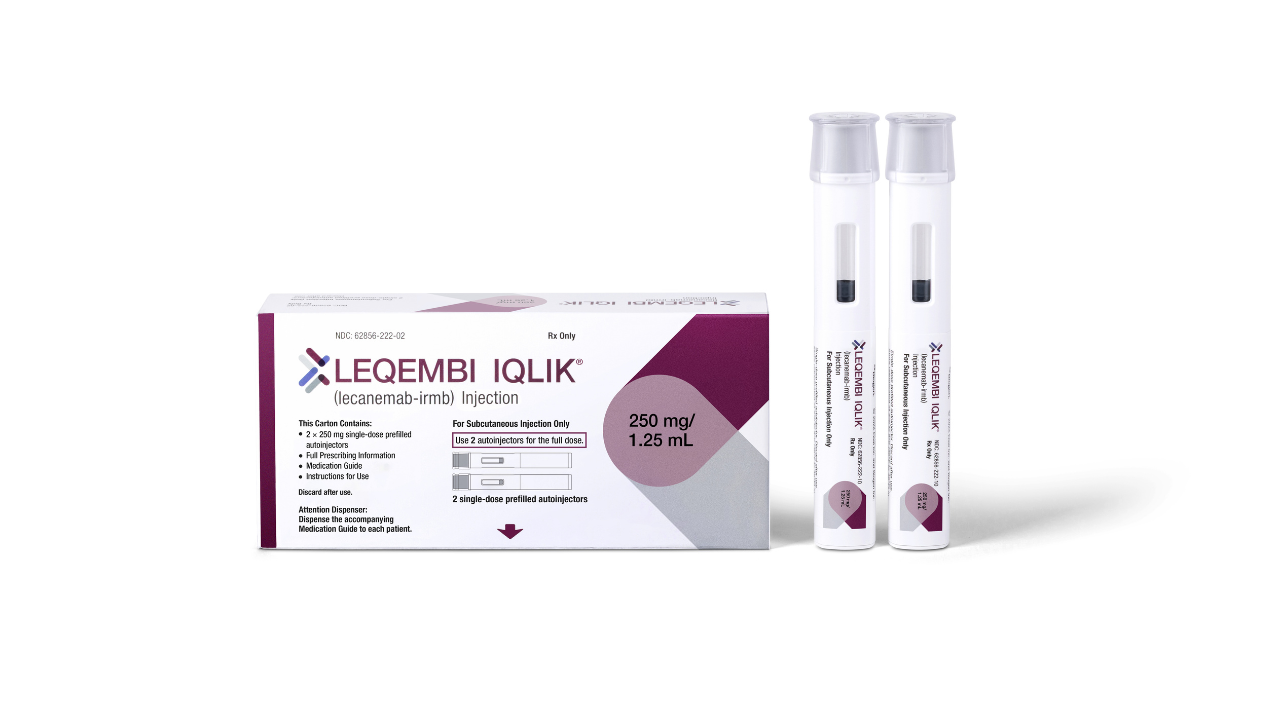
Diagnosing Alzheimer’s is a race against the clock. An early diagnosis means more time to plan and the opportunity to try anti-amyloid drugs like Leqembi or Kisunla that could modestly slow the disease. Although blood tests now provide a quicker way to confirm the condition, it can take more than three years to get a diagnosis.
Ten years after that academic conference, Stothart has adapted the method into the Fastball EEG test, which detects cognitive decline passively. All the test requires is watching a series of flashing images while brain waves are recorded using an electroencephalographic (EEG) cap. The whole process takes three minutes.
The latest proof-of-concept study, published in Brain Communications, shows the technique can detect mild cognitive impairment (MCI), which can — but does not always — precede Alzheimer’s disease.
How does Fastball capture cognitive decline?
Brain waves are electrical ripples created by patterns of firing brain cells. Any action, whether physical or mental, generates electrical discharges that form different kinds of waves.
Fastball exploits these ripples to test whether people recognize images they’ve already seen. During the test, as many as three images are shown per second. When the brain spots an image it has seen before, the signal changes, providing a readout of recognition memory — a process that deteriorates in Alzheimer’s.
In a 2021 study, Stothart and his team tested whether Fastball could distinguish between healthy older adults and those with Alzheimer’s. Comparing recognition memory in 20 participants from each group, the brain waves of people with Alzheimer’s showed a weaker response to images they had been shown before.
“We demonstrated that this was sensitive to Alzheimer’s disease memory impairment,” said Stothart. Would it work earlier in the disease process?
The new study showed that the tool could discriminate between 53 people with MCI and 54 healthy controls. It was even able to tell the difference between two types of MCI: one where memory is affected (and more likely to lead to Alzheimer’s) and another where memory remains intact.
The researchers are continuing to follow the participants to see if they develop Alzheimer’s. However, since the study began years ago — before blood tests for the disease became cheaper and more available — they do not have data on Alzheimer’s biomarkers.
Sir John Hardy, a professor of neuroscience at the UK Dementia Research Institute who wasn’t involved in the research, wrote in the Science Media Centre that the device does not “distinguish early Alzheimer’s from other causes of decline” and that additional testing would still be needed to confirm a diagnosis.
The future of Fastball
Stothart is working with the biotech company Cumulus Neuroscience to validate the test and pursue regulatory approval. “We’re now well into two four-year studies testing 1,000 patients in each one,” said Stothart.
The UK-based study is administering the test to all patients visiting one memory clinic, regardless of diagnosis, to see how it works in the real world. The US-based study has enrolled people with specific Alzheimer’s biomarkers and involves brain scans to measure amyloid and tau in the brain. Final data from both studies is expected in 2027.
How will Fastball EEG ultimately be used if these studies are successful? “We just don’t know where it will be the most useful,” said Stothart.
One possibility is routine screening at the doctor’s office. It could join a few dozen digital cognitive assessment tools that substantially speed up the process and identify which patients need more extensive testing.
While it has the disadvantage of requiring an EEG headset, it has other advantages: it is faster than many assessments, does not depend on patients’ understanding or ability to follow instructions, and measures signals directly from the brain. Since all it requires are digital tablets and EEG caps, it is relatively cheap and easy to scale.
If it proves accurate at distinguishing between different types of dementia, neurologists may use it to help make more precise diagnoses.
Stothart’s research team is also testing whether this technique could be expanded to assess other deficits. “My aspiration is to use the advantages of this technique to not just measure memory, but also other cognitive functions,” said Stothart.
IMAGE: Fastball EEG is a passive diagnostic test that measures brainwaves while the test-taker looks through a series of images on a computer screen. (Credit: Nic Delves-Broughton, University Photographer at the University of Bath)