Why Self-Care Isn’t Selfish
The sudden loss of a beloved mentor changed how Dr. Em Wong thinks about work, caregiving, and why protecting your own health isn't selfish — it's essential.
Dr. Em Wong is a doctor of internal medicine and brain health coach with a background in women’s health and integrative medicine. An artist and author of iHeal Mag online, she is writing a book, “Vibrant to 100: Extend Your Brainspan and Shape How You Age.” Her goal is to be healthy of mind and body at her 100th birthday party—and she wants to invite you along on the journey.
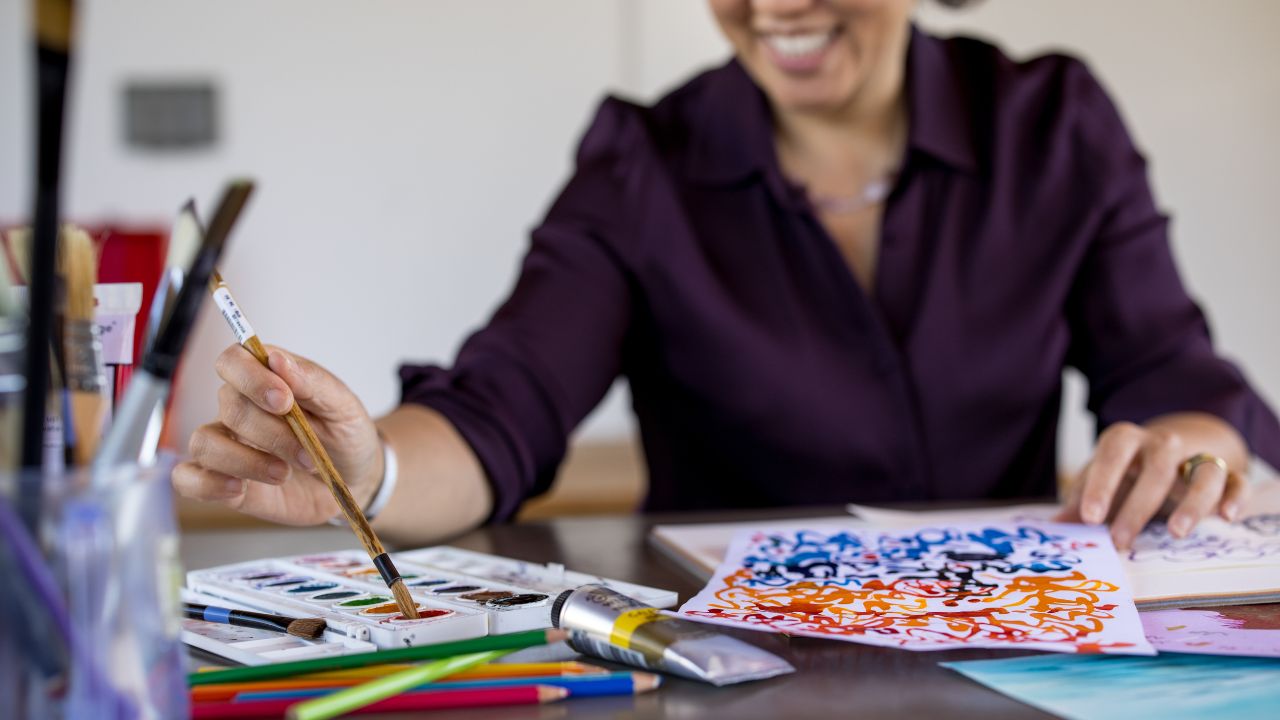
I used to think self-care was selfish. Whether doing art, getting a manicure, or working out, I believed that taking care of my needs was at best indulgent and at worst a waste of time and money. Not that I didn’t ever do any of the above, I would just feel guilty about it.
After all, my self-worth was measured by my ability to take care of others (my patients, my attending physicians, my family, and so on). I’d been brought up to believe that work deadlines, family responsibilities, caregiving, and other such obligations should be prioritized over and above self-care.
This is particularly true for caregivers of loved ones with Alzheimer’s and other forms of dementia, who report high levels of stress and a general lack of self-care leading to poor health and, in some cases, earlier death. It wasn’t until tragedy struck my colleague and mentor, whom I’ll call Jane, that I began to rethink my own priorities in this regard.
Jane was the head of outpatient operations when I got my first clinic chief position in academic medicine. Jane had supported generations of fledgling doctors like me with no prior leadership experience. Over the course of her storied career, Jane had become immensely skilled at managing up, teaching without seeming to, and guiding with tremendous tact.
Jane’s first most important leadership lesson came to me at a moment that I’m not at all proud of. The fire alarm was going off in our clinic building, and I was hiding out inside my office instead of evacuating the building as was protocol. Like many other doctors, my usual routine was to use the fire drill as an opportunity to catch up on work.
When Jane came and stood in my office door with her red fire marshal hat on, I gave her all the usual excuses for why I didn’t have time for interruptions like fire drills. She stood and listened quietly, and when I tried to dismiss her so she could go on with her duties as fire marshal, she said, “No, I’ll wait.” She stayed quietly in the doorway as I explained once again that I wasn’t going to leave.
Jane looked me in the eye and without raising her voice, she responded patiently, “You need to come with me, please. You are the Clinic Chief.” The implication was clear: in my new leadership position, I was expected to role model behavior that served the team and institution. And holding up the fire marshal was not something that a good leader was supposed to do. In that moment, I “grew up” as a leader, and that gentle lesson has continued to serve me almost 30 years later.
The second life-changing lesson that Jane taught me didn’t come until five years later but had an even greater impact. I had learned to respect Jane’s masterful approach to tackling politics and bureaucracy in the complex world of academic medicine. She exuded an air of unflappable calm, but in intensely stressful moments, I’d catch her rubbing her teeth against knuckles that had become thickened and calloused through constant abuse.
Jane mentioned to me once that she had high blood pressure and probably needed to take medication. I urged her to come see me in the clinic, but she always seemed too busy to take time for herself. Despite running one of the largest multispecialty clinics in the city, Jane never once booked herself in to see a doctor.
Jane retired to great fanfare in September of 2001 at the age 55, having worked for long enough to qualify for excellent state retirement benefits. She told me that she and her husband were planning to “sunbird” in Arizona that winter. So, I was surprised to get a call in February about her, from the ICU at St Joseph’s Hospital. She had named me as her primary care physician, even though I’d never seen her as a patient. The critical care specialist wanted to know if I would consider accepting Jane in transfer by admitting her to our academic care hospital in Seattle.

I drove down immediately to assess Jane in Tacoma. She had had a major stroke and was unable to speak. She clearly recognized me and held out her good hand to grab mine. I arranged for her transfer by airlift right away, but Jane went on to have a series of strokes that night and became comatose. Despite having the best stroke specialists in Washington state working on her, Jane died a week later.
When I spoke at Jane’s memorial service, I was still in shock. I told my fire marshal story, expressing my gratitude for how much I had learned from Jane. At the time, I had yet to assimilate the second—much more impactful lesson—that she had imparted to me. It took me several weeks to recognize that Jane had taught me the impact of good role modeling—and even more important, the effect of bad role modeling.
Jane had come from a generation that sacrificed everything for work, deferring gratification and self-care. She probably didn’t realize that she was role modeling her workaholic work ethic, and she did not intend for her life to end as it did. But I began to see how Jane’s story was a signpost for me. I needed to role model better work-life balance and self-care if I wanted my patients, residents, and children to take care of themselves.
Looking back, I’m not sure if I could have convinced Jane back then to address her blood pressure issue, or to take better care of herself in the present rather than waiting for retirement. To be honest, I, myself, completely bought into the self-sacrificing workaholic paradigm at that time. What I do know for sure is that I owe it to Jane’s memory to “walk the walk” and not just “talk the talk,” as most doctors do when it comes to self-care.
None of us can know what the future holds, but we can learn from the past. Each time we choose to brush our teeth, move our bodies, go to sleep on time, and eat whole unprocessed foods, we are investing in our present (and future) brain health, because self-care is brain care. Whether doing art, getting a manicure, or working out, there’s nothing selfish about making intentional choices for our own brain health. No one else can do it for us.