VOICES: When the Bough Breaks
Sarah Rivers Deal reflects on becoming her mother’s caregiver as Alzheimer’s reshapes the woman who once held their family together.
Sarah Rivers Deal, PhD, holds a doctorate in counseling and brings three decades of clinical experience to her work as a licensed professional counselor and owner of Two Rivers Psychotherapy, a mental health private practice in Austin. She writes from the perspective of a mother, wife, and her mother’s only child, bringing both professional insight and deeply personal lived experiences to her reflection on family, caregiving, and Alzheimer’s.
I grew up on Broken Bough Drive, in a house that held 37 years of family life. Birthdays, holidays, Sunday meals, ordinary mornings, hard conversations, and laughter all passed through that home. For years, it was the hub of our family, the place where everyone returned, and the place where my mother stood at the center of it all.
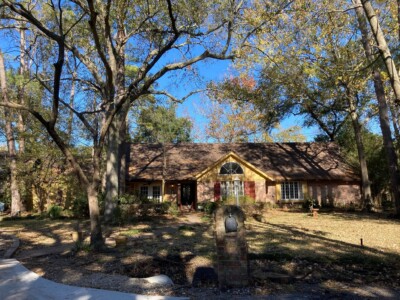
The name Broken Bough once felt like nothing more than an address. It appeared on envelopes, school forms, driver’s licenses, and Christmas cards. Now, after my mother’s Alzheimer’s diagnosis, it feels almost prophetic. A bough can look strong for years. It can shelter, carry, and hold. Then, slowly or suddenly, it can begin to break.
For most of my life, my mother was the great bough of our family tree. Really, she was more than that. She was the trunk: the central strength, the matriarch, the one from whom the rest of us extended. From my elementary years on, she carried that role largely as a single mother. My father was mostly absent, so the weight that might have been shared settled almost entirely on her shoulders.
As an only child, I felt her constancy with particular intensity. There were no siblings beside me to share the daily witness of her sacrifices. She was the parent who remained, the one who answered questions, noticed details, made decisions, solved problems, paid bills, preserved holidays, hosted family gatherings, and absorbed the emotional weather of the household. She was both anchor and canopy. Her constancy became the architecture of my childhood.
My mother’s resilience was quiet. It was not the kind of strength that announced itself. It lived in the way she kept going when there was no one else to take over. It appeared in meals made, problems solved, trees planted, gardens tended, and a brick pathway she laid with her own hands. Like a tree weathering season after season, she put down deeper roots and kept offering shade.
Then Alzheimer’s came, not as a visible storm, but as a slow fracture beneath the bark. At first, it was a misplaced word, a forgotten detail, a repeated question. Small things. Explainable things. But over time, the pattern became harder to deny. Something essential was being invaded. The bough that had sheltered us for so long was beginning to break.
An Alzheimer’s diagnosis does not land on one person alone. It lands on an entire family system. When a bough breaks, the damage is not limited to the limb itself. It leaves an open wound, changes the tree’s balance, and alters how it survives future storms. In the same way, my mother’s diagnosis changed the structure of our family. It shifted roles, exposed vulnerabilities, and asked us to live with a grief that had no clear beginning or end.
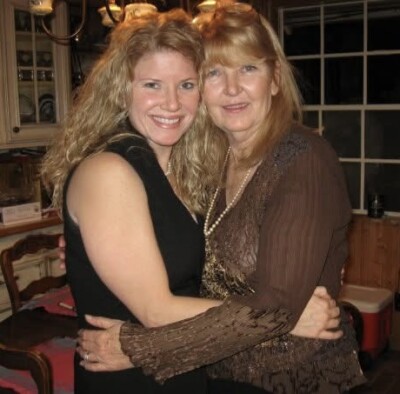
The hardest part of Alzheimer’s is that it asks you to grieve someone who is still here. My mother’s body remains. Her voice remains. Her face is still familiar. And yet pieces of her are taken in ways that feel both gradual and sudden. Memory loosens its grip. Language falters. Time folds in on itself. The woman who once knew the shape of everyone else’s life now needs help finding the shape of her own day.
As her only child, that reversal can feel especially solitary. As her legal guardian, it is also deeply practical. Guardianship is paperwork, appointments, decisions, vigilance, and advocacy. But it is also love translated into protection. It is a daughter standing beside the broken bough, trying to keep it from being further harmed, trying to mend what can still be mended.
Broken Bough itself still carries meaning for me. No one close to the family entered through the front door. Family came around back, crossing the brick step pathway my mother laid herself, brick by brick. I walked that path thousands of times. Today, two of those bricks are built into an outdoor fireplace at my own home. To anyone else, they are ordinary bricks. To me, they are relics, roots, proof. They anchor me.
The landscape around Broken Bough was also her handiwork. She planted trees, shaped beds, tended flowers, and created gardens worthy of Southern Living magazine. She did not simply live in that house; she cultivated it. When the house was later torn down, most of the trees and mature landscape she had created were destroyed too. To someone else, they may have been obstacles to construction. To me, they were part of her legacy.
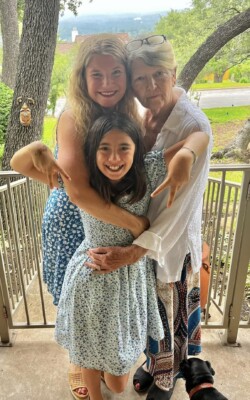
I can still see myself standing at the cul-de-sac, watching the house that held our family history reduced to debris. Eventually, a house nearly double the size of the original rose in its place. It looked less like a home than a commercial office building, oversized and impersonal. It stood on the same ground, but it did not know us. Alzheimer’s can feel like that too: the outer shape remains, but something sacred inside has been altered.
Dementia is not poetic when it is lived day to day. It is exhausting, confusing, and cruel in its intimate losses. There are days when love feels inadequate because love cannot restore memory. But care is still a form of bracing. We cannot unbreak the bough, but we can support what remains. We can protect the wound from becoming the whole story.
For those of us caring for someone with Alzheimer’s, mending may not mean cure. It may mean showing up, speaking gently, repeating ourselves, making hard decisions, preserving dignity, and remembering the whole person when the disease tries to make that person smaller. It may mean becoming, for them, some measure of the shelter they once were for us.
My mother is still here. Not in all the ways she once was, and not in the ways I wish I could keep forever, but here. As long as she is here, my work is not only to mourn the break, but to honor the whole tree: the roots, the trunk, the branches, the shade, the years, the home, and the love that continues to grow from her life.
The bough may be broken, but it is not abandoned. I am still beside it, doing what I can to protect it, brace it, and mend it with the same devotion she once gave to all of us.