
VOICES: Our Mom was Getting Lost in the Car and No One was Coming to Our Rescue
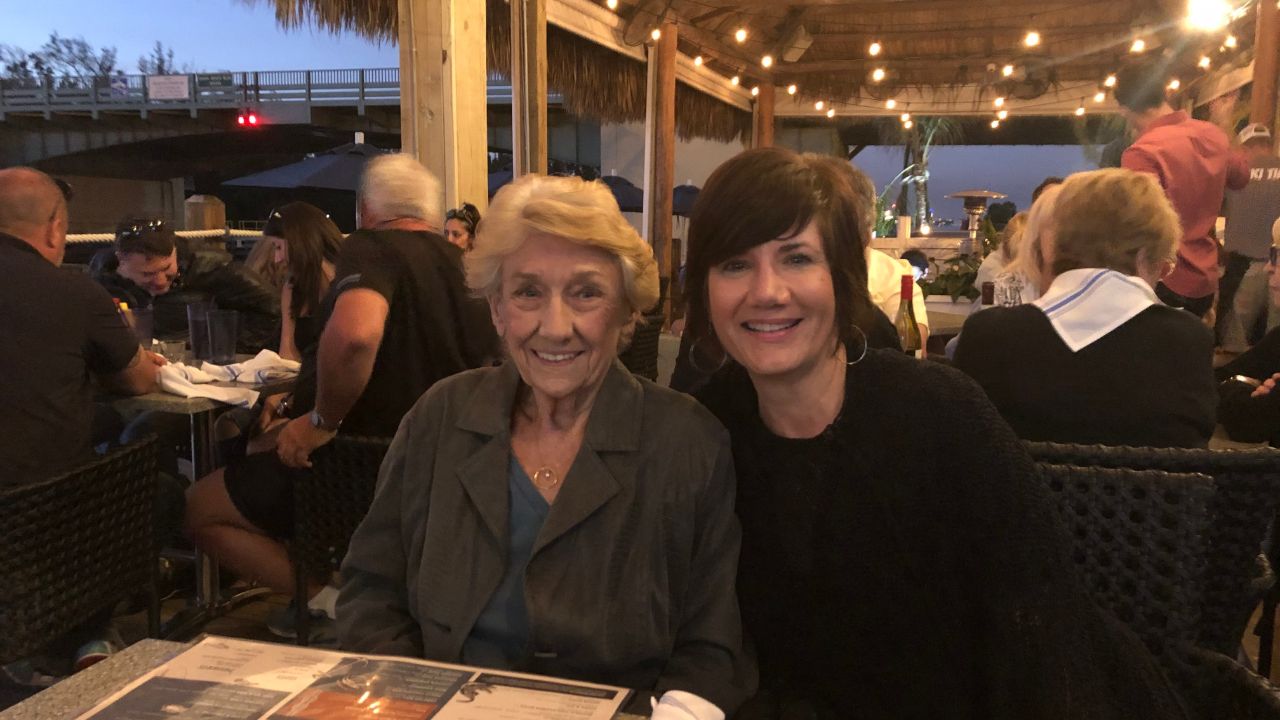
Donna Noll Stothfang reflects on the difficult decisions her family faced while caring for their mother with dementia from afar.
Donna Noll Stothfang is a writer, speaker and funeral celebrant in Cincinnati, Ohio. Her work explores caregiving, distance, dementia, and the emotional landscape of end-of-life—drawing on her experience navigating her mother’s final years from afar during the COVID pandemic. Follow her Elder Journey Insights blog at www.donnanollstothfang.com.
The first time we knew our mother, Dorothy Noll, got lost in her car she said she got turned around leaving Barnes and Noble after her volunteer gift wrapping shift for the Women’s Club. It was December 2015 and she was 79.
She chalked it up to a simple wrong turn that took her through a new neighborhood where she saw “all the pretty Christmas lights.”
I wanted to believe the dark of night and the Florida overgrowth caused her to miss the exit at the retail center, so I did. Even as other evidence of memory lapses came to our awareness, I blanked out the bookstore episode. Besides, Mom lived a thousand miles away from me and similarly distant from my three siblings — what could any of us do?
Four years later, though, on a visit to Mom’s house, I actually witnessed her get lost. She had gone to the gas station five minutes away. After three hours she was still gone so my sister and I called the police. She pulled in a few minutes after the officer arrived and was angry to see him. She was fine. There was no problem, she assured us.
Except there was. And we knew it. She refused to discuss her “brain playing tricks on her.” At the end of our visit, we headed to the airport leaving Mom behind with the keys to her Green Kia Sorento and a plea to the neighbors to watch out for her.
Two weeks later she got lost again. This time on my brother’s watch. She was gone for 12 hours. The county issued a Silver Alert. Around 1 a.m. she remembered how to use her cell phone and called my brother suggesting to him that she might be lost.
My brother ordered a tracker for her car. We put the app on our phones. Then he headed to the airport. The keys to the Green Kia Sorento were still in Mom’s purse.
Mom was fiercely independent and notoriously stubborn. She appeared to be taking care of herself, her dog, and her house. Insinuating it was different from that resulted in an argument every time.
We had no idea what to do and it was easy to look the other way when we all lived so far away.
When COVID struck, we were shamefully relieved. Mom now had few places to go. But when boredom set in she set out driving around just for fun. The neighbors would alert us when she had been away too long. We would consult the tracker app and see she was circling around somewhere. The neighbors would chase her down in their car somehow getting her attention and coyly coaxing her home.
When it happened three times in one week, two of us flew to Florida to take away the keys. Something we should have done months, if not years, earlier. We remain ever grateful that no one was hurt by our mother’s diminishing navigation and driving skills.
We tried to enlist the help of Mom’s primary care physician, but she had no interest in supporting our efforts. Despite the secret note we passed to her urging her to tell our mother she could no longer drive — so we didn’t have to — she did not.
Instead, she ordered a blood test for a urinary tract infection (UTI) since they can cause confusion and an MRI to check her brain. She otherwise offered us no assistance in what we had to do. And we knew it was no UTI. And we were right. The MRI was scheduled out two months. Not much help there either.
It was all on us. We looked at retirement communities where Mom could live and not need a car. But Mom’s resistance was like an impenetrable fortress. No one could get through to her. The dementia stood in the way of her understanding the dire situation.
The kindly neighbors stepped in to help Mom stay in her home by bringing her groceries and regularly checking on her. To limited success, we hired home health aides while we remained at a loss for how to proceed.
We quickly realized Mom didn’t even qualify for independent living in a retirement community anymore. So we spent the next year prevailing on the kindness of these neighbors while waiting out the worst of COVID, which had assisted living and memory care communities on lockdowns.
Mom eventually stopped asking where her car keys were, and we started working on a plan for her long term care. A plan we should have been making years ago.
It’s hard not to feel embarrassed by our initial management of our mother’s situation. But our mom was as stubborn as we were loyal. The instinct to protect our mother was so strong that taking the steps to actually protect her felt wholly disloyal.
But our loyalty was misplaced as she struggled to live on her own, not that she recognized the struggle herself. Finally, we put together a plan to get her to assign Power of Attorney (POA) to one of us. She was highly resistant to that idea, which created a huge stumbling block. Without the POA we did not have the authority to sign her into community living and we knew she would never sign herself in. But late in the game, we did convince her about the POA. Then we found a community we liked and used some very clever maneuvering to get her moved in. It was an enormous effort.
We should have started sooner to help our mother plan for her future. We should have insisted years ago—when Dad was still alive—that they assign a POA. Mom would have listened to him. We should have been less loyal and more brave when facing our mother about this. We should have talked more among us four siblings and been proactive from the moment Mom told me she got “turned around” driving home from Barnes and Noble that December night.
We should never have looked the other way.




What a brave and honest piece. Thank you for sharing your experiences, Donna, so others don’t feel so alone!
Hi Louisa, thank you for being here. Feel free to sign up for our weekly newsletter to get more Voices pieces like htis straight to your inbox: https://beingpatient.com/newsletter-sign-up/?utm_source=organic&utm_medium=social – take care.
Hi Louisa, thank you for being here. Feel free to sign up for our weekly newsletter to get more Voices pieces like this straight to your inbox: https://beingpatient.com/newsletter-sign-up/?utm_source=organic&utm_medium=social – take care.
Wow! Thank you so much for sharing your story!!!
Hi Leslie, thank you for being here. Feel free to sign up for our weekly newsletter to get more Voices pieces like htis straight to your inbox: https://beingpatient.com/newsletter-sign-up/?utm_source=organic&utm_medium=social – take care.
Hi Leslie, thank you for being here. Feel free to sign up for our weekly newsletter to get more Voices pieces like this straight to your inbox: https://beingpatient.com/newsletter-sign-up/?utm_source=organic&utm_medium=social – take care.
Thank you for bravely sharing your story. It really resonated with me. It’s so hard when someone you love is determined to maintain their independence, and you don’t want to go against their wishes.
I was especially struck that her primary care physician wouldn’t support you by telling her not to drive. So many caregiving resources recommend involving a physician, but very few acknowledge what to do when that support isn’t there. Your experience with the healthcare system is so relatable—you can advocate and advocate, yet still feel like you’re getting nowhere.
Caring for a loved one from far away is incredibly difficult, especially when siblings also live at a distance. I’m so grateful you shared your experience. Remote caregiving often goes unseen, but it comes with unique challenges that are incredibly hard to navigate and even harder to put into words.
Hi Trizah, thank you for your kind words. If you’re interested, you can find more caregivers’ Voices pieces here: https://beingpatient.com/voices/?utm_source=organic&utm_medium=social – take care.