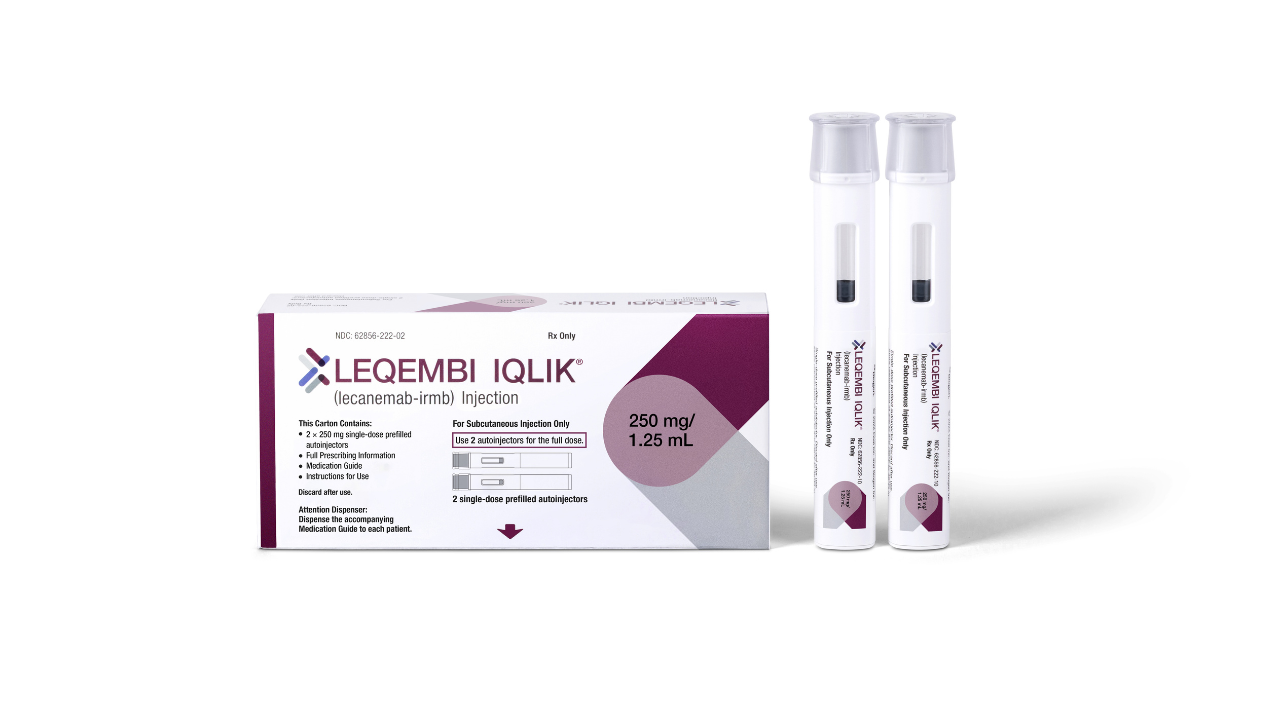
FDA Approved: An Injectable Version of Alzheimer’s Drug Leqembi

Up to now, Alzheimer's drug Leqembi has been administered via IV. Now, it's also available as an injection.
Since January 2023, Eisai’s anti-amyloid drug Leqembi has been available for people in the earliest stages of Alzheimer’s. The drug helps the brain clear out toxic forms of beta-amyloid called protofibrils and plaques. Up to now, this has all been via an 18-month course of semi-monthly IV infusions and then periodic maintenance doses thereafter.
That maintenance process is getting easier for patients: In January, the FDA approved a new monthly maintenance dosage, reducing the number of necessary infusion clinic visits. And at the end of August, the FDA approved another, more appealing option for many patients who live far from an infusion clinic: injectable Leqembi, in an auto-injector pen administered once per week. The new name is Leqembi IQLIK™.
These injections are subcutaneous (under-the-skin) injections — the same method used for other common prescriptions, like insulin, or Wegovy and Ozempic.
“It will be helpful to have a more convenient and accessible treatment, overcoming some of the limitations in the availability of infusion centers,” Eric Reiman, CEO of the Banner Alzheimer’s Institute, told Being Patient. “I expect it will be the maintenance treatment option of choice over IV.” He speculated that patients who experience IV infusion-related reactions — including fever, flu-like symptoms, and body aches — might prefer the injection.
According to data presented by drugmaker Eisai at the Alzheimer’s Association International Conference earlier this year, these maintenance injections are safe and don’t appear to lead to the known side effect of brain swelling associated with the infusions in the first 18 months of treatment.
With self-administered injections, patients may forget to take their medicine. But since patients receiving the injection have already cleared most of the beta-amyloid plaque from their brain, Reiman does not think that “being a little late” for a dose will have a great impact on treatment.
Can subcutaneous drugs inject excitement into the anti-amyloid market?
So far, sales of Leqembi and Lilly’s anti-amyloid Kisunla have been low. Though Leqembi has been shown to work safely in a real-world setting, it still comes with downsides: cost, small to modest benefits, and lots of brain scans to detect brain swelling and brain bleeds.
The FDA also released a new recommendation for additional early monitoring after reports of six deaths due to brain swelling occurring before the first MRI scan. (There were more than 1,700 Americans who were taking Leqembi by March 2024, meaning these numbers represent less than half a percent of treated patients.)
“I’m happy because it brings the MRI monitoring into line with donanemab [Kisunla], where we get an MRI in the first month,” Dr. David Weisman, neurologist at Abington Neurological Associates, told Being Patient. “We are implementing this ASAP.”
Injectable forms of the drug could make them more accessible, experts say. Eli Lilly is currently testing an injectable version of its next-generation anti-amyloid remternetug in Phase 3 trials.
“I am excited about that possibility, which is now being put to the test in persons with biomarker evidence of Alzheimer’s disease in cognitively unimpaired, MCI, and mild dementia stages,” said Reiman. “I’m eager to see subcutaneous [under-the-skin] formulations of other plaque-reducing treatments developed and put to the test as well.”
Since these drugs will be administered at home, new safety protocols will need to be developed to monitor for brain swelling and bleeding.
Is there an Alzheimer’s pill on the way?
While injections are easier than infusions, there’s an even more accessible method since drugmakers have an eye on: pills. But it isn’t likely that any will be available in the U.S. anytime soon. Many highly anticipated Alzheimer’s pills have failed trials in the past few years. Those still in development don’t seem to be anywhere near filing for FDA approval in the U.S.
Here are the most recent strike-outs when it comes to experimental Alzheimer’s pills:
- Alzheon’s highly awaited Phase 3 trial of its plaque-preventing pill valiltramiprosate failed to slow cognitive decline in early Alzheimer’s. The company is planning to run a follow-up trial in mild cognitive impairment.
- Cassava Sciences’ controversial Alzheimer’s pill simufilam failed Phase 3 trials earlier this year. One of the scientists developing the drug was indicted for fraud by the Department of Justice, and other former executives faced regulatory scrutiny.
- TauRx’s anti-tau pill has failed multiple clinical trials, and experts are highly critical of the data. Despite that, the company still filed for approval in the UK in 2024, but it isn’t clear when it will make its final decision. The company has not filed for U.S. approval.
Meanwhile, Anavex Life Science’s drug blarcamesine showed mixed data in its phase 2/3 trial. The company has filed for approval in Europe, but not in the U.S.
Beyond these, a new generation of experimental pills is entering clinical trials. Scientists are hoping they’ll fare better.