How the Brain’s Habenula Can Sabotage Habits and How to Break the Cycle
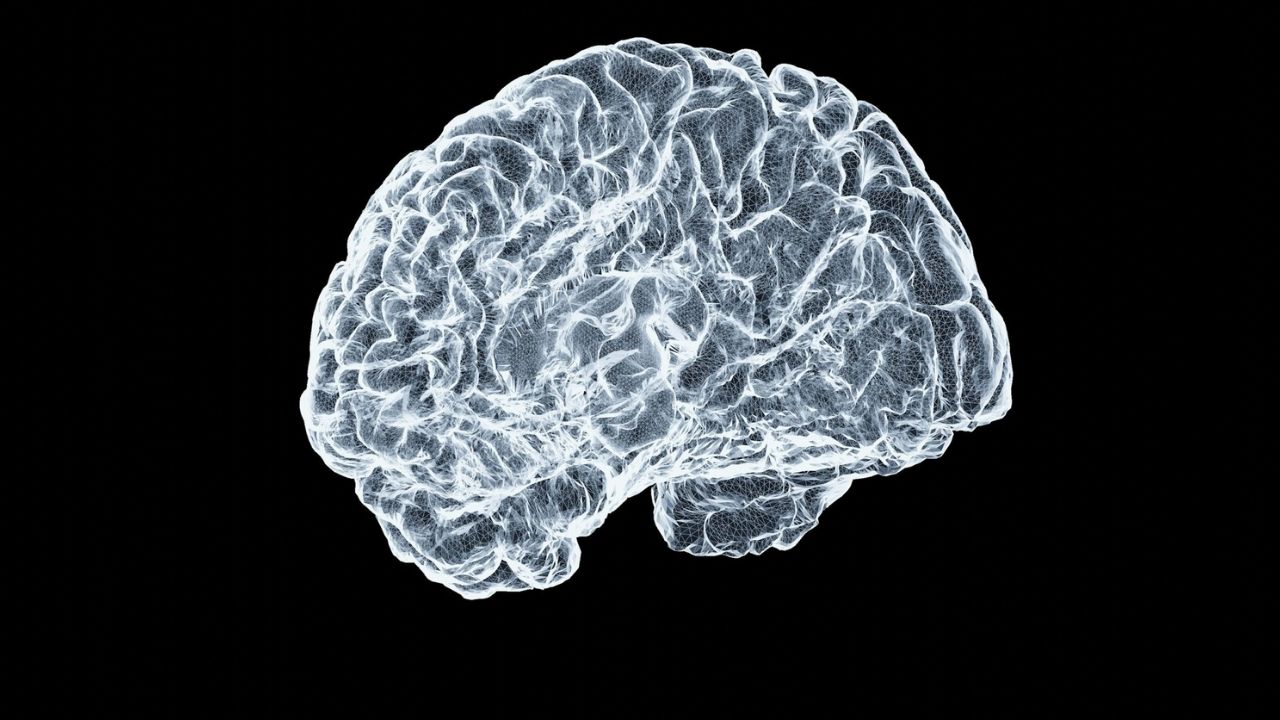
Dr. Kyra Bobinet explains how the habenula fuels shame, cravings, and avoidance after setbacks, and shares science-backed strategies to “neutralize failure” and build habits that last.
How can we train the brain’s decision-making and motivation centers to work for us instead of against us? Dr. Kyra Bobinet is the world’s leading expert in the applied neuroscience of the habenula, a tiny brain structure that plays a powerful role in motivation, habits, and how we respond to stress and setbacks.
Bobinet, who got her MD from UCSF and MPH from Harvard University, is a public health leader and expert on human behavior. She is the author of the book “Unstoppable Brain: The New Neuroscience That Frees Us From Failure, Eases Our Stress, and Creates Lasting Change.” Bobinet translates long-term neuroscience research into practical tools for self-care, habit change, and sustainable personal growth.
In this conversation with Being Patient’s founder Deborah Kan, Bobinet describes the habenula as an “anti-reward” hub that can overpower dopamine pathways when it flips on in response to perceived failure — fueling frustration, shame and negative self-talk. She says one of the most effective ways to regain momentum is learning to “neutralize failure” through an iterative mindset: reframing setbacks as feedback, making small adjustments and trying again.
Bobinet also shares strategies to break bad habits by “putting the brakes” between you and a craving. For people stuck in a deeper addiction loop, she notes that chronic stress can make the habenula more reactive, and that recovery may require layered support.
Being Patient: Where in the brain is the habenula? What does it look like? Does it sit in the hippocampus? Where exactly is the structure?
Dr. Kyra Bobinet: The habenula is in the center of our brain. The joke among habenula scientists is the whole cortex is there to protect the habenula because it is that important.
In Latin, it means “little rein.” It’s like it’s a little rein, but it controls everything. It’s about a half a centimeter large, and there’s two of them in the midline of your brain.
Being Patient: How long have we known that the habenula existed?
Bobinet: [It was] discovered anatomically in the late 1800s, doing cadaver research, I’m sure. And then nothing until fMRI (Functional Magnetic Resonance Imaging) comes by, and specifically the 7T machines, which are usually used in research only.
It’s much more common for people to be able to see mouse habenula. Every creature on the planet has a habenula, which I find super interesting. But for humans, we weren’t able to visualize this until these higher-resolution MRI machines came about. And so that’s when it got interesting. That’s when the functions of it started to come out, and we’re really at the advent of the power of this thing.
Being Patient: With decision-making, any type of behavioral thing I always associate with hormones or dopamine, something that controls behavior, impulsiveness. Do we know how the habenula interacts, is it driven by dopamine? Where is the connection there in terms of the actual chemical makeup and behavior?
Bobinet: Like most things, it’s part of a complex. In some papers, it’s called the habenular complex. But the way that you can think of it in terms of stochastic dominance is that it dominates dopamine, serotonin, decision-making, impulsivity, addiction, craving, addiction withdrawal, depression, anxiety and, of course, motivation. That’s kind of its hallmark, is motivation.
Being Patient: Is it most active when we have an addiction or we’re trying to break bad habits, but we can’t? Is that when it becomes really active? Do we want to keep it from being too active? What’s the control there in terms of our behavior and really how it presents itself inside the brain?
Bobinet: Basically, you can think of it as the brakes on our behavior. Anytime we don’t want to approach something or don’t want to try or don’t want to keep doing something, this flips on. And what causes it to flip on is really interesting: it’s failure. It’s negative emotions — disappointment, frustration, demoralization, being intimidated, being dominated by another animal in certain cases, like with male-to-male combat in other animals.
Stopping us from risking our lives is its main function. That’s why it has control over our dopamine pathways. That’s why it’s called the anti-reward pathway which means that it’s more powerful than the reward pathway.
If you ever met somebody who struggled with addiction, what they’ll tell you is, “I don’t use to get high. I use so that I feel normal.” And what that means is that they’re having a habenula that’s very hyperactive. And in that state, when it is active, it is so painful and so agitating. It’s like you want to crawl out of your skin. That’s the withdrawal symptom part of it. The habenula is responsible for negative self-talk. So it’s a very itchy state, and we want to stop it at all costs. And so we start using things, or we start distracting ourselves, or finding any way to shut it off. But we don’t know how to shut it off. We don’t know we have one, and we don’t know what turns it on. We do, but most people don’t.
“Basically, you can think of it as the brakes on our behavior. Anytime we don’t want to approach something or don’t want to try or don’t want to keep doing something, this flips on. And what causes it to flip on is really interesting: it’s failure. It’s negative emotions — disappointment, frustration, demoralization, being intimidated…”
Being Patient: Let’s use diet as an example. At one time in your life or another, you’re trying to eat healthier or maybe lose weight. And we’ve all been subject to failure. It may last a day or so, and then you snowball. So is there a way to consciously kind of beat back the habenula and tell it to stop through conscious state? Or is it something that we control by using other strategies in terms of really guarding and understanding how we accomplish what our goals are?
Bobinet: In my research, we did a head-to-head horse race of all of the sort of usual suspects: self-efficacy, optimism, learning-based goals, performance goals, grit, resilience — all these amazing psychological factors. What we found was that in every single case, the strongest medicine for being able to overcome your habenula and get long-term results [and] sustain your results, get through the weight loss or get through the healthy eating changes, get through habit formation, was something called an iterative mindset. And this is a naturally existing mindset in nature that people have. But what I did was I turned that into a methodology so that it can be trained. And we also did an inventory so that it can be measured. And that’s for free on my website.
And then the second horse to cross the line was optimism. So what that tells you is that when we iterate, we avoid going around the habenula because habenula is only triggered if we think that we failed in some way, shape or form. If I can prevent myself from thinking that way, or I can go back and correct my wrong thinking that I already failed, then I can turn my habenula off. My motivation plumps back up, and I’m good to go.
What people don’t realize is that when they lose motivation, it doesn’t feel like anything. It just happens. And all we notice is that we’re sitting on the couch, or that we’re eating the tub of ice cream, or that we’re doing things that we don’t want to do. And the trick is to identify where our habenula flips on and ask ourselves, “What might I be able to do to turn it off?”
Being Patient: When I want to quit something, whether it be sugar, or maybe I’m not going to drink wine this month, I find if I just don’t really think about it that much, it really helps me. But once we become obsessive and compulsive and you think, “Oh, I’m really missing that glass of wine tonight,” then you’re going to really obsess about it. But if you put it out of your mind and do something that makes you feel better, whether it’s like going for a walk or maybe having a drink that feels like it replaces the wine, but it’s not wine, then you kind of feel like you’ve won. Is that a way for us behaviorally to control this and kind of beat it back so that it doesn’t lead to worse behaviors? I guess what I’m trying to do is make it more relatable so people can understand, actually, you do have control over this part of the brain. So what would be your suggestion to us?
Bobinet: I think the modern skill that we haven’t even begun to realize is, how do we turn it off by neutralizing failure? So what you’re talking about is you don’t have failure with respect to wine. But somebody who is really addicted to wine, for example, they have that much control over how much they use because they’re so itchy and they’re in so much psychological pain that they can’t have that control.
When you’re truly, truly addicted to something, your habenula’s on. It’s hypersensitive, meaning that it’ll flip on at any little negative thought. So you’re off to the races, and then you feel badly, and then you want to use. You want to do something to self-soothe. And that’s where people get into trouble with food and binging and over-drinking, over-smoking — all these things that they do.
The hope, though, is that if you can catch the moment where you want to use, what I do is I say, “How did my habenula turn on?” If I want to use, or if I’m in a no-do gap — I know what to do, but I’m just not doing it, which is the sort of definition of addiction — I will ask myself, “What happened that I had my habenula turn on?”
It’s individual for each person, but focusing on arguing with, letting go of, reframing the failure, anything by hook or crook that you can do to unfail yourself or to fail-safe yourself and to get out of shame cycles, get out of blame cycles, you’ll just bounce back faster. And that’s really the trick.
“What people don’t realize is that when they lose motivation, it doesn’t feel like anything. It just happens.”
Being Patient: When people have a chemical addiction or, let’s say they’re addicted to drugs or sugar or they have a severe eating disorder, binging — is it that simple? Is there a different strategy to employ if it actually has become almost a physical addiction?
Bobinet: The physical addiction part is real, and people are suffering incredibly. And what is true about what you’re saying is that once you get rolling, it’s really hard because you’re on this merry-go-round and you can’t get off, right? Like, you trigger your habenula by being disappointed that you’re using, and then you feel like a failure, and then that triggers it again. And then that drives cravings. So you do get this kind of failure-habenula-addiction loop going.
When you can stop it, or when you can get a breath, is when you go to rehab and you have a moment to not be in it, like you’re abstaining by force usually. Or you take a GLP-1, which is an anti-addiction medication — not a weight-loss medication. What it does is that it sits superior to the habenula, and it turns off the habenula chemically. So does ketamine, if you’ve heard of ketamine-assisted therapy. Those kinds of medications absorb into the habenula cells and turn off the habenula.
What makes it more likely to be hypersensitive is chronic stress. So you could de-stress your life to make it less likely that you’re going to trigger your habenula. And then you can do it psychologically, like I was saying, with reframing and letting go. But if that’s not enough, to your point, you might have to go to chemistry. You might have to go to GLP-1. You might have to go to — heck, there’s an invasive procedure where they stick a probe in your brain and zap your habenula and turn it off manually, like electronically. So there’s all kinds of ways that people are cleverly inventing to be able to turn off the habenula. And there’s different layers of whatever works for a particular person.
Being Patient: What’s happening inside our brains where a GLP-1 could actually stop the addiction?
Bobinet: So the GLP-1 has a receptor on the habenula. And by the way, habenula has the most nicotine receptors in the brain and also has cannabinoid receptors. Downstream, it controls acetylcholine and all these kinds of very significant neurotransmitters. What’s happening is that GLP-1 is a daughter molecule of oxytocin. Oxytocin is the social bonding, the love hormone, but it really can be hate, too. It’s just whatever bonds you to other people, tribally, right? So whenever people go into tribal situations or familial situations and they’re bonded, they get oxytocin from that.
It used to be, before technology, that we would look each other in the eye, we’d give each other hugs, we would do all those kinds of things, and we would get our oxytocin. We now live in a world where all of that has been broken, and we’re isolated, and we’re lonely. And as we get older, that gets worse, unless we take really conscious efforts to continue to build our social network.
So then most people then have a deficient state of oxytocin, which means by association state of GLP-1, which means that they don’t have things to turn off their habenula to kind of keep themselves motivated, to keep themselves in a good-feeling state. And so they tend toward negative self-talk, they tend toward chronic stress, they tend toward depression, anxiety, OCD, addictions — those kinds of things.
Being Patient: What would the program be like if I came to you and I said, “Kyra, I just can’t break this bad habit. I’m eating terribly. I’m addicted to sugar. Write me the playbook. What should I do first?”
Bobinet: So if you say that you’re addicted to sugar, there’s all kinds of ways that you could iterate on that, and I’m addicted to sugar. So this is an area where I know pretty well what to do. So you throw away your dessert, or you take it to go, or you only eat one bite, or you order something that’s semi-sweet like fruit, but then you’re not going to get in trouble with pure, full-dose sugar. You order a smaller drink — all these things that you can do to kind of, it’s called harm reduction, lower the amount.
And then you can also play with time: stretch the amount of hours that you can go without sugar, the amount of days, do a sugar fast — whatever the case would be — to kind of break up that automaticity of that habit. Because this is a very robust neural network that drives me to consume sugar on a regular basis.
And so I have to do all kinds of things to put the brakes on between me and that sugar so that I can break up the habit and make it this size instead of bigger than me.
Being Patient: Sometimes we tell ourselves things and then they become a reality, right? Do you believe that thoughts can control actions in terms of what the outcome is? How much does the brain control the eventual outcome of what reality is?
Bobinet: So the habenula is the scout. It’s saying, “Is this going to work out for me or not?” And so those thoughts of, “Is this going to work out for me? Is this for me? Is this not for me? Is this going to hurt me? Is this going to be embarrassing for me?”— it’s called negative prediction error. So it’s predicting how much pain or suffering is going to happen to me. When it detects that that’s not going to work out for me, that’s when it puts the brakes on my behavior and tanks my motivation to keep trying that thing.
So if I historically had struggles socially and I walk into a party, my habenula is going to be like flashing light, like, “Get out of here. This is not going to work out for you.” I have a loved one who has social anxiety like this, where they just get really, really panicked and really concerned that nothing’s going to — that they’re going to die. That’s never happened, but the brain can trick you into thinking that way, right? And so the habenula is the actor that is telling us that “don’t do that,” that “that’s not going to work out for me.” “I can’t” is a big one, or “I’m not that,” or “Nothing works out for me.” All of that negative self-talk is sourced from the habenula because it’s the library by which we decide to approach something or to avoid it. And the habenula is the expert at avoiding, being aversive to something, getting away from something, running away from it.
Being Patient: My husband and I were talking about just recently how our brains must be totally rewired from the smartphone. Like having our phones all the time, taking these quick hits of information. And I mean, I see it in young girls today. They don’t feel great about themselves. They’re riddled with anxiety. So what do we know about that relationship? These kinds of quick hits of dopamine that we are putting our brains under constantly, what type of impact is that having?
Bobinet: I did some research at Stanford when I was in the lab there. This was the early days of smartphones, and did a profile of subconscious emotions associated with phone use. And the number one driver of us picking up our phone was not, “I want to have pleasure.” It was anxiety of checking disease, like, “What’s going on now? What am I missing out on?” And so that’s really what’s driving it, which is habenula all the way. It’s not the reward pathway. We think that this is rewarding, but it’s not. It’s more the anti-reward pathway that’s driving the addiction with the phone.
And since you’re talking about short-form content, I zap my brain with this. Not only is the blue light turning on my habenula, but I’m failing because I should have been doing something else. I’m judging myself. That wasn’t satisfying. So in every single case, what they show in the research is that the use of the phones is turning on our habenula. And extrapolate that: That means that you’re going to bed at night with a habenula on, you’re disempowered, you lose your motivation to do what you want in life, and you have these anxiety triggers and these depression triggers. Because depression is like, “I’m not matching up;” comparison disease, or anxiety is fear of missing out, not good enough.
So in every case, you’re having all of these triggers to the habenula, and that’s what’s happening with our young people. The number one reason why we have so many pervasive mental health problems is because the habenula is on. We don’t know it’s on, and we don’t know how to turn it off yet as a people.
Being Patient: What don’t we know about the habenula that we should know? Is there continued research?
Bobinet: There’s so much research happening. It’s gone to like the receptor and molecule level right now because I think it’s being kind of fashioned for pharmaceuticals.
But I’m on the behavioral side. Like I want to know more about, like, what if we do this? Or what if we do that? To me, it’s like a big 10,000-piece jigsaw puzzle and we only have 500 of the pieces. So I’m hoping that people will continue to just research things so that we can know ourselves, so we can understand what drives our behavior and not have to take a pill.