How AI Could Help Doctors Diagnose the Right Dementia
AI that spots patterns in brain scans and proteins in blood tests could help neurologists make a more accurate diagnosis faster.
Despite making fast-paced advances in biomarker technology, many people with dementia receive the wrong diagnosis. The overlap in symptoms and brain pathology — proteins that build up in the brain — across these disorders has made it hard for doctors to differentiate between diseases.
A new generation of artificial intelligence (AI)-powered brain scans and blood tests is driving the development of new technology to help doctors make a more accurate diagnosis.
A routine scan could help make the right diagnosis
Dementia with Lewy bodies (DLB) is often misdiagnosed as Alzheimer’s because it shares certain memory and cognitive symptoms.
David E. Vaillancourt, professor at the University of Florida, was interested in whether the information provided by routine MRI scans, called free-water imaging, which track how fluid moves in the brain, could help doctors differentiate these diseases. An AI algorithm using these MRI scans is already FDA approved as a diagnostic aid for helping diagnose Parkinson’s.
In his study published in Neurology, he used 310 scans of people with Alzheimer’s, DLB, and healthy controls, to train an algorithm to identify the diseases. Then they gave it over 70 new images to see if it could make the right diagnosis. The model could distinguish between the two dementias 99 percent of the time and differentiate dementias from controls more than 90 percent of the time. Vallaincourt also confirmed these predictions in 13 participants by looking at their post-mortem brains.
The study looked at people with DLB who tested negative for beta-amyloid. Since many people have multiple types of protein aggregates in their brain, the next step is checking to see if it will diminish in accuracy when including beta-amyloid positive individuals with DLB.
“This is the type of scan that’s routinely performed in a standard dementia workup,” Vallaincourt told Being Patient. The technology is being commercialized through a company called neuropacs.
Decoding 14 dementias from one scan
Dr. David T. Jones, a Mayo Clinic neurologist, specializes in understanding FDG-PET scans, which measure brain metabolism and could help specialists make a more confident dementia diagnosis. Other neurologists frequently reach out to him for advice. To scale his expertise, his team developed a tool called StateViewer, which uses an algorithm trained to spot patterns in FGD-PET images that help determine the cause of underlying symptoms.
In a study published in Neurology last year, his team used scans from over 3,600 older adults taken within 2.5 years of diagnosis who were either healthy or had one of nine different dementias. Their algorithm could pinpoint the right type of dementia with 88 percent accuracy. Radiologists who received the information from these algorithms were over three times more likely to make the correct diagnosis.
Now, he said, StateViewer is helping differentiate between 14 different dementias at the Mayo Clinic, including treatable forms like normal pressure hydrocephalus. “It can provide supportive evidence across that entire continuum of degenerative and non‑degenerative neurologic causes,” Jones told Being Patient.
The Mayo Clinic is working to commercialize this technology, which Jones believes “could help scale precision medicine and interpretation of brain function.”
A blood test to detect signs of four different dementias
Most people who develop dementia have a mix of protein aggregates in their brain — beta-amyloid and tau that define Alzheimer’s, but also alpha-synuclein or TDP-43, which are common across other dementias.
“We cannot just think that these diseases are totally independent and isolated,” Carlos Cruchaga, director of the NeuroGenomics and Informatics Center at the Washington University in St. Louis, told Being Patient. “We really need to understand what is happening in the brain to understand the patient’s journey,” which also determines what treatments and trials a person may be eligible for.
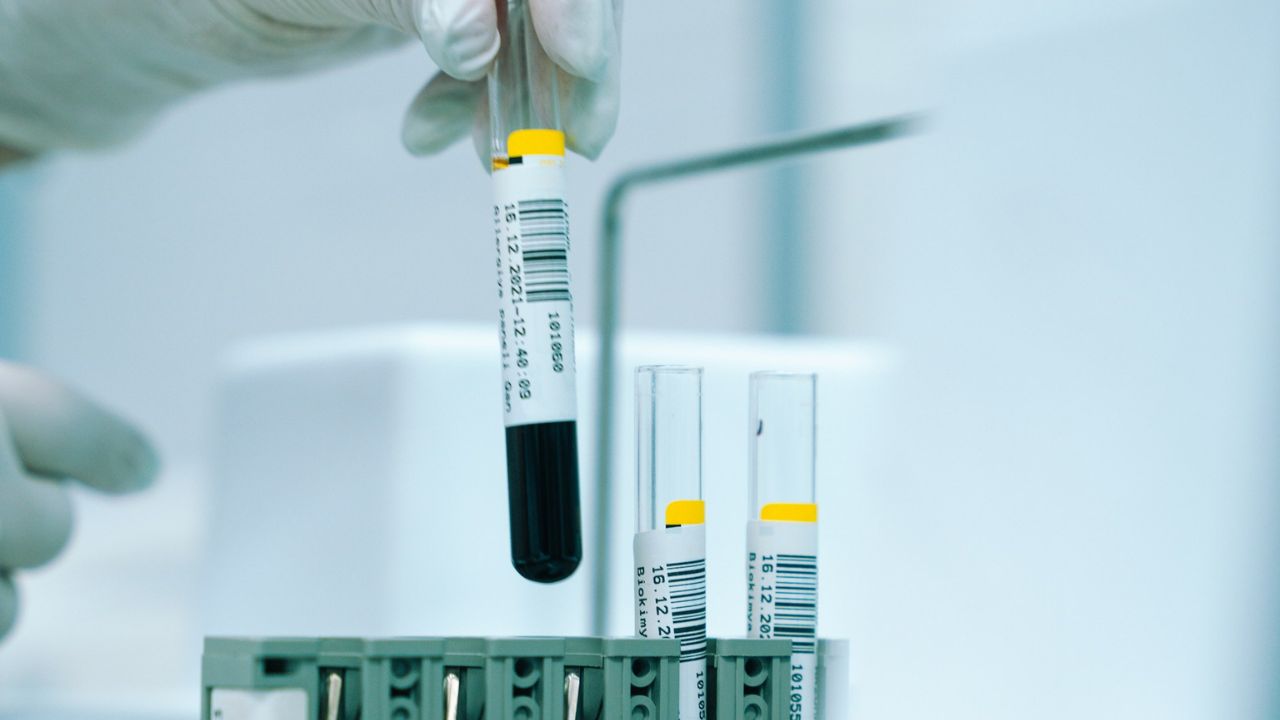
Cruchaga and his team used AI to analyze the blood protein signature of more than 3,200 people with various forms of dementia to figure out the ideal combination of proteins that could help make the diagnosis. The study, published in Alzheimer’s & Dementia, showed that measuring the levels of 15 different proteins in the blood could help researchers tell whether participants had Alzheimer’s, Parkinson’s, dementia with Lewy bodies, frontotemporal dementia, or a mix of these diseases with 90 percent accuracy.
Cruchaga said that the next step is working toward receiving FDA approval for the device, though that may take over five years. If it pans out, he foresees the test being used to screen people with signs of cognitive impairment before sending them off for imaging tests for confirmation.
As more drugs are developed to target different forms of dementia, the hope is that better diagnostic tools could make it easier for someone to receive an accurate diagnosis and the right treatment or combination of treatments sooner.
“I think this is going to open the door for more precision medicine,” predicted Cruchaga.
FAQs
In studies published from the last year, AI-powered diagnostic aids show high accuracy in differentiating different dementias. An MRI-based algorithm could tell the difference between Alzheimer’s, dementia with Lewy bodies, and healthy controls with over 99 percent accuracy. An FDG-PET scan that measures brain metabolism could pinpoint specific types of dementia with 88 percent accuracy. A newly developed blood test that looks at 15 proteins is more than 90 percent accurate at detecting signs of four different dementias. None of these tools are FDA approved yet for use in the diagnostic process.
Most individuals have multiple types of protein aggregates in their brain, like beta-amyloid and alpha-synuclein, suggesting that they may have multiple forms of dementia. It is often challenging to tell which of the protein aggregates are driving the disease, since the symptoms of many dementias overlap — and in some cases, individuals may experience multiple dementias at once.
A dementia diagnosis is difficult because there isn’t a single biomarker that provides a surefire diagnosis. Instead, specialists rely on clinical presentation, tests to rule out other conditions, brain imaging, and biomarker tests. Since there is overlap between the symptoms of different dementias, it makes it challenging, especially in edge-cases, to figure out the right diagnosis.