High-Dose Flu Vaccine Linked to Lower Alzheimer’s Risk
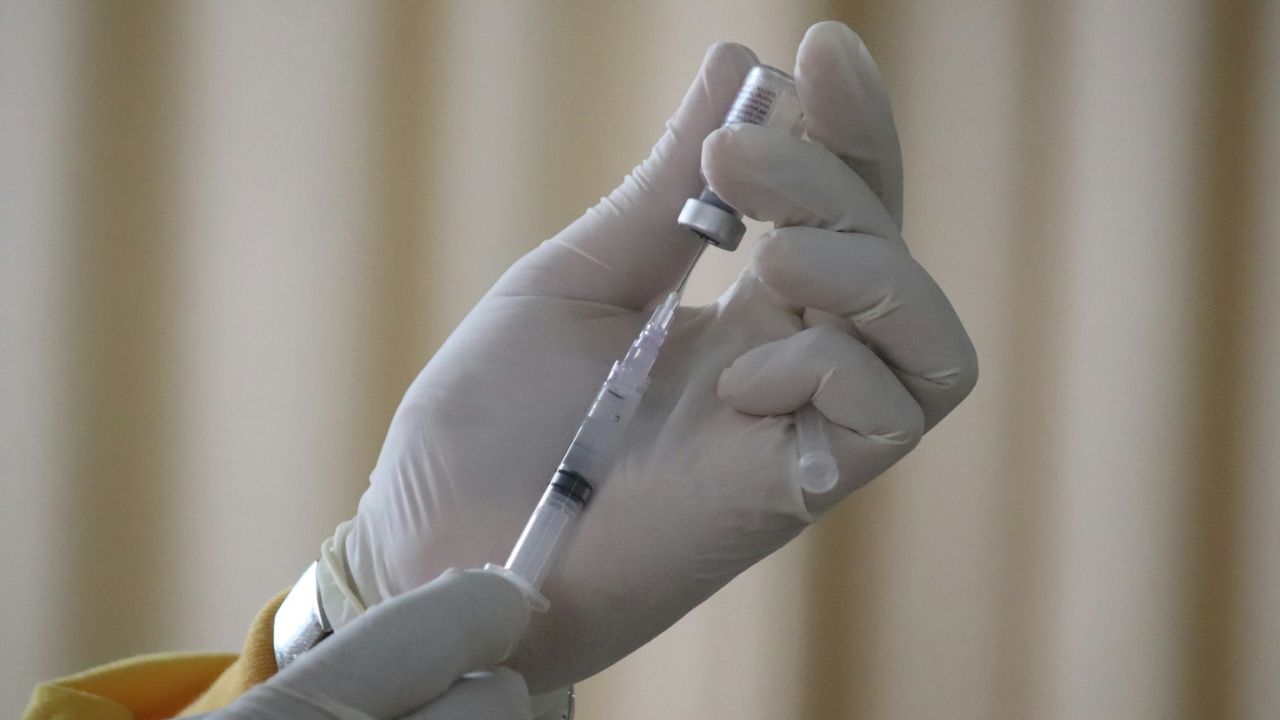
A new study found older adults who received a high-dose flu vaccine had an even lower risk of Alzheimer’s than those who received the standard shot.
The once-controversial idea that infections and their inflammatory aftermath can spark Alzheimer’s and other dementias is growing. Vaccines against diseases like RSV, COVID-19, diphtheria, and shingles are all linked to a lower risk of dementia.
The most compelling evidence comes from “natural experiments” of the shingles vaccine, where its rollout meant some people arbitrarily received it while others did not, mimicking a real clinical trial.
After showing that older adults who received the standard flu vaccine were 40 percent less likely to be diagnosed with dementia, Avram Bukhbinder and other researchers at the McGovern Medical School at UTHealth in Houston wondered whether a higher dose conferred more protection.
Though the Centers for Disease Control recommends the higher-dose formulation for older adults, there aren’t enough of these vaccines across the US, meaning that many Americans receive a standard dose instead.
The recent study, published in Neurology, took advantage of this to see whether a higher-dose vaccine provided more protection. Compared to the 40 percent protection from the standard dose, the high-dose vaccine led to a 55 percent reduction in Alzheimer’s risk. At 25 months, for every 185 people receiving a high-dose vaccination, that meant that one case of Alzheimer’s would be prevented.
Bukhbinder told Being Patient that the vaccination may train the immune system in a way that proves helpful for tamping down on age-related inflammation that plays a role in Alzheimer’s.
How much does a high-dose flu vaccine help?
Bukhbinder and his team examined electronic health records from about 165,000 older adults with an average age of 74 who received a flu vaccine between 2014 and 2019. They used a statistical method called “target trial emulation” that takes observational data in a way that mimics a randomized clinical trial. Target trial emulation’s especially useful in the case of flu vaccination, where the benefits are so obvious that a clinical trial where some participants receive a placebo, said Bukhbinder, is “not ethical.”
Since Bukhbinder’s team compared people who received different vaccines rather than vaccinated to unvaccinated individuals, their study avoids the “healthy patient effect.” People who exercise and take other actions to stay healthy are also more likely to receive routine vaccinations and less likely to develop dementia anyway.
Following their health records for two years, the researchers found that the high-dose vaccine reduced the risk of being diagnosed with Alzheimer’s compared to the standard dose. Intriguingly, the protective effects of the flu vaccine appear to be stronger for women than men. The men still received the benefit of the standard dose vaccine but didn’t get an extra boost.
These sex differences are also apparent in the shingles vaccination studies, in which women appeared to benefit more than for men.
Bukhbinder said the sex difference is real. “We know that there’s a significant difference in the immunologic milieu,” he said. Sex differences in the brain and hormones like estrogen may play a role.
While their main analysis only focused on people who had one vaccine, the smaller number of people who received yearly vaccinations received sustained benefits.
“A critical question is whether these effects potentially apply to other vaccines given in older age, and whether they are driven by targeting the virus or non-specific immune mechanisms,” Pascal Geldsetzer, an epidemiologist at Stanford University, who spearheads the research linking shingles vaccines to a lower risk of dementia, told Being Patient.
“The critical limitation of this study is that individuals who receive the high-dose flu vaccine are different in their health characteristics to those who receive the standard-dose vaccine,” he said.
Routine vaccines for preventing Alzheimer’s
Scientists are still trying to figure out why some infectious disease vaccines protect the brain.
Some researchers, like Geldsetzer, are zeroing in on individual vaccines and planning larger clinical trials. Others, like researchers at Brigham and Women’s Hospital, are taking a broader approach by testing an immune-stimulating vaccine component, called protollin, as a nasal vaccine against Alzheimer’s.
“It’s always possible to cook up reasons to be skeptical,” Brown University epidemiologist Sarah Ackley told Being Patient. But while the mechanisms aren’t clear, and clinical trials are still underway, she believes the data is pointing to a real phenomenon.
In addition to preventing severe infections, routine vaccines may help prevent or delay Alzheimer’s. For Bukhbinder, the motivation for routine flu vaccines in older adults over 65 are already so compelling, “because influenza infection by itself, has such tremendous morbidity and mortality.”
FAQs
A recent study suggests that people with a high-dose may receive more protection, but it does not prove cause-and-effect or explain why. Scientists speculate that it might protect more against the flu virus, which drives disease, or provide more of a boost to immune system function.
The Centers for Disease Control and Prevention (CDC) recommends the high-dose flu vaccine specifically for adults aged 65 and older, as they are more vulnerable to complications from the flu.
Routine vaccines for RSV, COVID-19, shingles, and other infectious diseases are also linked with a lower risk of developing dementia.