Genetic Testing for Alzheimer’s: What Your Genes Can Tell You

Thinking about genetic testing for Alzheimer’s? Here’s what ApoE4 and other risk-associated genes can tell you, and what experts say to consider first.
When Robin McIntyre was 29 she started thinking seriously about what her DNA might already know. Since 2010, 16 of her relatives had died of Alzheimer’s disease before the age of 60 — including her mother, uncles, and several cousins. Her family carries a rare presenilin gene mutation linked to autosomal dominant Alzheimer’s disease, an inherited form that typically develops at a young age in people who carry the mutation. McIntyre knew she had a 50 percent chance of inheriting it.
She waited a few years before asking her medical team. Part of the decision was about the future she wanted. “Knowing that I had a 50-50 chance of passing that on to my own offspring was a major decision factor,” she told Being Patient. “I was just feeling like knowledge was power.”
McIntyre’s situation is unusual — most cases of Alzheimer’s are not caused by a single gene mutation. But her central question is one a growing number of people are asking as at-home DNA kits and blood tests become easier to buy: Do I want to know what my genes say about my risk? And if I find out, what would I actually do with that information?
Here’s what genetic testing for Alzheimer’s can reveal, what it can’t, and what researchers and people who’ve been tested say is worth considering before you decide to get tested.
Is Alzheimer’s genetic? It’s complicated
Alzheimer’s disease affects an estimated 7.1 million people in the United States. Genetics play a role in that risk — but for the vast majority of people, they are only one piece of the picture.
Dozens of genetic variants have been associated with Alzheimer’s disease, with some influencing risk more than others. Some have only a modest effect, while others, such as ApoE4, are associated with a more substantial increase in risk. In rare families, mutations in genes including APP, PSEN1 and PSEN2 can directly cause an inherited, early-onset form of the disease. Understanding whether a test identifies a risk-associated variant or a disease-causing mutation is essential to interpreting what the result may mean.
The gene that receives the most attention is APOE, short for apolipoprotein E, which helps transport cholesterol and other fats through the body. APOE has three common forms, or alleles, and people inherit one from each parent. The combination a person inherits can raise, lower or have little effect on their risk of developing Alzheimer’s.
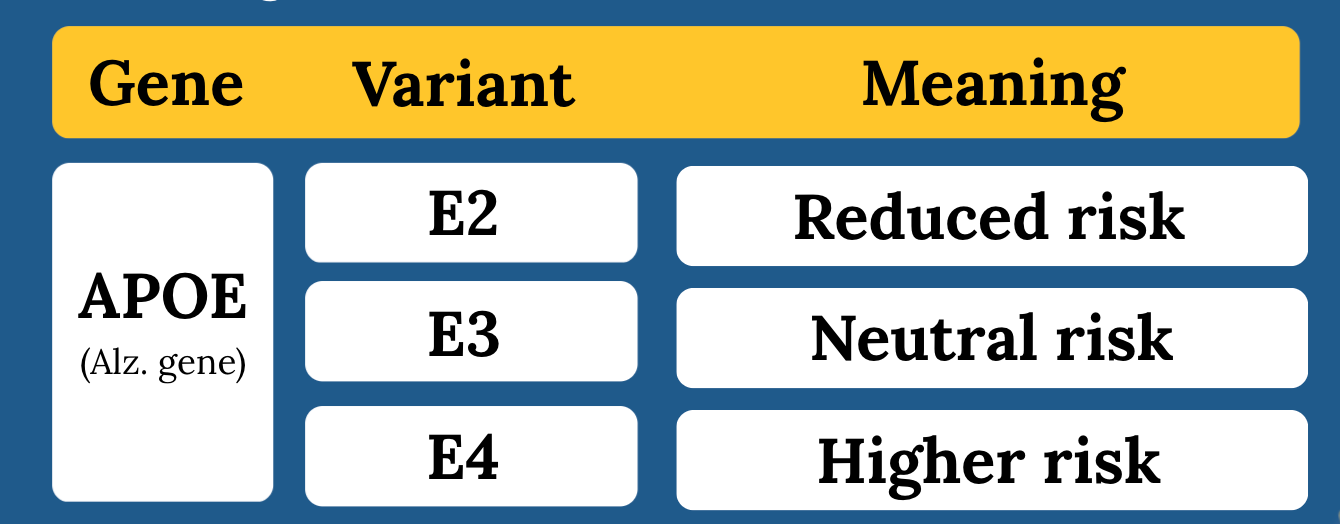
APOE4 is the variant commonly referred to as “the Alzheimer’s gene,” although the nickname can be misleading. Carrying one copy is associated with roughly three times the risk of developing Alzheimer’s, while carrying two copies — a genotype known as APOE4 homozygosity — raises the risk further.
Estimates vary considerably according to factors including age, sex, genetic ancestry, and the population studied. Even two copies of APOE4 do not constitute a diagnosis or guarantee that someone will develop dementia, although some studies estimate the risk of Alzheimer’s dementia by age 85 at about 60 percent.
The rarer genes that cause early-onset Alzheimer’s
A separate, much smaller category of genetic changes can directly cause Alzheimer’s disease. Early-onset Alzheimer’s is generally defined as Alzheimer’s that develops before age 65, sometimes as early as a person’s 30s. It accounts for an estimated 5 to 10 percent of all Alzheimer’s cases, although most people with early-onset disease do not carry a known disease-causing mutation.
Changes in three genes — APP, PSEN1 and PSEN2 — can cause a rare inherited form of early-onset Alzheimer’s. Unlike ApoE4, these mutations do more than raise a person’s risk: Someone who inherits one will almost always develop the disease. Each child of a parent with one of these mutations has a 50 percent chance of inheriting it, which is why Alzheimer’s can affect several generations of the same family.
Having a risk gene is not the same as having the disease
Testing positive for a risk variant such as ApoE4 does not mean a person will develop the disease. Many people who carry ApoE4 never develop Alzheimer’s, while many people with Alzheimer’s do not carry the variant.
Jamie Tyrone learned how difficult it can be to receive this kind of information without support. She discovered that she carries two copies of ApoE4 through a genetic test she had taken for an unrelated reason. She received the result alone at her computer, without a genetic counselor to help her understand what it meant.
“It came back that I had two copies of the APOE4 gene,” Tyrone told Being Patient. “Had I interacted with a genetic counselor, I think I would’ve been much more prepared for this information.”
Tyrone now encourages people to speak with a genetic counselor before undergoing testing. A genetic counselor can review a person’s family history, discuss why they want to be tested and explain what the results can — and cannot — reveal. It is one of the main reasons experts advise people to think carefully before ordering an at-home genetic test.
What actually happens in a DNA test
For most at-home tests, a person orders a kit, registers it online and provides either a saliva sample or a swab from inside the cheek. The sample is then mailed to a laboratory using the packaging provided.
At the laboratory, technicians extract and analyze the DNA. Results are typically delivered through a secure website or app, although the timing varies by company and type of test. Some tests look only for selected genetic variants, while more comprehensive tests examine entire genes or larger portions of a person’s DNA.
Genetic tests can cost anywhere from about $100 to $1,000, depending on the type and scope of testing. A genetic counselor can help someone choose an appropriate test and understand what the results may — and may not — mean for their health and family.
To test, or not to test?
Genetic testing can offer valuable information. It may give someone a clearer picture of their risk, more time to plan and, for some people, added motivation to make brain-healthy changes. A negative result may also provide peace of mind.
But there are trade-offs. Learning about an increased genetic risk can cause lasting anxiety, both for the person tested and for relatives who may share the same variant. Results may also have implications for life, disability, or long-term care insurance. And without guidance from a genetic counselor, genetic information can be easy to misunderstand or interpret as more certain than it really is.
For some people, the value of knowing comes down to the opportunities the information may provide. Wendy Nelson, a biotechnology executive who learned through a 23andMe test that she carries two copies of APOE4, decided the potential benefits outweighed the risks.
“Five or six years ago, I used to not want to know because there was nothing you could do if you were found to carry it or prone to get it,” she told Being Patient. “I’ve watched the clinical trial space and know that they’re trying to get people onto clinical trials earlier and that being a carrier qualifies you for some clinical trials now. So, that’s part of the reason I decided to find out.”
Genetic testing is also becoming more relevant in Alzheimer’s treatment. Dr. Marwan Sabbagh, a neurologist, told Being Patient that doctors now use APOE testing in part to help patients understand their risk of side effects from anti-amyloid drugs.
“We went from not talking about [genetic testing] at all to now using it for risk stratification, because we know that if you’re an APOE4 double copy, your risk of having complications with the monoclonal [antibody treatments for Alzheimer’s] is quite high,” he said.
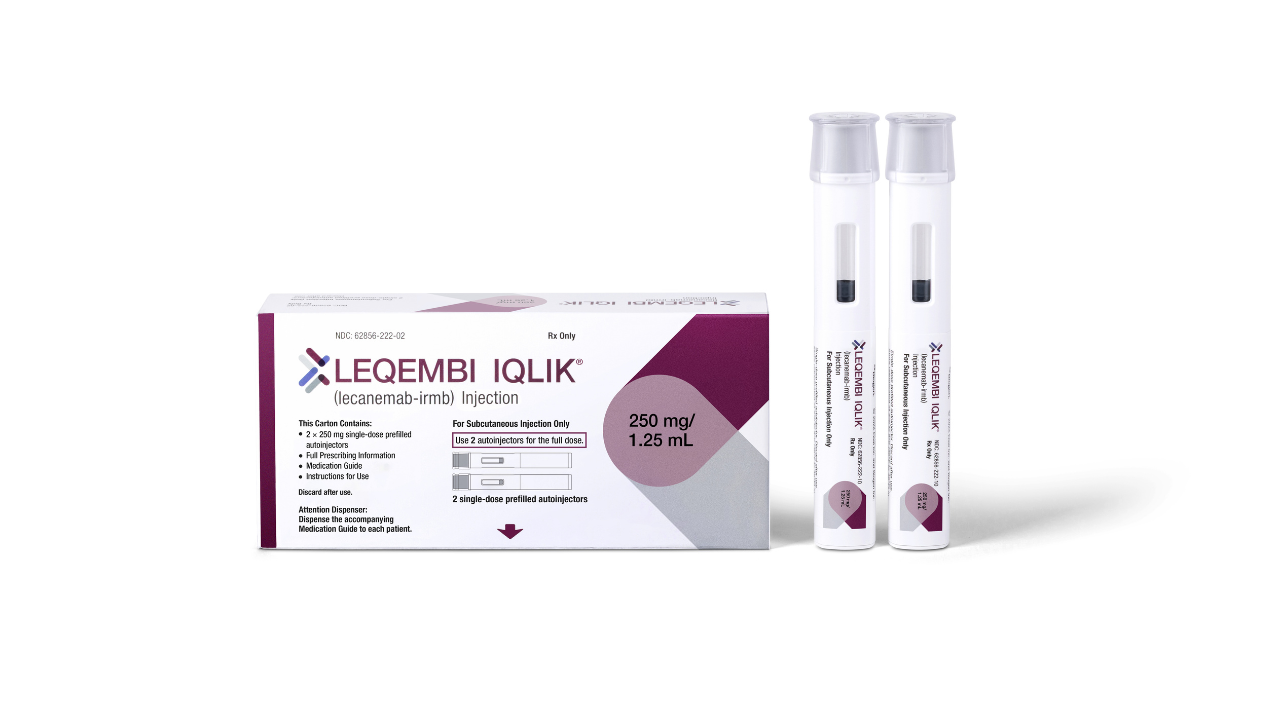
Those complications include amyloid-related imaging abnormalities, or ARIA, which can involve swelling or small areas of bleeding in the brain. ARIA can occur in anyone receiving treatments such as Leqembi, but the risk is higher among people with two copies of ApoE4.
The privacy question experts want you to consider
What happens to your information after you receive the results? Many people worry that a positive result could affect their insurance coverage, and the protections are narrower than they may realize.
The U.S. Genetic Information Nondiscrimination Act, or GINA, is a 2008 federal law that restricts employers and health insurers from discriminating against people based on their genetic information. Stanford Law professor Hank Greely, who studies the ethical and legal questions surrounding genetics and neuroscience, says the law leaves significant gaps.
“The act only deals with employment and health insurance, but it doesn’t deal with life insurance and probably most significantly for the Alzheimer’s community, it doesn’t deal with disability insurance or long-term care insurance,” Greely told Being Patient.
GINA also applies specifically to genetic information. It does not offer the same protections for other signs of Alzheimer’s risk or disease, including blood-based biomarkers, cerebrospinal fluid test results, or brain imaging.
The concern extends beyond insurance discrimination. Claire Erickson, Ph.D., who researches medical ethics and health policy at the University of Pennsylvania, has warned that information obtained through some direct-to-consumer tests may not receive the same privacy protections as medical information collected through a health care provider.
“As it stands today, there are no protections for biomarker information [detected from] direct-to-consumer tests,” Erickson told Being Patient. “It’s going to open a can of worms that I don’t think that we’re prepared for.”
The implications can also extend beyond the person who takes the test. Because relatives share some of the same DNA, learning that someone carries APOE4 or another inherited genetic change may also reveal information about the possible risks faced by their children, siblings and other family members.
Your genes are not your destiny
One reassuring message from the research is that genes do not act alone. Alzheimer’s risk is shaped by a combination of genetics, age, overall health, lifestyle, and environmental exposures. Although no single change can guarantee prevention, some factors may be modified in ways that support long-term brain health.
Diet is an example. Hussein Yassine, director of the USC Center for Personalized Brain Health, told Being Patient that overall eating patterns may be particularly important for people with a genetic risk of Alzheimer’s.
“We know that the MIND diet, which is a combination of the Mediterranean diet and the DASH diet, is particularly good for the brain,” he said. “People who start these healthy diets before they have a diagnosis of disease tend to have more [benefits] than after the diagnosis of disease.”
The hunt for protective genes
Just as some genes raise risk, others appear to lower it. Scientists are studying a rare variant in a gene called FN1, which produces fibronectin, a protein found in the blood-brain barrier.
Researchers found that among people with two copies of ApoE4, those who carried the protective FN1 variant had about 70 percent lower odds of developing Alzheimer’s. Among carriers who did develop the disease, symptoms began an average of about 3.4 years later.
The variant is rare — present in roughly 1 in 50 people who carry two copies of ApoE4 — and standard consumer tests don’t currently screen for it. But it points to a hopeful research direction: if scientists can understand how a protective gene shields the brain, they may be able to design drugs that mimic it.
What’s next in genetics research
Scientists are investigating whether Alzheimer’s could one day be treated by targeting genes that raise or lower a person’s risk. Some experimental approaches aim to deliver protective forms of genes, such as APOE2, to brain cells. Others use gene-editing tools to study whether harmful genetic activity can be altered. These approaches remain experimental and are not approved treatments for Alzheimer’s.
Researchers are also studying stem cells as a possible treatment for Alzheimer’s and other brain diseases. However, evidence that stem-cell treatments can safely or effectively treat Alzheimer’s remains limited. Experts warn that unproven treatments offered by commercial clinics can be expensive and may pose serious health risks.
Neither approach is ready for routine use. But this research reflects a broader shift in how scientists view genetic information: not as a prediction set in stone, but as a possible guide toward new ways of preventing or treating disease.
Making the decision that’s right for you
Genetic testing for Alzheimer’s can provide useful information, but the decision to be tested is deeply personal, and there is no right answer for everyone. Before moving forward, experts recommend asking yourself a few questions: Why do I want to know? What would I do with the result? Should I review my financial and insurance options before testing? And would having this information help me plan, or create more worry than clarity?
Whatever you decide, one message is consistent among experts and people who have undergone testing: Speak with a genetic counselor before being tested, not only after receiving the results. Remember that a risk-associated gene is a probability, not a prediction. And while healthy habits cannot guarantee that Alzheimer’s will be prevented, steps that support brain health — including physical activity, a balanced diet, adequate sleep, and social engagement — can benefit everyone, regardless of their genetic risk.
FAQs
There is no universally right answer — it depends on your family history, your reasons for wanting to know, and how you would use the result. Experts recommend consulting a genetic counselor before testing to think through your motivations, your family history, and the emotional and insurance implications. Genetic testing may be especially worth considering for people with a strong family history of early-onset Alzheimer’s or those hoping to qualify for clinical trials.
APOE4 is a variant of the APOE gene that is associated with higher Alzheimer’s risk. Carrying one copy is linked to roughly a three-fold increase in lifetime risk, and carrying two copies raises it further, with most research estimating a 40 to 60 percent lifetime risk. However, many people with APOE4 never develop Alzheimer’s, and many people with Alzheimer’s don’t carry it. APOE4 influences risk and timing — it is not a diagnosis.
Not for most genes. For common risk variants like APOE4, testing positive means your risk is elevated, not that you will definitely develop Alzheimer’s. The main exception is the rare early-onset genes — APP, PSEN1, and PSEN2 — where inheriting a mutation makes developing the disease nearly certain. These familial forms account for only about 5 to 10 percent of all Alzheimer’s cases.