Could the Gut Hold the Earliest Hints of Parkinson’s?
Scientists are studying whether changes in gut bacteria and nerves might be the earliest signs of Parkinson’s.
Since constipation and other gastrointestinal symptoms may precede Parkinson’s by decades, researchers began to suspect that some cases of the disease originate in the gut.
Dr. Per Borghammer of Aarhus University Hospital pioneered the brain-first and body-first models of Parkinson’s, which aim to explain why some people develop different symptoms first. In the brain-first model, the disease starts in the brain’s smell center or its emotional hub and then spreads through to the regions that control motor movement. Others may experience a body-first form of the disease, where the first changes occur in the gut and then spread upward.
The body-first explanation is supported by research from Swedish and Danish health records. Individuals who received a surgery to cut part of the vagus nerve, one pathway through which scientists believe the disease may spread from gut nerves to the brain, had a slightly lower Parkinson’s risk.
Researchers are looking at gut bacteria and misfolded proteins called alpha-synuclein in the gut to untangle the relationship. While an exciting avenue of inquiry and promising data in animal models, these ideas still need confirmation in humans.
“If you just look at the evolution of the clinical symptoms of a patient, it fits pretty nicely,” with the idea that Parkinson’s may start in the gut for some individuals, Dr. Todd Levine, neurologist and chief medical officer of CND Life Sciences, told Being Patient. CND Life Sciences developed a skin-punch biopsy test which is used to measure misfolded proteins linked to Parkinson’s and other diseases.
Researchers hope that understanding these links may eventually lead to less invasive strategies to detect who’s at risk for the disease.
Do gut bacteria hold the key?
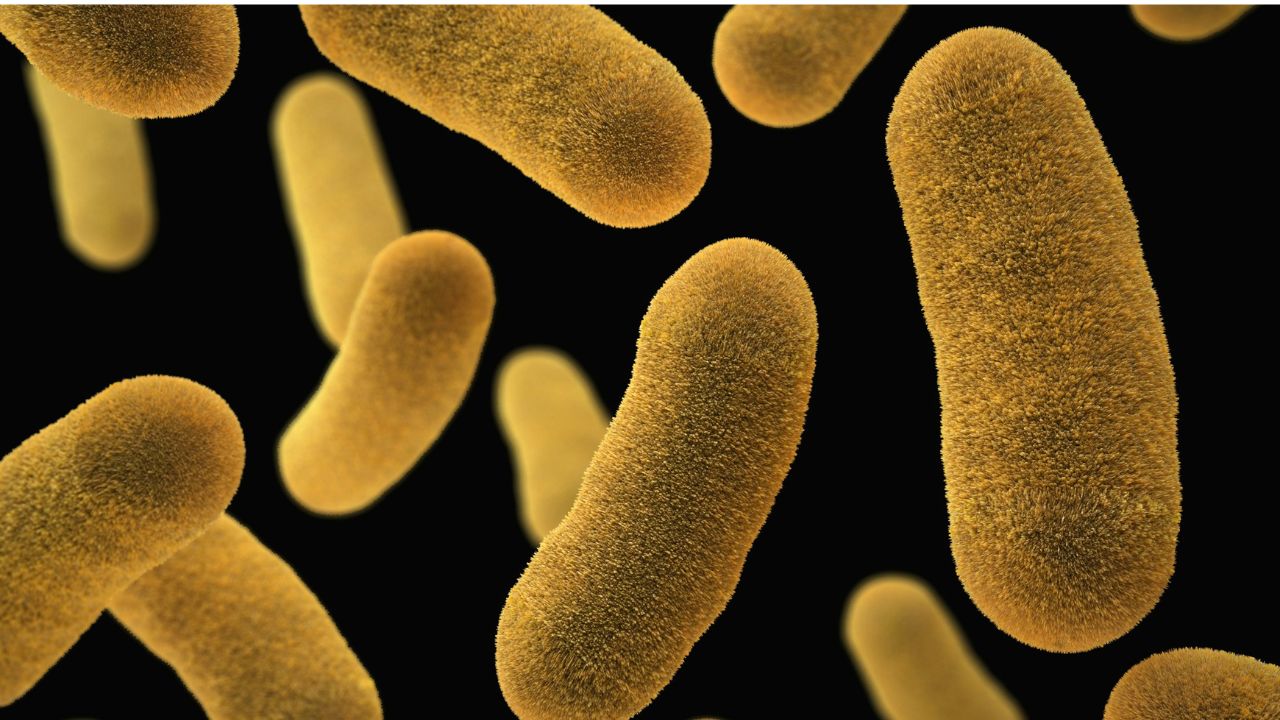
A community of trillions of bacteria makes its home inside the gut, aiding in digestion and influencing the immune and nervous systems.
A recent study published in Nature Medicine compared the gut bacterial signature of 271 people with Parkinson’s to 43 people carrying the GBA risk gene and to 150 healthy controls. The researchers found a distinct bacterial signature linked to Parkinson’s, which were validated across three other groups of individuals in the U.S., South Korea, and Turkey. These Parkinson’s-linked gut microbes even appeared in individuals with the Parkinson’s risk genes who hadn’t yet developed the disease.
“What’s interesting here is we have four groups around the world that have all shown overlapping types of bacteria that seem to separate people with Parkinson’s from people who are healthy and don’t have Parkinson’s,” Dr. David Shprecher, a neurologist at Banner Health, who wasn’t involved in the study, told Being Patient. He added that it also suggests that these signatures might predict who’s at risk but cautions that the findings need to be replicated by other researchers.
The study unfortunately can’t answer whether Parkinson’s starts in the gut. “It’s the chicken and the egg argument,” said Levine, who wasn’t involved in the research. Changes in the gut bacteria might lead to the buildup of misfolded proteins like alpha-synuclein and other nerve damage that travels to the brain. Or, he said, Parkinson’s-related changes in the nerves are changing the gut bacteria.
Traveling Proteins
If Parkinson’s begins in the gut, then it should be possible to track misfolded proteins as they travel up to the brain.
Scientists suspect misfolded alpha-synuclein, which forms aggregates called Lewy bodies, as a potential cause of cell death in the disease, though they aren’t certain. “We don’t know for sure that’s what’s causing damage, but it seems to be a bystander in the cells that are having damage,“ said Shprecher.
While some studies of donated brains and bodies have found signs of these proteins travelling upward, Shprecher and colleagues haven’t found a similar pattern in their brain bank. “We just don’t have that nice pattern of showing Lewy bodies working their way up the nervous system in a human the way we do in these animal models,” he said.
Levine is hoping to look even earlier. He’s applying for funding to test gut tissue obtained through standard colonoscopy to see if individuals with constipation might have misfolded alpha-synuclein in their gut.
If the gut indeed provides the earliest clues about Parkinson’s, it opens the door to new minimally invasive screening strategies through microbiome samples and biopsies taken during routine colonoscopies. Detecting risk early, said Levine, may allow people to prevent or delay the disease.
“We’re a long way from there,” acknowledged Levine.
FAQs
Researchers have proposed the body-first model of Parkinson’s, where changes in the gut, due to misfolded proteins and nerve damage, travel up to the brain and may lead to Parkinson’s in some individuals. However, this model has not yet been proven.
While many people who develop Parkinson’s experience trouble swallowing, constipation, and nausea years before their diagnosis – these symptoms are common across many diseases and aren’t specific warning signs of the disease.
Researchers want to test whether people at-risk of developing Parkinson’s have misfolded proteins that could be detected on a biopsy. It isn’t clear yet whether this research will pan out.