Diet and Brain Health: What the Science Says About Food, the Gut, and Dementia Risk
From the gut microbiome to the MIND diet, research increasingly suggests that what we eat can shape how our brains age — and may even help protect against diseases like Alzheimer’s.
Understanding the connection between brain health and diet can be challenging: Its effects can unfold over decades, and eating patterns are often difficult to separate from other lifestyle and health factors. Still, a growing body of evidence suggests that what people eat may influence brain health over time.
Much of the current research centers on the gut-brain axis, the communication network between the digestive tract and the brain. Scientists are studying how the gut microbiome may affect inflammation, metabolism, mood, memory, and long-term risk for diseases such as Alzheimer’s. Here’s what peer-reviewed research suggests so far about diet, the gut, and brain health — and which eating patterns experts say may be worth attention.
Why Scientists Are Studying the Gut-Brain Axis
The gut-brain axis is a two-way exchange between the digestive tract and the brain. Mounting evidence indicates that what’s happening in the gut — including in the gut microbiome, the community of trillions of microorganisms living in the digestive tract — can influence the brain, from cognitive function to mental health.
One reason scientists are studying this connection is the extensive communication between the gut and the brain. Most of the body’s serotonin, the neurotransmitter associated with feeling good, is actually produced in the gut. And a long nerve called the vagus nerve runs like a cable between the gut and the brain, carrying signals back and forth.
“One of the things that we’ve done for a long time is looking at the brain as its own organ, as its own compartment,” Barbara Bendlin, PhD, a professor of medicine at the University of Wisconsin–Madison who studies the gut microbiome and Alzheimer’s, told Being Patient. “This idea that the brain is its own thing that’s not interacting with the rest of the body — we can’t do that anymore. We have to think about the brain in the context of the rest of the body.”
The Gut Microbiome and Alzheimer’s Disease
Research on the gut microbiome has raised questions about whether the gut may influence how the brain ages. Studies have linked shifts in the gut microbiome with changes in brain health, and some researchers are exploring whether the microbiome could become a target for future interventions aimed at age-related cognitive decline.
Some of that interest comes from animal research. In one study, scientists transferred gut microbes from young mice into older mice and observed improvements in the older animals’ performance on tests of learning and memory. The findings suggest that the gut microbiome may play a role in aspects of brain aging. However, researchers caution that this work was conducted in mice, and much more research is needed before similar approaches could be tested or applied in people.
The gut microbiome looks different in people with Alzheimer’s
In human studies, one of the clearest findings so far is that people with Alzheimer’s disease appear to have differences in the composition and diversity of their gut microbiome compared with people without the disease.
“We compared participants who had Alzheimer’s dementia to people without Alzheimer’s dementia, [and] we found that there were differences in the composition of the gut, but also that individuals with Alzheimer’s disease had less [and] different kinds of microbes,” Bendlin told Being Patient.
A less diverse microbiome, she explains, may be a less healthy one: “If you think of a healthy ecosystem, there’s lots of different kinds of plants and animals, as opposed to monoculture where you just have one kind of plant. That doesn’t tend to be a healthy ecosystem, and the same is likely true in the human gut.”
The gut bacteria and Alzheimer’s link
Two areas of research help illustrate why scientists are paying closer attention to the relationship between gut bacteria and Alzheimer’s disease.
In one study, Swiss and Italian researchers reported a correlation between certain gut bacteria and the buildup of amyloid plaques, a hallmark of Alzheimer’s disease. The study, which included PET brain imaging and blood analysis from 89 older adults, suggested that proteins produced by gut bacteria may influence nervous system and immune responses in ways that could be relevant to neurodegeneration.
“Certain bacterial products of the intestinal microbiota are correlated with the quantity of amyloid plaques in the brain,” co-author Moira Marizzoni said in a news release.
Another study, involving more than 4,000 people, focused on specific types of gut bacteria associated with Alzheimer’s risk. Researchers found that people with Alzheimer’s had higher levels of four types of gut bacteria. Some of those bacteria were also found at higher levels in people who carry APOE4, the strongest known genetic risk factor for Alzheimer’s disease. One type of bacteria, Collinsella, was associated with an 18 percent higher risk of the disease.
The findings are notable, but researchers emphasize that it is too early to draw firm conclusions. Many factors linked to Alzheimer’s risk, including diet and exercise, can also shape the gut microbiome, making it difficult to determine whether microbiome changes contribute to disease risk or reflect other underlying health and lifestyle factors.
How diet affects brain health and dementia risk
If the gut is part of the brain health story, diet is likely part of it, too. Diet is one of the most direct ways people can influence the gut microbiome, raising an important question: Could certain eating practices affect brain health or help reduce the risk of diseases such as Alzheimer’s?
Some eating styles and foods have been linked to faster cognitive decline, while others have been associated with better brain health over time.
The foods that may speed up cognitive decline
Research has linked diets high in ultra-processed foods to faster cognitive decline. In one study of more than 10,000 adults in Brazil, people who consumed the highest amounts of ultra-processed foods had, on average, a 28 percent faster rate of cognitive decline and a 25 percent faster rate of executive-function decline compared with people who ate less ultra-processed food. A separate 2022 study found that higher consumption of ultra-processed foods was associated with a higher risk of dementia.
Researchers have identified several categories of foods that may negatively affect brain health, largely because of their links to inflammation, cardiovascular disease, diabetes and other conditions tied to dementia risk:
- Processed, fried, and fast food. Often high in calories, saturated fat, salt, added sugar and additives, these foods can contribute to cardiovascular disease and stroke, both of which are associated with a higher risk of dementia.
- Processed desserts, sweets, and sugary drinks. Diets high in added sugar can contribute to diabetes and heart disease, two conditions that are also linked to increased dementia risk.
- Refined grains. Foods such as white bread and white rice can raise blood glucose and insulin levels as they are digested. Over time, frequent blood sugar spikes may contribute to inflammation and oxidative stress, processes that researchers are studying for their possible role in Alzheimer’s disease.
- Red meat. As a source of saturated fat and cholesterol, red meat may contribute to cardiometabolic conditions that are associated with a higher risk of Alzheimer’s disease and other forms of dementia.
Diet studies cannot prove cause and effect on their own, in part because eating patterns are difficult to separate from other lifestyle and health factors. Still, researchers often note that shifting toward more whole, nutrient-dense foods is a low-risk step that may support overall health, including brain health.
Doctor-approved diets for brain health
When it comes to diet and brain health, experts often advise focusing on established eating patterns rather than short-term fads. Two of the most commonly studied diets are the MIND diet and the Mediterranean diet, both of which have been linked to better cognitive health.
People who follow MIND or Mediterranean-style diets typically consume higher amounts of fiber, healthy fats, and polyphenols — nutrients that may support the gut microbiome, cardiovascular health and inflammation regulation. Together, those effects may help create a healthier environment for the brain over time.
Dr. Hussein Yassine, a neurologist and director of the USC Center for Personalized Brain Health, emphasizes that the benefit is not tied to any single ingredient but to the overall pattern and diversity of the diet. “The more diverse your diet is, the more likely you’re going to get a lot of beneficial effects,” Yassine told Being Patient. “We know that the MIND diet, which is a combination of the Mediterranean diet and the DASH diet, is particularly good for the brain.”
He also frames brain-healthy eating as a long-term strategy. “Individuals who are taking a healthy MIND or Mediterranean-like dietary pattern are probably consuming a lot of fiber, a lot of good fats, and a lot of polyphenols,” Yassine said. “Those remodel and allow the body to create a niche or an environment that’s protective — whether it’s going to be at the level of the gut microbiome, or at the level of the blood, or maybe at the level of the brain itself. These all interact to help the brain function and to stave off any risks for diseases like Alzheimer’s.”
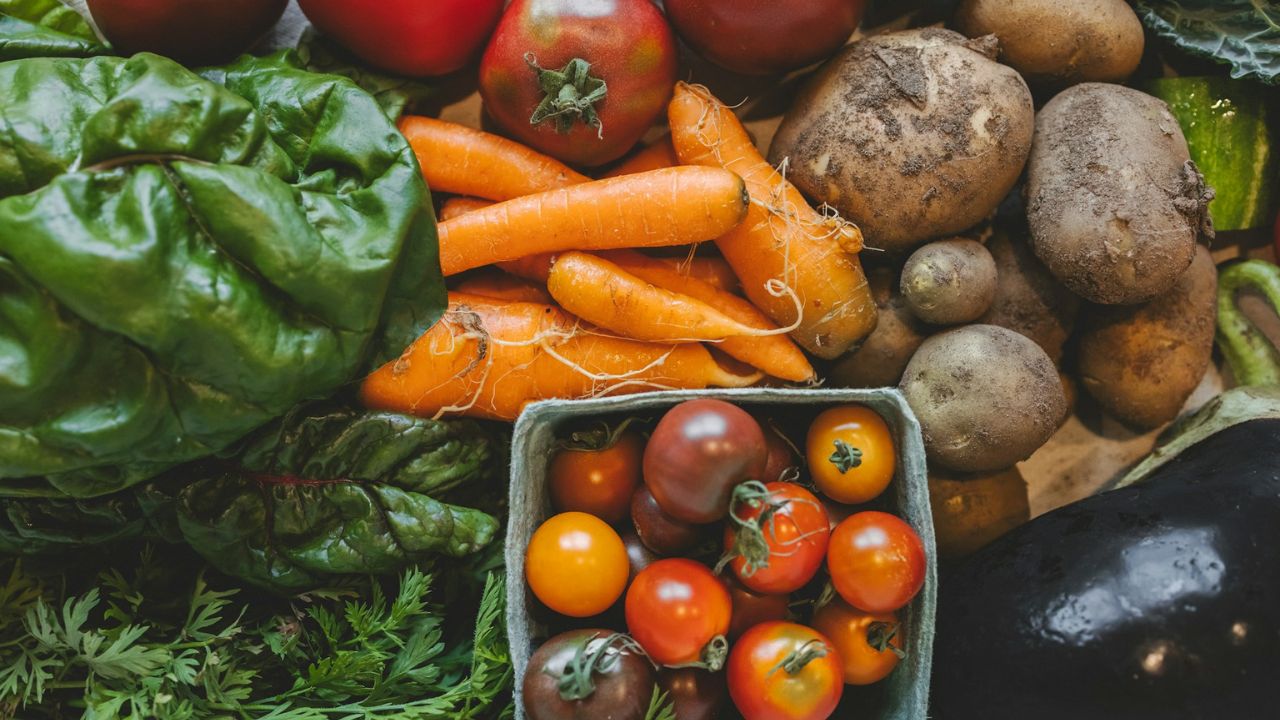
If you want to put this into practice, the Mediterranean diet — rich in vegetables, olive oil, fish, nuts, and whole grains — has repeatedly been linked to a lower risk of cognitive impairment, and the MIND diet offers a brain-focused eating pattern that emphasizes foods linked to cognitive health while limiting foods associated with poorer health outcomes.
The bottom line: healthy diets mean overall health
Scientists still do not know exactly what causes Alzheimer’s disease, and no diet has been proven to prevent it. But research suggests that many dementia risk factors are modifiable, and diet is one of the lifestyle factors people may be able to change.
Eating patterns associated with brain health often overlap with those linked to better heart and metabolic health. “The MIND diet has been shown to be good for heart disease and other things,” Dr. Marwan Sabbagh, a professor and chair of research at Barrow Neurological Institute, told Being Patient. “If you’re reducing other risk factors, that by extension reduces your neurodegenerative risk.”
In other words, eating for brain health does not mean ignoring the rest of the body. A diverse, whole-food diet — rich in vegetables, healthy fats, fiber and a variety of plant-based foods — may support both brain and overall health.
FAQs
While no diet can guarantee prevention, research strongly suggests that what we eat influences brain health over time. Studies indicate that roughly two in five dementia cases could be prevented or delayed through lifestyle changes, including diet. Eating patterns like the MIND and Mediterranean diets — high in fiber, healthy fats, and polyphenols — have science-backed links to better brain health and may help reduce the risk of diseases like Alzheimer’s.
The MIND diet — a combination of the Mediterranean and DASH diets — is frequently cited as particularly good for the brain. The Mediterranean diet is rich in vegetables, olive oil, fish, nuts, and whole grains. USC neurologist Dr. Hussein Yassine emphasizes that diversity matters most: “The more diverse your diet is, the more likely you’re going to get a lot of beneficial effects.”
Research links ultra-processed foods to faster cognitive decline. One study found that people who ate the most ultra-processed food had a 28-percent faster decline in global cognitive scores. The main culprits are processed, fried, and fast food; processed desserts, sweets, and sugary drinks; refined grains like white bread and white rice; and red meat — each linked to brain health through conditions like cardiovascular disease, diabetes, inflammation, and high cholesterol.