FDA Approves At-Home Injectable Leqembi for Early Alzheimer’s
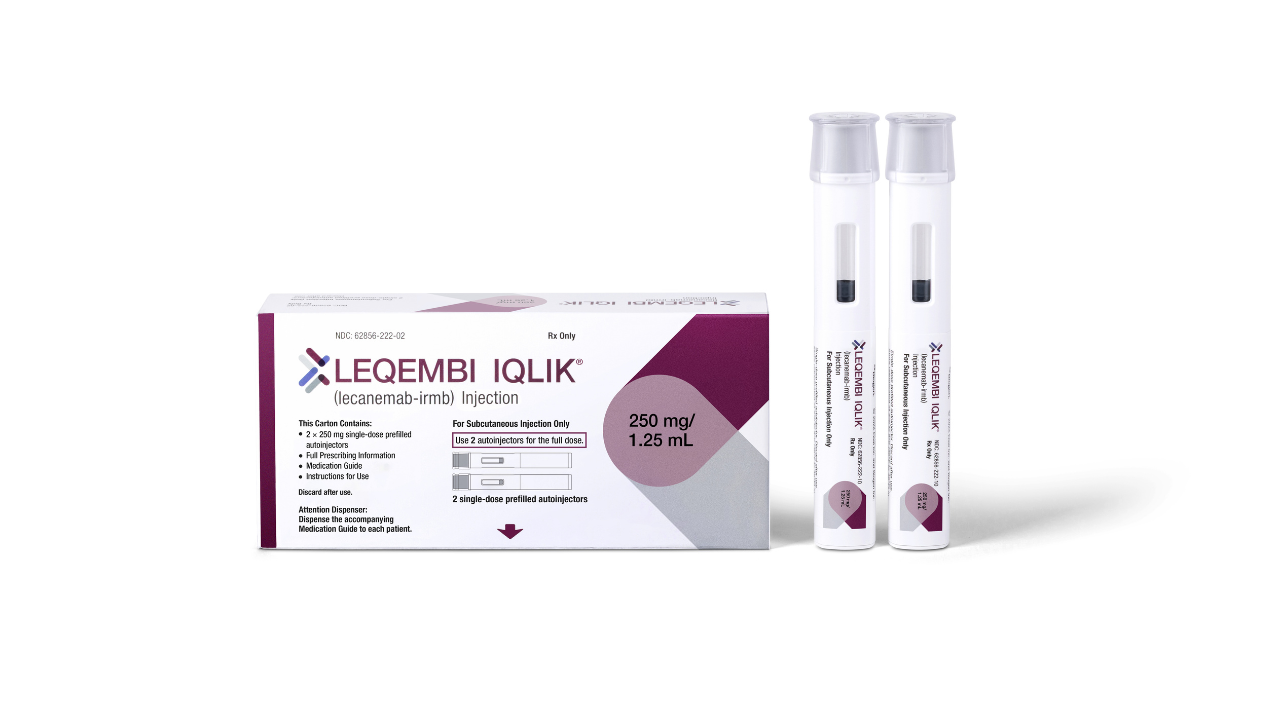
People prescribed Leqembi can now take the drug at-home with an injector pen rather than traveling to an infusion center.
People with early Alzheimer’s can now receive Leqembi at home after the Food and Drug Administration on Monday approved a self-injectable version of the drug.
The decision removes one of the biggest logistical hurdles to treatment. Since Leqembi’s 2023 approval, many patients have faced the burden of traveling to specialty clinics for regular intravenous infusions over the first 18 months of therapy, contributing to slower-than-expected adoption.
Eisai developed a subcutaneous version of the drug, delivered through an injector pen, like insulin, that delivers the drug under the skin. The FDA-approved injectable version, called Leqembi IQLIK, allows people to start treatment at home. This version of the drug, which requires two injections each sitting, administered weekly, will be available in late August.
In May the FDA delayed its decision, requesting additional information from Eisai to assess the drug.
Dr. Soeren Mattke, director of the Brain Health Observatory at USC, told Being Patient, “Not having to go to a clinic for a few hours every other week will make it more likely that patients will start treatment and it will reduce caregiver burden.”
How does the injectable Leqembi measure up?
Eisai provided the FDA with data showing the effects of injectable Leqembi at multiple doses, noting in a press release that the rates of side effects like brain swelling and microhemorrhages known as amyloid-related imaging abnormalities (ARIA) were no higher than with infusions.
Leqembi IQLIK was also approved last year for treatment maintenance after 18 months of infusions. It isn’t clear yet how the newly expanded injectable dosing will affect pricing.
Although taking the drug at-home reduces the overall burden for some, others might still opt for a clinic.
“My current patients receiving amyloid-targeting treatments have been reluctant to change to subcutaneous maintenance treatment because they have developed warm relationships with the infusion center staff,” Dr. Suzanne Schindler, a dementia specialist at Washington University in St. Louis, told Being Patient.
Still, she expects the rollout of injectable Leqembi to increase the number of people who can take the drug. Despite being more likely to develop Alzheimer’s, Black and Hispanic individuals, as well as women, are disproportionately underrepresented among the people taking Leqembi. Some 80 percent of people receiving the drugs need a caregiver or loved one to come to the infusion center with them. The switch to an at-home injection could help.
Like many other prescription medications, an at-home version of Leqembi means there’s a risk of missed or late doses. Mattke said that “high-cost drugs,” like Leqembi, “are usually delivered from specialty pharmacies, which have a financial incentive to ensure adherence and commonly use reminders and nudges.”
This may add an extra stopgap for safety. Pharmacies likely won’t release the injections, said Schindler, until specialists review the magnetic resonance imaging (MRI) brain scans used to monitor for ARIA. Still, Mattke said that there’s a potential risk that some subtle ARIA symptoms might be missed, though real-world data is needed to know for sure.
Other companies are also developing injectable Alzheimer’s drugs. Lilly is testing a subcutaneous version of its next-generation anti-amyloid remternetug, though it may be a few years until the company gathers enough data to file for approval.
FAQs
Leqembi IQLIK is an injectable subcutaneous, or under-the-skin, formulation of the approved Alzheimer’s drug Leqembi. Rather than requiring biweekly infusions in the clinic, Leqembi Iqlik is administered at home through two injections per sitting, each week.
Subcutaneous Leqembi IQLIK requires two injections per sitting, administered once a week. This schedule replaces the standard biweekly intravenous infusion regimen used for the first 18 months of Leqembi treatment.
No. The data Eisai provided to the FDA suggests there’s no elevated risk of side effects for Leqembi Iqlik. The rates of brain swelling and microhemorrhages known as Amyloid-Related Imaging Abnormalities (ARIA) are equivalent across the two formulations of the drug.