How Parkinson’s Affects Speech and Swallowing — and Why Early Therapy Matters
Subtle voice changes can be an early sign of Parkinson’s. Speech pathologist Samantha Elandary shares how “speaking with intent” and daily exercises can protect speech and swallowing.
Speech and swallowing changes are common in Parkinson’s disease, and they can start as subtle shifts, such as a softer, raspy voice. Left untreated, these problems can worsen over time, affecting communication and increasing the risk of serious swallowing complications. Speech therapy programs such as Parkinson Voice Project’s Speak Out are designed to help people strengthen their voice and swallowing.
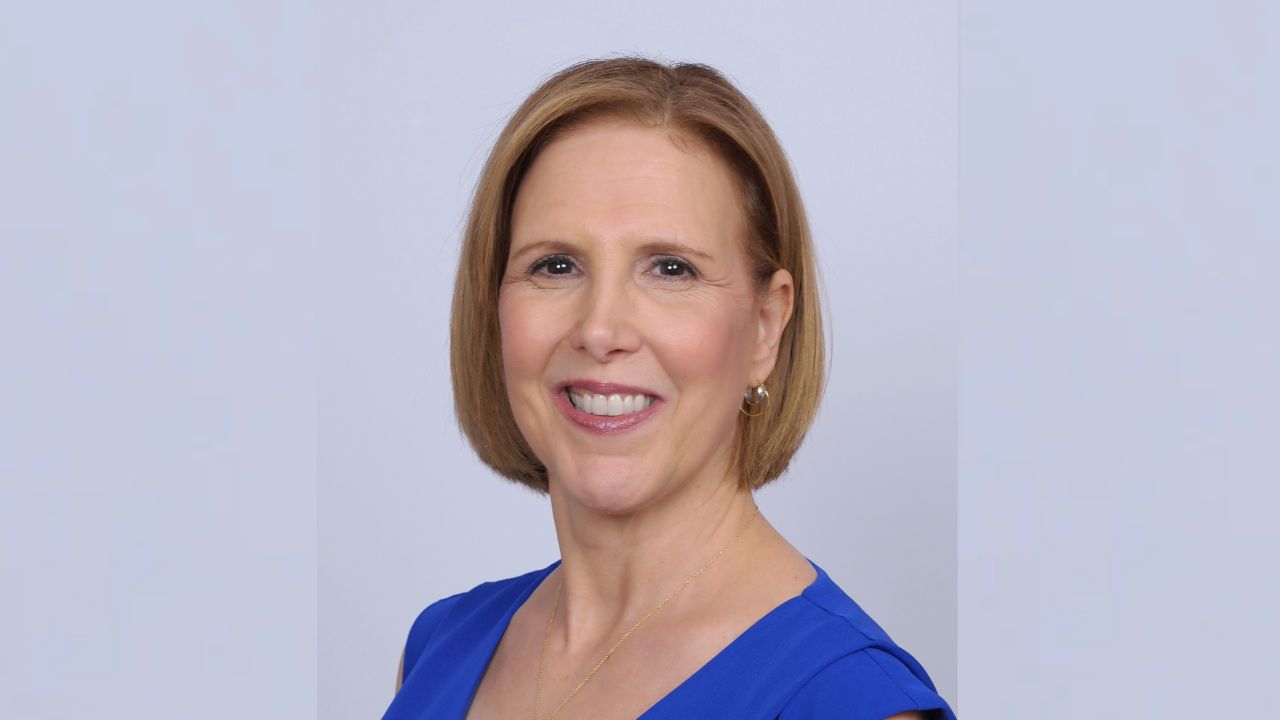
Samantha Elandary, MA, CCC-SLP, has spent more than two decades working with people living with Parkinson’s and related disorders. As president and CEO of Parkinson Voice Project, she leads what she describes as the only nonprofit organization solely dedicated to improving speech and swallowing in Parkinson’s. Her work is grounded in a simple philosophy: Therapy shouldn’t end when appointments do. Instead, she champions sustainable, at-home routines paired with ongoing check-ins to help patients strengthen muscles, protect swallowing, and maintain confidence in everyday communication.
In this conversation with Being Patient founder Deborah Kan, Elandary explains that early voice changes are often subtle and can be missed, partly because Parkinson’s can alter how loud someone thinks they’re speaking. She breaks down the difference between the brain’s “automatic” and “intentional” motor systems, emphasizing that skills that once required no thought like walking, swallowing, and speaking may need to become deliberate after a Parkinson’s diagnosis. She also underscores the importance of early evaluation, practicing “speaking with intent,” and sticking with daily exercises, noting that speech therapy can support safer swallowing, reduce aspiration risk, and help people maintain independence.
Being Patient: I want to talk a little bit about symptoms of speech and Parkinson’s disease. Do they appear early on, or when do people start to experience changes in speech with Parkinson’s disease?
Samantha Elandary: With Parkinson’s, it’s often referred to as the snowflake disease, because every person is different, and so when they experience speech and swallowing issues will be different for every person.
But the early symptoms are a voice that is raspy, or hoarse. A softer voice, so people asking you to repeat. Also, there’s not too much slurring or stuttering. Sometimes we have that, but that’s really typical. It’s usually a softer, gravelly voice, and those are the early symptoms of Parkinson’s.
It can be tricky because some people will say, “Oh, well, my allergies are real bad. That’s why my voice is raspy.” And also people with Parkinson’s don’t always recognize the soft voice. The voice feels differently to the person with Parkinson’s than it sounds to other people. So when somebody leans in and asks them to repeat, they may not realize it’s them that has the problem. They might think the other person has a hearing problem.
Being Patient: With that symptom, when you talk about it kind of feeling differently, can you describe that a little bit? Is it as benign as a hoarse voice, or is it more like a sore throat or something that hurts a little?
Elandary: No, it never hurts. With Parkinson’s the raspiness is caused by not using good breath support. When somebody hears that raspy, we usually say, “Does it hurt?” And they say no. And that’s the key.
It’s not like I went to a football game and I yelled, I cheered too much, and I ended up with a hoarse voice, a raspy voice. If I cheer too much and then I try to speak, I try to project my voice, I won’t be able to do it. It’ll sound worse. With Parkinson’s, it’s the opposite. When someone has a gravelly voice, if they project their voice more and speak out, they will sound better.
Now, the part about it not feeling the same way, that’s referred to as a sensory deficit. There is a sensory deficit related to Parkinson’s where, when somebody is speaking, their voice feels differently to them than it really sounds. And so some people with Parkinson’s will say, “Oh, well, my voice, when I speak out, I sound too loud.” And I’ll have to say, “No, you don’t sound too loud. You feel like it’s too loud, but it sounds really good.”
Being Patient: We know that Parkinson’s disease is caused by a loss of dopamine-producing neurons. We think of it in terms of a neurological condition, but do we know why it impacts speech?
Elandary: Parkinson’s is caused when the neurons that produce the chemical called dopamine start to die or become impaired. So by the time a person has any symptoms of Parkinson’s, they have already lost 60 to 80 percent of their dopamine-producing cells.
How that connects to speech is this: Automatic movements — anything that we do without conscious effort — requires dopamine or is highly dependent on dopamine. There are so many things that we do throughout the day that are automatic. We don’t realize that. We take it for granted. But, of course, somebody with Parkinson’s is starting to notice it.
Before Parkinson’s, somebody could walk down the street, talk to a friend, eat an ice cream cone, all at the same time, without really having to think about it. But then with Parkinson’s, when someone’s walking, they’re having to purposefully pick up their feet, heel, toe — think about it more often. They have to think about what they’re eating, even how they’re holding the ice cream cone, and think about their speech. So all of those movements are normally automatic. We do them without conscious effort, but automatic movements are highly dependent on dopamine. So anything that used to be automatic has to now be intentional.
Fortunately, humans have two motor systems. We have the automatic motor system that is highly dependent on dopamine, and then we have the intentional motor system that is not as dependent on dopamine. When people with Parkinson’s are purposeful, when they’re deliberate, when they really concentrate and focus, they can walk better, talk better, write better, get out of a chair better, do everything better, but it’s never going to be automatic. Even as much as they practice and they work on it — we do that to keep the muscle strong — but it will never be automatic again. And so people with Parkinson’s will always have to speak with intent and walk with intent.
“…but automatic movements are highly dependent on dopamine. So anything that used to be automatic has to now be intentional.”
Being Patient: Tell me a little bit about the Parkinson’s Voice Project.
Elandary: Parkinson’s Voice Project is the only nonprofit organization in the world solely dedicated to improving speech and swallowing in Parkinson’s.
The earlier someone is treated, the easier it is. But even if somebody is having severe issues with their swallowing and their speech, they can still benefit from the Speak Out therapy program. Think of it this way: A normal-sounding voice is 72 to 78 decibels. The average improvement that someone will make in speech therapy is about seven decibels. I’ve had patients gain 14 decibels, but the average is seven. If normal conversation is 72 decibels and somebody starts Speak Out therapy when their volume is 65 decibels, they do the treatment, their voice will probably sound like a normal voice when they’re done. You may not even know that they have Parkinson’s based on their voice.
But if they’ve been using a soft, raspy voice for a long time because to them it felt normal, that’s one of the big problems. I’ve had somebody come to us and their voice was 50 decibels. They work really hard, let’s say they get 10 decibels, now they’re at 60. But normal is 72. That person will make improvement. Maybe instead of repeating themselves four times to be understood, they only have to repeat once, but they may have lost their opportunity to ever get their voice back up to that normal level.
It’s not that you can’t make progress. I mean, if you were having to repeat four to only having to repeat once, that would be wonderful progress. But I want everybody to get their voice back up to their pre-Parkinson’s state. And in order to do that, they should have a Speak Out evaluation as soon as they notice the problem or as soon as someone close to them says, “I think that your speech is not as good as it was before.”
Being Patient: So let’s say somebody just comes to you and they want to start voice therapy. What does that entail? Take us through from the evaluation to actually what does the actual therapy look like?
Elandary: A new patient will start with a Speak Out evaluation.
People with Parkinson’s have to start recognizing that their speech used to be automatic. Now they need to be intentional. They also have to have hope. They have to understand that we do have an intentional motor system. It’s like a backup generator. That is not as dependent on dopamine, so it will work.
So, evaluation, then we educate the patient and family. Then we orient the patient and family to the therapy materials that they will need, and we provide those therapy materials at no charge. We have a Speak Out eLibrary with booklets and flashcards that the patient will use every day in therapy.
Most patients in our clinic at Parkinson’s Voice Project receive two therapy sessions a week for 30 minutes. It’s not very much. People with Parkinson’s need intensive practice, they don’t need intensive therapy. So they’re practicing twice a day, every day. Around week three or four of Speak Out therapy, they transition to a weekly Speak Out class, and that’s where they will be with a group of other people. In our clinic, it might be a group of eight other people. They will do the Speak Out exercises together, they will practice speaking with intent, they will share resources, it becomes a peer group. It’s a wonderful group. You’re with people who are also proactive and learning how to live their life with intent.
And then every six months the patient comes back for a re-evaluation. Sometimes I’ll have somebody come in and they’ll say, “Oh, I did physical therapy two years ago.” It won’t work with Parkinson’s. It’s continuous therapy and practice. So every six months you have to go back to the speech pathologist and regroup. Same thing with physical therapy. You have to go back to the physical therapist and regroup. And the biggest reason is because of that sensory deficit. People with Parkinson’s, it doesn’t feel the same way to them as it really is. So it’s very difficult for them to judge on their own what needs to be done.
Being Patient: We have an audience question: My Parkinson’s symptom is a bad stutter. Is there anything you could suggest to help control the stutter and improve my speech?
Elandary: Old therapy, way back when if somebody had a stutter, we would try to tell that person to slow down. That is the worst thing that you can do with Parkinson’s. Do not try to slow your speech down. Project it forward. So when you speak with intent or you speak out, what you are doing, you are taking back control of your speech. And all of a sudden, when you do that, you will sit up straighter. You will slow down. Your volume will be better. Your articulation will be better. You’ll have a better facial expression.
Usually for stuttering, the cue is to speak out more. Think of a tennis court and you’re projecting your voice forward and every word has to make it over the net. If you do that, it usually works.
Being Patient: Do voice and swallowing problems go hand in hand or can you have them independently of one another?
Elandary: You can have them independently at first, but the main cause of death in Parkinson’s, if somebody doesn’t receive treatment, is aspiration pneumonia. In fact, research shows that 70 percent of people with Parkinson’s, that will be the cause of death: aspiration pneumonia.
Now, I will tell you, at Parkinson’s Voice Project, that is not the case. And we are a nonprofit organization, but we run a speech therapy clinic. So right now, we are managing 505 people with Parkinson’s who we are treating right now, managing. So that statistic, 70 percent die of aspiration pneumonia, that is not happening at our clinic. People with Parkinson’s can get better.
“In fact, research shows that 70 percent of people with Parkinson’s, that will be the cause of death: aspiration pneumonia.”
Being Patient: Is it possible to have Parkinson’s and not have any voice issues?
Elandary: Ninety percent of people with Parkinson’s have speech and swallowing issues. So it is possible. It’s rare, but it is. I would say people who are diagnosed later in life, somebody who is diagnosed when they’re 80 years old, their experience will be very different. Maybe they will never experience the swallowing issues. Somebody younger, it’s a little bit harder. They’re going to live with it for 30, 40 years. It’s different.
I want to mention another symptom of swallowing disorder is trouble managing your saliva. So people with Parkinson’s often will say, “I feel like I have more saliva than everybody else in the world.” That’s not the case. Swallowing our saliva throughout the day is an automatic function. But because the automatic motor system isn’t working with Parkinson’s, because they don’t have enough dopamine, swallowing is no longer automatic.
And also some people with Parkinson’s will have a stoop, their posture will be down. So if the saliva is accumulating in the mouth and because of the sensory deficit someone might not be aware of it, and then they tilt their head down, they start drooling. As the muscles get stronger, the person will swallow more. They will become more aware of how they’re speaking. They will become more aware of that saliva and swallow with intent. It’s just that it used to be automatic and now it has to be intentional.
Being Patient: So do the intentional changes later turn automatic? With this intentional therapy for Parkinson’s, is it that way, too? The more you do it, the easier it becomes and, in fact, some of it becomes automatic?
Elandary: It will never become automatic because the automatic part of the brain needs dopamine, so it won’t become automatic, but it will be easier. When somebody comes in for therapy at first, the muscles have become weak because they haven’t been using them. It’s not unusual for people to come in and say, “Well, I can’t get my voice any louder. I can’t do it.” And then we show them how and they’re able to do it. So the muscles are weak at first. We do the exercises to make the muscle stronger. And now when they want to speak with intent, it won’t take as much effort.
Being Patient: What is the cost of not doing therapy? What does it mean to live with Parkinson’s and not have any voice therapy?
Elandary: It’s devastating. If somebody with Parkinson’s does not receive speech treatment, they could live the last five years of their life not being able to speak and not being able to swallow. Before the Parkinson Voice Project, there were people who were getting hung up every time they tried to make a phone call because nobody knew that there was somebody on the other end. I don’t want to scare people. I want to give people hope that treatment absolutely exists. Swallowing complications are life-threatening.
You know, some people, they come in and they go, “Well, you know what? I don’t really care so much about my voice. I’m retired. I don’t give presentations anymore. My wife does all the talking. I don’t like to talk on the phone.” But it’s about so much more. Speech therapy for Parkinson’s is about so much more than being heard and understood. It’s about controlling your saliva. It’s about being able to cough. Being able to eat safely. Being able to eat the food that you want.
One of my 85-year-old patients was hospitalized a few weeks ago, just for a couple days. In the middle of the night, his wife gets a phone call. She answers the phone. It was the nurse. She said, “Your husband asked me to call you. He misses you and wants to talk to you.” This gentleman has been in our program for 13 years. He’s 85 years old. He’s on a regular diet, regular food, thin liquids. He practices every single day. And he was able to tell the nurse what he needed and to talk. And think about that, being in the hospital — it’s a scary situation. You’re very vulnerable. And that’s my hope for everybody with Parkinson’s.
Our motto at Parkinson’s Voice Project is, “We’re in it with you for the long haul.” I don’t just want to improve your speech for a month or a year or five years. I want you to maintain it all the way to the end of your life. And it is possible. It really, really is possible.