The Sunflower: The Global Push to Recognize Invisible Disabilities
From airports to grocery stores, the Hidden Disabilities Sunflower is gaining ground in the U.S., helping people with conditions like autism and Alzheimer’s access support without saying a word.
For many people with invisible conditions, asking for help can feel like a challenge. The Hidden Disabilities Sunflower movement is trying to change that.
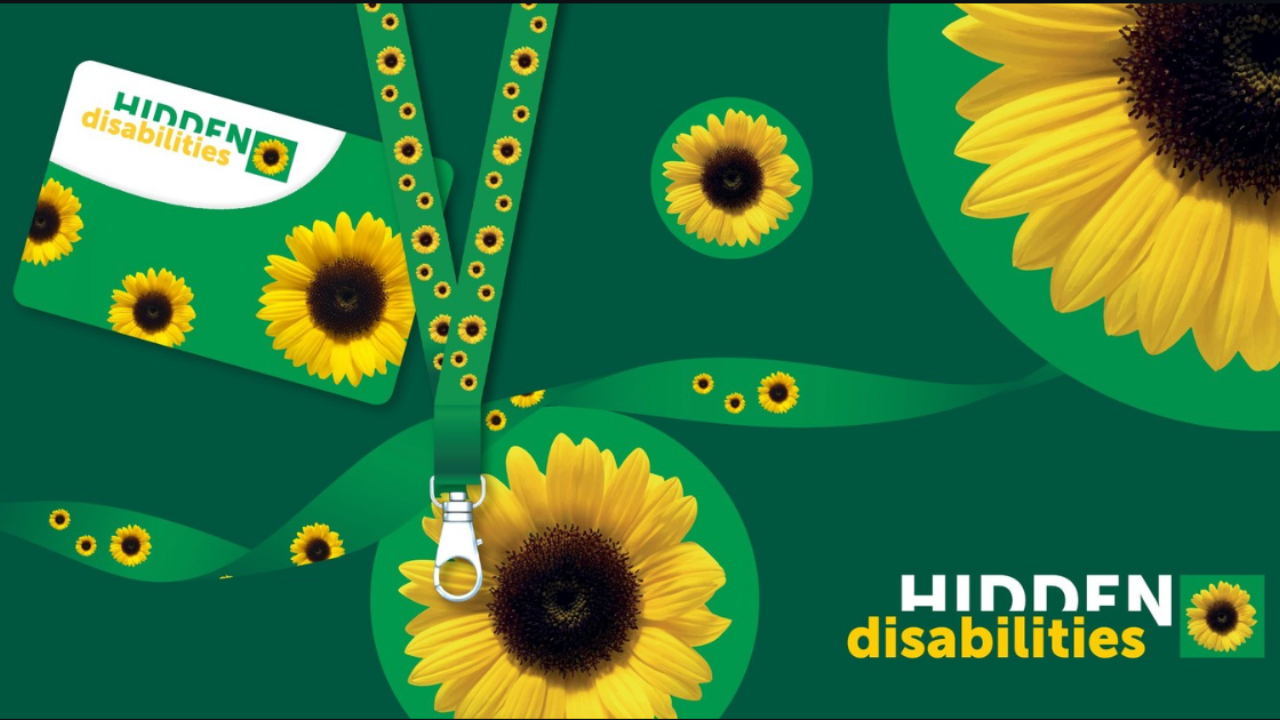
The movement began in 2016 out of London Gatwick Airport and has spread to other countries. The design, a bright yellow sunflower on a green background, is placed on wearable products like a pin, wristband or lanyard that can be worn around the neck. Wearing it is a discreet way to let staff and others who are aware of the program know that someone has an invisible condition and may need some additional support.
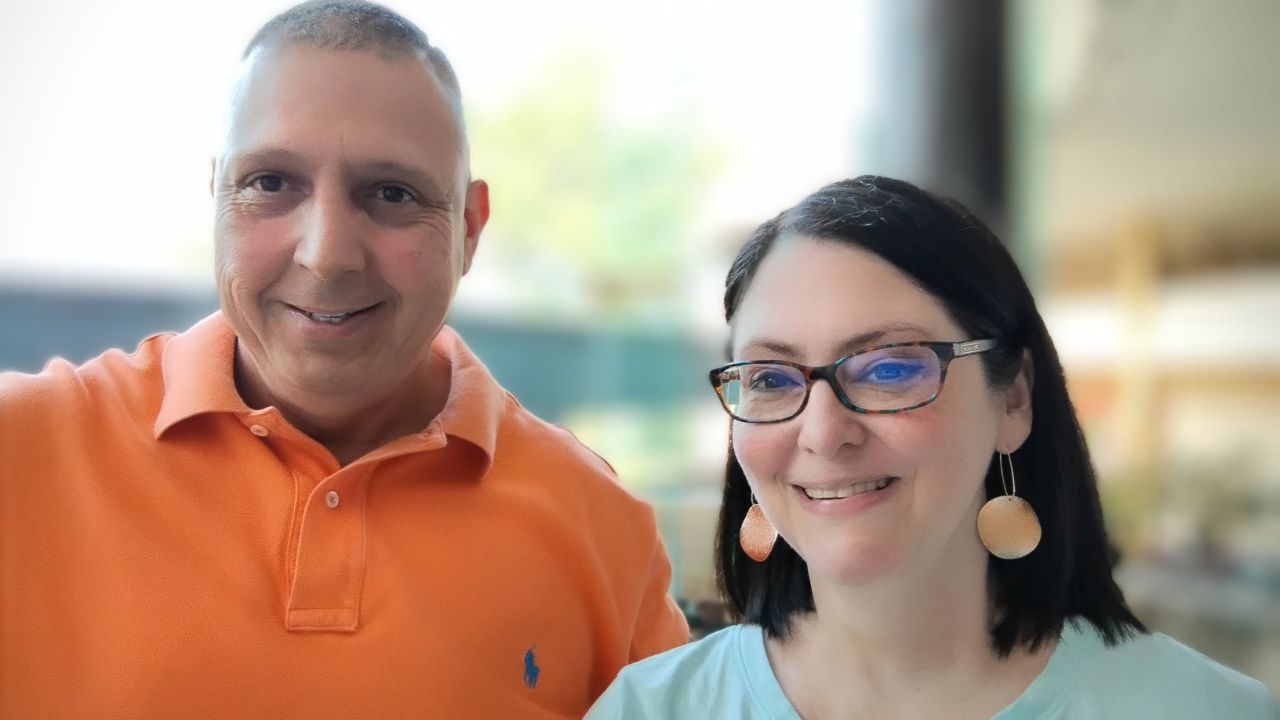
Jay Reinstein, who was diagnosed with early-onset Alzheimer’s at age 57, tested out of the program for the first time a few years ago. He had read about the Sunflower program but didn’t think much of it at the time, he said. But then he saw first hand how useful it was when he needed it.
“I was going to Heathrow, and honestly it’s a big airport, I didn’t know what was going on,” Reinstein said. “I remembered it, and I talked to the United Airlines person. It was like a whole new world was opened up. It sort of opened my eyes.”
Reinstein immediately wanted to help the Sunflower become more widely known in the United States. United Airlines and Air Canada were among the first airlines to have adopted the Sunflower. Swiss Air and Lufthansa both joined this month. He partnered with Voices of Alzheimer’s on letter writing campaigns to encourage more airlines and businesses to become members of the program.
Reinstein, who flies internationally at least twice a year and travels with his daughter or a close friend, says traveling after his diagnosis has been more challenging.
“I think now, the biggest issue is that I want to make sure someone is with me,” Reinstein said. “I need help with the kiosk. I’m a lot more anxious about traveling now. Security is a little stressful.”
Reinstein recently flew out of the Raleigh, NC airport and found that the birthdate on his passport didn’t match the birthdate on his ticket. Reinstein’s close friend accompanying him on the flight had already gone through security, not realizing that Reinstein was stopped by TSA agents. One of the agents familiar with the lanyard walked Reinstein back to the Jetblue counter, resolved the issue with the birthdates and then accompanied Reinstein through TSA once again.
“It really paid off to have it on,” Reinstein said of the Sunflower. “To be wearing this you don’t have to announce anything. You don’t have to say, ‘I have a cognitive issue, I have Alzheimer’s.’ They see this, and they really want to help. It makes for less stressful travel. Even when I’m traveling with someone, I just feel good about wearing it.”
Lynn Smith, the U.S. regional director for Hidden Disabilities Sunflower, has helped build partnerships with transportation, civic and private organizations and companies. Every member organization receives basic training on implementing the program.
“The training takes all of eight minutes,” Smith said. “It’s like [if] you see someone wearing the symbol, just say ‘Hey, can I help you today? Is there anything I can do to help you?’”
Organizations, such as airlines and airports, that are members hand out the Sunflower products at no cost to the public. Products can also be purchased online by individuals. An ID card and lanyard bundle is $15.
Smith says people of all ages and living with a variety of conditions like dementia, autism, epilepsy, Parkinson’s, anxiety, traumatic brain injury, multiple sclerosis, and others, wear the Sunflower.
“It could be that there’s an autistic child that then the mother would wear the symbol because sometimes the kid isn’t going to wear it,” Smith said. Or, she added, if someone doesn’t want the extra help in a certain moment, “they can just take it off and put it in their pocket. That’s why it’s on wearable products that easily come on and off, because they can choose to put it on when they want to.”
Los Angeles International Airport recently joined the other roughly 125 airports in the U.S. that have now adopted the Sunflower program. The Port Authority Trans-Hudson (PATH), a New York-New Jersey public transit rail, and Carnival Cruise Line have both joined as well. The U.S. State Department has been a member for about two years.
Smith said she is focused on spreading awareness and building partnerships with non-transportation organizations. The Midwest grocery store chain Hy-Vee recently joined, and an amusement park, Sesame Place, joined this year as well.
Brazil passed a law to recognize the Sunflower as the national symbol for hidden disabilities in July 2023.
“The goal in general is to have the sunflower recognized as a symbol for people with nonvisible disabilities globally, anywhere where people meet, greet, and gather,” Smith said. “I think that a large global symbol that’s recognized around the world is needed and I think it’s proven to work based on the stories and the way that it’s helped so many people.”