
Your Guide to Alzheimer’s Blood Tests: Pricing, Accuracy, and Where to Get One

As of June 2026, there are two FDA cleared blood tests for Alzheimer’s and many others available in the U.S. Here are the tests currently available, how much they cost, and how accurate they are.
Since they hit the market a few, short years ago, Alzheimer’s blood tests have reshaped the conversation about the disease. While they may make an early diagnosis more accessible, blood tests generate a lot of confusion, even among clinicians.
Importantly, Alzheimer’s blood tests can’t give you a definitive Alzheimer’s diagnosis and experts don’t know what their results mean in people who are younger and cognitively healthy. Guidelines developed by neurologists outline how accurate a test needs to be before use in clinical practice, and only recommends using these biomarker tests in people with memory loss and cognitive impairment as the rate of false positives in healthy adults is still very high.
As of May 2026, only two blood biomarker tests have proven their validity and reliability to the FDA, granting clearance and extra credibility among clinicians. More than ten other tests, with varying accuracy, are also on the market. Some of these tests measure one specific biomarker while other tests incorporate multiple biomarkers at the same time. If you’re still curious about what’s out there, what exactly they test for, how the process works for patients and how much they cost, we rounded up all the answers for you.
Interpreting Blood Tests
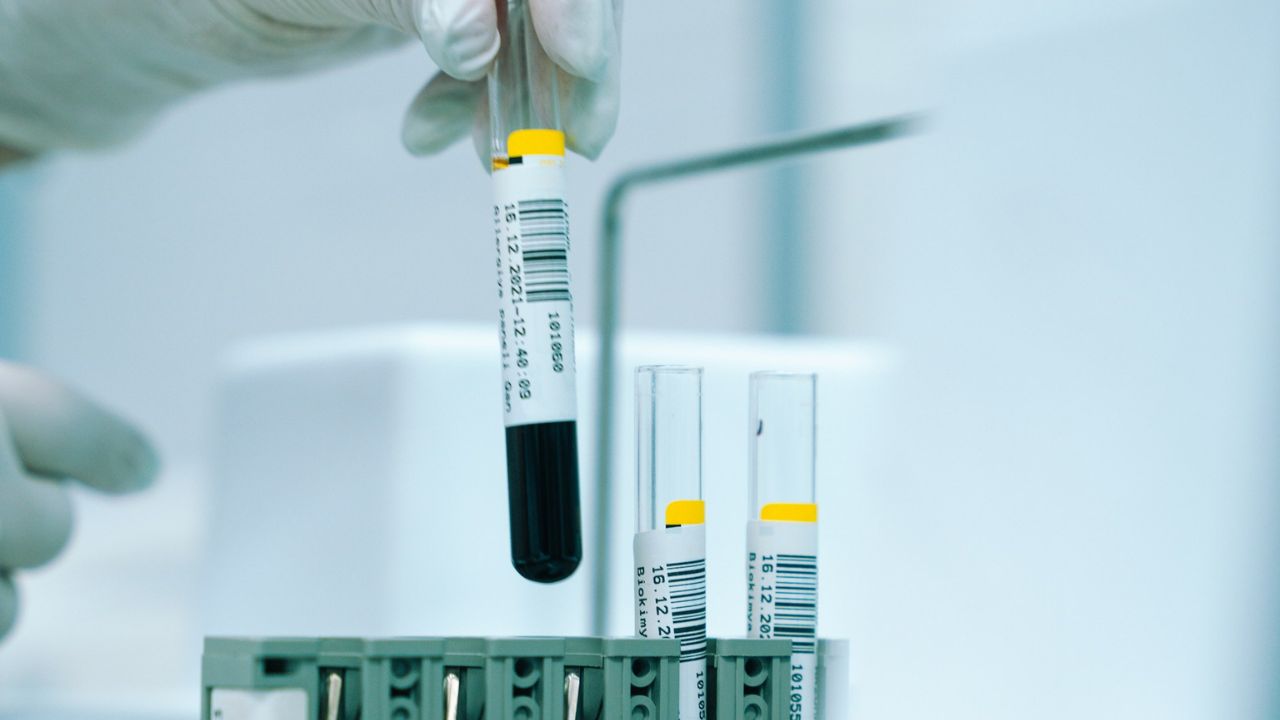
Alzheimer’s blood tests measure the levels of various proteins in the blood that provide a window into the brain. They’re a minimally invasive proxy measurement of beta-amyloid plaques and tau in the brain, making them more affordable and accessible than gold-standard cerebrospinal fluid (CSF) tests and amyloid PET scans. After taking a family history and basic laboratory tests to rule out other causes of cognitive impairment, a doctor or specialist might use one of these tests to get clarity on a diagnosis.
There are two types of blood tests on the market. Triage tests rule in or rule out the possibility of Alzheimer’s but require another biomarker test to confirm the diagnosis. Confirmatory tests, if accurate enough, may be used instead of a CSF test or amyloid PET scan to make the final diagnosis.
Within two weeks of getting the test, your doctor will receive one of three results. A positive biomarker test indicates that memory problems and cognitive impairment may be caused by a buildup of Alzheimer’s-related proteins in the brain. An indeterminate result, which means that it can’t make a clear-cut conclusion: In some cases a doctor will order a follow-up test and in other cases, it might mean waiting and re-testing in the future. A negative test indicates that there may be another reason for the cognitive problems.
Since the tests are developed for older adults with cognitive and memory problems, they don’t work well in younger, cognitively healthy populations. The number of people who have beta-amyloid plaque buildup before 60 is so low, that even the most accurate tests might provide false positive results more than half of the time.
While a few companies offer blood tests direct-to-consumer, experts recommend against this approach.
FDA Cleared Blood Tests
Fujirebio’s Lumipulse G pTau217/β-Amyloid 1-42 Plasma Ratio Test
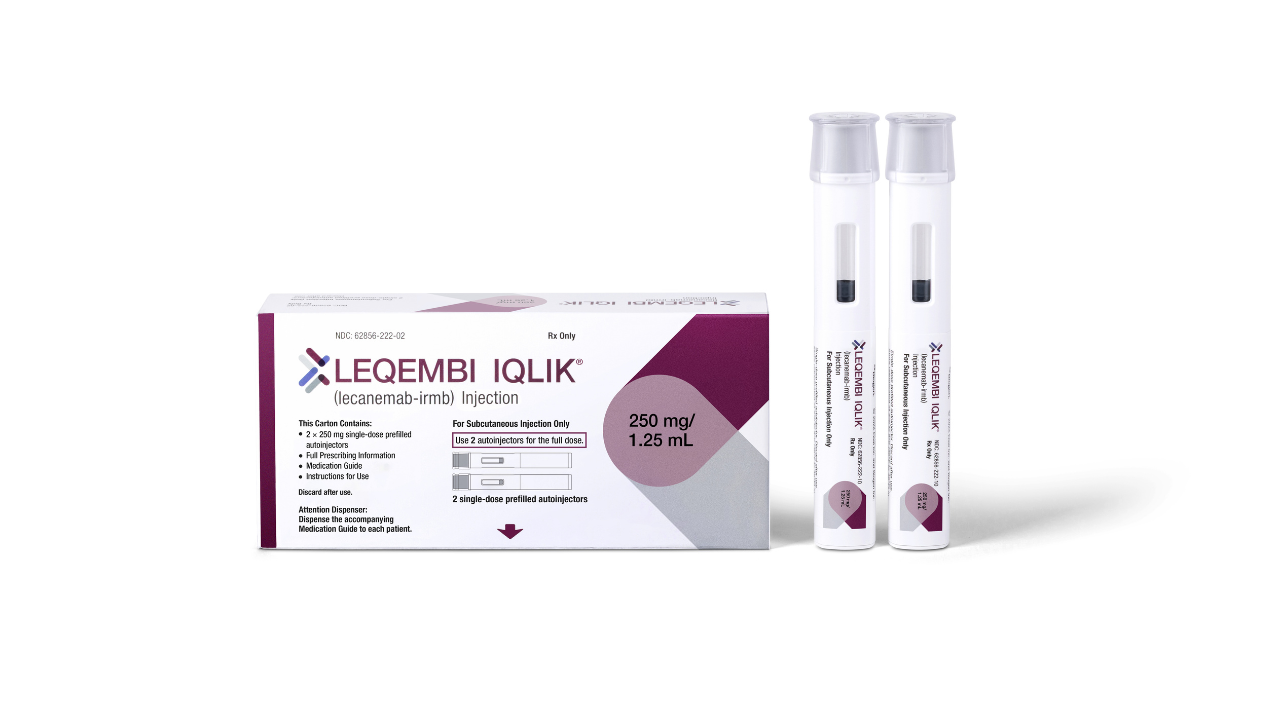
Fujirebio’s Lumipulse G pTau217/β-Amyloid 1-42 Plasma Ratio blood biomarker test garnered FDA clearance on May 16th, 2025. The test is developed for use by specialists like neurologists to confirm a diagnosis in adults 55 or older experiencing memory and cognitive symptoms. A positive test could provide the biomarker confirmation needed to make an Alzheimer’s diagnosis, and in some cases, may help check whether a person is eligible for treatment with Leqembi or Kisunla.
This blood test measures the levels of two proteins in the blood that help determine whether beta-amyloid plaques — key biomarkers of Alzheimer’s disease — are building up in the brain.
In a study of 499 participants, a positive result on the blood test matched up 91.7 percent of the time to a positive result of a gold-standard cerebrospinal fluid test or amyloid PET scan. A negative blood test result matched up with a negative CSF test or PET scan 97.3 percent of the time.
Fewer than 20 percent of people who took the blood test received an indeterminate result, meaning that the test can’t cleanly say whether an individual is positive or negative for these biomarkers. In these scenarios, some doctors may run a CSF test or an amyloid PET scan, and in other cases, may wait until a future appointment to test again.
The FDA clearance will incentivize some insurance companies and Medicare to cover the cost, according to Dr. Suzanne Schindler, a dementia specialist at Washington University in St. Louis. And since the test is FDA cleared, “clinicians will feel more comfortable ordering them.”
The cost of the test isn’t publicly listed.
Roche’s Elecsys pTau181 Test
Roche’s Eclecsys pTau181 test received FDA clearance on October 13th 2025, making it the second Alzheimer’s blood test to receive the agency’s stamp of approval. This test is intended for use by primary care doctors to rule out Alzheimer’s as a cause of cognitive impairment in individuals 55 or older.
In a 312-person study, Elecsys pTau181 correctly ruled out the presence of beta-amyloid plaques — the key hallmark of Alzheimer’s in the brain that’s required for diagnosis — 97.9 percent of the time. The details and data from the study aren’t yet published.
A negative result usually means that doctors need to look for other explanations for the cognitive symptoms. A doctor might take another look at other possible causes like sleep apnea, vitamin or hormone deficiencies, or thyroid dysfunction which may lead to memory loss or thinking problems.
For some high-risk patients, including those over 80 who have memory problems resembling Alzheimer’s, Schindler told Being Patient that “the clinician should still consider additional testing” to make sure it isn’t a false negative. By helping primary care doctors screen their patients, it could ease the burden on specialty memory clinics, which Schindler said often have six to twelve-month waitlists.
The cost of the test isn’t publicly listed.
Non-FDA Cleared Blood Tests
Several companies have Alzheimer’s blood tests on the market, with varying levels of accuracy. None of these tests are covered by Medicare though they may be covered in part by some private insurers.
C2N Diagnostics
C2N has two tests on the market. PrecivityAD™ measures the ratio of two beta-amyloid proteins called Aβ42/40 in the blood as well as determining which form of the APOE gene you carry. The PrecivityAD2™ also takes into account tau levels in the brain by measuring pTau-217 and npTau-217 in the blood.
How much does the test cost?
The Precivity AD™ test costs $1,250, and AD2™ costs $1,450.
Lucent Diagnostics Tests
Lucent Diagnostics has two blood tests on the market. One test measures the levels of pTau-217 in the blood, with higher amounts of this protein indicative of Alzheimer’s. The LucentAD Complete test combines measurements of pTau-217, the ratio of Aβ42 to Aβ40 proteins, as well as biomarkers of inflammation and damage called NfL and GFAP.
How much does the test cost?
The pTau-217 test currently costs $300 while the Complete test is listed at $486.
Labcorp
Labcorp has six different Alzheimer’s blood tests. Four of Labcorp’s blood tests measure the level of a single protein in the blood: pTau-181, pTau-217, GFAP, and NfL. One test measures a ratio of the Aβ42 to Aβ40 proteins. The ATN profile takes into account the Aß42/40 Ratio, pTau-181, and NfL.
How much does the test cost?
The pTau-217 test costs $277 while the ATN test costs $626.
Quest Diagnostics
Quest offers six different blood tests, many under the AD-Detect name. Some of the tests measure individual protein biomarkers like pTau-181, pTau-217, and NfL. Another test measures the ratio of Aβ42 to Aβ40. Two tests combine multiple measurements: One combines the ratio of Aβ42 to Aβ40 with pTau-217, while another adds in an evaluation of ApoE status.
How much does the test cost?
Quest’s tests start at $399.
Eli Lilly
Drugmaker Eli Lilly has also developed a blood test that is now available for order by clinicians. The test measures the levels of pTau-217 in the blood.
How much does the test cost?
The cost of the test is not available online.
UPDATED – June 10, 2026
UPDATED – APRIL 25, 12:40 PM EST: Added information about Eli Lilly’s CertuitAD blood test.
UPDATED – APRIL 2, 1:31 PM EST: Added information about the ALZpath Dx and Labcorp pTau-217 blood test which were released after the initial publication of the article. As of March, Quest Diagnostic’s test is also no longer offered direct to patients and must now be ordered through a doctor.
FAQs
Medicare does not currently cover the cost of Alzheimer’s blood tests. Coverage through private insurers varies depending on the carrier and the plan.
Blood tests are evaluated by comparing how often the results of the test align with an amyloid PET scan or spinal tap. There is substantial variation in the accuracy of individual blood tests, which means that some are less accurate than the spinal taps. Current guidelines developed by an Alzheimer’s Association-convened working group outline that for a blood test to be used as a standalone confirmatory tool by specialists, it needs at least 90 percent sensitivity and specificity.
A few companies offer direct-to-consumer Alzheimer’s blood tests, but experts don’t recommend them. Without a doctor’s involvement, these tests are likely to produce a high rate of false positives — flagging people as at-risk who are actually cognitively healthy or have a low likelihood of Alzheimer’s. Doctors are best positioned to order these tests because they can assess whether testing is appropriate for you, explain the risks and limitations beforehand, and provide proper counseling when results come in.







Its been a long 30yrs so far since a dr tested me for the APOE4. Even back then i had problems w/memory. I think patients deserve an answer instead of allowing dr to pick & choose who they will test. Telling a patient no is gaslighting. What do they care? Since medicare refuses to pay for the test but by gawd they will b there for the results. I say if i have to pay for these blood test, they r nobodys business! I didnt ask for that first blood test to c what my apoe4 blood test results r.
Hi Marla, thank you for your comment. We understand how frustrating the diagnostic process can be. For more information, feel free to check out our recent article on the first FDA-approved Alzheimer’s blood test: https://www.beingpatient.com/fda-approved-alzheimers-blood-test/
Its been a long 30yrs so far since a dr tested me for the APOE4. Even back then i had problems w/memory. I think patients deserve an answer instead of allowing dr to pick & choose who they will test. Telling a patient no is gaslighting. What do they care? Since medicare refuses to pay for the test but by gawd they will b there for the results. I say if i have to pay for these blood test, they r nobodys business! I didnt ask for that first blood test to c what my apoe4 blood test results r, the dr did!