When Memory Fades: Navigating Dementia From Early Signs to Later Care
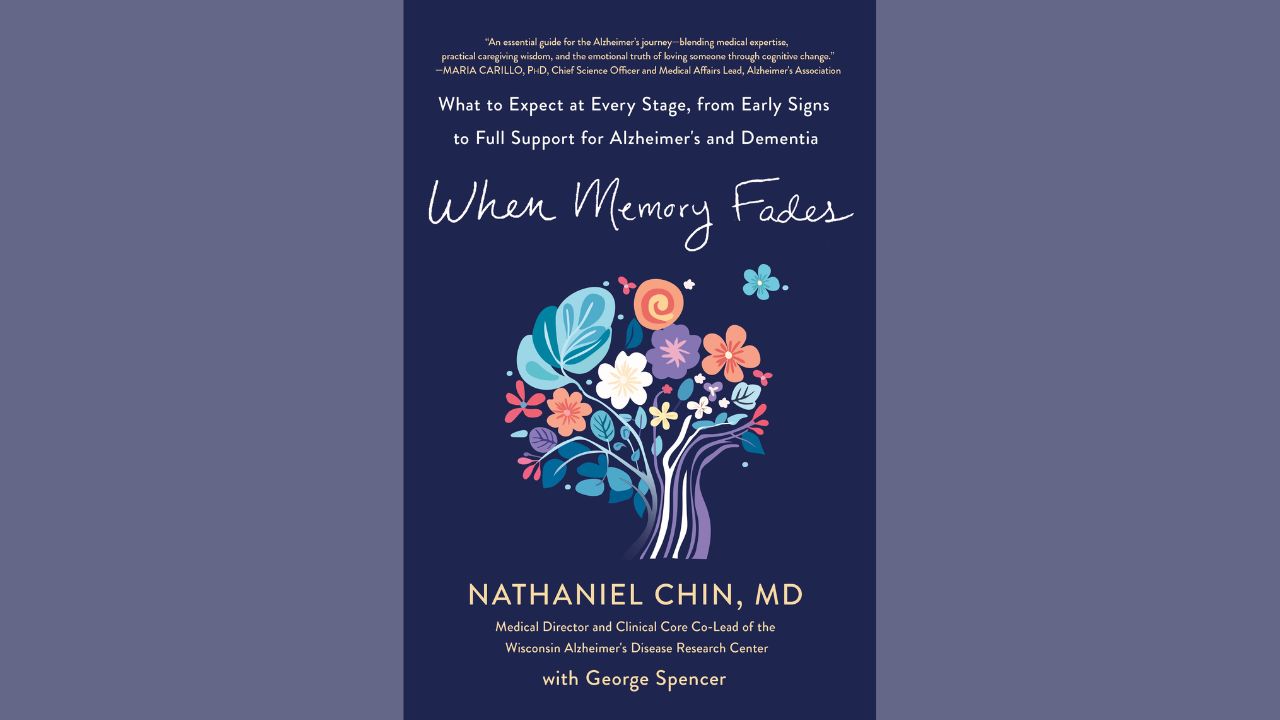
From deciding whether to pursue biomarker testing to planning for future care, Dr. Nathaniel Chin explains what families should know at every stage of dementia.
An Alzheimer’s disease or dementia diagnosis can leave families unsure of what comes next. In his new book, Dr. Nathaniel Chin offers families a guide to navigating Alzheimer’s disease and other dementias, from the first signs of memory loss to the later stages of care.
Chin, the medical director and clinical core co-lead of the Wisconsin Alzheimer’s Disease Research Center and an associate professor in the University of Wisconsin-Madison’s Department of Medicine, hosts the podcast “Dementia Matters.” `He wrote “When Memory Fades: What to Expect at Every Stage, from Early Signs to Full Support for Alzheimer’s and Dementia” after his father’s diagnosis changed his career and he became one of his father’s primary caregivers. The book offers practical guidance on recognizing early symptoms, navigating medical exams, holding family meetings, building routines and maintaining connection as the disease progresses.
In the conversation with Being Patient founder, Deborah Kan, Chin shared guidance from “When Memory Fades,” including how families can approach early symptoms, why people should be prepared before pursuing biomarker testing, and how routines, habits and advance care planning can help people live with more stability and dignity. He also discussed the promise and limits of new Alzheimer’s blood tests and treatments, the importance of building brain resilience in the early stages, and the need for honest conversations about what families may face as the disease progresses.
Being Patient: I wanted to start with your own personal experience. Can you tell us about your father’s diagnosis — what was happening in your life and career at the time, and how that experience shaped the path you’ve taken since?
Dr. Nathaniel Chin: At the time I was in my training to become an internal medicine physician at UC San Diego. I was married with no children. So I was free and had this great amount of time outside of work to live in sunny San Diego and actually spending a lot of time focusing on a career and marriage. My mother invited my sister and I home to what I thought was going to be a family get-together. My sister is a family medicine doctor. My dad’s a family medicine doctor. So we were trade stories. I was in the thick of my experience. And that’s when my mom had this family meeting, which I talk about in chapter two of the book, in this way that she prepared us to learn what she was suspecting. And so that was in my mid-20s at this point.
It was over the next couple of years that I would come visit my family, my mom and dad, pretty regularly every four to six weeks, and spend time with them. Ultimately, two years afterwards, my wife and I moved back so that we could be with them. And that’s really when my entire career changed from infectious disease to geriatrics and memory care, and then really focusing on research so that I could do something to combat this disease. As a family member, you want to do something. For me, being at that point in my training, I was able to pivot and really focus on providing care.
Being Patient: So I asked this question of people who have a medical background. I’m wondering, from your father’s point of view, in those earlier days, did his medical knowledge make it easier or more difficult for him to accept what was happening?
Chin: I think it made it more difficult. He experienced a fair amount of denial. In fact, my mom recorded the visit in which the geriatrician talked to him about his diagnosis of Alzheimer’s disease. And the geriatrician, who did a wonderful job, actually had to repeat, “No, Mo” — my dad’s name is Mo — “Mo, you have Alzheimer’s disease.” And you can hear him saying, “No, I don’t have Alzheimer’s disease.” And so it was hard for him to grasp this.
Now, my mom was very compassionate, but also very forceful in saying, “This is what we’re dealing with, this is what we need to move forward with.” And so he stopped practicing medicine the very next day. And they had a game plan that week. And so it was hard for him because he recognized what it meant for his career, for his life. And because a geriatrician as well who took care of patients in nursing homes, he saw firsthand what dementia looked like, what Alzheimer’s disease looked like. And while he never talked about it with me, I’m sure that had an impact on how he felt about the situation.
Being Patient: So, in the book, “When Memory Fades,” you really do focus on that early stage. What does a diagnosis look like to you today? What would be your advice to the people who are coming into this? I feel like today, with blood tests, it may be easier for people to get confirmation. My question is geared towards what advice do you give people who are perhaps finding out earlier than my mom and your dad did?
Chin: I do think these biomarkers — these tasks that can tell us about the biology of Alzheimer’s disease — have helped destigmatize what it is because it removes symptoms from biology. It has also facilitated greater access so that we can learn these things with more confidence. And so you’re right, earlier is better. We’ve certainly said that from a clinical perspective, but earlier is better from a patient and family perspective, too, to know what’s happening. You want an explanation and you want more opportunity for intervention. But that’s still in the symptomatic period. So, what we’re talking about is people coming into their clinician. And they have to report having a memory change or a complaint. And so I do see that. I see less and less people coming in for a diagnosis of dementia and more and more people coming in with a diagnosis of early mild cognitive impairment where they’re still functioning quite well. I think that’s going to go even earlier to a stage we call subjective cognitive decline, which isn’t commonly used in clinic. It’s very common in research.
But then I think what’s really exciting is what you mentioned: pre-symptomatic, being able to detect this biology in someone without symptoms, and then being able to intervene or plan in a way that’s very thoughtful and methodical using brain health there. And that is going to open the doors for a lot of people. There’s a lot of concern, too, and I think that’s understandable. You want to have some meaningful treatments in that space. I do see that’s the direction and that’s what blood tests allow for us to do. And Being Patient writes a lot about the incredible advancements in these biomarkers. But we’ve now really defined Alzheimer’s by biology, by the process, and not by the things that have historically scared us, the symptoms of dementia. I think that’s going to serve us for intervention, for care, and certainly for taking away some of that stigma.
“Earlier is better from a patient and family perspective, too, to know what’s happening. You want an explanation and you want more opportunity for intervention.”
Being Patient: We had a question from a member of our community. Carol has written to us and she said, “I’m a 66-year-old female that has one copy of APOE4.” So she has a genetic link to Alzheimer’s. “My mom and maternal grandmother both died of Alzheimer’s. I was diagnosed with MCI last year and still have occasional lapses. Word issues. And two weeks ago, I found my paring knife in our office desk drawer. I’m doing all the steps to decrease my risks of this progressing, but I’ve accepted that the diagnosis may happen. What would you do if this was you? What should my husband do? And what should we look out for at this stage?”
Chin: First of all, the courage to say this publicly, right? To write in this forum and share it, I think that speaks to the power of where the movement is, this idea that, no, this happens to people, let’s talk about it. And I think that’s the first thing, being able to have the mindset of embracing what’s happening, the biology that’s happening, and then asking that really important next step of, “what do I do?” There’s a lot to unpack in that.
There’s the mild cognitive impairment piece, and it seems very early because we’re not having that many symptoms. So it’s recognizing that that is where I am in the clinical spectrum of thinking change. And really recognizing it because you can use terms like Alzheimer’s and APOE, but you’re doing really well, Carol. You’re having very mild changes, so it’s about maintaining that. So that’s where we start initially talking about brain health and lifestyle. So the exercise, the diet, the sleep, the mental stimulation, those are all really important things. So that’s something that you and your partner, your husband, can work on.
It’s then optimizing your chronic health conditions. That would be if you have high blood pressure, addressing that or making sure you don’t develop that. If you’re having hearing changes. Your sleep. And so that’s the combination of lifestyle and modifying those conditions. Making sure your medications and supplements aren’t interfering. So that’s how I would approach the MCI piece of it: recognizing you’re doing well, let’s build brain resilience.
You then talk about the APOE part of it, and APOE4, so that one copy of 4, one copy of 3, presumably, that’s about 25 percent of the population. And so that is a risk gene for developing Alzheimer’s disease, the biology. And so, certainly, with the family history, it’s not surprising that you would have one copy. But that doesn’t mean you’re going to develop Alzheimer’s disease. It just means you’re at higher risk of it.
You already have MCI, but it doesn’t mean your MCI is due to Alzheimer’s. It could be due to vascular disease, perhaps it’s a different protein in the brain, perhaps it’s a reversible factor like sleep apnea. So, we would really have to be evaluated to make sure what exactly is going on causing my MCI. Does my genetics have a factor meaning it’s led to amyloid protein?
When Carol asks, well, what do you do? For me, I would want to know: do I have that protein in my brain? So, that would be the blood test or a PET scan or spinal fluid.
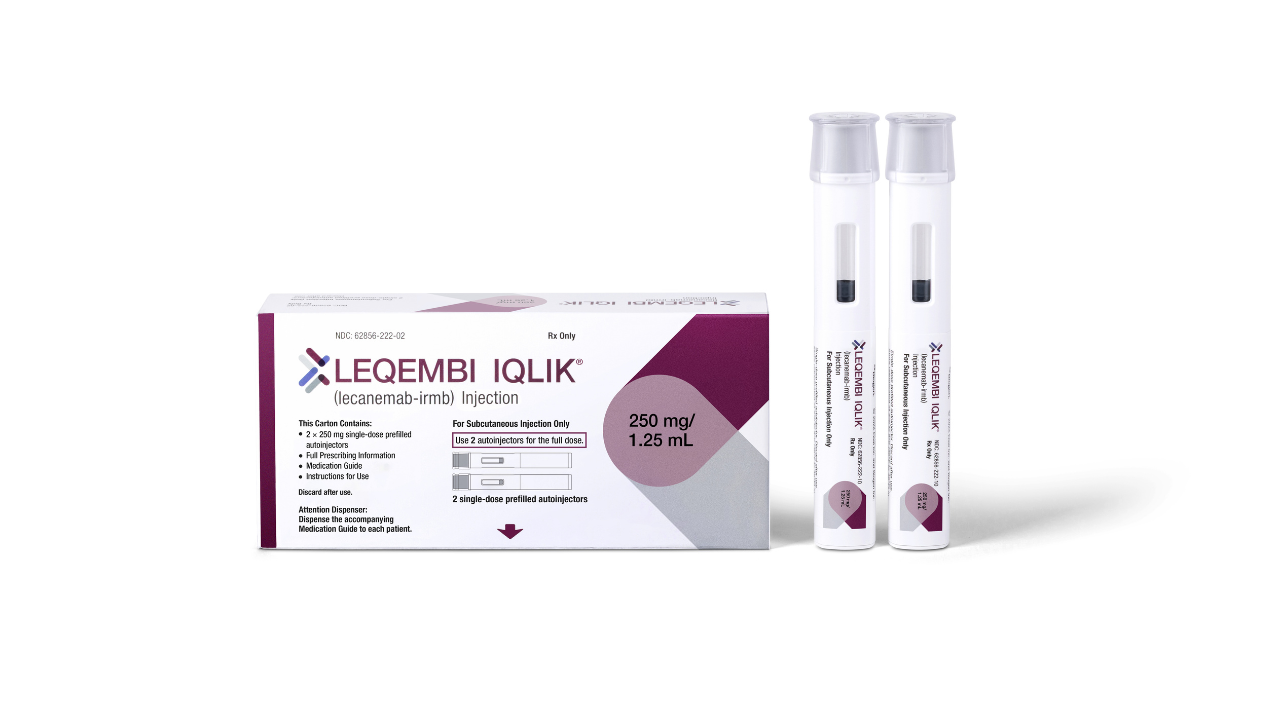
And then, if I do have that protein, well, then that’s when you start talking about potential therapies, anti-amyloid treatments — on which Being Patient has lots of resources — and what that means, because that would be a realistic option for removing the protein, slowing progression. Perhaps you don’t want that, but there are other options, clinical research you could do — or maybe it’s not Alzheimer’s. I wasn’t sure if Carol mentioned that in her question, but if there isn’t confirmation, perhaps it’s not that. And then there’s another factor you have to look at.
I’ll end by saying, the other things to think about are things that we tend to take for granted. Have I had a meaningful conversation with my family about advanced care planning? What is meaningful to me? What matters to me? What do I want my life to look like? Do I have my healthcare power of attorney, my financial power of attorney? I write about this in my book because it’s often put to the side, and it’s so important when you’re having thinking changes or just thinking about the future to really have those things as a safety net already done. And so that’s certainly something you could do now, even without knowing the exact cause of your MCI.
Being Patient: I had someone write to me actually this week and said, “I have Alzheimer’s on both sides of my mom and dad’s family. Should I get a blood test just to make sure everything’s okay?” We’re getting that question more and more. And I’m wondering what your take is. Maybe a familial link makes people nervous, but they have no symptoms whatsoever. Should those people be getting blood tests?
Chin: The easiest answer is it’s an individual decision when it’s going to be allowed. Meaning, because right now there aren’t — that hasn’t been cleared to be done, although it is offered, though.
Being Patient: There are quite a few blood testing companies that are offering p-tau217 now, right? So it’s only a matter of time before people go direct to consumers.
Chin: I think this is really important. I love that you already know so much about this because of your work. Not all tests are created equal, right? So the ones that are direct-to-consumer, or you might be able to get down the street, don’t necessarily relate to the ones that got FDA cleared, or the ones that we do in research, or the ones that are available in the clinic.
Those tests were validated in people with mild cognitive impairment and dementia because later in the disease, you have more of the protein. So they were able to show really high levels of accuracy: that a positive test is truly positive on a PET scan or spinal fluid, a negative test is truly negative on those things. But we don’t have the same level of confidence yet in that preclinical, asymptomatic group of people who don’t yet have symptoms or impairments. So it’s not as reliable yet, even among the best tests. But certainly, I’m more worried about those that are just out there publicly that were never FDA cleared or truly validated. So I would not encourage the direct-to-consumer because I just don’t trust the accuracy yet.
When it is available clinically, the question is: well, what are you going to do with that information? Because in essence, you are receiving a diagnosis of biological Alzheimer’s disease. Well, how are you prepared to handle that information and what will you do with that information? If there’s a drug available, that would make sense. If you think it’s going to modify how you live your life and you’re going to embrace more brain health strategies, okay, I can see that. But you really have to be prepared for it.
As of now, I’m not encouraging people to go and find these tests to get it because we just don’t yet have the infrastructure and the ability to help people directly with this. Although I do believe this information is their information and that’s what we look at in research. And so as we are getting more confidence in the test, as there are more options for care afterwards, I certainly can see an argument for why someone would do it.
But I just caution them: family history is a factor, but we’re different from our parents and our grandparents. And that idea of, well, my mom had it, so I have it — that’s the 1 to 2 percent of cases of Alzheimer’s where it truly is that genetic risk, the one of the three mutations where you have that gene, you get it. That is not common. And so, taking a breath and recognizing: okay, if I’m not a part of that 2 percent, there are still things I can do even without knowing if I have that protein in my brain.
Being Patient: I wanted to ask you while we’re talking about this early symptomatic stage, where are you on the monoclonal antibodies? What’s your honest assessment there? There’s a lot of mixed opinions. When people go to neurologists, some will say, yeah, great, they’re the first disease-modifying drugs. Others will say, wait, let’s get more data around them. What’s your assessment being on the research side? How do you feel about them?
Chin: I think there are incredible advancements in our field. It’s all because of biomarkers. We were able to truly detect the biology. We created these windows where we can intervene early. But these are two phase three large studies that were very well conducted that met the goal of one, removing amyloid. And to date, there’s no other way of removing amyloid once you have it and it’s elevated. I am not aware of any other particular intervention that can actually remove the amyloid so effectively that a PET scan becomes negative. So it’s the only way of effectively doing that. And that’s a pretty remarkable accomplishment.
But, two, and this is to the people who are concerned, and I think it’s understandable, we just don’t see the clinical benefit that we’re hoping for. But that doesn’t mean there isn’t a benefit. And so I think as we start looking at more real-world data and longitudinal data, people beyond 18 months, a slowing of disease is still meaningful. And an individual can argue one way or the other for that, but a slowing of disease is still slowing. And it’s truly disease modifying in that we’re modifying the rate of change. So it’s not just, well, I’m separating from people not on the drug. As time goes on, there’s more and more of a separation. And that is cognitive ability, that’s functional ability, and I think function being one of the most important parts. So I do see that being meaningful for those who are willing to be on the therapy.
Those who don’t, I understand there’s a risk that they don’t want, or it’s a burden that they’re not willing to take right now. But I do think that this is the beginning of what will be more meaningful treatment. And so I’ve never met anyone who said, we’re done. Amyloid therapies are everything. We can move on. No one has ever said that. They’ve said, okay, 30 percent slowing, that’s okay. We want 100 percent slowing. It’s probably going to take other drugs, other targets in order for us to get there and doing it earlier.
I think this is really building momentum, but it’s recognizing we are where AZT was for HIV. We are where they were in the beginning with mustard gas for cancer. We’re just at the beginning, but the success of it is still meaningful. So we in Wisconsin, we prescribe these medications, not for everyone, but for many. And we find that those that choose to be on it are finding it to be a meaningful intervention.
Being Patient: What struck me was one of the things that you said in your book, which is important, is the power of habit, routines. Can you talk to me a little bit more about that? Because I find, especially as a person is changing when they’re living with Alzheimer’s disease, families try to adapt according to their needs. Can you tell me a little bit more about the power of habit and what you really meant by that?
Chin: I do write a story in the book where I’ve had patients who have rotated homes with their loved one with dementia. And it was the best of intentions. You have five kids in your family, that’s wonderful. It’s five caregivers, so let’s move mom around to the different homes. But with every transition, that was really hard. It disrupted habit and routine, like we’re talking about. It disrupted setting, and the brain just wasn’t able to adapt to that the way you and I can do that now.
I actually ground this belief in habit — well, one, from the experts that I talked to, but two, in the reality that we’re losing brain cells in dementia, we’re losing more than we’re generating, and those brain cells have to fire in order for us to do something, in particular, something that is new and we’re learning it. We are not firing our brain cells when we’re brushing our teeth or tying our shoes because it’s habit, and this is where that muscle memory comes in. I really ground this belief in the more we can build these habits, the less taxing it is on our brain. And therefore we can maintain the thing we’re trying to do without actually taxing our brain. We can then use our brain for other purposes or at least maintain the ability.
I have this interview with Dr. Giles, who’s an occupational therapist, but I hear it from individuals like you, from social workers. The value of the habit is it enforces something that we hope is good. So, a positive habit like going for a walk every day or a sleep routine is a good habit. But it also just maintains that ability even when other brain cells are dying because the neural network, those brain cells that are used to create that habit, they never really needed all of them to continue to do that. They’re not really requiring energy to fire. And so if we lose some of them from the disease, okay, that’s not good, but it’s also not impacting what we care about, which is to accomplish a task. And so I’m a big believer that routine and structure are really helpful.
I do see this in my patients who retire. They lose their routine, they lose their structure, and they struggle. And so I coach my patients and families: have your habits for the morning and the afternoon. It doesn’t have to be every hour scheduled out, but have your breakfast roughly at the same time and then attach something positive to that. After breakfast, I’m going to go for a walk every day. And so you’re able to build a routine that way. And I think that allows for people to do the things they care about, so quality of life, but also maintain that without actually taxing your brain, knowing that your brain is unfortunately declining.
“The more we can build these habits, the less taxing it is on our brain.”
Being Patient: “When Memory Fades,” you really go through the entire journey of Alzheimer’s, ending with the end stage, the hard stage. What’s surprised me from my work at Being Patient is the end really does look differently for different people. I want you to give us a little bit of insight on that final stage, even from a personal view. What did you learn about the last stage of Alzheimer’s?
Chin: That’s such a great question, Deborah. It was really hard to write that chapter at the end. I wanted to explain the physiology of dying with Alzheimer’s disease because I wanted people to understand it’s going to be expressed differently for every person, every family, but that the brain does control everything. It’s not just the source of our thoughts and emotions, but it does help control part of the beating of the heart, and the way our skin is, and how our other organs are processing. And there is this slow slowdown of those organs that eventually lead to other potential complications. And that’s where people can die of different things.
And for my father, who was very healthy and didn’t have that many other health conditions, it clearly was Alzheimer’s that was driving his slow change, his slow death. And I don’t say that in a negative way because it actually was very peaceful, but he went almost two weeks without eating and drinking. And he had a subcutaneous IV or subcutaneous line in him for pain medication. And so he got some hydration that way, but it was very slow, and he would wake periodically, but not that often. When he was awake, he certainly recognized my mother. I believed he recognized me, even if he couldn’t talk. But the whole body just slows and the color fades. And it was this very gentle process for us. But the stopping of these organs — and that’s how I describe it in that last chapter.
But I still remember him. I put my hand on his hand and he moved, and there was still this pressure that he was still holding my hand. And so I challenged some of these beliefs of, oh, they stopped smiling and they stopped recognizing you. One, I don’t think you can prove that. And two, I believe he recognized it, and he felt it.
Sadly, there can be more aggressive ways or more violent ways of dying. Those are complications of Alzheimer’s, the pneumonia, or bleeding, or obstruction in the stomach. You don’t always die at home either. So I had the benefit of being with my dad in our home. Some people are dying in a hospital. Others might die in their home in assisted living. The process — it was a question that came up a lot, Deborah, in clinic. And I was always impressed that my family, my patients’ families, could ask that question, especially in front of their loved one, because it’s so often unanswered. And so I wanted that chapter to be an indirect way of helping answer that question, whether they asked it of me or not.
Being Patient: Tell me a little bit from your point of view why you wrote “When Memory Fades.”
Chin: I wrote the book because people would reach out to me with the same question or the frequent question of, “What do I do? I’m worried about so-and-so.” So it’s not a diagnosis, not any real plans yet as to what was going on. And I would constantly search for a book, for a resource to give them. And there wasn’t one particular one. I had to compile this across a lot of online searching. And so it dawned on me: well, here’s this gap. We have a lot of great books about brain health, about managing people in the midst of dementia, but we didn’t have this resource for people who are still exploring exactly the earliest symptoms or the evaluation process. And the evaluation is intimidating. And so I wanted to put together something for people to destigmatize it, but to also promote the idea that there are other causes of thinking change that can be reversible. Even if it’s not reversible, there are things we can do. I wanted the book to show the hope that I feel day after day when I’m in clinic and in research, but for that very early period. And so, that was a major impetus for this.
I also wanted to tell my story, and for my own reasons, of wanting to share my experience, my mother’s experience with caring for my dad. And so, I wanted to wrap that into this information.
And then, lastly, and this is the three parts, I wanted to talk about the advancements in science and in research because it is pivotal. We can’t go forward without more research. But there is this debate happening in the field, and we still see it day in and day out of challenging what has been done, what direction we’re moving in. And I think we need to be finding the common ground too, because I think all of us care about the ultimate outcome of stopping Alzheimer’s disease and all causes of dementia. And so I wanted to show to the public: yes, there’s debate, debate can be a good thing, but at least the science that we see, it is still moving forward and doing so at a rate which brings me more hope.
Ultimately, the book is meant to provide information, but also hope that we are making progress. It doesn’t feel fast enough, and I don’t think it ever will, but we are making progress. And people have a reason to pursue a diagnosis and to make steps in the right direction going forward.