What to Remember When You Are Forgetting: Dr. Zaldy Tan on Living Well With Dementia
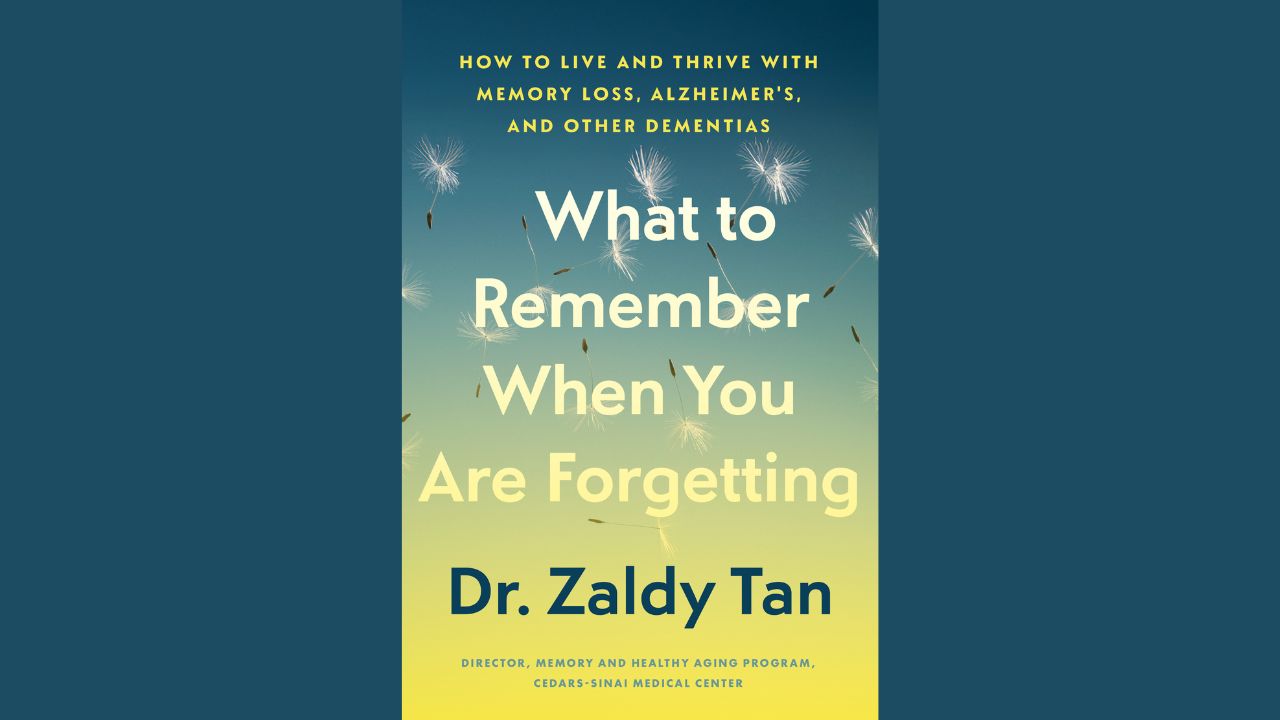
Dr. Zaldy Tan discusses his new book, “What to Remember When You’re Forgetting,” and breaks down how families can prepare for life after diagnosis.
A dementia diagnosis can raise difficult questions about what comes next: How do you know what changes to expect? How should families prepare? And how can someone continue to live well as memory loss progresses?
Those are some of the questions Dr. Zaldy Tan addresses in his new book, “What to Remember When You’re Forgetting: How to Live and Thrive With Memory Loss, Alzheimer’s and Other Dementias.” Tan, director of the Memory and Healthy Aging Program at Cedars-Sinai Medical Center and a professor at the David Geffen School of Medicine at UCLA, guides readers through the full spectrum of memory change, from recognizing early symptoms and pursuing an evaluation to navigating the different stages of Alzheimer’s and other dementias.
In this Live Talk with Being Patient founder Deborah Kan, Tan discussed many of the issues families face, including what new blood-based Alzheimer’s biomarkers can and cannot tell us, how behavioral symptoms such as hallucinations and delusions differ across dementia types, and why getting a precise diagnosis matters.
He also explained why preparing early, having conversations about future care, making new memories, and maintaining a sense of purpose can help people and families make the most of the years ahead.
Being Patient: What exactly is your book covering?
Dr. Zaldy Tan: The book is really written for anyone whose life has been touched by memory loss, Alzheimer’s, in themselves or in their family. It covers the whole spectrum of memory loss and memory change, from the very beginning, when someone may be experiencing age-related memory changes, like blanking on a name or a word, or missing an appointment, and wondering whether that’s the first sign of Alzheimer’s or just part of normal aging. How do you distinguish normal aging from early signs of Alzheimer’s or other dementias?
Then, how do you get a memory evaluation? If you’re thinking there’s something real going on, how do you find the right memory specialist? What should you expect when you do see a memory specialist? What tests need to be ordered? What questions should you ask?
And then, after the diagnosis, it really goes through each of the stages, the stages of Alzheimer’s and dementia, and what the most important tasks are to accomplish in each of these stages.
Being Patient: Let’s start at that early stage, because there’s a lot changing with diagnostics today. A lot of clinicians are using blood tests, aside from the cognitive assessment, there’s now a biomarker measure. How is this changing the way that you specifically diagnose? Are you using blood tests?
Tan: I think early diagnosis and blood-based biomarkers are really game changers in terms of the way we diagnose dementia.
Biomarkers themselves are not new; they’ve been around for a long time. We’ve been doing spinal taps, or cerebrospinal fluid analysis, which is the fluid that bathes the brain. If you have amyloid and tau, the abnormal proteins that develop in people with Alzheimer’s disease, some of these proteins leak into the cerebrospinal fluid. We’re able to get a lumbar puncture, get a sample of the spinal fluid, send it to the lab, and determine whether there are abnormal ratios and proportions of the abnormal proteins. That’s been around for a long time.
What’s new is that the technology has advanced so much that we’re now able to get peripheral blood, basically the same blood test that you get from your primary doctor or neurologist, and send that to the lab and determine the ratios and the amounts of the amyloid and tau that’s swimming around in people’s blood.
From there, we get an idea of whether there’s a good chance that they’re already accumulating amyloid and tau in their brain and are therefore already on the path toward Alzheimer’s disease.
Being Patient: I think the gold standard recommendation is that if you’re having memory problems or symptoms, you should discuss with your clinician whether to get a blood test. But there are ways to get these blood tests through precision medicine companies offering p-tau217 and other panels.
I’ve had several people write to me saying they were put in a high-risk category when they got their results and had no idea what it meant. From the patient’s vantage point, what they see is low risk, medium risk, high risk, and they don’t really understand what the measures are in terms of determining those biomarkers. How would you explain that to people so they have a clearer understanding of what biomarkers actually mean? Does having confirmed amyloid plaque in your brain mean you have Alzheimer’s?
Tan: The way I describe it is: let’s say you get a blood test from your primary doctor, neurologist or geriatrician, and it’s positive. Positive means your p-tau217, one of the proteins that accumulate in the brains of people with Alzheimer’s disease, is positive, or you have the Aβ42/40 ratio, and it’s suggestive of amyloid deposition in the brain, so you have the Alzheimer’s pathology. It doesn’t mean you have Alzheimer’s disease.
The best analogy I can give is diabetes. If I get a fasting blood sugar or a hemoglobin A1C on a person who has a family history of diabetes, I can check those levels and say this person has elevated blood sugar. In the way that we define diabetes, if you have elevated blood sugar, you already have diabetes, which is a chronic disease. With Alzheimer’s, it’s not so simple, because even if you have elevated amyloid, it doesn’t mean you’re going to develop Alzheimer’s disease, meaning the memory loss and functional decline that we associate with dementia. It may not happen. So it’s not 100 percent certain that having amyloid in your brain means you’re going to develop Alzheimer’s disease.
Therein lies the complexity. We do have tests right now that can be obtained from various sources, but it doesn’t mean you’re going to get Alzheimer’s disease. It’s a marker, almost like cholesterol. If I say you have elevated cholesterol, it doesn’t mean you’re going to have a heart attack in the future; there are a lot of other factors that determine whether you’re going to have a myocardial infarction, or heart attack. Those are ways to think about it.
I always caution people, especially if it’s being done through a precision medicine company, or by primary doctors who may not be familiar with the result, that getting this blood test may result in more confusion and anxiety than anything else, because right now we don’t have a way to treat someone who has biomarker positivity but no symptoms of the disease. We just don’t have a treatment for that. There are exciting clinical trials, at least three large ones going on, looking at preventing dementia by treating biomarker-positive people, but they’re not FDA approved yet; they’re not available.
I caution people against getting this test out of curiosity, because it may have implications for their mental health, their idea of their future, and even their potential insurability for long-term care insurance or health insurance. I caution people not to do this. The recommendation is to test only people who are symptomatic, who are showing signs of memory loss.
“I caution people against getting this test out of curiosity, because it may have implications for their mental health, their idea of their future, and even their potential insurability for long-term care insurance or health insurance.”
Being Patient: When do you think is the right time to go to the doctor? Because we have normal aging, and I think a lot of people cling to the idea that it’s just them getting older. Women are told, in some cases, that it’s menopause. From your perspective, when is the right time to see a doctor?
Tan: In my view, memory is never black and white. It’s not like you can say, if you see these two things, you definitely need to see a memory doctor. Context matters. For example, if someone gets lost while driving, what’s the context? Is it someone who has lived in the same community, went to the same supermarket, and then got lost and couldn’t find their way around, or is it someone who just moved into the community recently and perhaps didn’t drive that much? Is that a real problem or not?
I think the important thing to consider is: is this a real change from baseline? Someone who was an accountant and can’t do their taxes anymore, or a writer who takes forever to write an essay or a piece, that could be a sign. Repeating questions and conversations is very common; is this person having a hearing problem, or maybe not paying enough attention when they hear the answer to their question? So context matters, but don’t let that be an excuse.
I always say there are two types of patients I see: Mr. and Ms. Worried Well, or Mr. and Ms. Endless Excuses. ‘I don’t like politics, I never liked that person, that’s why I skipped that lunch. I meant to do it, I didn’t forget it.’ These are things we need to keep in mind when we’re experiencing this ourselves or in a loved one. Are we dealing with a worried well person or an endless excuses person?
Either way, I would encourage people who have some concerns to at least talk to their primary doctor about it. A primary doctor may ask more questions, do some cognitive testing, or refer them to a memory specialist, like we have at Cedars-Sinai or in other places, and determine what’s going on from there. Again, the important thing is how it has changed from baseline. If it’s a significant change, that’s really the time to see a memory specialist.
Being Patient: One of the hardest things, aside from getting the diagnosis, is how do you know what stage you’re in? And the definitions of the stages are changing. Traditionally, it was always talked about with seven stages. How do you define the different stages of Alzheimer’s? Is seven the benchmark we go from? I know clinically they’ve added a lot more stages. What’s the right definition to use?
Tan: It depends on the situation. The seven stages you’re referring to, I think, is the FAST scale, which I include in the book because I think it’s a very clear way of determining what stage you’re in, whether you’re in the early, mild stage, the middle stages, or the late stages. It goes through several details, like whether a person is able to speak, whether they’re able to dress themselves, whether they need assistance with toileting. It’s a very practical and useful way of looking at the stages.
When I see patients in the clinic, I use something called the CDR, the Clinical Dementia Rating scale, which is a bit more involved and more validated for research, but it requires a bit of training to do accurately. The simplest way is looking at it from early, middle, and late stages, knowing that within each stage there’s variation. The early middle stage will look different than the late middle stage, for example, because in reality it’s a continuum. There’s no point where you say, “My mom just crossed over to late stage.” There’s no such thing; it’s a continuum, and people have to be observant. That said, there are things that are different for each stage, what symptoms to expect, and what the most important tasks are to do at each stage.
Being Patient: Behavioral symptoms like agitation, paranoia, and hallucinations can appear surprisingly early, even when someone otherwise seems to be functioning well. They may also come and go, which can make it difficult for families to understand how the disease is progressing. How do behavioral symptoms typically evolve over the course of Alzheimer’s, and what can they tell us about disease progression?
Tan: That’s why I think it’s so important to get a precise diagnosis, because people think of dementia as monolithic when, in fact, there are many types of dementia, the most common being Alzheimer’s disease, Lewy body dementia, frontotemporal dementia, and vascular dementia. Each of these types has distinct symptoms that appear in each of the stages, early, middle and late.
A good example is frontotemporal dementia. People with frontotemporal dementia typically don’t present to the doctor with memory loss; they usually present with disinhibition. Mom is hugging strangers, kissing random babies, saying bad words, or criticizing strangers about the way they look or their body image. Those are more frontal symptoms, and they can appear early in the disease. Visual hallucinations, for example, happen in Lewy body dementia, even in the early stage; people could see things, insects, or dead relatives coming to visit them. So these are different types of dementia.
If you look at classic Alzheimer’s, those symptoms tend to happen in the middle stages rather than the early stage. Not to say there isn’t variation, because there is individual variation. If you imagine those proteins, amyloid and tau, they start in the hippocampus, which is the short-term memory center, but then they could spread in many different directions. If they spread into the occipital lobe, for example, a person could have hallucinations relatively early, and they could have visual-spatial issues relatively early. So that’s the thing to keep in mind: while there are general patterns, and this is really helpful to know what to expect, there are individual variations, and your results may vary.
Being Patient: In terms of the way the medical profession has been trained to diagnose dementia, should we be casting a wider net and saying that, possibly in the beginning, this could be multiple types of dementia occurring?
Tan: I’ve had patients we diagnosed with Alzheimer’s disease because we did an amyloid PET scan and it’s positive, and the presentation is typical of Alzheimer’s disease. Then, later, they develop visual hallucinations or delusions early in the process, and they say, “Wait a second, maybe you had the diagnosis wrong, I read up on the internet, and this is more like Lewy body dementia.” I try to explain to them that there is such a thing as a Lewy body variant of Alzheimer’s; the primary pathology is still Alzheimer’s, but there are characteristics of Lewy body.
You mentioned TDP-43. TDP-43 is not just in LATE, it’s also in frontotemporal dementia; that’s the protein that causes frontotemporal dementia. So what I tell them is that just because you have Alzheimer’s doesn’t mean you’re automatically protected from Lewy body, frontotemporal, or vascular dementia. There’s a lot of overlap.
One important example is normal pressure hydrocephalus, when the brain either makes too much cerebrospinal fluid or has a delay in absorbing and getting rid of the extra fluid. These people can have a gait disorder, a tendency to fall, and their gait becomes what we call a magnetic gait, an irregular gait. Then they get urinary incontinence and cognitive impairment. If you test someone in their 70s or 80s and just get a blood-based biomarker and they’re positive for amyloid, and say, “Alzheimer’s disease,” you may miss that this person has normal pressure hydrocephalus, which we know is potentially reversible if caught early enough, with a ventriculoperitoneal shunt.
That’s why a precise diagnosis is really important, because we can’t think of dementia as just Alzheimer’s and leave it at that. There could be other pathologies, like vascular dementia, that can be mitigated by controlling your blood pressure, cholesterol, and diabetes, which can help the overall picture.
Being Patient: We’re getting a question from Christine, who’s asking: should you tell someone they’re hallucinating? How do you deal with that? If they’re hallucinating, they’re probably not aware they’re hallucinating. As a physician, how should loved ones and caregivers deal with that type of situation?
Tan: Hallucination, by definition, is seeing things that aren’t there: children, insects, dead relatives coming to visit. Delusions are false beliefs, like that my husband or wife is cheating on me, my caregiver is stealing from me, or someone’s trying to poison my food. These are two of the most common behavioral symptoms that develop in the later stages of Alzheimer’s disease.
What I ask families about hallucinations and delusions is: how disruptive is it, how distressing is it? If it’s distressing for the patient, meaning “Dead relatives are coming to get me and I’m afraid,” or “My food is being poisoned by my daughter who wants the house, so I’m not going to eat or drink anything because I don’t want to die,” those are very troublesome and disruptive delusions that need to be treated.
Hallucinations, I’ve seen people, for example, who were school teachers, say, “Oh, look at those pretty girls, they’re getting ready for school, how sweet.” That’s not something I’d recommend treating, because all of the medications used for behavioral symptoms of dementia have side effects: sedation, increased risk of falls, confusion. So I always ask, is this worth treating?
If it’s not distressing for the person with dementia, why do we need to treat it? If it’s a pleasant hallucination, or the delusion is “My mother is going to come visit me and bring me flowers,’ do we really need to give powerful medications to get rid of that delusion, or do we say, “oh really, that’s great, are you looking forward to it?” Pick your battles, because the medications to treat hallucinations and delusions can bring their own set of challenges.
Being Patient: In your book, you talk about what to remember when you’re forgetting. What are the key things, maybe three, that you tell people as a physician:This is really important as memory loss happens?
Tan: The most important thing I say is: prepare. In my experience, a lot of people, when they get a diagnosis, don’t want to think about it. They live as if nothing happened. If the diagnosis is accurate, we know that, just like any neurologic disease, whether Alzheimer’s, frontotemporal or vascular, it will progress. So you have that precious time, assuming you’re diagnosed early, in the early stage, let’s say three, four, five years to make preparations.
Some of the preparations can be fun, some may not be so fun. Preparing for the fun things: what is it you wanted to do that you’d been deferring for later years because you thought you had a lot more time? Would it be traveling to Machu Picchu, or visiting your granddaughter on the East Coast whom you haven’t seen for a while, but you’ve been deferring it? Make sure you plan the things that will give you positive memories to hold on to, and take a lot of pictures so you can remember them for a very long time.
The other things, maybe not so fun, but very important, are having the conversation with your family about your wishes: “In case at some point I’m not able to make a decision for myself, I’m assigning my oldest son to make a decision for me because he knows me well,” or who gets the house, or “Is there a point where I don’t think aggressive medical care is right for me?” Have your voice and use it to speak to your loved ones, who would need to make these decisions for you later on, not if but when the disease progresses far enough that you need a surrogate. Who’s your surrogate decision maker?
Those things are important to prepare, because I’ve seen so many times families gathered in the hospital after a health crisis, arguing with each other about who’s going to take care of mom, whether she should go to a nursing home, whether they should have the surgery, who gets the house. All these things need to be done early. That’s really one of the main messages: to prepare. In the book, I write down the things you need to do for each stage, early, middle, and late.
“Make sure you plan the things that will give you positive memories to hold on to, and take a lot of pictures so you can remember them for a very long time.”
Being Patient: From talking to hundreds of people living with dementia, I’ve noticed that those who maintain a strong sense of purpose and supportive relationships often seem to do better. How important are purpose, independence, and human connection in helping people live well with a diagnosis?
Tan: I always say that getting a diagnosis of dementia, whether early, middle or late stage, is not a solitary activity. The last thing you want is to hide it and not speak about it, as if it doesn’t exist, because at some point there will be a crisis, and it will be much more difficult, and you squander the time you could actually live very well, experience the world, and make positive memories you can draw from for many more years to come, and resolve some conflicts and preparations you need to make. That’s really key, life of purpose.
If you’ve been diagnosed with dementia, and you know reasonably that you have, say, five or eight years of mental clarity, how do you want to use that? What’s the purpose of that clarity you have? What do you want to do with it? You want to travel, make new friends, pursue a dream, or spend more time with your family, that’s individual and personal. But the last thing you want is to squander that precious time by living as if nothing happened, and before you know it, you may not be able to do the things you want to do.
Being Patient: What do you think people with a diagnosis should be asking their doctors to get the best possible care through the course of this disease? If this was flipped, and you brought a notebook to your doctor, what would be on that piece of paper?
Tan: First of all, I want to make sure they prepare for the visit, because I’ve seen so many visits where there’s not enough of an exchange and a conversation, so in the end, I wasn’t sure what they understood or not. Take a lot of notes, and prepare by writing down a lot of questions.
In terms of questions, I would ask, if it’s established that they have dementia, what type of dementia it is. What are the most likely things I can expect in terms of how fast this is going to progress? What symptoms can I expect that may be troublesome, that I need to prepare for? What are the available treatments?
When it comes to treatment, whether we’re talking about monoclonal antibodies like lecanemab or donanemab, or donepezil or memantine, I always tell them to ask: “What’s the best case, worst case scenario? If it works exceptionally well, what can I expect, and if it doesn’t work, or produces complications, what can I expect?” That way they can decide whether they’d like to pursue that treatment or not.
And ask not just about the diagnosis and treatment, but what community resources are available, because that’s so valuable. A lot of the needs of people with dementia aren’t just about a monoclonal antibody or a prescription medication, but socialization, transportation, safety, and caregiver support groups. Those are so important to ask about.
“A lot of the needs of people with dementia aren’t just about a monoclonal antibody or a prescription medication, but socialization, transportation, safety, and caregiver support groups.”
Being Patient: Colleen is asking: is it appropriate to be evaluated based on subjective memory concerns if you live alone and no one’s around to observe you? I have one copy of ApoE4 and a strong family history. Would I be wasting resources? Would it be good to get a baseline?
Tan: Absolutely. If you have a family history, or know you have one or two copies of ApoE4, at baseline you’re already at higher risk. It doesn’t mean you’ll get it, but statistically, you’re at higher risk.
I don’t know what age Colleen is, but if she’s 40 and over, maybe 45, 50 or older, it’s really worth getting an evaluation, even just a baseline cognitive test by her primary doctor. At Cedars-Sinai, we have something called the Memory and Healthy Aging Program, which offers a more detailed evaluation for someone at higher risk, to see what their baseline is, so that in the future we have a way of comparing. Sometimes people come to us already with symptoms, but we don’t know what their baseline was, so that’s really worth knowing.
I wouldn’t recommend getting a blood-based biomarker, for the reasons already stated, but at least get a baseline cognitive test and write down your symptoms. You could also ask a friend or someone you trust, even if you don’t live with them, whether they’ve noticed any changes in your memory, because if you live alone, you may notice the changes later than someone who has a partner or someone they live with who can tell them if any changes have been observed.
Being Patient: I encourage everyone to check out your book. How do people get “What to Remember When You’re Forgetting”?
Tan: It’s available now for pre-order on Amazon, Barnes & Noble, and all of your online book shops, and it’ll be on bookstore shelves September 15th, so hopefully you’ll watch out for it.
FAQs
Not necessarily. A positive blood biomarker test can indicate Alzheimer’s-related changes such as amyloid or tau, but it does not by itself mean someone has or will develop dementia.
Talk to a doctor when memory or thinking changes are noticeably different from your usual abilities or begin interfering with everyday tasks. A primary care doctor can evaluate the changes and refer you to a specialist if needed.
Yes. Hallucinations can occur early in Lewy body dementia, while in Alzheimer’s they are more commonly seen in later stages, though symptoms vary from person to person.